Aidan Hartley

Aidan Hartley

Aidan Hartley is the Spectator's Wild Life columnist.

Wild life | 23 March 2016

From our UK edition

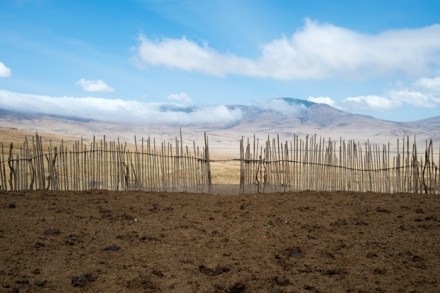
Laikipia ‘Awayoo,’ was how our head stockman Apurra said ‘how are you?’ in his texts from Pokot country, where I had sent him on a mission to search for thin tribal steers for us to buy. Now that we have plenty of pasture, we are looking for large-framed beasts that we can fatten and sell to the butchers. ‘Boss, Awayoo,’ Apurra’s message asks, with news that he has gathered a good mob of steers that are now being trekked to the farm. When we first completed the electric fence, which now extends 15 kilometres around the entire ranch perimeter, I thought that was largely the end of the game for wildlife. Electricity flows like a river, a 6,000-volt stream, enough to kill an entangled zebra.

The master Builder who made me

From our UK edition

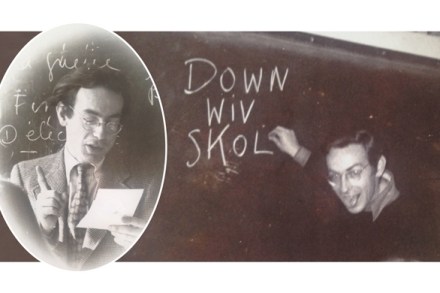
Michael Schützer-Weissmann was the greatest teacher I ever had. When I was 17, I got into trouble at Sherborne, my school in Dorset, after a friend and I each drank a bottle of whisky. I felt splendid, but my friend had to be stomach-pumped. For that the headmaster, Robert Macnaghten, caned me. It was amazing that he managed to hit me six times, because he was famously blind — and had once awarded a detention to a coat hung on a peg at the end of his classroom, mistaking it for a boy refusing to sit down. Caning probably saved me from expulsion, but I was thoroughly fed up with Sherborne: neither a ‘blood’ at rugby nor good in lessons. That’s how ‘Schutz’, as we all called him, found me.

Wild life | 11 February 2016

From our UK edition

Nairobi Nairobi’s old avenues were designed to be wide enough for a wagon and several span of oxen to U-turn in them. Even so, in our modern era the matatu communal taxis frequently manage to create a traffic jam out of nothing so nobody can go anywhere, sometimes for hours. So I’m waiting patiently in a jam on Uhuru Highway thinking of Hardy’s poem ‘He Fears His Good Fortune’: There was a glorious time At an epoch of my prime; ...And sweetness fell around Like manna on the ground. And I look up into the fever trees.

Not so happy valley

From our UK edition

Simon Barnes opens with a presumably true idea, that we are all in search of our own versions of paradise — a special place presented here as the sacred ‘combe’ of the title, being a word with Celtic origins that describes a steep hollow or hidden valley. These paradises might be real or imagined, exist only in memory, or live in fiction like Narnia or Robin Hood’s forest; they can be unattainable, beyond reach, or ruined, like Eden. His point, frequently stated, is that we are always on a quest for them, and need them. The particular combe of this book is not on the edge of Dartmoor but in the national parklands of Zambia’s Luangwa river valley.

Wild life | 14 January 2016

From our UK edition

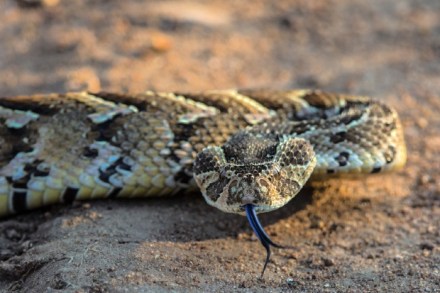
On New Year’s Day I took the family out for an evening walk on the ranch. Along the verges, lush after rains, I urged our children, Eve and Rider, to help me collect specimens of different plants, or identify wildlife spoor or scat. I wore shorts and flip-flops. As usual I was talking too much to my wife Claire, when I was stunned into silence by Eve, who cried out loudly, as if the world was ending, and pointed at the ground in front of me. I froze. I had not looked where I was going and my right foot was about six inches from the head of a puff adder, fat and four-foot long. I recoiled and my herpetologist pals will be annoyed to hear that on an automatic impulse I killed the beautiful creature. Usually, I would never hurt a snake. I felt it was a matter of survival.

The James Herriot of Africa

From our UK edition

Great Rift Valley The mare hangs her head; her neck is swollen, her eyes bloody red, crammed by flies. She has horse sickness, a mainly tropical disease transmitted by midges. ‘All OK?’ asks the stud manager. ‘Not at all,’ says Hugh Cran. ‘Horse sickness is very serious, with a high mortality. We shall have to see.’ The manager looks worried, but at least he was able to call out Hugh, who for nearly 50 years has been a farm and family vet in Kenya’s Rift Valley. A dog disembowelled by hippo tusks, snakebite, big wild beasts, sick camels, exotic tropical plagues, mad upcountry ranchers, the perils of the equatorial road. Hugh has led an adventurous, unique life devoted to helping animals.

The Kenyan night is like a busy shipping lane, but silent

From our UK edition

Night falls like a fire curtain at seven and I go to bed not long afterwards, serenaded by bullfrogs after rain. Having risen long before dawn, ranchers tend to sleep early, following a thin gruel of a supper. In upcountry Kenya it used to be that pyjamas and dressing-gowns were permissible for even quite posh dinners. Once in a blue moon, one might keep a farmer awake with good whisky or rugby to watch. Sometimes, once an evening gets going, by night’s end there’s reeling and the light bulbs are being used for target practice. Not more than once or twice in a year, mind you, or this can crowd out a man. Not an hour after I’ve shut my eyes I wake again. From below my window come vaguely Jurassic, subsonic rumbles.

What Ryszard Kapuscinski airbrushed out of his bestselling book

From our UK edition

I once found myself on a lonely road in southern Ethiopia with the famous Polish author Ryszard Kapuscinski. We were travelling through bandit country when we got a puncture. We had a rendezvous at a bush airstrip with an aircraft that had to take off before night closed in. It turned out Ryszard had no clue about changing tyres and, whereas I was quite happy to break open the beers and sleep in a ditch, he fretted about missing tea with the lady relatives of Emperor Haile Selassie back in Addis Ababa. I realised he was scared.

Wild life | 24 September 2015

From our UK edition

   Laikipia A lion has just mauled and partially eaten a warrior who tried to throw a spear in my guts while trespassing on my farm a few months ago. This man was from the same gang that in April attacked me with rocks and smashed up my left hand so badly the doctors were hours away from amputating two or three of my fingers. Apparently, the spear thrower was up to no good again, on private land some distance from here some nights ago, when a lion slunk out of the darkness and jumped on his back. It then moved to his buttocks, on which it began feasting. It was all up for the lad and you might as well have said, ‘Yon lion’s ’et Albert — and ’im in his Sunday clothes, too...

Pigs, pranks, but no Dave

From our UK edition

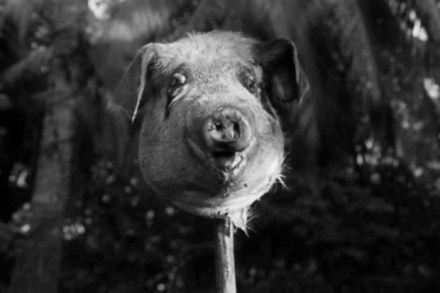
I attended the Piers Gaveston Society in the mid-1980s, when I was at Oxford in the year above David Cameron. The parties were debauched and tremendous fun. But Dave was not there. The most remarkable figure at the heart of the Gaveston was Gottfried von-Bismarck, the Iron Chancellor’s great-great-grandson who, after his untimely death at just 44 in 2007, was said by the Telegraph to have led an ‘exotic life of gilded aimlessness’.

The Piers Gaveston society was far too libertarian for David Cameron

From our UK edition

I attended the Piers Gaveston Society in the mid-1980s, when I was at Oxford in the year above David Cameron. The parties were debauched and tremendous fun. But Dave was not there. The most remarkable figure at the heart of the Gaveston was Gottfried von-Bismarck, the Iron Chancellor’s great-great-grandson who, after his untimely death at just 44 in 2007, was said by the Telegraph to have led an ‘exotic life of gilded aimlessness’.

Man’s greed and gain

From our UK edition

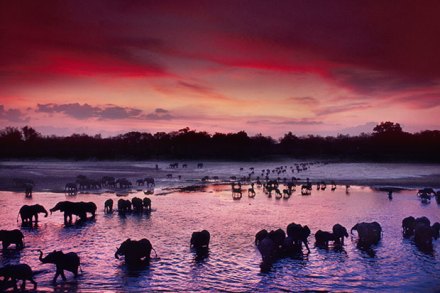
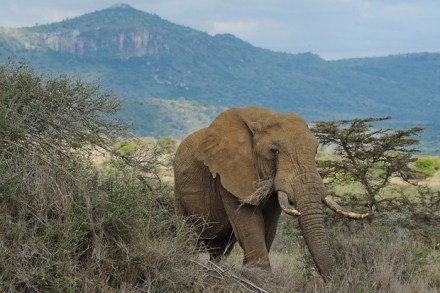
Laikipia An elephant can break through an electric fence by pulling out the posts, pushing younger, more stupid animals into the wire — or by simply sitting on the fence. I do hope they will play such tricks on us, now that high-voltage wires enclose most of the ranch, leaving only a few corridors for animals to pass through. The wilderness has become the territory of humans, a farm to produce food, no longer the land of elephants. Before the second world war, when Africa swarmed with wildlife, there was a bull elephant on Kilimanjaro known as the Crown Prince. It had huge tusks. My father once tracked the Prince for many hours through the forest at great speed.

Wild life | 16 July 2015

From our UK edition

Laikipia A quarter of a century ago I met two young South African men who had ridden their ponies 1,700 miles from the Kalahari desert to Kenya. They were on their way to Sudan. They carried all their needs on their tough Botswana cattle station ponies, with one spare horse following behind. Their saddlebags were filled mainly with horse feed. Their only clothes were shorts, flip-flops, bush shirts, one blanket and one coat each. This was from the time before mobile phones. In the year it had taken them to reach Kenya they had spent perhaps £150. Along the road they gladly accepted the kindness of strangers for a beer, a bath or a meal, but they were just as cheerful sleeping out in the bush by a campfire with their ponies tethered nearby.

Wild life | 18 June 2015

From our UK edition

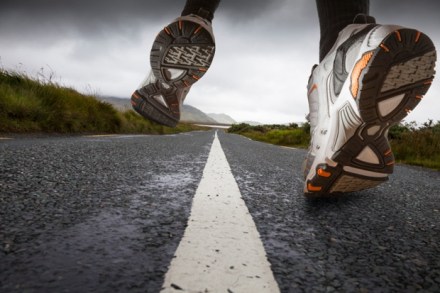
Laikipia, Kenya   Out cross-country running on the farm in Kenya recently, I came face-to-face with a gang of bull elephants. I zigzagged away from them, keeping downwind, jogged on for a bit, then found myself following the tracks and fresh dung of a herd of buffalo. I paused my stopwatch, had a think then continued at a timid pace while looking around fearfully. The night before I had heard lion and hyena, so as I ran I imagined the yellow eyes that might be following the form of a 50-year-old man huffing, puffing and advancing at a stumble — easy prey, but chewy old meat. I studied the ground ahead of me, checking for the camouflaged signature of a puff adder or the coiled spring of a cobra.

Wild life | 21 May 2015

From our UK edition

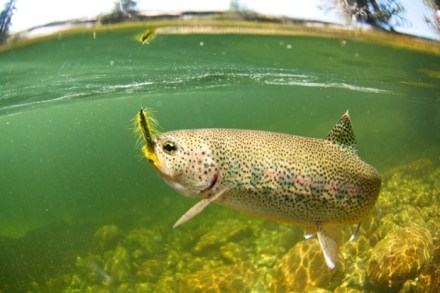
 Nairobi Trout were first introduced into Kenya’s highland streams in 1905. Men like Ewart Grogan, ‘baddest and boldest of a bad bold gang’, shipped Loch Leven fingerlings in ice-packed chests to Mombasa and then up to the Rift Valley on the Lunatic Express. From there, porters carried them up into the misty, forested Aberdare and Mount Kenya slopes. Rivers with now legendary names such as Amboni, Gichugi and the two Mathioyas were stocked — and our fly fishers’ paradise was born. Last week in Nairobi, the Kenya Fly Fishers’ — the oldest club of its kind in all of Africa — held its 95th annual dinner. It was a strictly male affair, more than 100 members and their guests. Visually it was pure H.M. Bateman.

Wild life | 23 April 2015

From our UK edition

 Laikipia When I was a boy in Devon we had an orchard. On a string of autumns, as the fruit ripened, the orchard became a battlefield of apples between my two brothers and me. My older siblings could launch apples at me with such force they fizzed like bullets through the air. A hit with an unripe Russet or Pippin could hurt like hell, so I became adept at dodging incoming missiles. A childhood of scrumping came in handy this month when a mob of Samburu tribesmen attacked me. In what has become a routine activity at home these days we were attempting to prevent trespassers flooding into our farm pastures. I called the police, while the three spearmen I encountered phoned their cohorts.

The warrior arched his body, readying to sling his spear at my chest

From our UK edition

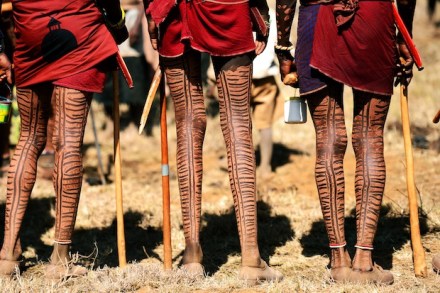
 Laikipia With a shriek, the warrior arched his body, readying to sling his spear at my chest. The tear-dropped javelin point flashed in the sun. In the heat, dust swirled up from the hooves of the young blood’s cattle invading my farm. In his hand, the seven-foot shaft lance quivered, ready, poised for release — and then he yelled again. This is March 2015, I reminded myself, not AD 991 at the onset of the Battle of Maldon. I had asked the man to come with me to the police, where he would be arrested for trespass. The spear flashing was his response. He had pushed his cattle into what was left of my pasture, and many other herds had been there too for weeks — upwards of 7,000 beasts cropping the last of the grass.

Having oozed optimism for a decade, I am a bit down about the Hopeful Continent

From our UK edition

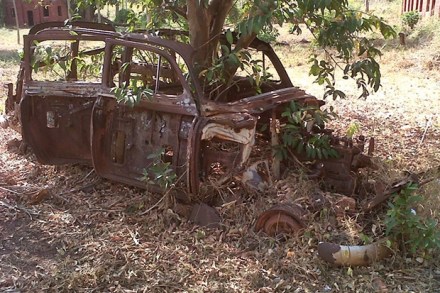
Juba I discovered a 1954 Morris Minor parked outside the Catholic mission station in Mopoi, South Sudan. The car had been there for so long that a guava tree was growing up through the gearbox. To me it was a tragic memorial to Daniel Comboni, the canonised 19th-century missionary who set out to ‘save Africa’ and whose followers built Mopoi. Just a year after that Morris Minor came off the production line, civil war erupted. Millions of deaths later, Mopoi was half-ruined, strangled by figs — though inside the church I found the votive candles still burning and the Blessed Virgin with a resigned expression, raising her hand as if she was about to say ‘nobody knows the trouble I’ve seen...’.

I want to do for field rations what Jamie Oliver did for school dinners

From our UK edition

Hell’s Kitchen My ambition to open a fish and chip shop in Mogadishu has not happened yet, though I remain optimistic. Food, I’ve decided, is the thing to go for on my next entrepreneurial adventure. For a while I dreamed of going into the chicken trade, importing refrigerated containers full of wings and drumsticks from Brazil for sale up the furthest reaches of the Congo. Fortunes have been made in brokering African chicken deals. But so far my forays into the food business have not gone very well. I tried, for example, to sell pots of honey with my friend Tom at various local fêtes.

If you want a real safari, head to Botswana

From our UK edition

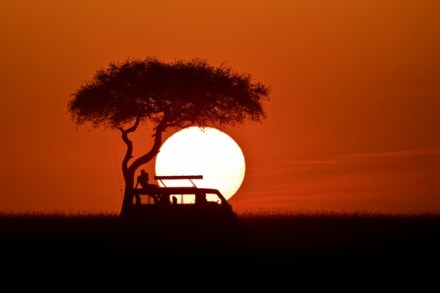
As a boy camping with my father on safaris deep in the African bush, there were no tents involved; we just slept by the fire like cowboys in the open under the constellations. Supper was sweet tea and biltong and we used a tin bucket for a shower. When it rained we simply moved underneath our parked Land Rover. One morning we woke to find tracks circling us, where a big lion had come close enough to blow on our toes as we slept. That old Africa rubbed off on me and I still like safaris to be the real thing — under canvas, by the campfire, gin, tall tales, fresh air, and carpet-creeping between tents. Safari is an art and it’s for real people, not celebrities climbing Kilimanjaro.