Aidan Hartley

Aidan Hartley

Aidan Hartley is the Spectator's Wild Life columnist.

Wild life | 10 January 2019

From our UK edition

Kampala I am terrified of being with former death-row prisoner Susan Kigula. This is because she qualified for her driving licence only quite recently, after 16 years in Luzira maximum security prison, and she drives like a maniac on Uganda’s roads. From behind the wheel Susan tells me she was sentenced to death for murdering her boyfriend. Her conviction was based partly on the witness testimony of a four-year-old child and she denies committing the crime. Her cell for five inmates in Luzira’s Condemned section, notorious from Idi Amin’s days, was very cramped with no beds, a bucket for a loo, no window — only an air vent — and a light bulb burning dimly from lock-up at 3 p.m. until 9 each morning.

Wild life | 13 December 2018

From our UK edition

Laikipia, Kenya ‘The End,’ I typed. The book had taken me 14 years to write. I rose from my desk and stretched; outside, go-away birds glowered down from the fever trees and a dust devil coiled across the valley. ‘A walk at last!’ I grabbed my cattle stick — and up leapt the labrador, the collie and Potatoes, the mongrel. In a riot of tails, the dogs rushed out of the open front door with me striding in pursuit and there, on the front porch, I came face to face with an eight-foot long spitting cobra. ‘Look, and be afraid!’ the cobra Nag hisses at Rikki-Tikki-Tavi. But unlike Kipling’s mongoose, on our farm we adore snakes. I lie in bed watching delicate little brown-lipped house snakes in the coconut thatch above, hunting for geckos.

Wild life | 13 December 2017

From our UK edition

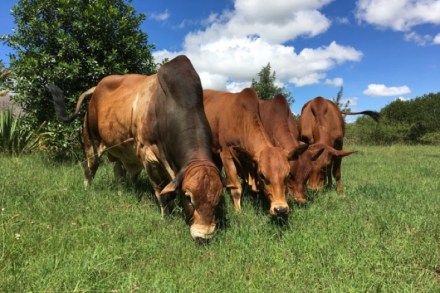
Laikipia, Kenya   The zebra lacks a rumen and eats at least twice as much as a cow. On our modest Kenyan ranch we run several hundred head of Boran cattle. In our arid conditions, this number is carefully calculated on a stocking rate of so many beasts to the acre. If you add hundreds of zebra to the pasture you swiftly finish your grass. During this year’s drought, and the chaos beyond our boundaries, wild animals were poached and they starved. Many arrived on the farm so desperate that they smashed through walls and fences to get in to where it was safe. I let them stay. The elephants came and went as they pleased, barging through any barrier.

Wild life | 1 November 2018

From our UK edition

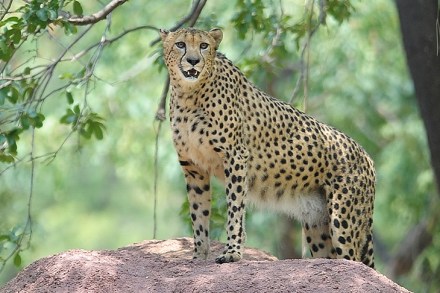
Laikipia   My two Jersey bulls Halcyon and Hosanna were grazing happily on the lawn in front of the house when a pride of lion breached the 7,500-volt high-security fence enclosing our garden, pounced on the cattle and broke both of their necks. I am down by 24 sheep so far this year thanks to the old leopard who patrols the hillside above us. A cheetah boldly tried to grab a calf in the valley the other day. The pasture grass I planted at huge expense has attracted great numbers of oryx, buffalo, zebra, eland, gazelles and warthog. The electric fences I placed around the perimeter of the farm have completely failed to keep out the roaming elephant, giraffe and plains game.

Wild life | 4 October 2018

From our UK edition

Laikipia, Kenya   The Turkana cowhands are on Facebook and they spend a lot of time on their cell phones, but they are also superb trackers and one of them, called Ekuwom, can divine the future by ‘reading’ the entrails of a butchered animal like the Etruscans. After the confusion of a heavy thunderstorm before dusk one evening we lost a flock of sheep; we searched all night and rescued dozens. In my experience with lion, leopard, jackal and hyena, a sheep left outside the boma overnight has a 50–50 chance of living until morning. At dawn, beneath low cloud, we found 12 carcasses scattered white and red across the grasslands. The hyenas had only half eaten a single one, leaving the rest with skulls crushed and balls and guts ripped away from the arse ends.

Wild life | 23 August 2018

From our UK edition

Laikipia ‘This year we’re too broke to take our cattle to the show,’ I told Mark. For six months we had been preparing the show string, training our Borans to stand correctly, to walk well, squandering money on feed, brass nose rings and fancy halter ropes. As the big day loomed I looked at the costs of the lorry to Nairobi and all those expenses in town, and I knew we could not afford it. The bullets are no longer flying in Laikipia but after all the dramas on the farm in recent years we are skint. My tyres are bald, the soles of my boots are falling off. I had such a lovely mob of six heifers ready to go — feminine, structured, big bellied with muscling over the top.

Wild life | 26 July 2018

From our UK edition

Maasai Mara   Last night the hyenas made off with our fudge cake. We are camped with a group of four families on the banks of the Mara river, waiting for the wildebeest migration. During the night hours, tucked up in our sleeping bags, only slivers of canvas divide us from the African bush. It is very exciting to be roused from slumber by hyenas cackling as they canter between the guy ropes of the tents. You lie there listening to pods of hippo chortling, to the elephant and the lion, and baboons barking in the trees. This morning everybody said how well they had slept. It must be the fresh air, the feeling of the ground beneath your bedding roll, the delightful exhaustion after a day out on safari.

Wild life | 28 June 2018

From our UK edition

Laikipia, Kenya A minotaur head glowers at me through the bathroom window while I am brushing my teeth in the morning. It’s George the bull, who wants his ears scratched. After I get dressed, it’s time to select a cattle stick, known here as a finbo, from an umbrella stand stuffed with crooks, wands, withies, shillelagh-like cudgels and rods that a biblical prophet might have forgotten had he come to supper. I choose my favourite, a finbo that balances perfectly in the hand like a drum major’s malacca cane. Outside, a Jersey bullock is sprawled on the garden path, chewing the cud.

Wild life | 31 May 2018

From our UK edition

Laikipia I wake at 4 a.m. these days. At that time you might hear a lion or a braying zebra, but the birds and bullfrogs are quiet under the constellations. False dawn comes an hour later with the liquid song of sandgrouse and the bustards cackling as they angle into the first light. Just before sunrise the birdsong becomes a sound cloud rising from the valley up on to the plains. The cattle spill out of the boma bellowing and mooing and then later, at seven, comes the sound of men’s voices arriving at work, diesel engines warming up, chickens, dogs barking. My father used to rise at 5.30 a.m. — but he always had a siesta after lunch, wherever he was in the world. When I was youngI often saw the dawn only because I had not yet gone to sleep.

Wild life | 3 May 2018

From our UK edition

Laikipia, Kenya Neighbours Tom and Jo came by with a bucketful of wild African mushrooms, which they had collected in old cattle bomas on the way to the farm. I asked: ‘How do you know they are not toadstools?’ Tom said you could peel the caps, the gills were dark brown, not white, there was a ring around the stem like a Jacobean ruff — and they did not smell poisonous. ‘Fine,’ I said and into a great pot they went with butter and parsley from the garden. Everything else for supper was from the garden too — even the road runner cockerel — except the flagons of wine brought by guests David and Kate, also from a farm only two hours’ drive away. The mushrooms were delicious.

Let kids learn

From our UK edition

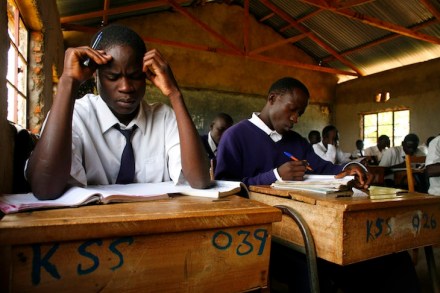
Why would anyone who claims to care about the world’s poorest children try to shut down their schools? It’s strange and sad, but several British charities, in cahoots with some British unions, are making a concerted effort to close down hundreds of schools in Africa. They are doing this because they dislike private education, seeming not to care that this will destroy the life chances of thousands of desperate children, forcing them, at best, into state schools where the teachers are often absent, drunk or incapable. The campaign involves not only an alphabet soup of left-leaning charities from Action Aid to Amnesty International but also Unison and the National Union of Teachers (NUT).

Wild life | 5 April 2018

From our UK edition

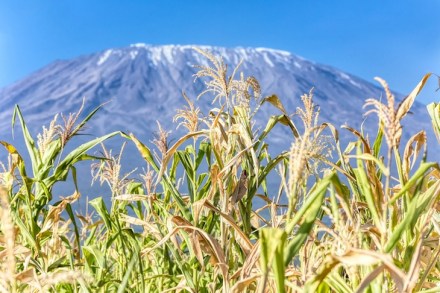
Laikipia, Kenya Erupe is a Kenyan farmer. He owns a smallholding of a few acres not far from my own place. When we meet our talk is usually about the vagaries that preoccupy farmers: crops, rain, livestock diseases and market prices. On his little patch he built a dwelling from mud and wattle with a corrugated iron roof. Inside, a picture of Jesus on the wall stared down on the poor but growing family, their only possessions a couple of beds, a chair, a radio and some faded photographs of relatives. Outside the hut my friend grew an avocado tree, bananas, a guava and a small patch of blue gums for shade and firewood. Beyond that he and his wife had tilled the soil with jembe mattocks. They planted maize and beans.

Witness to an extinction

From our UK edition

   Laikipia, Kenya   Before vets put him down in Kenya this week, I attended the deathbed of Sudan, the world’s last male northern white rhinoceros, to observe up close what extinction looks like. Like a king he lay on his side, all 2,800 kilos of him. For millennia, his species had been one of the largest of land mammals. At the grand old age of 45, his back legs had given out, then he had developed a nasty lesion. Finally his vast grey bulk became covered with what looked like bedsores. I expected Sudan’s hide to be rough and petrified. I thought of Kipling’s rhinoceros, bad-tempered on account of the crumbs hidden inside his skin by the Parsee on the Altogether Uninhabited Island in the Red Sea. To my surprise, Sudan was soft to pat and stroke.

Wild life | 8 March 2018

From our UK edition

Laikipia Off Madagascar the other day the Indian Ocean gave birth to a little storm called 11S. As its gyre turned clockwise over the sea, 11S gained momentum until it was a huge vortex of thunder and lightning christened Tropical Cyclone Dumazile. Like a naughty lover yanking away the shower curtain so that everything in the bathroom is sprayed with hot water, Dumazile pulled the entire weather system of mainland Africa eastwards. The effect was to suck the clouds from the steamy jungles of Congo’s river basin across the equator and dump their entire contents over our farm in highland Kenya. There was I enjoying the dry season. ‘How’s the farm?’ asked people through February. ‘Dry,’ I said.

Clean water beats social justice

From our UK edition

In the early 1980s when I was a schoolboy, my father, Brian Hartley, worked for Oxfam during a famine in Uganda’s Kara-moja. Like Dad, the other Oxfam people I remember in East Africa were earnest agriculturalists or engineers who had been overseas most of their lives. Some of them were religious or socialist, but they all had the technical skills to help local farmers rebuild their lives after wars or droughts. The focus was on development. Like my dad, most were sandal-clad volunteers who worked for the charity for free. They helped farmers cultivate better crops or breed improved livestock to stop soil erosion, vaccinate cattle, plant trees and dig boreholes. Since Quakers founded Oxfam in the 1940s to help civilians in Greece, it has saved and improved countless lives.

Wild life | 8 February 2018

From our UK edition

Laikipia I woke with the breath of a leopard a few feet from me as I lay in my bed. Before he came there were the sounds of Laikipia’s darkness: nightjars, insects, a wandering hyena. Then it all went abruptly silent and I heard him exhale, just on the other side of the bedroom door. I got out of bed and listened to him snuff the air. A hiss came from the back of his throat, then a deep-throated cough. Our three dogs sat up in their baskets, ears up, hackles raised, silent and staring. At dusk I had put them — Jock, the labrador, Sassy the collie, and our mongrel bitch Potato — in the bedroom to sleep close to me because the leopard had been after them for a string of nights. A leopard loves nothing more than a dog to kill.

Wild life | 11 January 2018

From our UK edition

Kenya  First comes a distant hum, rising in volume until I hear it coming straight at me like Niki Lauda behind the wheel of his Ferrari. The blue sky darkens. I duck as swarming bees zoom overhead, trailing their queen. They are gone again in a second, coiling off in a shadowy murmuration across the veldt. After the rains, several swarms hurtle over us daily looking for homes, criss-crossing in the air. When bees nest in our farmstead walls we leave them be. Anybody who has had bees live under the eaves will know how cosy it is to lie in bed at night, listening to the soporific thrum of countless beating wings.

Wild life | 2 November 2017

From our UK edition

Laikipia   Flying home across Laikipia’s ranchlands with Martin after a farmers’ meeting, I see the plateau dotted with cattle and elephants. Stretching away towards the north, it is all green after good rains. I think to myself that farming is hard enough without having to deal with toxic politics: will there be a drought, and what about the ticks, or foot-and-mouth disease; will your cattle get rustled, or flocks of quelea and hordes of zebra devour your crops? After months of politics in Kenya, the news comes in that Uhuru Kenyatta has been declared our president again. This comes as a great relief because most people in Kenya are exhausted by politics after months of crisis. We just want to get back to work. Everybody is broke.

Wild life | 5 October 2017

From our UK edition

Laikipia Ripping up the black cotton soil on the farm’s high savannah I get a sense of what it must have been like to be a sodbuster on the Great Plains of America 150 years ago. Riding my big yellow tractor I find it thrilling to plunge through virgin land that has been innocent since time began, but it also makes me feel intensely sad that it had to come to this. Through the clouds of dust and diesel fumes I can see a giraffe pouting at me from above a stand of acacia trees that will soon be torn out. Herds of zebra, oryx and eland are retreating as the lines of freshly turned tilth advance across tawny grasslands stretching northwards all the way to Ethiopia. I am destroying wildness in order to survive. We never built a safari camp for tourists.

‘Kill! Kill!’ yelled the mob

From our UK edition

 Laikipia, Kenya Following Kenya’s recently concluded elections, I took a walk on my Laikipia farm and lit up a cigar, stale because I had saved it for a day when I might hear a bit of good news that never seemed to come. I felt it was the end of a terrifying five-year ordeal when I frequently sensed my life was in extreme danger. A few weeks before at a rally on the plains near our farm boundary, our local MP, Mathew Lempurkel, had allegedly declared: ‘If we win this election we will take this land… We will make sure all wazungus (white people) go to their homes.’ This speech was recorded by witnesses, and Mathew was arrested and charged with incitement. But my MP was no stranger to criminal cases.