Aidan Hartley

Aidan Hartley

Aidan Hartley is the Spectator's Wild Life columnist.

New world disorder, cholesterol pseudoscience vs scepticism & the magic of Dickens

From our UK edition

48 min listen

This week: the world needs a realist resetDonald Trump’s presidency is the harbinger of many things, writes The Spectator’s editor Michael Gove, one of which is a return to a more pitiless world landscape. The ideal of a rules-based international order has proved to be a false hope. Britain must accept that if we are to earn the respect of others and the right to determine the future, we need a realist reset. What are the consequences of this new world order? And is the Trump administration reversing the tide of decline, or simply refusing to accept the inevitable? Michael Gove joined the podcast alongside the geopolitical theorist Robert Kaplan, author of the new book Waste Land: A World in Permanent Crisis.

How I found my way to my half-brother

From our UK edition

Kenya In my dream my father is sitting next to me in the car as we drive around our hometown of Malindi, in Kenya. I realise it must be odd for him, because so much has changed in the decades since he died. He keeps shaking his head in disbelief at the thronging crowds of modern Africa and all the buildings, the vanished forests, the once-empty bush and all the other things that have changed. I say I’m pleased to see him but ask why he has returned here after all these years and he just says: ‘Take care of Michael’. I first learned about Michael at the age of 13 when I found my mother in the kitchen weeping over her Cinzano. She revealed that my father, working far away in Ethiopia for months and years on end, had taken a mistress and fathered a son there.

Like my father before me, I’ve found comfort in yoga

From our UK edition

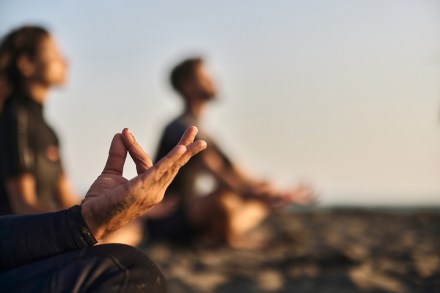
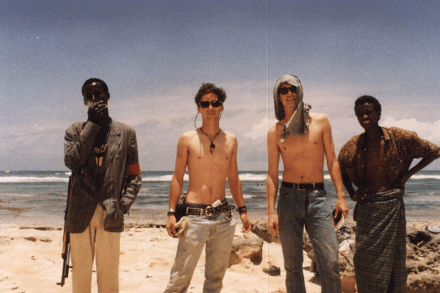
Malindi, Kenya In 1967, Tanzania’s socialist rulers seized all my parents’ property – their ranchland, their home and their cattle – and overnight my father saw the fruits of all his labour taken from him. He had no time to dwell on his misfortune, since he had a wife and four children to support, so at the age of 60 he picked himself up and vanished off to work in Somalia. My father’s last words were ‘yoga breathing’ and he died smiling We went to live at a beach hut in Malindi, on the Kenya coast, which became our new home. Dad’s job involved long spells out in the wilderness with camels and cattle, but occasionally he had to visit Mogadishu and here he rented a room in a derelict Shirazi mansion overlooking the harbour.

Retracing the steps of slaves in Benin

From our UK edition

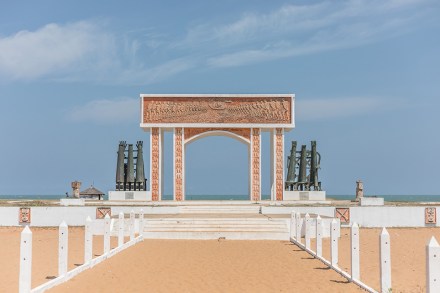
Ouidah, Benin On a free afternoon in Benin, I decide to walk the slave route in Ouidah, the port from which perhaps a million Africans were transported on the Middle Passage to the Americas. Near the old slave market or Place Chacha, named in memory of the slaver Francisco Félix de Souza, about whom Bruce Chatwin wrote a book, I encounter a group of black Americans following the same path. Now in 1776 – even before the abolitionist Wilberforce – the MP for Hull, David Hartley, was the first to introduce to parliament a debate ‘that the slave trade is contrary to the laws of God and the rights of men’ – but I have no proof that he was my ancestor.

The politics of glasses

From our UK edition

Africa Orientale Italiana ‘Where did you get those glasses?’ a stylish Italian gentleman asked me, gesturing at the acetate L.G.R. frames I wear for my myopia. I said Nairobi. ‘Good,’ he said, ‘I make them.’ Luca Gnecchi Ruscone and I then had a conversation that brought back fond memories of adventures across the Horn of Africa, all focused through a history of spectacle lenses. Astigmatism and short sightedness has been with me since I was 13 in England, when I was forced to start wearing those heavy, black-rimmed NHS 524 specs. The singer Morrissey later made them seem cool, but I remember always taking them off to stumble blindly around at school dances so as not to frighten the girls.

What the Delameres did for Kenya

From our UK edition

Kenya’s Rift Valley The story of Kenya’s Europeans such as the 5th Baron Delamere, who died recently, is one of hard work. In late 1897 his grandfather, the 3rd Baron, rode his horse up the Rift Valley’s eastern escarpment into the highlands. For a year he had been trekking through Somalia’s burning deserts and now he saw cool waters, green grass and fresh winds. ‘Here was a promised land, the realisation of a Rider Haggard dream of a rich and fertile country hidden beyond impenetrable deserts and mountains… a modern Eldorado, waiting only for recognition,’ wrote his biographer Elspeth Huxley. Tom, a friend of mine, spent years languishing in Kamiti Maximum Security Prison The 3rd Baron rose at 4 a.m.

Life lessons from a 2,000-year-old plant

From our UK edition

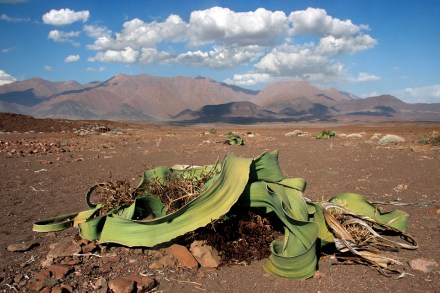
Iona, Angola East of the gulps of cormorants along the Skeleton Coast by the Ilha da Baia dos Tigres, Atlantic mists are rolling in across the Angolan desert. A red, alien sun dips towards the horizon and I’m crouching down on the sand, with my face close to the oldest living thing on our planet. If the oldest living thing in the world dies, that’s not a cheery message for the rest of the planet Some say the Welwitschia mirabilis plant, which can grow for 2,000 years, looks like an octopus, with its green leaves spreading like tentacles in a circle. In Afrikaans it’s apparently known as the ‘tweeblaarkanniedood’ – two leaves that will not die.

My hopes for Africa

From our UK edition

Lake Malawi As we speed southwards along the potholed road near Lake Malawi’s shores, I tell my colleague Helen that overpopulation in Africa is just a myth. On either side of the road is an unbroken procession of women carrying firewood on their heads, of barefoot children, of poor men on bicycles, avenues of huts, suicidal goats, blighted crops and dusty lands rising towards distant, once--forested hills. Malawi had four million people at independence from Britain in 1964 and today it’s five times that number. It may look like a land that has eaten itself – but it’s going to be all right, I say.

The joy of getting lost in the Congo

From our UK edition

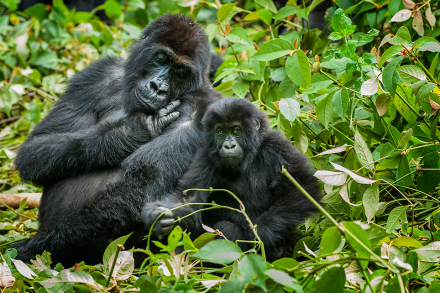
Republic of Congo I’m sending this to you from the rainforest in Congo, surrounded by vast trees and jungle noises in one of the loveliest, remotest places I’ve ever seen. Yesterday, flying at 150 feet above the canopy, I glimpsed in a clearing a family of relaxed gorillas gazing up at me, a visitor from another world. When I set out as a young reporter in Africa 36 years ago, I drafted my stories on a typewriter. I had to travel to a city to book a reverse-charge call that took hours to come through, then dictate my words to the paper’s copy desk, or type it out on a post office telex machine.

Nairobi’s streets are fizzing with violence – and I’m glad to be home

From our UK edition

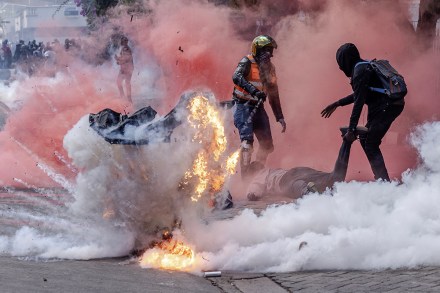
Nairobi, Kenya Parliament and City Hall were burning under great columns of smoke and clouds of tear gas hung over Nairobi’s crowded streets fizzing with violence, flying rocks and gunshots. Speeding along the expressway looking down on these running battles, I thought, as I always do, it’s so good to be home in Kenya. Judging from comments under articles about Africa in The Spectator, I know that readers don’t have much hope for this continent. In recent days my country has been in the news again, this time because dozens have been killed or abducted in riots against taxes and misrule by our government. Early signs of economic crisis could be seen in the shortening of the presidential motorcade to 50 vehicles It all looks like a familiar African story.

My father vs the killer lion

From our UK edition

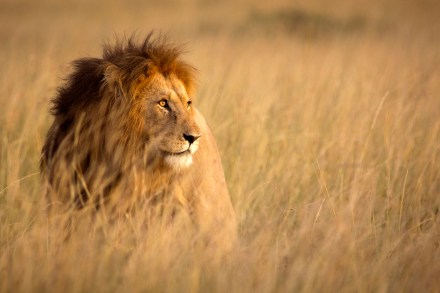
Laikipia, Kenya This month, in broad daylight on our Kenyan farm, a lioness mauled one of my bull calves. Before she could make a kill, a quick-witted herder intervened and drove the beast off. My son Rider loaded the injured calf into the pickup and brought it home, where he gently cleaned the tooth and claw wounds, then injected the poor creature with antibiotics and a painkiller. Big cat injuries go bad fast, but we all felt cheered that the calf, to my mind a future champion Boran bull, had survived and might pull through. The next morning the calf got to his feet and suckled his mother. What a sight that was. The morning after that, the mother was out grazing with her calf when she inadvertently bashed into a tree in which hung a beehive.

My battle with the dreaded ‘black cotton’

From our UK edition

Laikipia, Kenya By the time I set off from the farm before dawn we’d had 22in of rain in the past month. At the bottom of the valley I saw in the headlights that our lugga, or seasonal watercourse, had become a roaring torrent of brown water after yet another downpour overnight. If I tried to cross the Landcruiser would be swept away in the flood. This rainy season the land has become a sea of mud, with a thousand streams of water splashing down from the plains, our days and nights serenaded by bullfrogs. Normally I would stay put, give up on any travel and wait it out. There have been times when heavy rains have made a wonderful sanctuary of the farm, surrounded by seas of mud and oomska, isolating us from the world for days or weeks at a time.

Am I having a heart attack? 

From our UK edition

Nairobi Some of our medical practitioners in Kenya advertise their services on street corners. ‘Bad omens, lost lovers, broken marriage, BIG PENIS,’ say hand-painted notices nailed to telegraph poles. ‘Love potions, LUCKY RING, Do-As-I-Say Spells, business boosting magic, land issues, lost items, herbs from the underseas.’ I admit to needing help on many of these things, but on this day, my GP only wanted me to get an electrocardiogram. Feeling on top of the world, I skipped into a gleaming white clinic in Nairobi, paid the fee, lay down, got rigged up with electrodes and had a pleasant chat with the nurse.

The family water stories that have become legends

From our UK edition

Laikipia, Kenya When I met him as a boy, Terence Adamson was an elderly fellow whose face had been half torn away by one of his brother George’s famous lions. His disfigured features made him hard to look at, but Terence taught me how to dowse for water. He’d pick up any old stick and divine with that, or he used a pendulum or two metal rods held out in front of him as if gripping an imaginary steering wheel. In time I reckoned I could find water on my own with bent bits of coathanger wire, though I was hopeless at discovering much more than its presence. I used to watch Terence staggering around with his twigs shaking violently as he determined the salinity, flow and yield of water beneath the African soil. I think he occasionally did find fresh, plentiful water.

Viazi the dog had a lucky escape from a baboon

From our UK edition

Laikipia Viazi is a Samburu mongrel bitch with a curly tail. She is one of the most delightful, wonderful creatures I’ve known in my life. Her energy is boundless, she is always cheery and she’s been my great friend. When our collie Sasi had her litter of puppies in a heavy thunderstorm on the farm before the pandemic, we assumed Jock the labrador was the father. It later became evident that Sasi had been jumped by a roving Samburu cattle dog. We found homes for all of the puppies except for this little girl, who was as brown and as round as a baked potato – so we named her Viazi, which in Swahili means ‘potatoes’. I suppose our son Rider loved Jock the most, Claire and our daughter Eve loved Sasi, and I was left with Viazi to love.

How Britain sobered up

From our UK edition

36 min listen

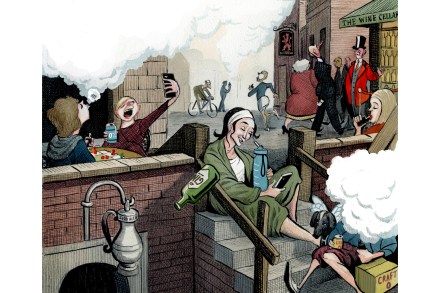
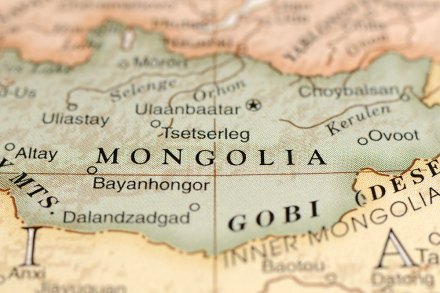
This week:  The Spectator’s cover story looks at how Britain is sobering up, forgoing alcohol in favour of alcohol free alternatives. In his piece, Henry Jeffreys – author of Empire of Booze – attacks the vice of sobriety and argues that the abstinence of young Britons will have a detrimental impact on the drinks industry and British culture. He joins the podcast alongside Camilla Tominey, associate editor of the Telegraph and a teetotaler. (01:27) Also this week: could Mongolia be the next geopolitical flashpoint?

Mongolia’s increasing dependency on the West

From our UK edition

Ulaanbaatar The collapse in Mongolia’s exports of cashmere legwarmers to Russia serves as a bellwether of East-West superpower rivalry. For decades, Mongolia enjoyed a lucrative trade selling cashmere clothes to Russian customers, knitted underwear and leggings being the fastest-selling items. At the outset of the Ukraine invasion, cashmere sales went through the roof as mothers across Russia bought their sons underwear to keep them cosy in their tanks and trenches. Even as the war’s first winter set in, however, sales plummeted, as sanctions started to bite and fewer mamushkas could afford natural-fibre undies.

The lure of Kenya’s empty shores

From our UK edition

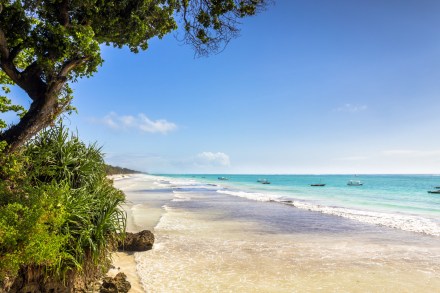
Malindi, Kenya coast As I walked along the empty shore on our stretch of Kenya’s north coast, I noticed a big fish, a giant trevally, swimming in the gentle waves parallel to me. When I came to the coral rag cliffs at the end of the beach and turned around, the fish also turned around and swam alongside me, keeping abreast with my stride. The tropical noon sun burned my bare back and I began to wonder if this creature wanted to tell me something, or that perhaps he was awaiting my confession for all my wrongdoings in 2023. I waded into the limpid water towards him and he swam away into deeper waters. At that moment I realised that the trevally was probably the ghost of my mother or my father, both of whom we scattered as ashes in these waves.

How Hannes took on a buffalo – and nearly paid the price

From our UK edition

Kenya Hannes became a professional hunter because, as he says in his fine book Strange Tales from the African Bush, he missed ‘the smell of cordite… the clatter of the helicopters and the memory of the blood brotherhood that few, other than soldiers under fire, are lucky enough to know’. He’s a 14th generation white African and a veteran of the famous Rhodesian Light Infantry that fought valiantly in that country’s civil war. He still loves Africa and lives in the Western Cape. When he visited our beach house on the Kenya coast, I managed to persuade him to tell me a few stories, fuelled with bottles of Tusker – a much-loved local lager which is named after the elephant that killed the original brewer.

Life was simple when we had just a tent in the bush

From our UK edition

Laikipia, Kenya Twenty years ago, we pitched a tent in the wilderness which became the farm where we live now. We were starting from scratch. At twilight we saw a low, silver mist descend into the trees, making halos around the distant giraffe and elephant, and settling into the grass. The constellations came out, the moon in its phases, with meteorite showers. There were no electric lights, nor any sounds outside camp apart from wild creatures. In our early days, drought made the land bare and silent. Dust devils coiled across the plains. One night, we woke to hear an army beating spears against shields. The breeze brought the first scent of rain, which lifts your soul. The smell of wet dust, blood of the gods splashing onto dry rocks. Hope! Delight!