A. E. Stallings

The bloody prequel: a triumphant new translation of the Iliad

From our UK edition

There is an ancient comment (on the work of a grammarian with the terrific moniker Dionysius Thrax) that the performers of the Iliad and the Odyssey changed costume according to which poem they were reciting: a dark blue crown for the sea of the Odyssey, red for the blood of the Iliad. Emily Wilson, whose brisk and clear-eyed translation of the Odyssey became a bestseller, has now switched her sea-blue crown for her blood-red one. Even the covers of the two books – the Odyssey had a blue-dominated cover depicting the Minoan fresco of ‘Ladies in Blue’; the Iliad is red and gold, with an image of Thetis giving Achilles his new helmet – reflect the shift.

A. E. Stallings: This Afterlife

From our UK edition

38 min listen

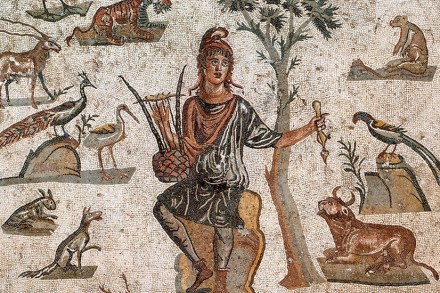
In this week's Book Club podcast, my guest is the distinguished poet A. E. Stallings, whose new selected poems This Afterlife marks her first UK publication in book form. She tells me why the idea that formal verse is stuffy is wrong, how she thinks Greek myth is a living tradition, and why women poets have to be both Orpheus and Eurydice.

Singing to the gods: a millennium’s span of ancient Greek hymns, gloriously portrayed

From our UK edition

We are experiencing a boom of popular books on Greek mythology: Stephen Fry’s Mythos; Natalie Haynes’s Pandora’s Jar; Liv Albert’s Greek Mythology: The Gods, Goddesses, and Heroes Handbook, to name a few. Admittedly, Greek mythology has it all: love, sex, murder, incest, cannibalism, magical transformations, pirates, monsters, miracles. Surely some readers, though, will want to go even deeper, to tap into the ancient sources, incorrigibly plural and various. These sources include Homer’s Iliad and Odyssey and Hesiod’s genesis and who-begat-whom of the gods, the Theogony. (Plus a chunk of ‘Greek’ mythology which we actually get via the Roman poet Ovid.

A long way home

From our UK edition

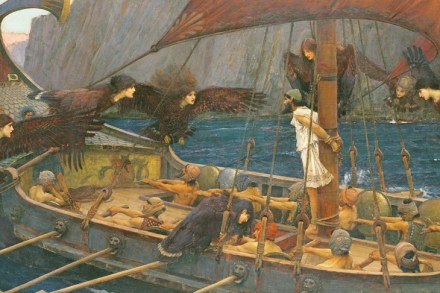
Until recently, it seemed we were living in an age of Iliads. Since 2007, the ancient Homeric epic has been translated into English at least seven times (including by Caroline Alexander, the first woman to do so). Yet the Iliad’s sequel, the Odyssey — about war’s aftermath, the home front and the difficult return to civilian life — is just as topical. And with its greater emphasis on female characters and different walks of life, it should appeal to a broader audience. Until now, it has not been translated into English by a woman. Does this make a difference? Emily Wilson, in the introduction to her sleek translation, argues that it does.

Bird thou never wert

From our UK edition

The most appealing phoenix in literature is surely the eponymous bird from E. Nesbit’s 1904 classic, The Phoenix and the Carpet. A mysterious egg arrives in the children’s nursery on Guy Fawkes night (J.K. Rowling’s phoenix, ‘Fawkes’, is the clear literary descendant), and the five children, whose adventures unfold in an atmosphere of benign neglect, manage to set fire to the nursery — involving paraffin and fire-crackers — and trigger the rejuvenation of the mythical bird.

The greatest anti-war poem of all

From our UK edition

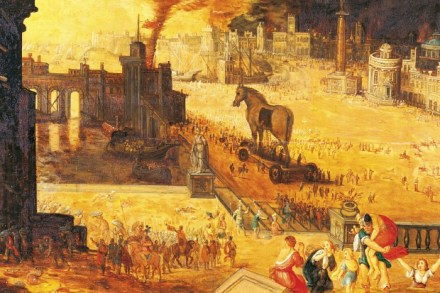
The Iliad begins with a grudge and ends with a funeral. In between are passages, if not necessarily of boredom, to alter the war adage, of lists, pathos, sex, humour, fairytale strangeness (golden fembots, a talking horse) and lyric images, punctuated by moments of pure terror (eyes popped out of heads, a spear throbbing in a beating heart, a man cradling his intestines in his hands). With several new translations in the past year alone, as well as a film in 2004, and recent novels (David Malouf’s Ransom), dramatisations, and book-length poems (War Music by Christopher Logue and Memorial by Alice Oswald), we are clearly, in our era of seemingly perpetual war, in an age of Iliads.

Parmenion

From our UK edition

Athens The air-raid siren howls Over the quiet, the un-rioting city. It’s just a drill. But the unearthly vowels Ululate the air, a thrill While for a moment everybody stops What they were about to do On the broken street, or in the slow shops, Or looks up for an answer Into the contrailled palimpsest of blue. Always we forget. It’s once a year Just as lush September’s getting sober Ambushed by October. It strikes the heart like fear, as the vibrations build To an All Clear. The test is dubbed ‘Parmenion’ After the general second in command To Alexander, Implicated by his own son In a confession to a plot of treason. And Alexander had him killed, Old family friend, right-hand man, comrade in arms, Probably without reason. A pity.