Zimbabwe

Kate Chisholm on what makes the BBC World Service so special

From our UK edition

‘Don’t take it for granted,’ she warned. ‘It’s one of the few places where you can hear diverse voices, different points of view; where you can understand that the world is infinitely complex.’ Alana Valentine, an Australian writer, was talking about the BBC World Service with such passion it was inspiring. You might think she would say this, wouldn’t she. After all, Valentine was giving her acceptance speech having just won first prize in the World Service’s International Radio Playwriting Competition for her radio drama The Ravens. Yet what she said was striking because you could tell she really meant it. These were not just platitudes.
A secret from my African childhood has become a deeper mystery

From our UK edition

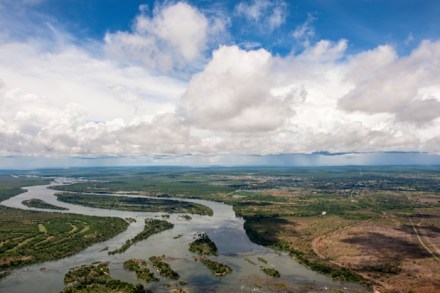
About 55 years ago, when I was about ten, my younger brother Roger and I discovered a slave pit in Africa. Actually it probably wasn’t a slave pit and we probably didn’t discover it, but ‘Arab’ ‘slave pits’ were what Southern Rhodesian schools offered as an explanation for the circular, room-sized, stone-lined pits sunk about five feet below ground but open to the sky. And if Roger’s and mine were not the first modern eyes to behold this antiquity, then we were able at least to persuade ourselves of the claim, as there was no path trodden into the small patch of dark, dense primary forest in whose midst we found the pit; and nobody else seemed to know about it. This felt like a discovery.

The day I awoke my inner predator

From our UK edition

Gweru on the central Highveld of Zimbabwe used to be called Gwelo when I was there as a boy but seemed otherwise largely unchanged when we passed through a couple of weeks ago. Sleepy, laid-back: a petrol station, a few stores and a scattering of offices and little townships of bungalows on the main tarred road between Harare and Bulawayo. Less in Zimbabwe has changed than people think. We were on our way, though, to a place that was certainly new to me: Antelope Park, a lush, green riverside encampment at the end of a long dusty road out of Gweru. At Antelope Park you can walk with lions. I will not enter upon a debate I know exists about the viability of the park’s overall project.

From the archives: Mugabe’s rise to power

From our UK edition

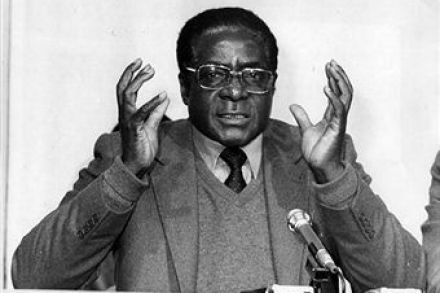
A strange sort of anniversary, but an anniversary nonetheless: it is 31 years, to the day, since Robert Mugabe took power in Zimbabwe, or Rhodesia as it was still called. In which case, here is The Spectator's leading article from the time. It is, for the large part, a good demonstration of the benefits conferred by hindsight. But its caginess about Mugabe is apparent in such observations as, "It is up to Mr Mugabe whether he leads his country into yet another black tyranny, corrupt and inefficient, or whether he builds on what has already been built." Mugabe, it seems, made his mind up on that one some time ago. Off the the Rhodesian hook, The Spectator, 8 March 1980 Mr Mugabe's victory in the Rhodesian elections is overwhelming.

The Feeble Mugabe Gotcha

From our UK edition

Step forward the FT's Jim Pickard: Some sceptics have often asked why Tony Blair was happy to help rid the world of some dictators and not others. The example most often cited is that of Robert Mugabe, who could have been deposed with even less effort than Saddam Hussein. Blair tries to justify the contradiction in his book, far from convincingly. “You need to ask if such action is feasible and practical. People often used to say to me: If you got rid of the gangsters in Sierra Leone, Milosevic, the Taliban and Saddam, why can’t you get rid of Mugabe?