Young Adult fiction

The magnetism of His Dark Materials

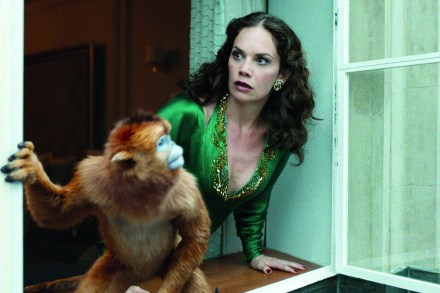
When I was in middle school back in the 1990s, there were two sets of books every boy seemed to have in his backpack. One was the Redwall series, Brian Jacques’s swashbuckling tales of heroic mice and tyrannical wildcats. The other was the His Dark Materials trilogy by Philip Pullman. It’s no coincidence, I think, that both Jacques and Pullman are British. What made these books intriguing, beyond their carefully wound plots, was that they were marketed to children yet addressed subject matter that was very much adult. In Redwall, it was the brutal violence. His Dark Materials had some of that too (in the first chapter of the first book, we witness an attempted killing; in the first chapter of the second book, we witness an accidental fatality).

his dark materials

Forever young

Long before publishing dreamt up the category of Young Adult fiction to try to persuade adult children and childish adults to keep reading, there were novels that described what it felt like to be young. Catcher in the Rye was one such, as were The Bell Jar and Bonjour Tristesse; these books coincided with the invention of the teenager circa 1950 and have enjoyed lasting critical and commercial success. Though British writers reign supreme in the field of children’s literature, American authors have always written outstandingly about teenagers. But the changeover from fiction describing the condition of being young to the YA genre, with its accounts of first love, high-school hell and so on, has not necessarily served every reader well.

friends

Sarah Dessen and the thin-skinned world of Young Adult fiction

‘The cultural critics,’ the late Harold Bloom wrote in 2000:‘...will, soon enough, introduce Harry Potter into their college curriculum, and The New York Times will go on celebrating another confirmation of the dumbing-down it leads and exemplifies.’How right he was. Not only are J.K. Rowling’s books widely studied by college students but ‘Young Adult’ literature is exhaustively and exhaustingly consumed by, well — adults. One 2012 study found that more than half the readers of ‘YA’ spec fiction are older than 18. As with the dominance of superhero movies at the box office, this represents a craving for the naive grandiosity of youth.Well, if it was a private indulgence it would be churlish to shake your fists about it.

young adult fiction