Working class

The Democrats need a new rulebook

Donald Trump’s triumphal return to the White House is the end of more than just the Joe Biden era. Since Bill Clinton’s presidency, Democrats had adhered to a formula they thought unbeatable: They would be socially progressive, economically centrist and staunchly internationalist. Republicans, they thought, had staked their future on demographics that were in decline — whites and the most conservative Christians. Democrats were the party of twenty-first-century America, an ethnically diverse and more secular, or at least religiously liberal, land. What went wrong? When Trump won in 2016, Democrats dismissed it as a fluke.

Democrats

Where to find self-esteem

It’s a month before publication day for my second book, Second Class: How the Elites Betrayed America’s Working Men and Women. I start an Instagram account in the hopes of drumming up interest in the book on a new platform. I post a few clips of TV hits from recent weeks and follow a few friends. Instagram immediately recommends an article about how to grow your Instagram following, and I click on it and learn that consistency is key on Instagram. Roger that. Later that day, I find myself arranging my overachiever elder millennial self into an artfully nonchalant pose while stirring a lamb curry I’m whipping up for my regular Shabbat dinner salon. “There once was a Batya,” my husband mutters on his way to the fridge. “Now there’s a content creator.

class

Poverty is a major issue in the midterms

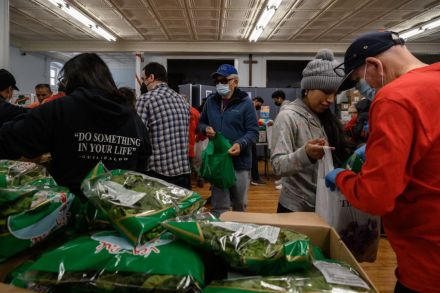
My friend here in rural Pennsylvania is the director of our local anti-hunger program. It’s orchestrated through the YMCA and has been ongoing for years, mostly providing supplemental food for rural children. But the program started running at full throttle when Covid hit in March 2020, and now, more than two years later, my friend tells me they’re doing about 25 food distributions a month — more than they were doing at the height of Covid. What’s more, he’s seeing twice the number of people lining up for free food, and 85 percent of those people have jobs. “When people think of hunger, they think of poverty,” my friend says.