Winston churchill

Remembering the few

From our UK edition

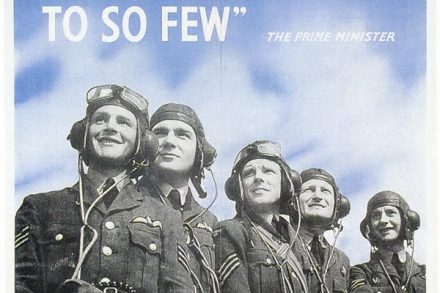
Today is the 70th anniversary of Winston Churchill's 'Few' speech. Here's how the Spectator reviewed it at the time: Mr Churchill looks ahead, The Spectator, 23 August 1940 Mr Churchill surpassed even his own masterpieces of lucid and spirited exposition in his speech on Tuesday, in which he surveyed the first year of the war and the last exciting days of victory in the air and looked fearlessly into the future. During the previous fortnight, and especially during the previous week, the nation had become aware of the fact that the intensified air attack was part of that onslaught on Britain whose approach was trumpeted in Germany.

Becoming a Victorian

From our UK edition

Winston Churchill was a racist. He said things like ‘I hate people with slit eyes and pig-tails. I don’t like the look of them or the smell of them’. Winston Churchill was a racist. He said things like ‘I hate people with slit eyes and pig-tails. I don’t like the look of them or the smell of them’. In 1931 he described Gandhi as a seditious Middle Temple lawyer, a half-naked fakir and a ‘malignant subversive fanatic’ and in 1954 he told the white Kenyan settler Michael Blundell that he ‘did not really think that black people were as capable or as efficient as white people’, although he said that ‘if I meet a black man and he’s a civilised educated fellow I have no feelings about him at all’.

Concentrating on sideshows

From our UK edition

It is becoming difficult to say anything new about Churchill as a war leader. The basic facts about the conduct of allied strategy have been known for many years. Diaries and memoirs, and the occasional loose anecdote, still dribble into the public domain, adding spice but nothing fundamental to our knowledge. What remains is analysis and opinion, and even that is a crowded field. Max Hastings’ Churchill as Warlord, 1940-45 covers, within a narrower chronological frame, the same ground as Carlo d’Este’s recent book, Warlord: Churchill at War, 1874-1945. Hastings’ views are a good deal more balanced than d’Este’s, as well as being better researched and argued. But the essential point made by both authors is the same.