Whales

A farewell to summer

On the roads in Amagansett, in the shops, at the train station, the summer crowds have vanished, and those of us who spend time here “off-season” sigh with relief. Until we drive down the most exclusive street in town, Further Lane. Then we – some of us at least – seethe over the loss of something we loved. Last winter, a person or persons operating under the moniker Further Lane Barn LLC, bought two contiguous lots totaling seven acres, stretching from Further Lane to the magnificent ocean dunes that front the wide, sandy beach that is the chief attraction of the gorgeous east end of Long Island. The price for land, house, and a couple of outbuildings? A cool $70 million. So far, so 21st century.

summer

William Blake still weaves his mystic spell

From our UK edition

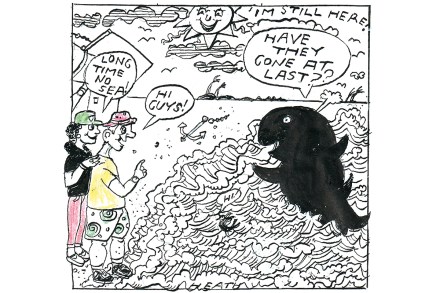
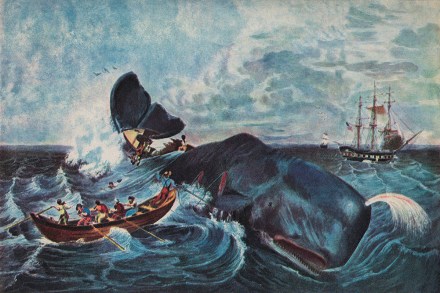
Everyone has their own William Blake and each age finds something new in the ocean of his work: revolutionary Blake, Christian Blake, humanist Blake, Jungian Blake, Freudian Blake, free-love Blake, hippy Blake, occult Blake, eco-Blake. The only time that missed out was his own – then he was mad, delusional and ignored Blake. Philip Hoare brings the fizz of his own sensibility to bear on the work of a man whose progeny of artistic spin-offs multiply with each passing generation. The result is a book that is neither Blake biography nor critical analysis nor legacy-tracing nor personal odyssey but a capacious mixing of them all. As the author of Leviathan or, The Whale, and Albert and the Whale and the film Hunting for Moby-Dick, Hoare begins by giving us whale Blake.

The song of the bearded seal and other marvels

From our UK edition

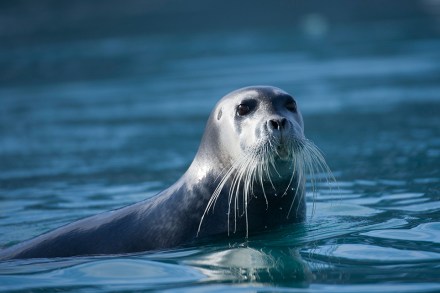
In his satirical Devil’s Dictionary, Ambrose Bierce defined the ocean as ‘a body of water occupying about two thirds of a world made for man – who has no gills’. Bierce may have been right to poke fun at human arrogance, but he underestimated the importance of the seas. Averaging almost 3,700 metres (12,000ft) deep, the ocean constitutes around nine tenths of the habitable space on our planet. It plays a commensurate role in the Earth system, not least as an engine – a ‘blue machine’ in the phrase that also titles an excellent book by the physicist and science presenter Helen Czerski – that moves heat around the planet.

Notes on the natural world: an exquisite collection from Kathleen Jamie

From our UK edition

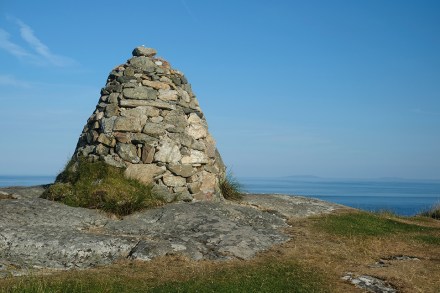
‘Let me leave Cairn here as a trail marker, a moment noted, a view from the strange here-and-now,’ Kathleen Jamie states towards the end of the prologue to her exquisite new collection of writings. In more than 40 micro-essays and poems, her keen-eyed view encompasses both an uninhabited island far out at sea and a piece of flint in her hand; it accommodates surfacing memories and also peers into the uncertain future awaiting the next generation. A balanced tower of ultra-short pieces is a new form for Jamie, the Scottish makar (or national poet), who also pens longer pieces of nature writing, collected into the genre-expanding works: Findings, Sightlines and Surfacing.

Four months adrift in the Pacific: a couple’s extraordinary feat of endurance

From our UK edition

It is every writer’s dream to glimpse, peeping out from behind a news story or feature, the contours of a book. Brian Masters was eating his breakfast on 12 February 1983 when he read in the morning papers reports of the arrest of a mildly spoken Jobcentre employee accused of strangling a number of men with whose flesh he had blocked the drains in his flat in Muswell Hill. Masters wrote to Dennis Nilsen. Nilsen wrote back: ‘Dear Mr Masters, I pass the burden of my life on to your shoulders.’ After Nilsen had filled 50 prison notebooks, Masters embarked on Killing for Company, surely the grisliest yet most poignant biography of a serial killer ever written.

Sounds and sweet airs that give delight

From our UK edition

Caspar Henderson writes beguiling books about the natural world, full of eyecatching detail and plangent commentary. His Book of Barely Imagined Beings: A 21st-century Bestiary came out in 2012. A Book of Noises is a worthy companion – a pursuit of auditory wonders, a paean to the act of listening and a salute to silence. Item: the music of the spheres. (The planets’ orbits, proving unideal and elliptical, suggested to the musically minded astronomer Johannes Kepler an appropriately sad, minor-keyed leitmotif for the Earth, where, he felt, misery and famine held sway’.) Item: the world’s loudest sound.

Black History Month and the usable past

This is Black History Month when we are invited to think through a certain spectrum of the people who came before us. As it happens, I am very much interested in black history. I wrote a book about it, 1620: A Critical Response to the 1619 Project, and several books about diversity, and I have been working for several years on a nearly completed documentary about the early days of black theater and film. But, lacking any black ancestors, I must make do with my own sketchy line of progenitors. When I was growing up in the Fifties and Sixties, my father attempted to find his great-grandfather — GGF in anthropological parlance. GGF had an air of mystery since all anyone knew about him was his last name and GGM’s inveterate reply when asked about him: “He was lost at sea.

black history month

A beginner’s guide to the narwhal

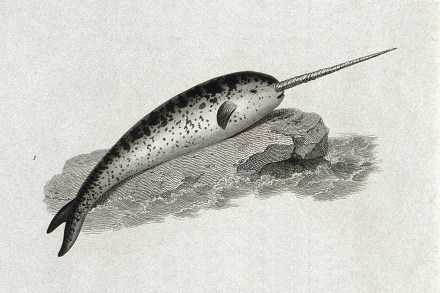
You may be thinking, at this particular moment, about narwhals. It’s unlikely, but it’s more probable than it would have been a week ago, given the improbable insertion of the toothed whale species known as Monodon monoceros into the current news cycle. In a horrific incident that left two dead, a knife-wielding terrorist on London Bridge was stopped from further destruction in part by a man brandishing a five-foot-long narwhal tusk. (They’re not cheap weapons, on that note.)This opened up a litany of confessions on Twitter in which plenty of otherwise sane adults admitted they didn’t think the narwhal actually existed.

narwhal

A thought experiment with John McAfee

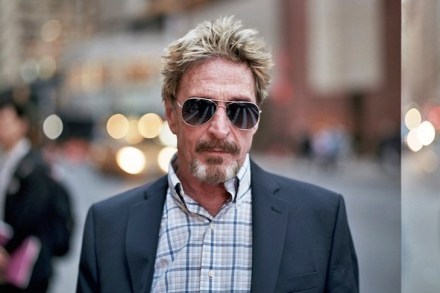
Knowledge, which is known information, has become the number one commodity in the world. It doesn’t matter how large and important or how small and insignificant a piece of information may be: there is still value in it. Knowledge of a person’s shoe style preference, for example, is valuable to shoe manufacturers or sales organizations which may place targeted ads on social media. Knowledge is king. Given the massive effort placed in collecting, analyzing, cross referencing and disseminating this near infinite body of valuable knowledge, it is odd that no one has yet attempted to exploit the far larger collection of knowledge’s mirror image – the world of ignorance.

john mcafee