Westminster

The new faces of Tory euroscepticism

From our UK edition

Britain is avowedly eurosceptic. But euroscepticism is not homogeneous; there are different tones of disgust. Many decry further political integration; others oppose Europe’s penchant for protectionism; some are wary of the EU’s apparent collective socialism; a few are essentially pro-European but believe too much sovereignty has been ceded; others hope to redefine Britain’s cultural and political relationship with the Continent, as a bridge between the Old World and the Anglosphere; most see Brussels as an affront to elective democracy; and a handful just want out and vote UKIP. So it has always been – perhaps one reason why William Hague’s ‘ticking time-bomb’ has not yet exploded.
IPSA’s olive branch to angry MPs

From our UK edition

The foreword to IPSA's latest consultation document is certainly more conciliatory than combative. "The last eight months have been demanding, both for MPs and their staff, and for IPSA," it starts – in subtle reference to the mutual frustrations that have overtaken the expenses operation to date – before asking whether the current system can be made more "fair and workable". And that tone carries across into the main body of the text. Although IPSA insist that nothing has been decided yet, they do at least moot the possibility of raising certain allowances back up again. As James Kirkup writes on his Telegraph blog, this document is, in some respects, IPSA's last chance.

Khan to Miliband: What life experience do you have?

From our UK edition

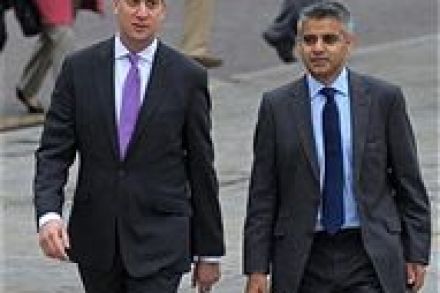
Ok, not quite. But this snippet from GQ's interview with Shadow Justice Secretary Sadiq Khan is almost a description of Ed Miliband's rise to the Labour leadership: "One of my criticisms of a lot of politicians of all parties is that they're career politicians. Since they were 11 years old they dreamed of being an MP, being the Prime Minister, and so they'll do A-Level Politics, Politics degree, get a job with an MP, work for a think tank, become an MP, Prime Minister. And my criticism is what life experiences do you have? The reason most MPs aren't popular is that people can see through that." He makes up for it later, though, saying of Miliband that "I believe in him, I really do, he's a mate.

In Praise of… Bob Ainsworth

From our UK edition

Hats-off to the former Home Office Minister and Secretary of State for Defence who will use a Westminster Hall debate today to say: “I have just been reading the Coalition Government’s new Drugs Strategy. It is described by the Home Secretary as fundamentally different to what has gone before; it is not. To the extent that it is different, it is potentially harmful because it retreats from the principle of harm reduction, which has been one of the main reasons for the reduction in acquisitive crime in recent years. However, prohibition has failed to protect us. Leaving the drugs market in the hands of criminals causes huge and unnecessary harms to individuals, communities and entire countries, with the poor the hardest hit.

Talking point: the West Lothian question

From our UK edition

Political Betting carries this table on the breakdown of the tuition fees vote. English Lib Dems were noticeably more loyal than their Celtic counter-parts (only 16 of 43 voted against the bill), which reflects the left-wing political focus in those regions and perhaps the divide in the Liberal Democrat party itself. But, clearly, the West Lothian question is at issue here. Personally, I’m swayed by the argument that the new fees arrangement will affect applications to Scottish universities and therefore it is the business of Scottish MPs. That higher education was devolved in the first place is another, more interesting debating point. The comments section is yours...

The Power of Partisanship

From our UK edition

From Ross Douthat's latest column: In 2006, Gallup asked the public whether the government posed an “immediate threat” to Americans. Only 21 percent of Republicans agreed, versus 57 percent of Democrats. In 2010, they asked again. This time, 21 percent of Democrats said yes, compared with 66 percent of Republicans. In other words, millions of liberals can live with indefinite detention for accused terrorists and intimate body scans for everyone else, so long as a Democrat is overseeing them. And millions of conservatives find wartime security measures vastly more frightening when they’re pushed by Janet “Big Sis” Napolitano (as the Drudge Report calls her) rather than a Republican like Tom Ridge.

Phil Woolas, four investigations and a funeral wreath

From our UK edition

It may take another week to discover if Phil Woolas has the right to challenge the election court ruling that destroyed his career. To the delight of his cadre of supporters in the House, judges have said there are "difficult questions to resolve" - not about the evidence of Woolas' campaign making "false statements", but about the specific application of the Representation of the People Act (RPA). Before the last die is cast, here are two quick contextual points. First, it is not just Harriet Harman who is keen to shut down this episode - many folks on all sides of the House of Commons would like to pretend skulduggery of this kind is exceptional. It is not - Phil Woolas' behaviour is far from untypical of northern politics.

Au Revoir, Tom Harris

From our UK edition

Blogging is a risky business for any MP*. There are some whose blogs would persuade one to cast a vote for almost any other candidate, regardless of party. But if I lived in Glasgow South I'd be quite happy to have Tom Harris as my MP. Hell, I might even vote for him despite disagreeing with him on many issues. Admittedly, since it's a safe seat this is not such a sacrifice but I think electing good people to parliament is as important as the colour of the rosette they wear. So it's disappointing, even a shame, that he's decided to stop writing his blog. (At least for now.) He must be one of the few people to find blogging less fun in opposition than in power.

The Poetry of Opposition

From our UK edition

Hosannas are due to Danny Finkelstein and Iain Martin for finding and publicising this poem written by Chris Bryant, Labour MP for the Rhondda and a shadow justice minister. It's about The Cuts and why They Are A Bad Thing. Make of it what you will. Supine by Chris Bryant One arm stretched out behind my head, dipped back, I push the other through the water’s swirl And past my thigh before the next attack, Propelling me, with languorous aqueous grace I could not possibly repeat at pace. The rhythm of the stroke, as lengths unfurl, Calms down my daily work obsessions, Inspires free-style inquisitive reflections, About what happens when we all cut back. Above me, on the polycarb’nate roof A single leaf is twisting in the gale.

Stop dreaming of Leo McGarry

From our UK edition

The West Wing has an amazing hold over Fleet Street. The TV series has not only taught a generation of British reporters about US politics but even influenced the way that they see the workings of Westminster. Every time centre-right writers think David Cameron is seen as having made a mistake - mistreated his back-benchers, hired a personal photographer or made a foreign policy gaffe - they trot out the same refrain: No 10 needs a powerful Leo McGarry-type chief of staff who can bring the various parts of the operation together from Steve Hilton's work to Andy Coulson' operation. An enforcer, a puller-togetherer. I have three arguments against a British Leo McGarry.

Gordon Brown speaks out about not speaking out

From our UK edition

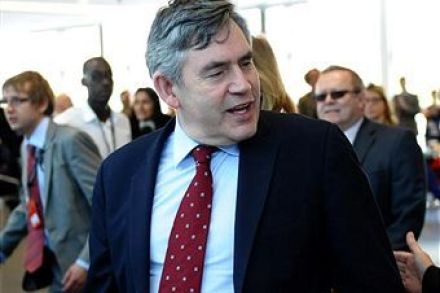
Courtesy of Andrew Sparrow's ever-superb live blog of the political day, from Brown's appearance before the Commons development committee: "Let's not get into this in any detail because it's a diversion from what we're doing, and I think it's unfortunate that this is the sort of question that is the first question to this committee from a member. Let's put it this way, most former prime ministers have rarely spoken in the house at all. I have decided obviously to concentrate on my constituency work and on some of the work that I've been doing internationally. But, at the same time, I have taken a very big interest in some of the questions that the government I led was involved in ...

Tory Policy Refresh Strategy Unveiled

From our UK edition

Courtesy of Ian Martin and Steve Hilton Stewart Pearson from The Thick of It. All too plausible: Monday Lock-in with the Weather Guys, our team of digital analysts plotting cultural climate change. Useful prep for the forthcoming Media Policy Refresh. Aiming to roll this out after Christmas, when everyone's more receptive to notions of shrinkage, frugality, Less Is More etc. Rethinking points already emerging. The Quango is dead. Long live The Hub. Out: "public consultation". In: "forward niche matrixing". Goodbye, tropegeist. Hello, Pixelated Society. Quick fruit lunch, then we're back on the synapse highway. More rethinking points: triangulations, forecasts, aftercasts, podcasts. Now we're mantra-sifting: Sympathise, Empathise, Synthesise, Synergise. Synergy?

MacShane suspended

From our UK edition

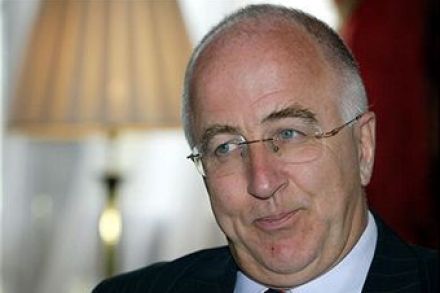
Denis MacShane, the lachrymose MP for Rotherham, has been suspended following the Privilege and Standards Committee’s decision to report him to the Metropolitan Police. MacShane also got into scalding water recently when he castigated a member of IPSA’s staff with what might be termed ‘most unparliamentary language’. MacShane is one of the old guard who had a flagrant disregard for the public purse. But, even so, he has a point when it comes to IPSA. A bad system is no better than one easily exploited. Ben Brogan explains in his Telegraph column: ‘No wonder then that they, along with the MPs who survived the May cull, are frustrated by the obstacles placed in their way by the Independent Parliamentary Standards Authority.

Straining for effect

From our UK edition

A saint of self-deprecation, Chris Mullin closed the first volume of his diaries A View from the Foothills ‘contemplating oblivion’ after his dismissal from ministerial office. A saint of self-deprecation, Chris Mullin closed the first volume of his diaries A View from the Foothills ‘contemplating oblivion’ after his dismissal from ministerial office. This was plainly not the case, as the 443 pages of his second volume, Decline & Fall, demonstrate. Whatever the fate of those he writes about with such sardonic charm, obscurity is unlikely to overtake the former Member for Sunderland South, though he will be better remembered for what he wrote than for what he did.

Boles’ immigration revolution

From our UK edition

Nick Boles’ Which Way’s Up? is gaining a quiet cult following in Westminster, and John Redwood has unearthed Boles’ radical approach to immigration. Boles dissents from the view that happiness in Sweden’s utopia rests on pay equality; he observes that it is a homogenous society that has controlled mass immigration. He writes: ‘We will not be able to sustain a social contract in which schooling and healthcare are provided to all citizens free of charge and are funded by taxation if we continue to allow, every year, hundreds of thousands of people from around the world to join the queues at A and E and send their children to British schools.

Nick Clegg’s 15% Opportunity

From our UK edition

Who would have thought, even a year ago, that the future of the Liberal Democrats would arouse such interest? Perhaps I was too harsh on Nick Clegg's speech to the party's conference; certainly Fraser was more impressed by it and the gang at Liberal Vision also seem pleased. Perhaps I was wrong to hope that Clegg would disavow the social democrats in his party in this speech. One should always be wary of criticising politicians simply because they decline to do what you would have them do. Equally, one should not assume that doing what one would want them to do is the path to either political or policy success. Clearly there needs to be a "nevertheless" here.

Boris for a second term

From our UK edition

Boris’s decision to announce today that he is to run again for Mayor of London is intriguing. Many in government circles expected Boris to wait until London’s settlement in the CSR had been finalised before announcing, his candidacy was the best card he had in the negotiation. So his declaration has sparked speculation that Boris and George Osborne have come to a deal. If Boris wins, and he starts as favourite, then what he does in his second term will be fascinating and the best guide to his future plans. If we see Boris becoming an increasingly national figure and championing causes dear to the right—free enterprise, low taxes and Euro-scepticism — it will suggest that he is at some danger of being decapitated by a Frisbee.

Has Rumour Ended William Hague’s Career?

From our UK edition

Is William Hague finished? That's the sub-text to this interesting, even intriguing, Ben Brogan post in which The Telegraph's man in Cameronland goes so far as to suggst the Prime Minister "should fear for his colleague's state of mind." That's not all: In a series of Commons conversations this morning I was struck by the number of Conservatives who believe Mr Hague’s political career is now over. Where he was previously talked of as an emergency replacement for George Osborne or even David Cameron in a bus scenario, he is now out of the running. No one expects him to serve beyond the Parliament, and many expect him to last no more than a year.

Blair pulls out of book launch

From our UK edition

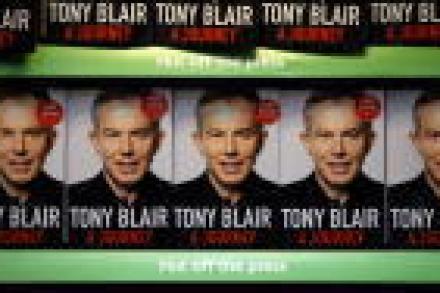
It is profoundly depressing that Tony Blair has had to pull out of his London book signing. Whatever you think of Blair, he is a man who led his party to three general elections victories and is the second longest serving Prime Minister of the post-war era. There is something very wrong if he feels he has to cancel an appearance at a book shop because of the threat of disruption from protesters whose intentions do not appear to be entirely peaceful. One other thing that should be noted is that the polling suggests that Blair is nowhere near as unpopular in this country as much of the coverage of his book suggests. A YouGov poll, timed to coincide with the book’s launch, found that a plurality, albeit narrow, of voters believe Blair was a good Prime Minister.

The Hague Affair

From our UK edition

This so-called story is fast becoming an ideal case study for any student of politcs and the British press. Neither party comes out of it looking especially good. I'm sure James is correct: the press wins (or loses, if that's how you view it) either way. If Hague ignores the innuendo then it's fodder for bloggers and diarists (and eventually columnists) and if he addresses the matter then that means that it's "officially" a story fit for public discussion. Heads gossip wins, tails Hague loses. If the rumours about Hague's relationship with his young and now-former SpAd were true then, yes indeed, you'd have a scandal that would cost the Foreign Secretary his job. But as best one can see there's no evidence that there's any truth to the rumours at all.