Walt Whitman

Gazing at the eclipse in Walt Whitman’s perfect silence

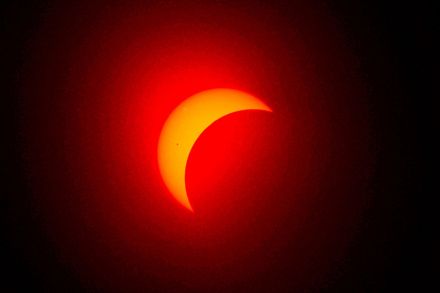
The day before the April 8 eclipse — our postage stamp of ground sat smack dab in the middle of totality — we abounded in sunshine and birdsong, with nary a cloud in the sky. The day after, too, was dominated by the yellow star moseying along the ecliptic, but on the big day — we won’t be similarly situated for another 120 years — ole Sol was obscured by thick gray clouds. (Which parted, as if on mischievous cue, two hours after the celestial spectacular.) This is why Western New Yorkers exhibit a cheerful “oh well” fatalism, and why we know that the Buffalo Bills kicker will always miss the game-ending field goal. The hungry and hotel-hunting eclipse trackers who were predicted to overrun our rural county, leaving a spoor of tourist dollars, never showed.
eclipse

How America influenced George Orwell

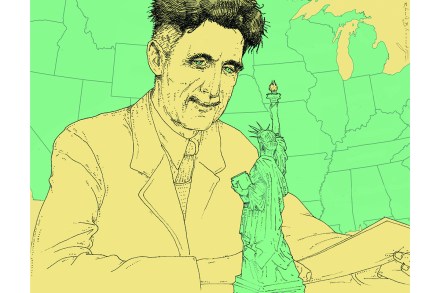
Some of the most tantalizing pieces of George Orwell’s journalism are the reviews written on the hoof, filed against deadlines, sent straight to the typewriter while World War Two raged above his head. One of them is a round-up of four reprinted dystopian novels supplied to the weekly magazine Time and Tide in July 1940, shortly after the fall of France. (Today, it’s rarely reissued and barely available outside the stout bindings of volume XII of Orwell: The Complete Works.) The four books are Jack London’s The Iron Heel (1908), H.G. Wells’s When the Sleeper Wakes (1910), Aldous Huxley’s Brave New World (1932) and Ernest Bramah’s The Secret of the League (1907).

orwell

The next so-called civil war

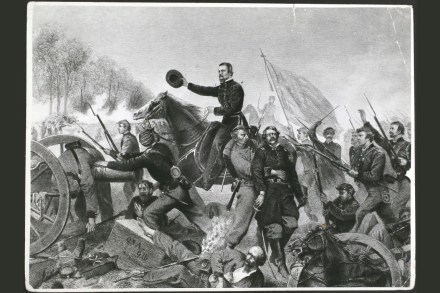
Batavia, New York On a brutally hot and wasp-swarming late summer mid-afternoon I walk our town’s old cemetery, as is my wont — hey, if I’m gonna live here for eternity I may as well get to know the neighbors. Walt Whitman swooned over one of this boneyard’s residents, and I have come to read the relevant passages to the boy who rests under the sod. His name was Stewart Glover, and he appears in Whitman’s diaristic Specimen Days to illustrate ‘the terrible and tender realities’ of war-death. Glover, Whitman tells us, grew up in Batavia with his father, John Glover, ‘an aged and feeble man’. (I dunno: his gravestone says Pop lived to the ripe age of 83, dying in 1873.

civil war

The Economist should be more like Walt Whitman

America is complicated. It’s hard to predict what it’ll do next, despite all the time and money spent observing it. Not without reason is Walt Whitman — with his long beard, loose morals and love of ambiguity — its national poet. In an election year, plumbing the country’s mood is especially crucial. But that doesn’t make it any easier. Once bitten in 2016, the liberal portion of America’s establishment is twice shy, and terrified about slipping into the same complacency over Biden’s chances as it did over Clinton’s. While not an American institution, the Economist fits neatly into the same footloose, cosmopolitan club as the more neoliberal-minded of Democrats.

economist

Getting Wilde in America

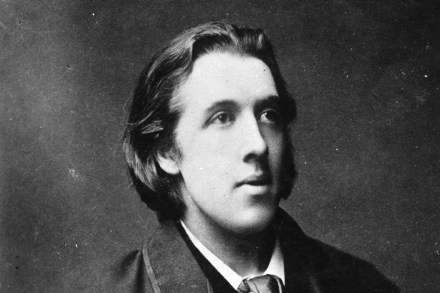
In January 1882, a still little known 27-year-old called Oscar Wilde began his year-long, coast-to-coast, 15,000-mile grueling lecture tour throughout America. The ostensible purpose was to publicise the US tour of Gilbert and Sullivan’s Patience, whose precious aesthete Bunthorne — ‘what a very singularly deep young man this deep young man must be!’ — was partly based on Wilde. The real motive was to advertise himself and become a celebrity while searching for his true sexual identity. Victorian men had to hide their homosexuality, but Wilde found a way to flaunt his real feelings. Wearing a theatrical costume while behaving outrageously on stage, he used his ambiguous sexuality to provide entertainment.

oscar wilde