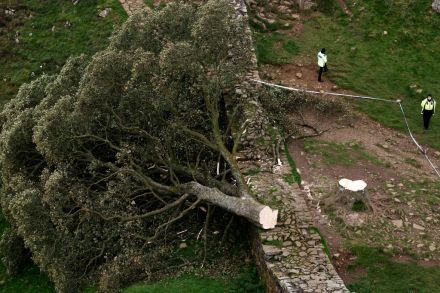
Vandalism

From ballrooms to billets – the fate of our country houses and their owners in wartime

From our UK edition

Ever since Brideshead Revisited, both the book and two television series, there has been a fascination with what some of us thought of as the last knockings of the country house, as once splendid aristocratic mansions sank beneath Nissen huts, mistreatment by the armed forces and lack of maintenance during the second world war. But what could this new book tell us? John Martin Robinson alone has published twice on the subject in recent years, and when I read that Judith Lewis’s was a gendered account, my heart sank. But I was wrong. Scholars have tended to overlook the tragedy that requisitioning put on the women for whom a country house was not just an ancestral possession, an expression of power or a grand accumulation of works of art, but a home.

It’s a wonder that the Parthenon remains standing at all

From our UK edition

We all have our own vision of the Parthenon. Lord Elgin, for one, seems to have treated it like Harrods. Hoping to decorate his Scottish stately home with the Marbles, he wrote long instructions to his agent: ‘The first on the list are the metopes, the bas-reliefs and the remains of the statues... Would it be permissible to speak of a Caryatid?’ The Greek gods must have thought not, because Elgin’s fortunes rapidly took a turn for the worse. He lost some of the Marbles in a shipwreck in 1802; was imprisoned in a French fortress by Napoleon; his wife had an affair with his best friend; and he lost his entire fortune in the ensuing divorce. He returned to England penniless, dreams of interior design long abandoned. And that, believe it or not, is when the drama really began.

The Sycamore Gap tragedy is one of a long list of tree killings

My ancestors presumably had something to do with trees — and true to my heritage, I enjoy some amateur forestry on my land in Vermont. The crack, the whoosh and the thunder of a tree coming down exactly where you aimed it thrills the Upper West Side me, chainsaw in hand.  But it grieves me when a good tree is blown down or uprooted. I cut only those that have to be removed because they are dying or might crush house or head if not tended to.  The Spectator reports on the murder of the Sycamore Gap, a 300-year-old tree along Hadrian’s Wall, chainsawed by a vandal when no one was looking. The culprit apparently is a sixteen year-old boy. It was an act of gratuitous violence. But not a singular act.

sycamore gap tree