Utopia

The importance of fairy tales in testing times

In the realm of magic and imagination, human nature can be better understood than in the world of our everyday lives: “The best of our tales do not lie or die.” It is a bold claim, which the folklorist Jack Zipes explores across continents and class in a series of essays. He guides the reader from the origin of oral storytelling, through medieval writings, to 17th-century literary salons and finally to today’s cinema screens. In the course of this journey, he focuses on the specific genre of the “wonder tale,” in which “those who are naive and simple are able to succeed because they are untainted and can recognize the wondrous signs... They have not been spoiled by conventionalism, power or rationalism.
fairy tales

In search of utopia: Chevengur, by Andrey Platonov, reviewed

From our UK edition

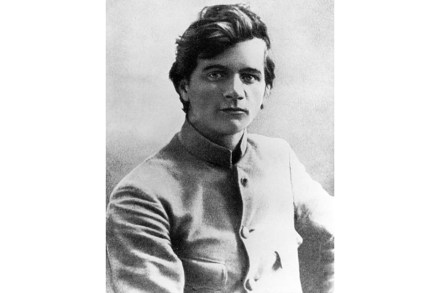
It has been a long journey into the light for the greatest Russian modernist most people have probably never heard of: Andrey Platonov. Born in 1899 in Voronezh, he started professional life as a mechanic and land-reclamation engineer, making him one of those rare writers with an affinity for both people and machines. In the mid-1920s, he was branded an ‘anarchic’ spirit by Maxim Gorky, who nevertheless admired his work. His great early novels were openly critical of the Soviet policy of ‘total collectivisation’ – which, in Platonov’s nightmare scenarios, tends to collectivise people to death.

Searching for the best of all possible worlds – in London

From our UK edition

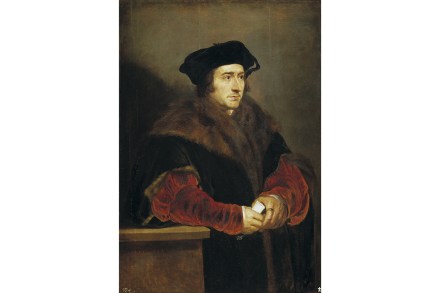
Utopia can never exist, literally, since the word, which Sir Thomas More coined in his 1516 book of that name, comes from the Greek for ‘not’ and ‘place’. For the avoidance of doubt, More doubled down on the wordplay, naming the governor of his fictional island Ademos, meaning ‘no people’, and the river that runs through it Anyder, meaning ‘no water’. Interrupting your steak to recite from Leviticus isn’t everyone’s idea of fun Yet there’s more to it than this, because it turns out that one man’s idea of an ideal society is often very different from another’s. More’s vision was proto-communist. Houses in his Utopia are allocated by lot, and re-allocated every ten years.

Why globalism is the enemy of freedom

I was recently asked to say a few words about “Globalism and Freedom” at a conference sponsored by Hillsdale College in Boise. Globalism, I said, is the enemy of freedom. Why? Because globalism systematically attacks and undermines the moral and political filiations that make genuine freedom possible. In order to understand why this should be so, we must begin by pondering the word “globalism” and its adjectival personification “globalist.” Neither occurs in my thirteen-volume edition of the Oxford English Dictionary, which dates from the early 1960s. What does that tell us? For one thing, it tells us that the term “globalism” and its cognates are neologisms. Neologisms come into being for a couple of different reasons.

globalism

Saying goodbye to the crypto nerd utopia

It’s been a great year for those of us who didn’t have the nerve to invest in crypto. The value of Bitcoin, Ethereum and Luna crashed in May. Now, crypto giant FTX has gone bankrupt amid serious allegations of criminal misconduct. At last! For years, we kicked ourselves for not investing in Bitcoin, ETH, et cetera, when we had the chance. We heard tales of people who went from bums to millionaires, while we grinded in our offices and fretted about debts. Suddenly, we can reframe our risk aversion as foresight! Of course we knew that this would happen! Of course we did! Really, I shouldn’t joke about this crypto craziness. A lot of people have lost a lot of money. People will lose businesses, homes, and families. Some might even commit suicide.

A flawed utopia: The Men, by Sandra Newman, reviewed

From our UK edition

The problem for feminism is men. Not, specifically, in the sense that men are the source of women’s problems, although the statistics do tend to point in that direction. Feminism’s men problem is that, despite all this, women like men. Love men. One of the lessons of second-wave experiments in separatism is that the idealised man-free existence is always fighting against the gravity of affection. Sandra Newman’s novel The Men takes that quandary and does something clever with it. She imagines a world in which all the men and all the boys and all the trans women and all the male non-binaries and all the Y-chromosome-carrying foetuses are mysteriously spirited out of existence in one strange instant.

A universal language will always be an unattainable dream

From our UK edition

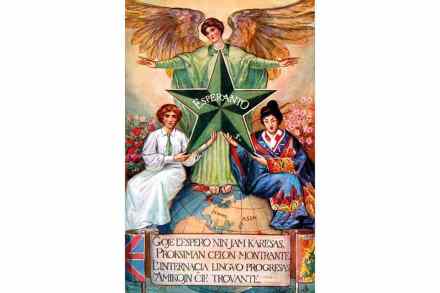
The comedian Sacha Baron Cohen, in his stage persona as the dim-witted interviewer Ali G, once asked Noam Chomsky if a person could simply invent a new language from scratch. The renowned linguist gave him short shrift: ‘You can do it if you like and nobody would pay the slightest attention to you because it would just be a waste of time.’ Throughout history, however, a motley array of eccentrics has done just this, and received a fair bit of attention.

A spirited attempt to fix a show that’s never really flown: Utopia, Limited reviewed

From our UK edition

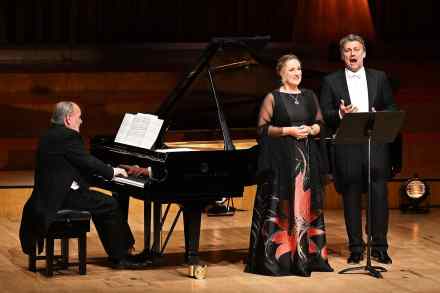
Utopia, Limited (1893) is a rare bird, and one that every Gilbert and Sullivan completist simply has to bag. The point of completism, of course, is to acquire an overview: if artists are truly original, everything they created should illuminate the whole. But what if a career tailed off, or ran to seed? It’s just going to be depressing, isn’t it? By the time they began their penultimate opera, Gilbert and Sullivan hadn’t collaborated for three years. In fact, they’d barely spoken. Goaded back into harness, they produced a comedy that really ought to have sparkled and yet somehow… well, put it this way: even the late D’Oyly Carte company waited until 1975 before attempting a revival.

The strange ideology that could be driving Putin

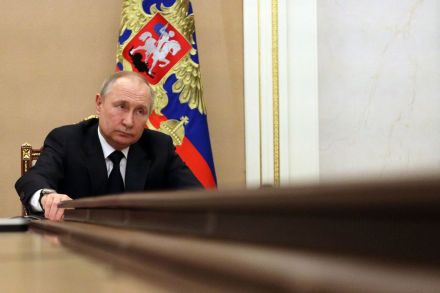
Vladimir Putin’s motives in attacking Ukraine have become the subject of many deep and searching speculations. Is he seeking a personal legacy by attempting to reassemble the parts of the Soviet Union that fell asunder? Is he pursuing Russian national security by making sure Ukraine never becomes the frontline of NATO? Is he gleefully taking advantage of a weak and incompetent US president? Is he vindicating the glorious history of the KGB? These theories are not mutually exclusive, and there are many more possibilities. I want to enter the discussion from my nearly pristine ignorance of Russian geopolitical designs.

eurasianism

The TV we feared they’d never dare make any more: The Singapore Grip reviewed

From our UK edition

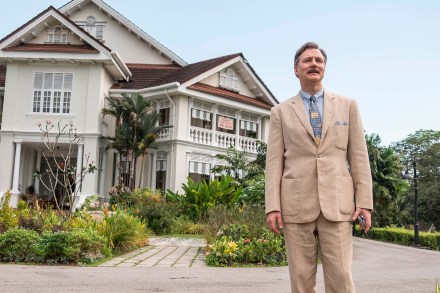
‘Art is dead,’ declared Mark Steyn recently. He was referring to the new rules — copied from the Baftas — whereby to qualify for the Oscars your movie must have the correct quota of gay/ethnic minority/transgender/etc people. This, he argued, will lead to the kind of leaden, politicised, phoney art we associate with communist regimes in the Soviet era and which, not so long ago, we used to find eminently mockable. If British and American producers want to lose money on TV shows and movies that no one wants to watch, then good luck to them. All that matters is that there’ll be enough brave dissenters out there to say: ‘Sod the awards.