US steel

Trump announces steel tariffs

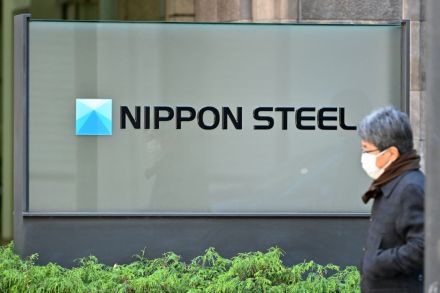
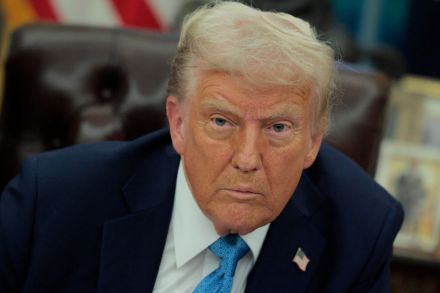
President Trump said that steel tariffs would be announced Monday — and that reciprocal tariffs against, among others, the European Union, were coming early this week. Yet questions remain whether these tariffs will go into effect, or if their announcement is being used as a bartering chip, as with other tariff threats last week.The threat of tariffs reemerged after Trump met with Japanese prime minister Shigeru Ishiba last week to discuss Japanese investment in US Steel. This 25 percent tariff on imported steel and aluminum appears to be an attempt to protect US and Japanese shared interests. This tariff is set to be placed on all nations equally and is not a bargaining tool, unlike those with which Trump threatened Canada and Mexico last week.

Will DeSantis make it to Iowa?

Florida governor Ron DeSantis’s 2024 presidential campaign is imploding spectacularly. His first mistake was waiting too long to announce his intention to run while traveling the country for a “book tour,” which allowed former president Donald Trump to sully his name unanswered for weeks. Then when he did jump in, he made his announcement on a glitchy, botched Twitter Space with Elon Musk. In the months that followed, DeSantis struggled to adopt a clear strategy and seemed uncomfortable with the basic prospect of running a national campaign, perhaps best exemplified by an anecdote from 2018 when an advisor told him to write “LIKABLE” at the top of his debate notepad.

The rise and fall of US Steel

US Steel, which came in with a bang in 1901, is going out with a whimper. It has agreed to sell itself to Japan’s Nippon Steel for $14.1 billion, $55 per share in an all-cash deal. While steel is still an indispensable commodity (world production has doubled in the last twenty years, to 1.951 billion tons, about half produced in China), it has long ceased to be the iconic measure of industrial power that it was in the late nineteenth century. Steel — iron with a carefully calibrated amount of carbon added — has been known since ancient times. But it could be made only in small batches, and thus was so expensive to produce that it was almost a semi-precious metal, its use reserved for razors, sword blades and surgical instruments.