Us politics

Will the Obama administration deny requests for more troops in Afghanistan?

From our UK edition

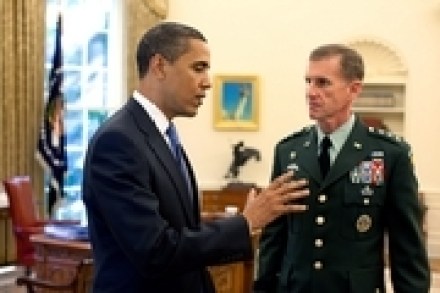
Frederick and Kimberly Kagan, two of the people involved in devising the surge strategy in Iraq which so transformed the security situation there, have a strong piece in the Weekly Standard arguing that the Obama administration is in danger of repeating in Afghanistan the mistakes the Bush one made in Iraq: not giving the commander on the grounds the tools they need to do the job. The Kagans’ concern has been caused by strong hints from the Obama administration that it is not minded to send any more troops to Afghanistan whatever the review initiated by the new US commander there, General McChrystal, says. (The deadline for McChrystal to make his requests has been pushed back until September). If McChrystal thinks he needs more troops, he should not be denied them.

The West must prepare contingency plans to bomb Iran

From our UK edition

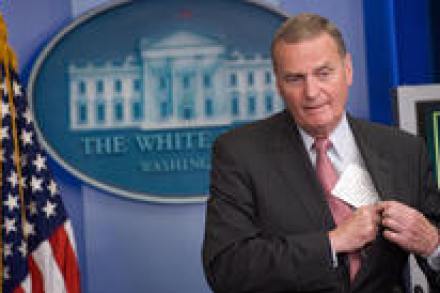
Chuck Wald, a retired US Air Force General who was the air commander for the US response to the 9/11 attacks, has an important op-ed in the Wall Street Journal today about Iran. Wald argues that while no one wants to see the military options explored before all others have been exhausted, it would be a mistake to think that there are none. He argues that even the mere act of a military build up might persuade the Iranian regime that the cost of continuing with their nuclear programme would be being bombed and thus persuade them to give up. Alternatively, a naval blockade could deny Tehran the petrol imports it needs, bringing its already teetering economy to a halt.

Mehsud’s death is a massive blow to the Taliban 

From our UK edition

If Baitullah Mehsud, the leader of the Pakistani Taliban, has been killed that is a major success which should help both in the fight against the Taliban in Pakistan and Afghanistan; Mehsud had up to 20,000 fighters under his command. It appears that a drone hit his father in law’s house while he was there receiving medical treatment. One of his wives is reported to have also been killed in the strike. Drones are a controversial part of the US arsenal, some argue that the collateral damage they inflict turns the population against the coalition and so make them not worth using. But for this kind of operation they are invaluable.

Damaging revelations make the CIA more risk averse

From our UK edition

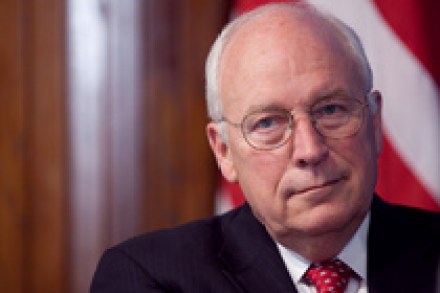
The latest revelations about the CIA’s prospective covert assassination program is yet another nail in the coffin of US intelligence and its willingness to take risks. Immediately after the World Trade Center attacks in 2001, Vice President Dick Cheney called a meeting of intelligence chiefs to ask them what new powers they would like to fight terrorism. A whole laundry list was presented, including increased eavesdropping on Americans, the seizing of terrorists overseas and a torture program that evolved to include a number of foreign countries.

Who watches the watchmen?

From our UK edition

In the US, a storm is brewing over Dick Cheney’s alleged role in concealing an intelligence programme from Congress. Whatever the details of the alleged offence, it raises an interesting question: should oversight of the intelligence community intrinsically be different from other kinds of parliamentary oversight? Over in the States, Legislators were content to delegate the management of intelligence agencies to the executive until a series of abuses was revealed in the early 1970s, and the House and Senate Committees on Intelligence were set up in 1977. In Britain, however, Parliament has only had scant role in overseeing the intelligence community.

Not a patch on our scandals

From our UK edition

Inspired, perhaps, by The Spectator's list of the top 50  political scandals, Bloomberg has run a list of the ten best American ones. I have to say, these prudish Americans just don't do scandal like us. The list has a common theme: moralising politician caught having an affair! Please. Where are the Russian spies, the society whoremongers, the russian oligarchs, the Corfu taverns? Okay, I'll accept that the boy Clinton did them proud - but the rest of the list makes you think either America is squeaky clean or that its political class get away with far too much. Anyway, here are Bloomberg's choices, with my comments: 10 ‘Family Values’. Spitzer was New York governor, and resigned on threat of impeachment.

Is General Jones on his way out?

From our UK edition

With Obama’s administration gradually filling up, problems appear to be brewing at the centre. Though picking ex-General James Jones as a National Security Adviser was seen as a smart move, associating the general’s wide experience and bi-partisan appeal with the young president, it may be turning out not to be so clever after all. President Obama continues to rely on his campaign advisers, principally Denis McDonough, nominally one of Jones’ deputies, and Mark Lippert, the Chief of Staff of the National Security Council and a confidant of Vice-President Biden. Both aides have a close personal bond with the President.

The consequences of Johnson’s cowardice

From our UK edition

There was great excitement here in Old Queen Street when Lord Carlile, the Government’s own adviser on anti-terror law, announced that Alan Johnson can and should help poor Gary McKinnon. McKinnon is the computer nerd who hacked into the Pentagon looking for evidence of UFOs, but who is soon to be extradited and tried as a terrorist in America. Lord Carlile – not usually a dovish man – thinks a great injustice is being done (Mckinnon might get 70 years in a ‘supermax’ prison) and has said that the Home Secretary should prevent it. So we called the Home Office to find out when Alan Johnson was planning to act. “The Home Secretary can do nothing. This is a matter for the judicial review,” said his spokesman. So why does Lord Carlile think he can?

Obama’s bear-hug

From our UK edition

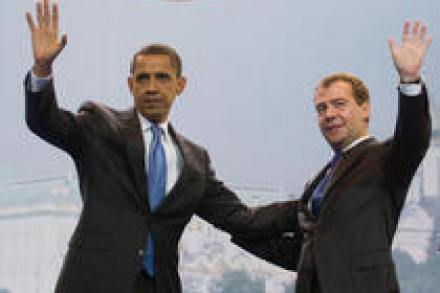
Presidents Obama, and Medvedev (and Prime Minister Putin) seem to be having a good summit. Nuclear talks look like they have gone well, there has been mention of expanding NATO's transit for its Afghan mission through Russia, and the mood - crucial at any summit - has been reasonably good. Nobody stared into any one else's soul, but the leaders nonetheless agreed, as Bush and Putin did a few years ago, that the US and Russia can do business. But is a rapprochement between the US and Russia really possible? Dmitri Trenin, of Carnegie Russia, says the West and Russia share many threats. But he also says that anti-Westernism is an "obsession" on the part of Russia's elite.

Gary McKinnon is a victim of injustice

From our UK edition

Well done to the Mail for their continued support for Gary McKinnon, whose case featured on their front page a couple of days ago. It was a bold decision, but absolutely the right thing to do. Unless Alan Johnson steps in at the last minute, an awful injustice is about to take place. Gary McKinnon is the 43-year-old from Hertfordshire who hacked into US military computers, looking for evidence of UFOs. No-one is denying that he has committed a crime ­ least of all Gary who made a full confession to the police. And, yes, Gary deserves to be punished - a light sentence or community service would be best. Instead - and although he could easily be tried in this country - he is to be extradited to the US.

The greatest edit in history

From our UK edition

Seeing as it is the Fourth of July, I hope Coffee Housers will indulge me in a quick post on the Declaration of Independence. The document was, of course, drafted by Thomas Jefferson. But Ben Franklin ran his eye over Jefferson’s draft and made a few changes. One of them, can I think, lay claim to be the most felicitous edit in history. As Franklin’s biographer, Walter Isaacson, explains, Franklin took, "We hold these truths to be sacred and undeniable" and changed them to the words now enshrined in history: "We hold these truths to be self-evident." (The picture is of Franklin’s marks.) The Declaration of Independence remains an inspiring document, the highest expression of country party ideology. If you have a moment today, do re-read it.

Palin resigns. Pundits ask, what did she mean by that?

From our UK edition

Sarah Palin’s decision to quit as governor of Alaska is perplexing. It is hard to see how she can be a credible presidential candidate when she failed to serve out even one term as governor. There has been little normal or orthodox about Palin’s political career and trying to assess why she is walking away now isn’t easy. One can make a credible case that she is doing so because she has had her fill of politics, certainly that what NBC News’ Andrea Mitchell has heard. (And whatever one thinks of Palin, some of the attacks on her family have been disgusting Or, you can argue, as Bill Kristol does, that by leaving Alaska she gives herself the time to build up a national campaign.