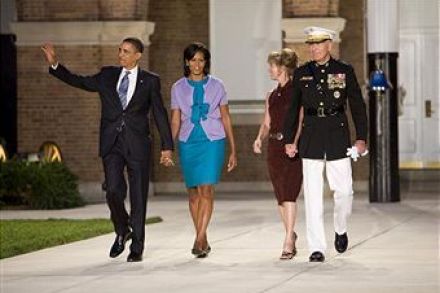
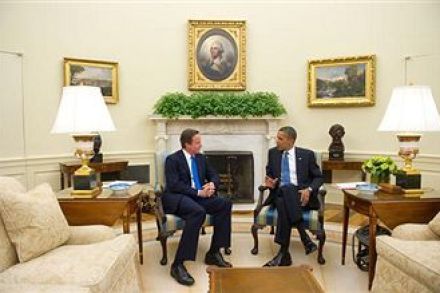
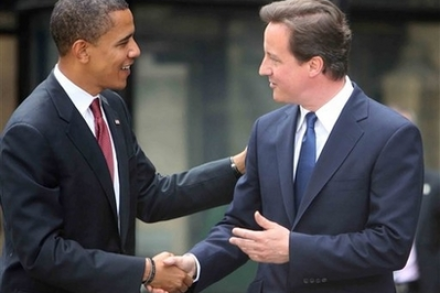
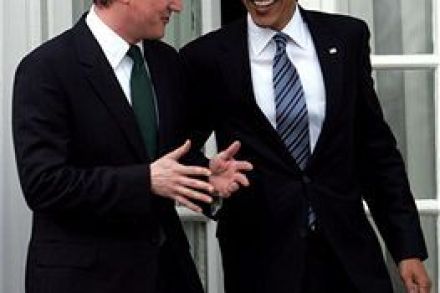
Will Zardari’s meeting with Cameron go like this?
From our UK edition
After his stark warning earlier, it's worth remembering that President Zardari can be quite cheerful in person.
From our UK edition
After his stark warning earlier, it's worth remembering that President Zardari can be quite cheerful in person.
From our UK edition
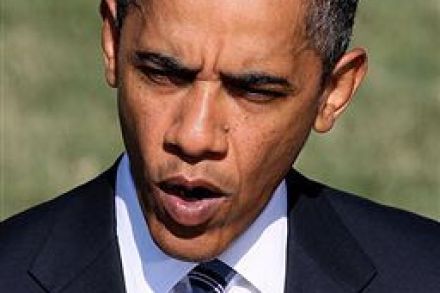
Gordon Brown will be seething, and with some justification: he never got photo-ops like these with Barack Obama. Shots of a cosy chat in the Oval Office are usually reserved for Benjamin Netanyahu, following the latest impasse between Israel and America. The Obama administration has gone to great lengths to repair the damage it did to Anglo-American relations at the start of its term. The President was all sparkle and bonhomie during the joint press conference, and he was careful to name-check ‘The Truly Special Relationship’ twice. Obama may be faking it but he looks comfortable with Cameron. He has always given the impression of being a cold fish, short on empathy, and I suspect he objects to leaders fawning at his throne.
From our UK edition
I’ve spent the morning contending with the WSJ’s Heath Robinson-esque subscription service so you don’t have to. Inside the paper, David Cameron explains what the Special Relationship means to him. 1). The Special Relationship is close and robust because British and American values are essentially the same, which explains why our national interests are often aligned: 'The U.S.-U.K. relationship is simple: It's strong because it delivers for both of us. The alliance is not sustained by our historical ties or blind loyalty. This is a partnership of choice that serves our national interests.
From our UK edition
The Washington Post today publishes the first part of its series on the intelligence bureaucracy that has grown up in the United States since 9/11. The Post has been working on this report for two years and what it reveals is not pretty. There are more than 1,200 government organisations working in this area and, predictably, they don’t talk to each other. There are 51 federal organisations and military commands studying terrorist financing alone, with all the predictable problems of overlap. Retired Army Lt Gen John R.
From our UK edition
Today marks the 31st anniversary of President Jimmy Carter’s famous ‘malaise’ speech. On July 15, 1979, Carter, then running for re-election against Ronald Reagan, ignored the advice of his campaign team and gave Americans a grave warning. The nation, he said, was facing a fundamental "crisis of confidence". (He didn’t actually use the word malaise.) "Too many of us now tend to worship self-indulgence and consumption," he said. "Human identity is no longer defined by what one does, but by what one owns. But we've discovered that owning things and consuming things does not satisfy our longing for meaning.
From our UK edition
Emblazoned across the Times is the headline: ‘Europe warns Obama: this relationship isn’t working.’ The piece is teeming with quotations from diplomats and representatives of major European governments, voicing their concern that post-Cold War America no longer offers Europe a privileged relationship. The goodwill that Europe offered Obama has entirely evaporated. Few diplomatic spats are ever one-sided, and the Americans are deeply frustrated with the European Union.
From our UK edition
Robert Byrd, the longest serving Senator in American history, has died aged 92. Byrd will be remembered not only for the length of his service but also for the fierceness with which he guarded the prerogatives of the Senate. Byrd used his position and seniority in the Senate to funnel huge amounts of money back to the state he represented, West Virginia one of the poorest states in the Union. Travel through West Virginia and you rarely go more than a few miles without passing the Robert C. Byrd something or other. As the Washington joke had it, Byrd didn’t bring home the bacon, he brought back the whole damn hog.
From our UK edition
The implosion of General McChrsytal’s career has refocused attention on Afghanistan. Reading Peggy Noonan’s column on the subject I was struck by this paragraph reflecting on Jonathan Alter’s reporting of Obama’s decision making process when he ordered the surge: More crucially, the president asked policy makers, in Mr. Alter's words, "If the Taliban took Kabul and controlled Afghanistan, could it link up with Pakistan's Taliban and threaten command and control of Pakistan's nuclear weapons?" The answer: Quite possibly yes. Mr. Alter: "Early on, the President eliminated withdrawal (from Afghanistan) as an option, in part because of a new classified study on what would happen to Pakistan's nuclear arsenal if the Islamabad government fell to the Taliban.
From our UK edition
G20 summits are usually turgid affairs, but this one has some (limited) potential. Relations between the White House and Britain and the White House and Europe have been frosty of late. Afghanistan, BP, the Falklands, Merkel and Sarkozy’s irritation at Obama’s personal and political aloofness, all of these have been contentious. Diplomatic tension has now developed an economic arm. The broadly centre right governments of Britain, France and Germany are committed to cutting public spending now. Each has introduced an austerity programme, and Cameron has made retrenchment is his international cause. Obama still stands for stimulus.
From our UK edition
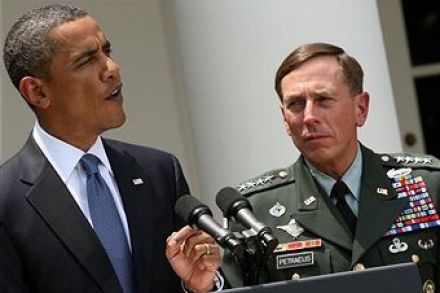
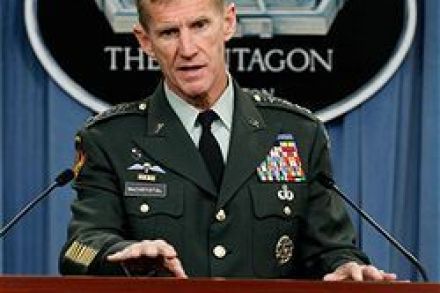
How wrong I was. President Obama, lambasted by his critics for being ponderous, has acted with lightening speed: less than 24 hours after that Rolling Stone article, General Stanley McChrystal was forced out of his job in place of the only person that could pick up where he left off, namely General David Petraeus. In acting swiftly, the US president has moved to restore the authority and respect his position as Commander-in-Chief deserves; and he has begun to re-establish the kind of civil-military relations that need to exist in militarily-capable liberal democracies like the United States. What effect the change of commander will have in Kabul remains unclear. But it will have a long-term positive effect on US democracy.
From our UK edition
The Taliban are expanding their area of influence, NATO allies are eager to leave Afghanistan, the forthcoming parliamentary elections are likely to be even more fraudulent than last year’s presidential election – in other words, how can it get any worse for President Obama’s AfPak strategy? Oh yeah, the man the US president has trusted to execute the strategy, the man whose name is now synonymous with the international community’s’ plan, General Stanley McChrystal gives an interview to Rolling Stone magazine (in itself a dubious choice), which paints a picture of the commander as insubordinate, unwise or simply not in control of his headquarters.
From our UK edition
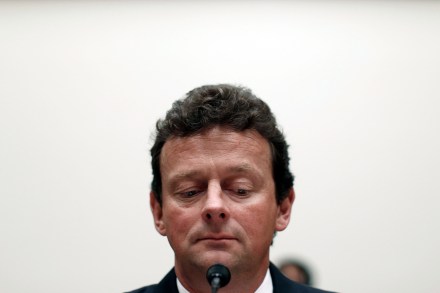
American politics often plays like a bloodsport, but the appearance of BP's Tony Hayward before a congressional hearing today has been in a league all of its own. Things were already looking decidedly brutal at the start of the morning session, when Hayward was subjected to a solid hour of attacks and accusations from the committee's members before giving his own testimony. But since then we've had everything from pictures of oil-coated birds to protests from the crowd. It has been a compelling, if unenlightening, theatrical event. For his part, Hayward has been neither convincing nor all that unconvincing. His demeanour is suitably contrite, but his answers have been too evasive to count. Not that the BP chief exec can really do much anyway.
From our UK edition
Barack Obama knows language and innuendo: he will know what he’s doing by deploying what Boris Johnson rightly calls “anti-British rhetoric” in the BP disaster. BP has not – for many years – stood for British Petroleum’ – you won’t find the two words anywhere in its annual report. But you hear them plenty tripping off the presidential tongue, as if to point the finger on the other side of the Atlantic. It makes you wonder how highly he values UK-US relations: Bush was genuinely grateful for the fact that Britain was America’s most dependable ally in Iraq and Afghanistan. It’s hard to imagine Bush using the rhetoric that Obama has so quickly resorted to.
From our UK edition
Very little is my immediate answer. The President’s approval ratings are biting the dust. Powerless to stem the tide of oil and unpopularity, Obama can only victimise a ‘foreign’ oil company. Obama may be embattled at home, but if any doubt the US President’s ability to influence global events, they need only look at BP’s share value and the pension funds derived thereof. BP is mired in an expensive oil disaster, but the President’s rhetoric about the ‘habitual environmental criminal’ and threatening BP with criminal proceedings demolishes market confidence. If the British government had condemned AIG, Goldman Sachs and Merrill Lynch in similar tones, the US administration would have retorted. Cameron can do nothing.
From our UK edition
To all bar Tony Hayward, it is clear that BP is finished in America. A Macarthyite degree of opprobrium has been cast against the interloper. As Matthew Lynn notes, BP’s PR flunkies are grovelling across the networks, apologising in that singularly lachrymose British fashion. They should stop demeaning themselves and fight back. BP is to blame for the leak, but it is being demonised by an American President whose desperate populism and prejudice is masquerading as principled leadership; it is the latest British institution to be victimised by Barack Obama. Owing largely to the demands of the insatiable US market - which Obama has done nothing to abate, despite his green credentials - oil exploration has never been so risky as companies drill in deeper and rougher seas.
From our UK edition
Richard Holbrooke, the U.S. diplomat in charge of Afghanistan and Pakistan affairs said Washington has now publicly made clear the US government is serious about negotiating with the Taliban. Speaking at a conference in Madrid, the US envoy said: ‘Let me be clear on one thing, everybody understands that this war will not end in a clear-cut military victory. It's not going to end on the deck of a battleship like World War Two, or Dayton, Ohio, like the Bosnian war It's going to have some different ending from that, some form of political settlements are necessary ... you can't have a settlement with al Qaeda, you can't talk to them, you can't negotiate with them, it's out of the question. But it is possible to talk to Taliban leaders.
From our UK edition
Fifteen days ago Newsweek had an extract, no not from Alistair Campbell’s diaries, but about something that actually matters – Jonathan Alter’s book about President Obama’s AfPak strategy. I have only just read it – apologies -- but a soggy May weekend is just the time to snuggle up on a sofa and read about warfare. Alter charts the discussions in the ten meetings on last year in the Situation Room in the basement of the White House when the Obama administration settled on a new strategy. Three things spring to mind when reading the passages. First, that the maintenance of civilian control over the military is not automatic; it is a constant struggle, particularly in a media-lacked environment.
From our UK edition
In opposition, the Conservatives pursued an AfPak policy that can best be described as loyal criticism - while they supported the mission they criticised the means and methods employed to achieve it. It was an effective line of attack. But now that they have the internal documents and can call for further intelligence assessments, they should instead undertake a zero-based review of the current strategy focusing on: 1) the viability of the current US approach; 2) the likely timing and manner of a US shift; and 3) the best role for the UK in the next six months, in the next 2 years and in the next five years. In this discussion nothing – absolutely nothing – must be off the table.
From our UK edition
Several months ago, European leaders went to Copenhagen to save the planet. China, India and Brazil on the other hand went to the climate negotiations in Denmark to showcase the changed distribution of power in the world. Unsurprisingly, the Europeans came home empty-handed, shut out of the key negotiations and powerless despite what was meant to be a standard-setting promise of 20 percent cut in the EU's greenhouse gas emissions. The US and the rising powers struck a non-binding deal, the value of which is still being determined.
From our UK edition
‘With time,’ writes David Remnick, ‘political campaigns tend to be viewed through the triumphalist prism of the winner.’ Never more so, perhaps, than in Remnick’s idolatrous new biography of Barack Obama, which presents the First Black President’s ascension to the White House as nothing less than a glorious saga. Deeply read — if not rooted — in the civil rights movement of the 1950s and 1960s, Obama is said to have derived his spectacular political success from the great and martyred prophet Martin Luther King, Jr and King’s closest disciples, especially John Lewis.