United nations

Libya has not been Cameron’s finest hour, but it’s not been a disaster

From our UK edition

The government has been damaged by its response to the Libyan crisis and the SAS incident in particular. William Hague has been branded a 'serial bungler', and the FCO’s response was condemned as slow and ill-prepared. The consensus is that heads should roll at King Charles Street. Many commentators have also argued that the Prime Minister was too quick to call for a no-fly zone over Libya. Nobody, not even government loyalists, could argue that the last few weeks have been David Cameron’s finest.   However, one can be too critical. Let’s start with the SAS mission. Something obviously went wrong, but it is hard to believe that ministers could have done anything differently. Their job is to set direction, not to micromanage operations.

Lessons from wars gone by

From our UK edition

As the situation deteriorates in Libya and the international community begins to look at various options, including military ones, policymakers would do well to remember a number of key lessons from the last 15 years of warfare. Like all history, they don't provide a guide to the future, but can be a warning nonetheless. The Bosnian experience of the mid '90s contains four key lessons. The first is that international handwringing costs lives. Many lives. (The same lesson emerges from the post-Gulf War I slaughter of the Kurds and Shia by Saddam Hussein). Wait, and the situation usually gets worse not better. The second lesson is that however great the humanitarian need may be, any military mission must not be framed as a humanitarian one.

Toppling Mad Dog

From our UK edition

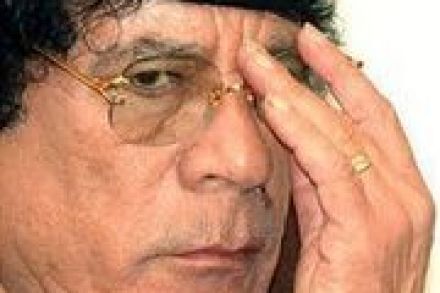
Should Gaddafi be pushed? That is the question diplomats and policy makers are beginning to ask. The UN has imposed travel restrictions and frozen Gaddafi’s assets. But Gaddafi is resisting the hangman’s noose; the loss of his Mayfair property empire is the merest of inconveniences. And still he fights on. There is now a growing humanitarian case for direct military intervention by Western powers. However, there are plenty of arguments against even introducing a no-fly zone. Gideon Rachman makes some of them in today’s FT: ‘A few of the problems are practical. Some military observers say that a no-fly zone would be of limited use in Libya, since Col Gaddafi seems to be mainly relying on ground forces.

Cameron: military action not out of the question in Libya

From our UK edition

The government’s game of catch-up on Libya continues apace. David Cameron came to the Commons to update the House on the current situation. His main message was now that we have the vast majority of our citizens out, we can have a policy. Indeed, the government is today openly admitting that it was hamstrung last week by the continuing presence of a large number of British nationals in Tripoli. Cameron told the House that ‘we do not in any way rule out the use of military assets’; a dramatic shift from the tone of his entourage on last week’s trip. At the moment, the main military option on the table seems to be a no-fly zone and Cameron said he had asked the MoD and the chief of the defence staff to examine how this could be done.

Act soon or face another Guernica

From our UK edition

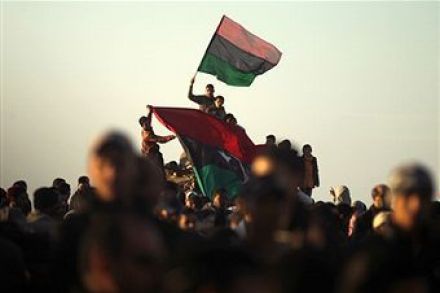
We now know that Libya is heading into a full on civil-war and that Gaddafi is prepared to do pretty much anything to stay in power. The former interior minister Abdel Fattah Younes al-Abid, admittedly a partial source, says that he defected after arguing with the Libyan leader over his plan to bomb the rebel stronghold of Benghzai. In an ideal world, the United Nations would move to impose a no fly zone on Libya. But this is unlikely to happen. Russia and China, for obvious reasons, want to uphold the principle of non-interference in another state’s affairs even if that state is brutally repressing its own people.   This puts the ball in Nato’s court as the largest military alliance of liberal democracies there is.

Libya on the brink

From our UK edition

Tonight, Libya appears to be on the verge of a full on civil-war. The interior minister has defected to the opposition and urged the army to do likewise. The interior minister has also warned that there are half a million mercenaries in Libya under Gaddafi’s orders. This seems further grim confirmation of just how far Gaddafi is prepared to go to hang onto power. If Gaddafii does step up his campaign of violence against his own people it raises the question of what the international community can—and should—do. There’ll be some who say that this is no one but Libya’s business. But this argument is flawed strategically as well as morally as slaughter in Libya will have a spill-over effect.

Cameron’s fine, liberal speech

From our UK edition

David Cameron’s speech in Kuwait today did not take on his hosts in the way that Harold Macmillan’s ‘winds of change’ speech did. But it was a still fine, liberal speech. The key argument of the speech was that: ”As recent events have confirmed, denying people their basic rights does not preserve stability, rather the reverse. Our interests lie in upholding our values – in insisting on the right to peaceful protest, in freedom of speech and the internet, in freedom of assembly and the rule of law. But these are not just our values, but the entitlement of people everywhere; of people in Tahrir Square as much as Trafalgar Square.” This is the crucial point: crude realism is not realistic.

How young Arabs saved the old West

From our UK edition

Three months ago the future looked bleak for the West. The countries that once dominated the world, invented capitalism, articulated mankind's universal desire for freedom and defended it against all enemies looked destined for an impoverished future squeezed by the authoritarian capitalists of the East and unsure about the righteousness of its ideological foundation. Even one-time liberals, whose life has been shaped in a struggle for human rights embraced China and its state-backed progress. Now, thanks to the pro-democracy protesters in the Middle East, the West is back. Not that it backed the democratic movements and now stands to reap the benefits.

The Gaza flotilla raid was legal – but stupid

From our UK edition

Yesterday saw the publication of a report into Israel's naval blockade of Gaza, the Hamas-run part of the Palestinian crypto-state, and the Israeli military's raid on a flotilla of aid ships bound for the coastal enclave last year. The inquiry, headed by former judge Yaakov Turkel, argued that: "The naval blockade imposed on the Gaza Strip... was legal pursuant to the rules of international law" The inquiry defined the fight between Israeli forces and Hamas and other Gaza-based militant groups as "an international armed conflict".

China in a bullshop

From our UK edition

As if to illustrate Pete’s post about the rise of China and India, Chinese Vice Premier Li Keqiang has just finished a visit to Spain during which agreements worth 5.7 billion euros were signed. The Chinese delegation is said to have committed itself to buying six billion euros of Spanish debt, which helped calm markets and provided some relief for Spain’s recession-hit economy. Around the time that the Soviet Union collapsed, the Chinese used to say only they could save communism. Twenty years on, it seems only they can save capitalism. The Spanish are certainly in no doubt about the importance of their newfound Chinese friends. The left-leaning Spanish newspaper El País wrote that that Li was received in Madrid as "a new Mr.

David Miliband’s options

From our UK edition

Downing Street may  have dismissed as “complete nonsense” a newspaper report that the coalition was considering inviting David Miliband to become British ambassador to Washington. But the former foreign secretary is one of a few younger British politicians with international standing and while it would be odd to appoint him to a government job – and stranger still for him to accept -- the coalition should consider putting him forward for a number of international assignments. Potential jobs include the international community’s “high representative” in Bosnia; as a UN envoy to Yemen; or as the representative of the Friends of Democratic Pakistan.

DfID’s role put to the test

From our UK edition

At a speech to the Royal Defence Academy earlier in the year, Andrew Mitchell outlined the costs of overseas conflict to Britain and offered a number of lessons for the future. The most important, he argued, was the need to help prevent wars before they start, starting with being “better at identifying the potential for conflict.” The Cabinet’s only ex-soldier, Mitchell has seen up close the cost of conflict, burns with anger about the Rwandan genocide and knows that development funds will forever be wasted if people are mired in violent conflict.

A tale of two statesmen and a wary industry

From our UK edition

The only readable part of Tony Blair’s Lawrentian romp of a memoir, is the epilogue. He explains why the state must be trimmed in the future and how globalisation is affecting global polities, and all expressed with languid charm and an air of self-deprecation which he has acquired on the road to riches. No wonder he’s the toast of Washington, the UN and Beijing – he’s the model of the Modern English Gentleman, a real pukka sahib. Gordon Brown, meanwhile, has travelled to the UN to attend a meeting on tackling poverty. After a decade of enduring Bono at his most self-righteous, poverty is not yet history. Aid agencies and campaigners, wary of aid fatigue, are asking what went wrong. It seems that humanity could not realise its expectations.

Lead by example: take paternity leave

From our UK edition

The birth of the Cameron’s baby daughter is, obviously, wonderful news for the Cameron family. All the political chatter around it is, frankly, irrelevant compared to the happiness that they must be feeling.   But I do hope that David Cameron does take paternity leave. The Tories have talked a lot about making Britain the ‘most family friendly country in Europe’ and the PM taking paternity leave would be a good ‘nudge’ to employers and prospective fathers alike. One other timing issue worth noting is whether Cameron now goes to the UN summit in New York on the millennium development goals.

Already, the anti-war lawyers leap on Clegg’s slip

From our UK edition

Never one to miss the bus, Phillipe Sands QC has informed the Guardian that an international court would be ‘interested’ in Nick Clegg’s view that the Iraq War was illegal. Sands continues with his favourite homily: ‘Lord Goldsmith never gave a written advice that the war was lawful. Nick Clegg is only repeating what Lord Goldsmith told Tony Blair on 30 January 2003: that without a further UN security resolution the war would be illegal and Jack Straw knows that.’ Well, that would be right but for Goldsmith’s draft advice of the 12 February 2003, and his final clarification on 7 March 2003.

Who could Britain place in the UN’s humanitarian department?

From our UK edition

After Sir John Holmes retires as the head of the UN’s humanitarian activities later in the year, the Cameron government will have the chance to make its first high-level international appointment. Officially, the job is appointed by UN secretary-general Ban ki-Moon, but the unpopular South Korean is likely to want to keep the new British government on board as he seeks re-election for a second term. So the UK is likely to get its pick. Rumours have it that three people are on the short list drawn up by officials:  Valerie Amos, the Labour peer and former International Development Secretary; Dame Barbara Stocking, the head of OXFAM, and Martin Griffiths, the head of the Centre for Humanitarian Dialogue and formerly Deputy UN Humanitarian Relief Coordinator.

A PR disaster for Israel

From our UK edition

Prematurely, the world’s press has condemned Israel. As I wrote yesterday, the facts have to be established before Israel can be adjudged to have acted disproportionately. At the moment, the facts seem to support Israel. Video footage shows commandoes descending into a maelstrom of baseball bats and knives, armed with items that resemble paintball guns. The latest pictures released show a hoard of improvised explosives, machetes, bats, crowbars etc. Those sources’ veracity should be scrutinised, but there is nothing else to go on at the moment. Iain Martin has debunked Jon Snow’s absurd genuflection that this is our fault. Being British I apologise for everything, but not this time.

The French ambassador has not contradicted Straw’s evidence to Chilcot

From our UK edition

The drowsy Hay festival has been shaken by two bespectacled academics igniting a rather too intricate political bomb. Under the guise of a literary interview, Philippe Sands QC and the French ambassador to London, Maurice Gourdault-Montagne, have connived to attack Jack Straw’s evidence to the Chilcot Inquiry.   Straw was adamant that President Chirac was ‘unambiguous, whatever the circumstances’ in his refusal to back a second UN resolution. The Guardian reports that Gourdault-Montagne told the Hay festival: ‘Chirac had made it clear that he meant France could not have supported a new UN resolution at that time since it would have triggered an invasion despite the lack of evidence that Iraq possessed WMD.

Britain’s man inside the UN

From our UK edition

Sir John Holmes, the highest placed Briton at the UN, is leaving his job early. A long-serving Foreign Office mandarin, Sir John’s appointment by UN chief Ban Ki-Moon to be the UN’s Coordinator for Humanitarian Relief originally came as a surprise. The post is responsible for oversight of all emergencies requiring UN humanitarian assistance, and acts as the focal point for relief activities. Everyone had assumed that the British diplomat’s background lent itself more readily to the top political job at the UN, rather than the humanitarian portfolio.

Could Jacques Chirac add to the Chilcot inquiry?

From our UK edition

The Iraq inquiry is making the political weather, much more than Gordon Brown expected. By the time of the general election, every key diplomat, soldier and politician involved in the war will have given evidence. But there are people that have played pivotal roles who should be given the chance to put their views across - not about the war as such but about Britain's diplomatic and war record. I'm thinking of senior US officials, from President Bush down the hiearchy but also then-French President  Jacques Chirac, former UN chief Kofi Annan and so on. I'm not suggesting Sir John Chilcot broaden his inquiry to nor that 'W' would come to give evidence.