United nations

From the archives: On liberal wars

From our UK edition

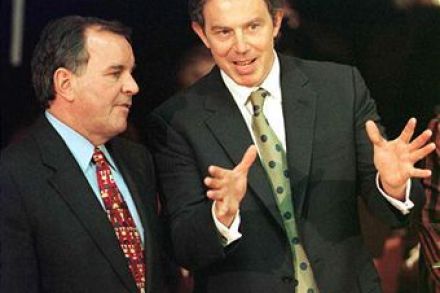
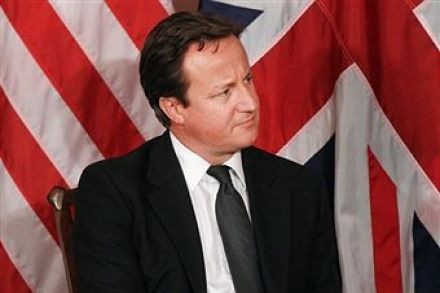
David Cameron’s speech to the United Nations yesterday was, among other things, a defence of liberal intervention. It reminded numerous observers of Tony Blair’s famous speech in Chicago in, the setting for the so-called Chicago Doctrine that guided his foreign policy thereafter. The Spectator said surprisingly little about Blair’s speech, perhaps because it wrote the following 5 days before the speech was made on 22 April 1999. End this liberal war, The Spectator, 17 April 1999 We can now see how liberals start wars, and wage them. First, they notice on television that people are being ill-treated or murdered.

Cameron’s foreign frustrations

From our UK edition

David Cameron’s much trailed speech to the UN is tinged with frustration. He will say, “You can sign every human rights declaration in the world but if you stand by and watch people being slaughtered in their own country, when you could act then what are those signatures really worth? The UN has to show that we can be – not just united in condemnation, but – united in action acting in a way that lives up to the UNs founding principles and meets the needs of people everywhere." That seems to be a fairly thinly veiled reference to the global community’s indifference to oppression in Syria.

The new Israel and Palestine question

From our UK edition

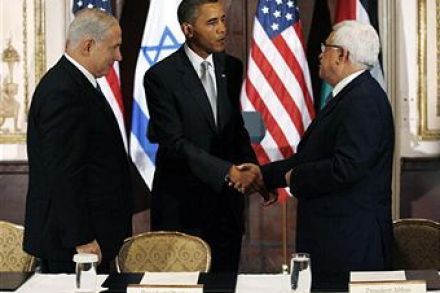
The halls of the UN are packed with presidents and foreign ministers. But for all the thousands of subjects under discussion, this year's General Assembly will be remembered for one issue only: the Palestinian statehood application. Mahmoud Abbas has made clear he wants to proceed, despite the reality of a US veto. In the end, it may not come down a showdown. If an application is made to the UN Security Council, the issue will likely go to a sub-committee of the full UNSC and take quite some time before it comes to a vote, whatever the Palestinians may want. That is why the US prefers the option to a vote in the General Assembly, which would probably take place and pass immediately.

Abbas pitches for a Palestinian state

From our UK edition

As Daniel wrote this morning, the Middle East peace process has returned to the headlines. Palestinian President Abbas has called for Palestine to be granted full membership of the United Nations, adding that the Palestinians had “legitimate right” to full membership. Abbas added that he remained committed to working with Israel, but said that negotiations had reached “an impasse, a dead end due to the stubborn policies of the Israeli Government that reject commitment to reference of negotiations based on international legitimacy.” This announcement would appear to have made Britain’s diplomatic position no less uncertain. Just as before, Britain’s position will depend on the precise wording of the resolution.

The Israel Palestine question

From our UK edition

After a hiatus, the Middle East Peace Process is about to return to the international stage. The Palestinians are pushing at the UN for recognition. Nobody knows yet what they will actually ask for: full statehood or just upgrading their UN status to "non-member". But, whatever the language of the resolution, the issue will be contentious. By some estimates, 126 states are poised to back the Palestinian request, including France, India, Brazil, Spain. The US will not support a Palestinian move, nor is Germany likely to. Britain remains undecided, hoping to help the Palestinians draft a resolution that other Europeans can sign up to. It’s not clear what Britain and European governments should do.

Britain’s Palestinian statehood question

From our UK edition

The Palestinians are seeking United Nations recognition as a state and a vote is apparently imminent. The Guardian's Jonathan Freedland has a useful account of the diplomatic arithmetic and explains how the possible vote could be decided by European countries and by Britain in particular. ‘Barack Obama has already said the US will vote against any Palestinian move towards statehood at the UN general assembly now gathering in New York. Large swaths of Latin America, Africa, Asia and the Middle East plan to vote for it. Which leaves Europe as the diplomatic battleground. If the leading European powers side with the US, the Palestinian initiative will be seen as a failure.

Where does the Arab Spring leave Israel?

From our UK edition

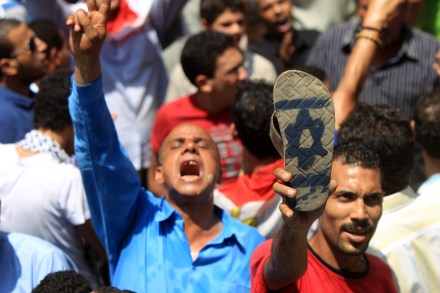
After decades where Arab politicians kept the truth of their constructive relations with Israel hidden from their publics and stoked anti-Semitism and anti-Israel sentiment for domestic purposes, it is no wonder that Israel remains the focus of anger across the Middle East, even after the Arab spring turned attention elsewhere. Last night in Cairo anti-Israeli protests went further than anything seen before, as frustrations with the slowness of the democratic transition and misperceptions about the Egypt-Israeli relationship led demonstrators to attack and torch the Israeli embassy. There will be those who see in Cairo proof that the Arab Spring will unleash nothing but turmoil and conflict. I think it is too early to tell.

Relations between Turkey and Israel deteriorate

From our UK edition

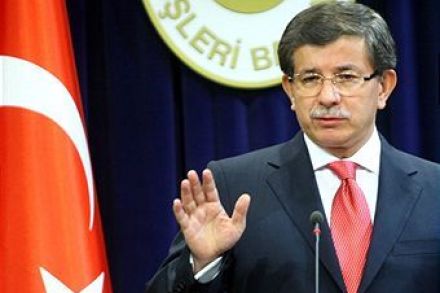
Last summer, I spoke to Turkey’s foreign minister, Ahmet Davutoglu, about the Mavi Marmara row. Davatoglu was not only animated, but clear on what he thought. Unless Israel apologised, he said, the “relationship would change”. Now, Turkey has reacted to the publication of a UN report (which insists that Israel's naval blockade of Gaza was legal but that Israeli soldiers used unreasonable force) by following through on some of Davutoglu's threats. Many military agreements between Turkey and Israel have been suspended and the Israeli ambassador has been expelled. The Turkish Prime Minister, Recep Erdogan, has also warned that relations will disintegrate further unless Israel offers an apology, pays compensation and removes the embargo against the Gaza Strip.

Capital punishment to be debated in parliament?

From our UK edition

Sir George Young has graced the pages of the Daily Mail this morning, arguing that MPs cannot ignore the clamour for a debate on the death penalty, as examined in depth by Pete last weekend. The Leader of the House’s intervention is the greatest indication yet that parliament will discuss the issue for the first time since the passage of the Human Rights Act in 1998. This has not come as a bolt from the blue. A string of e-petitions will mature soon and capital punishment is expected to be near the top of the list, as it always is when the public is asked for its opinion.

Massacre in Hama hastens the need to tackle Assad

From our UK edition

Syrian President Bashar Al Assad has praised his troops for ‘foiling the enemies’ of his country. Some enemies. 140 civilians are said to have died in a pre-Ramadan crackdown on protesters, adding to the toll of 1,600 civilians who have been killed since anti-government demonstrations began in mid-March. Details of the events in Hama are unclear because journalists have been kept out of Syria. But the pattern of events is familiar: protests against the Assad regime emerge; the army moves in to kill demonstrators; more protests then take place, which leads to more killings. Meanwhile, the international community stands by.

Making the peace is a risky business

From our UK edition

The UN has lifted sanctions on 14 Taliban leaders, the strongest indication yet that the international community is opening a negotiated settlement with elements of the Afghan insurgency. Indeed, Germany’s UN ambassador said the move “sends a strong signal: the Security Council and the international community support the efforts of the Afghan government to engage reconciled Taliban in a political dialogue in order to achieve peace and security in Afghanistan.” There are serious concerns about engaging with the insurgency, which, though amorphous, shares common ground in its unreconstructed religious extremism. Renowned war correspondent Dexter Filkins has written of the resilient Taliban’s mounting aggression.

Stopping Syria

From our UK edition

Syria is still ablaze and the West seems unable to do douse the flames. And the risk of the Assad regime committing even greater violence will increase when the world's media moves on. The reasons for Western impotence are manifold. First, for a long time Western leaders thought they could reason with Assad and therefore shied away from direct pressure. When they decided to act, they discovered that Assad is immune to European pressure because Syria does little trade with Europe. But, crucially, many Syrians are either loyal to the regime or fear triggering disintegration of the sort they have seen in neighbouring Lebanon and Iran. Finally, unlike Libya, the Syrian regime is not hated by fellow Arab states.

The trouble with Ban Ki-moon

From our UK edition

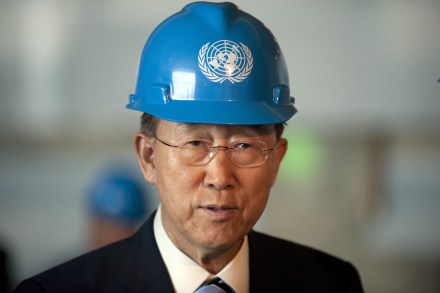
In the little compound known as “Bantanamo,” located outside the UN headquarters in New York, a small sigh of relief was probably breathed last week. For, inside, UN Secretary-General Ban Ki-moon had just been told of the UN Security Council’s unanimous decision recommending that he be elected for a second term. Gabon's UN ambassador Nelson Messone made the announcement to the press after the 15-nation council met behind closed doors. The UN General Assembly will probably vote this week, confirming that Ban will run the organisation until the end of 2016.

Sanctioning Gaddafi

From our UK edition

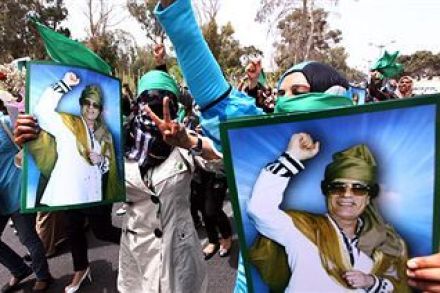
Yesterday, Foreign Office minister Alistair Burt went to Chatham House to explain the UK's Libya policy. It was a mildly painful experience. A particular gem: "Where we will end up nobody quite knows." Well-spoken Lindsey Hilsum easily skewered UK policy, talking of the "indecent haste" of the ICC investigation and raising the ICC's proposal to focus on a political deal. Sir Richard Dalton, an ex-mandarin, remarked that the "tone of optimism of the minister needs to be questioned further." Burt got a lot better during the Q&A, but the event did not make for a particularly compelling argument for what the UK is doing, which is a shame, not least because Alistair Burt can do better. More so as Libya policy may be in better shape now than it has been for weeks.

Unseating Gaddafi

From our UK edition

The pressure is being turned up on Colonel Gaddafi, but it may still take a while to have an effect. The Libyan dictator retains some form of power and has told the only person who has been granted access to see him, South Africa's Jacob Zuma, that he intends to stay on in Libya. He wants a ceasefire before anything else is discussed. The rebels in Benghazi, meanwhile, want him to go before anything else is discussed. And so the bombing goes on. At the UN, people talk of negotiated settlement, fearing that chaos would follow Gaddafi's killing. That may be true, but there has been little evidence so far that the colonel is willing to negotiate in anything approaching good faith.

From the archives – the Butcher of Belgrade

From our UK edition

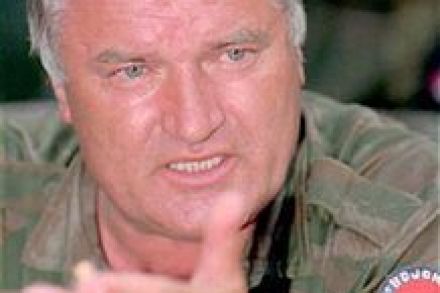
As Ratko Mladic faces his accusers at the Hague, it’s instructive to revisit the fallout from one of the atrocities he is alleged to have committed. The Srebrenica massacre was both a horrendous tragedy and a horrendous failure of internationalism – a point the Spectator made cautiously as news of the war crime emerged. No End of a Lesson, The Spectator, 22 July 1995 The tragedy in Bosnia is so harrowing, the United Nations’ failure so all-embracing, the West’s humiliation so total that it is difficult as yet to see beyond them. But for the Bosnians themselves, the worst may now be passed. Whether the defeated international powers stage some dramatic military feat before their departure is largely irrelevant to those they were sent to protect.

Libya: Bombing does not preclude preparing a Plan B

From our UK edition

The PM is looking to intensify the military campaign in Libya. Losing is not an option. Just think about it. The US gets its man; Britain gets angry, bombs a bit and then goes home. The dictator lives on in infamy: very Clintonesque. To avoid such an ignominious end, a delegation from Benghazi has been called to London in order to hatch a plan with Britain and her allies. But at the same time it may be prudent for someone in government – quietly and out of sight, of course – to look at a Plan B. Not for execution now, but ready in case the time comes. Why a Plan B? While the mission has protected Benghazi and is helping the rebels, questions are emerging about how long the UK can go on for? The operation has already cost close to half a billion pounds.

The Libyan intervention needs to be stepped up

From our UK edition

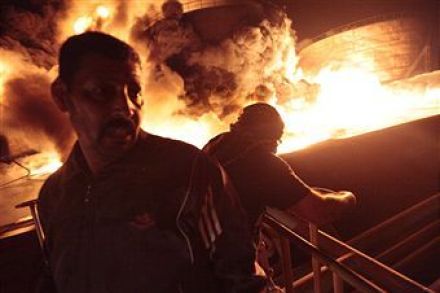
The government is rightly proud of the Libya intervention. Not only did it save thousands of lives in Benghazi but it was conducted in way that learnt the lessons of the past. The Foreign Secretary took pains to get a UN resolution, making the mission legal, and kept the shape-shifting Arab League committed throughout. But unless the government is now  willing to unlearn the lessons of the past, and act both more unilaterally and even illegally, its multilateral, UN-sanctioned action may have been for nothing. For Misrata is now getting the punishment that had been planned for Benghazi. The town is being destroyed in a seige that looks like the shelling of Sarajevo.

The government should recall parliament

From our UK edition

Today’s declaration (£) by Barack Obama, David Cameron and Nicolas Sarkozy that Nato’s operation in Libya will continue until Gaddafi leaves power marks a shift in their rhetoric and makes explicit that regime change is the war aim. This has led to calls to recall parliament, most notably from David Davis on the World at One, to debate this change. Parliament merely voted to enforce the UN resolution which was not a mandate for regime change. The government would be well advised to heed these requests. It would be the best way of maintaining the necessary political support for the mission. Now that regime change is the explicit war aim, the allies must will the means. To do otherwise, would simply guarantee a humiliating and debilitating stalemate.

Dylan urged to stop blowing with the wind

From our UK edition

As one famous artist vanished in Beijing, another appeared. Bob Dylan has begun a tour of China in the same week as Ai Weiwei became the most prominent victim of Beijing’s current repression drive. Ai has been unlawfully incarcerated for what the authorities describe as ‘economic crimes’, and the cry has gone out for his release. Except that the cry has been more of a whimper. Western governments have largely ignored Beijing’s clampdown, which began in February as democratic activism spread from Cairo to Chinese websites. No trade sanctions or UN Resolutions are being issued here, just stern communiqués. Some human rights activists have called on Bob Dylan’s celebrity to condemn the Chinese government outright.