United nations

The camps don’t work

From our UK edition

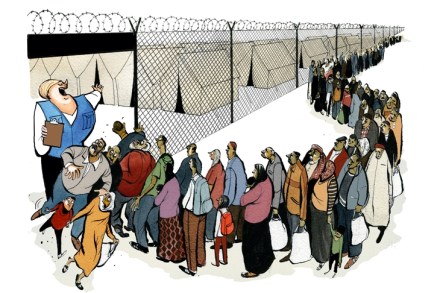
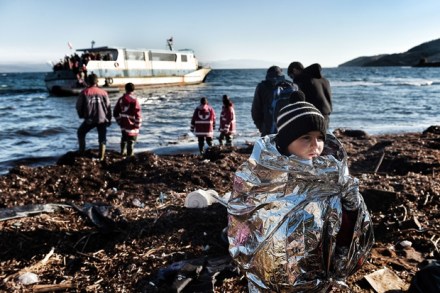
The civil war in Syria, and the resulting displacement of half the population, has been the tragedy of our times. We cannot turn our backs on the ten million people who have been forced to flee their homes. Every decent society knows this and knows that it’s our moral duty to come up with a workable way of helping the refugees. But while the scale of the displacement is substantial, it is not unmanageable. The 21st century should be capable of dealing with such catastrophes and we must prepare ourselves actually to do so. To rise to the challenge, we need to combine the instinctive compassion that mass suffering arouses with the dispassionate analysis necessary to craft an effective response. We need the heart supported by the head.

Trump’s new ambassador is right: the UN is anti-Israel

From our UK edition

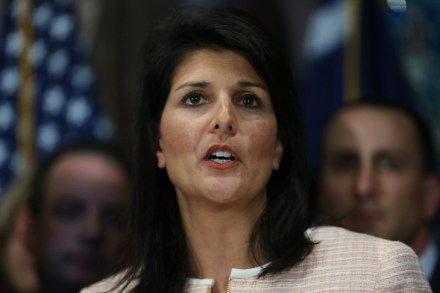
The most important statement from the new administration. Clear, concise, simply and devastatingly expressed. Exactly what many of us have been saying for years – and always upbraided and denounced for so doing. Ladies and gentlemen, I give you Nikki Haley, the new US ambassador to the UN, who has called out the organisation's anti-Israel bias: https://www.youtube.com/watch?v=IwChiaqAMTg Well done, Ms Haley. A woman of colour in the supposedly racist and misogynistic Trump administration. Now she's said it, we all can, with a bit more confidence. And my guess is that more politicians over here will say it, having been given their cue.

Do you know who I am?

From our UK edition

Anyone looking for a groundbreaking ethnography of the global political elite —the elusive social grouping that western electorates are currently lining up to slap in the face — is likely to be disappointed by this book. In the course of these ‘Misadventures’ it is often stated that, for example, ‘At the UN, the bullshit meter is off the charts,’ or ‘the State Department is… full of self-importance and hot air… with very little tangible output.

Britain was wrong to back the U.N’s anti-Israel resolution

From our UK edition

Like all the best mistakes, it was done for the right reasons. Knowing that for once the US wouldn’t veto, the UN Security Council passed a resolution condemning settlement building in the occupied Palestinian Territories. The UK was no doubt keen to be with the consensus but we were wrong to back the Resolution. This time was different. Not because Israel has changed, nor the expansion of the settlements is exacerbating the efforts towards a settlement, but because the world has changed and so have we. The Arab Spring showed that the Israel-Palestinian conflict doesn’t matter. This may sound harsh for a country generating more news than any people can reasonably be expected to cope with but the medieval mapmakers were wrong. The Holy Land isn’t the centre of the world.

A truly monstrous regiment

From our UK edition

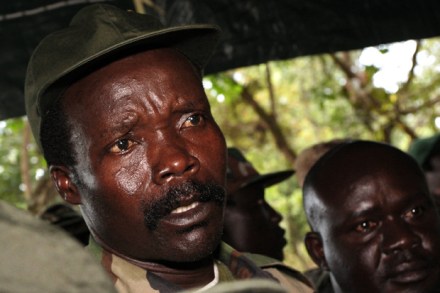
When George Omona first saw soldiers in the infamous Lord’s Resistance Army, he was amazed. The scary fighters who had terrorised people for decades across a big chunk of Africa turned out to be emaciated teenagers with dirty clothes who could hardly hold the big guns they carried. Some were unarmed children, barely ten years old. He felt sorry for them. ‘They could not have known anything else but living in the forest like wild animals.’ Soon he had joined their pack, a reluctant member of one of the world’s most notorious rebel groups. A bright boy who dreamed of becoming a teacher, George ended up a bodyguard to one of the world’s most bloodstained killers.

The West has totally misjudged the situation in Libya

From our UK edition

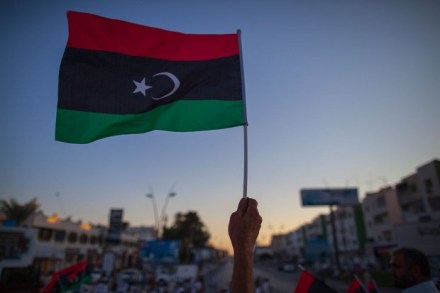
Libya’s former Prime Minister Dr. Mahmoud Jibril has become the first senior leader of its Arab Spring revolution to call time on the country’s new western-backed government, saying 'the chances of success are very slim'. This apparent failure hasn't been caused by a lack of support, which has poured in from London and Washington in a bid to get the Government of National Accord (GNA) to stand up and walk on its own two feet. It was also hoped that by doing this, a fix could be found for the twin problems of Islamic State and mass migration. But Dr Jibril, who helped steer the country through its brutal uprising against Muammar Gaddafi, says foreign powers made a mistake by installing an unelected regime without popular support.

Less than Marvellous

From our UK edition

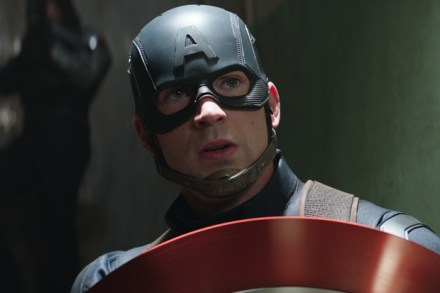
Captain America: Civil War is the 897th instalment — or something like it — in the Marvel comic franchise. This time round, the superheroes take sides, with the marketing asking if you’re #TeamCap or #TeamIronMan but not if you’re #TeamNeither, as would be most useful in my case. I swear this is the last Marvel film I will see as I never get anything out of them and whatever I say only sets the fans against me, which is not what you want at my age. I only attended this one because I had read the American critics (and some of the British ones who’d had a heads up). They all said, at last, a decent Avengers movie with ‘emotional depth’ and ‘moral complexity’, and now I have to question what planet they’re living on.

A genocide is underway in Iraq and Syria. Why won’t the government recognise this?

From our UK edition

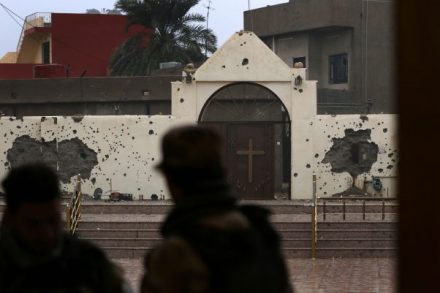
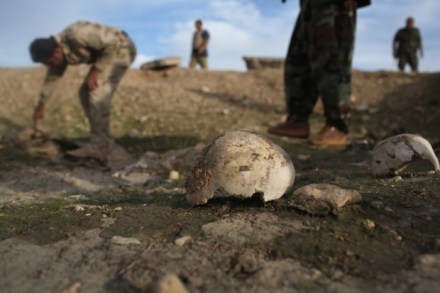
Later today the House of Commons will vote upon a motion expressing belief that a genocide is underway against Christians, Yazidis and other ethnic and religious minorities in Iraq and Syria. The motion, proposed by Fiona Bruce MP, is supported by a large number of MPs from all parties. The Government is expected to oppose, as they did when a similar measure was debated in the Lords. At the time of writing, party enforcers are rumoured to be whipping MPs on the payroll to abstain from the vote. This is an old parliamentary tactic intended to undermine the legitimacy and clout of the measure under consideration by reducing the number of MPs going through the lobbies (about 150 are on the payroll). Surprised by this Machiavellian scheming? You shouldn’t be.

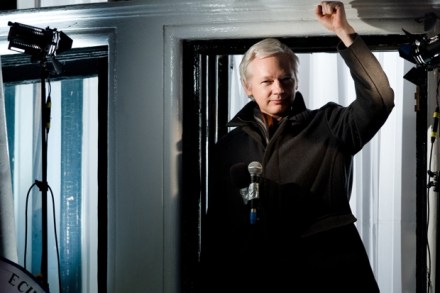
Does the UN not realise that Julian Assange has detained himself?

From our UK edition

Even by the high standards of the UN, its report on Julian Assange is ridiculous bordering on comic. The BBC is reporting that the UN Working Group on Arbitrary Detention will find that he has been ‘unlawfully detained’. This is patently absurd as the only person detaining Assange is Assange himself. He is free to leave the Ecuadorian embassy at any time. Now, if he did so, he would be arrested. But staying in hiding to avoid arrest is completely different from being detained by the state. But the UN panel seems to have missed this. The Assange spin machine has been in full operation today, with the BBC blasting out that he would accept arrest if the UN report found against him.

The ten worst UN moments of 2015

From our UK edition

While a new year can mean new beginnings, Steerpike would hate for anyone to forget some of 2015's more 'interesting' incidents. So Mr S thanks the Geneva-based UN Watch for the following list which highlights the ten worst moments of 2015 when it comes to the United Nations: 10. Iran elected to UN Women Executive Board 'Electing the Iranian regime to the UN women’s rights board is like making a pyromaniac into the town fire chief,' said UN Watch executive director Hillel Neuer. 9. Genocide warnings aside, Burundi wins seat on UN Human Rights Council Although a 2010 Transparency International report named Burundi as East Africa's most corrupt country, the country won a seat on the UN Human Rights Council. 8.

Cooler heads

From our UK edition

When world leaders met in Paris to launch the latest UN climate conference, much of the talk behind closed doors did not focus on global warming. Instead, the Paris conference has been overshadowed by more pressing and less contentious security concerns: the war in Syria, Europe’s refugee crisis and the growing threat of Islamist terrorism in the wake of the Paris massacre. The Copenhagen summit six years ago was a massive event; this year’s climate conference barely merits a mention of the front pages. The Paris meeting is not even attempting to achieve what the 2009 Copenhagen summit failed to do: reach a legally binding treaty on cutting CO2 emissions.

The real victims of climate change

From our UK edition

[audioplayer src="http://rss.acast.com/viewfrom22/thegreendelusion/media.mp3" title="Matt Ridley and Michael Jacobs debate the point of the Paris climate change conference" startat=31] Listen [/audioplayer]The next generation is watching, Barack Obama told the Paris climate conference: ‘Our grandchildren, when they look back and see what we did in Paris, they can take pride in what we did.’ And that, surely, is the trouble with the entire climate change agenda: putting the interests of rich people’s grandchildren ahead of those of poor people today. Unfair? Not really, when you look at the policies enacted in the name of mitigating climate change.

Get ready: these climate change talks might actually do something

From our UK edition

The Prince of Wales is right, and I appreciate that this isn’t something people say very often. Now and again, certainly, Prince Charles does turn out to be right about things, such as the need for interfaith dialogue or the horrors of some modern architecture, but the manner in which he tends to be right about them does rather have the feel of happy coincidence. In the future, as Warhol didn’t quite say, we will all be right for 15 minutes. Unless it’s about homeopathy. This week, you see, the Prince told Sky News that the war in Syria may be linked to climate change. Not, please note, that it was caused by climate change, let alone man-made climate change. His view is very much not that, if more of us drove electric cars, Raqqa would be at peace.

Charles Moore’s Notes: Who’d be a diplomat now?

From our UK edition

The other day, a friend told me, he had been chatting to an old friend of his who has spent his life in diplomacy and international relations. The man, who will quite soon retire, has had a successful career, but he was full of gloom. Essentially, he said, the entire system of international relations has now been working very badly for 20 years, having worked much better in the previous 50 or so. No one — particularly no one in the West — can see a way through this, but the chancelleries and ministers are reluctant to confront this sad truth, and so a pointless merry-go-round of international conferences, bodies and negotiations consumes the energies of those foolish enough to stay in the game.

The Australian example

From our UK edition

For many years, Australia has been turning away boats filled with migrants. From a remove, this looks cold--hearted — a nation built by immigrants showing no compassion for others who want a better life. But it is precisely because Australia is an immigrant nation that it understands the situation: if you let the boats land, more people come. People traffickers will be encouraged, migrants will be swindled, and their bodies will wash up on your shores. Any country serious about immigration needs a more effective and robust approach. Tony Abbott, the former Prime Minister of Australia, made that point clearly this week on a trip to London.

PMQs: Corbyn fails to sustain the pressure on Cameron

From our UK edition

PMQs was a rather ill-tempered affair today. With tax credits and steel closures dominating proceedings, the two sets of benches went at each other with vigour. This was much more like an old-style PMQs than the other Corbyn sessions. The Labour leader began on the tax credits issue. His questions were beginning to rile Cameron, who — in a poor choice of words — said that he was ‘delighted’ that tax credit cuts had passed the Commons. But Corbyn then changed tack to ask about the steel industry. This eased the pressure on the Prime Minister and allowed him to regain the initiative. Corbyn finished his set of questions by demanding that Cameron cooperate with a UN investigation into how Britain treats the disabled.

Who knows where the violence in the West Bank might lead – but it could well take Abbas with it

From our UK edition

In recent days the situation in Jerusalem and the West Bank has been unravelling. For some years now, fighting between Israelis and Palestinians has tended to come in the form of intermittent clashes in and around Gaza. Rocket warfare, Israeli airstrikes and subterranean tunnel attacks have become a familiar part of the latest chapter of this now century long confrontation. In the last couple of weeks, however, the focus of tensions has shifted from Hamas controlled Gaza to the West Bank, where the major Palestinian population centres are under the security control of the somewhat more moderate Fatah. The violence that we are seeing now is taking the form of roadside shootings, stabbings, rock throwing attacks and rioting.

Dick at his trickiest

From our UK edition

In the more than 40 years since Richard Nixon resigned as president — disgraced as much by his inveterate lying as by his actual crimes related to Watergate — history has been relatively kind to him. Compared with Ronald Reagan, Bill Clinton and George W. Bush, Nixon in retrospect can seem statesmanlike, thoughtful and liberal-minded. He established diplomatic relations with communist China, took the US off the gold standard, negotiated the wind-down of the Vietnam war, and created the Environmental Protection Agency — accomplishments that generally prompt even Nixon-haters to pause before they condemn Tricky Dick to perdition. But now comes Joan Brady with a bracing reminder of what indeed was so hateful, so villainous about Nixon and his political ascent.

Mitchell and Cooper present two different paths on dealing with Syria

From our UK edition

It’s back to school day in Westminster and one of the first items on the agenda will be David Cameron's announcement on accepting more Syrian refugees. Exactly how many extra asylum seekers Britain will take in is, according to the Sunday Times, likely to be between 10,000 and 20,000. Someone who is particularly pleased with this is Yvette Cooper, the shadow home secretary and Labour leadership contender.

Military inspections must be a non-negotiable part of Iran’s nuclear deal

From our UK edition

It is probably safe to say that the negotiations with Iran aren’t going very well. As the 30 June deadline for a final agreement looms America’s top negotiator Wendy Sherman has just announced that she will resign shortly after, telling the New York Times that it has been 'two long years' in that position. Meanwhile the Iranians are now saying that they want the deadline for reaching an agreement extended, with the Obama administration insisting that’s not an option. To make matters worse unconfirmed reports have recently emerged claiming that a delegation of North Korean nuclear weapons experts have been paying regular visits to Iranian military facilities.