Uk politics

Hey big spender

From our UK edition

Perhaps Lord Myners hasn’t seen the cuts memo because he appeared on Sky News this morning trying to convince the world that Britain can and must maintain its current spending levels. Despite concerns over the budget deficit, a reality that even the Prime Minister acknowledges, Lord Myners said: "We're keeping people in their jobs we're keeping people in their houses we're being sensitive to the needs of the community. That programme must not stop until the recovery is firmly rooted. "We can afford to do it and it's quite evident from the fact that we are able to raise money in international bond market. The willingness to support us is there.
Unite: Labour can’t function without our money 

From our UK edition

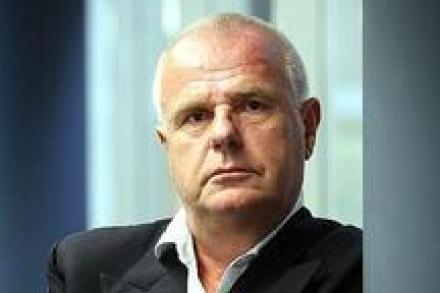
With the TUC conference coming up, Derek Simpson, leader of Unite, flexes his muscles in an interview with The Independent. He tells Jane Merrick that Labour couldn’t fight a proper election campaign without Unite’s financial backing: "What are the consequences of us not giving Labour money? That will really impair, fatally damage, any chance of Labour winning a general election. We give money to allow the Labour Party to function." Considering that the unions gave Labour £11.4 million between the first quarters of 2008 and 2009, Simpson is probably right. (Worryingly for the party one of Simpson’s most likely successors is standing on a platform of ending the union’s donations to Labour).

Can Brown make it through December?

From our UK edition

The question of Gordon Brown’s leadership won’t go away, but there’s a feeling that nothing will happen for a while yet. Andrew Grice writes in The Independent today that the coup might come in December: “Labour's hard left and the trade unions are the dogs that have not barked. The assumption is that they stick with him for fear of something worse, and calculate that their best hope would be to exploit a backlash against New Labour after an election defeat. I am told that their mood is now changing. Some left-wing MPs and union bosses are coming round to the view that they would have an overriding duty to avoid a massacre that could keep the party out of power for a generation.

John Denham’s Mosley comparison merely sensationalises race-tensions

From our UK edition

Communities Secretary John Denham has compared the English Defence League (EDL), the group that has organised protests against what it describes as the ‘Islamification of Britain’, to Oswald Mosley’s Union of British Fascists. Whilst announcing that the government plans to re-engage predominantly white working class voters who are being seduced by the BNP, Denham said: “You could go back to the 1930s if you wanted to - Cable Street and all of those types of things. The tactic of trying to provoke a response in the hope of causing wider violence and mayhem is long established on the far-right and among extremist groups.

Tory guru: Financial system riskier now than it was before the collapse of Lehman Brothers

From our UK edition

There’s a good article in the New York Times today about how little has changed in the way Wall Street does business since the collapse of Lehman—employment in the sector is only down eight percent, Goldman employees will earn on average $700,000 this year and derivatives are still not being traded on an open exchange. Indeed, the new Tory guru Nassim Taleb, the author of The Black Swan, thinks that the system might be riskier now than it was when Lehmans collapsed: “Mr. Taleb warns that the system has grown riskier since last fall. The extensive government support that began after Lehman collapsed will lead investors to assume that governments will always prevent major banks from collapsing, he said.

Cameron’s public caution masks the party’s private preparations

From our UK edition

David Cameron doesn’t give much away in his interview with the Telegraph. He again commits the Conservatives to making cuts and implies that taxes will have to be raised. But there are no specifics given. On the one hand, the lack of detail is frustrating—surely the party would have more of a mandate in government if it was more explicit now about what it was planning to do? Some straight talk would also put to bed the idea that the Cameroons are nothing more than marketing men. But on the other hand, one can appreciate that any specific pledge would hand Labour an issue to campaign on. In private, though, the Tories are beginning to get to grips with what they will need to do.

The government needs to get a grip on its CRB craziness

From our UK edition

That the news that the government wants everyone who gives children a lift anywhere to be CRB checked broke on the same day that it emerged that Haringey council had sent a child to live with the ringleader of the airline bomb plotters is beyond satire. How have we got to a state where parents can’t team up to do a run to Cubs together without the state vetting them while simultaneously a council is sending a child off to be fostered by terrorists? As Mary has argued, CRB checks are one of the big obstacles to volunteering. If the Conservatives really do want to roll forward society, then they are going to have to deal with this CRB craziness and instead apply a bit of a common sense.

Balancing defence spending

From our UK edition

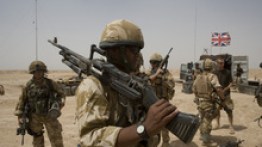
There's an intriguing story in today's Times suggesting that the Tories may "backtrack" on some defence spending commitments, and are thinking about shelving the Trident replacement.  Here's a snippet: "Liam Fox, the Shadow Defence Secretary, pledged last year to protect the three most expensive equipment programmes: aircraft carriers, an armoured vehicle system known as FRES and Britain’s nuclear capability. He also indicated his desire to expand the Army by 10,000 soldiers. An aide to Dr Fox said this week that commitments 'had been superseded' by plans for a Strategic Defence Review (SDR) after the election. George Osborne, the Shadow Chancellor, also warned that a Conservative government would have to make “some difficult decisions” on military procurement.

What to make of the Simpson intervention?

From our UK edition

"What did he mean by that?" is the question one is left with after reading Derek Simpson’s interview with the Mirror. Simpson tells the paper that New Labour is dead and that "if you could convince me there is somebody who could take over and go down the Old Labour route without hesitation I'd share the view that if Gordon is not prepared to do it he should stand aside and let that person do it. That could save the Labour government.” This is, to put it mildly, rather off message and Unite have rushed out a statement this morning saying that Brown has Simpson’s “full support” and is the “only choice” to lead Labour into the election. But it doesn’t deny what Simpson said.

Clarke and Cameron, in conversation

From our UK edition

A neat little anecdote in Steve Richards' column this morning: "When David Cameron bumped into Charles Clarke at the end of the summer, the former Cabinet minister told the Tory leader in relation to the attempted coup: 'Don't worry... we'll be back'. Cameron replied to him only half jokingly: 'That's exactly what I am worried about'.

Clarke tries to get a left hook through Brown’s defences

From our UK edition

Charles Clarke has sounded off so often during the Brown premiership that it is tempting not to pay too much attention when he does. But his latest broadside is interesting in that Clarke is having a go at Brown as much from the left as from the right. He again attacks the abolition of the 10p rate and calls for Trident not to be renewed, two things that please the left. But he follows up with two new criticisms of Brown that will play well with the left. He says that Brown’s “toleration of UK tax havens has been a disgrace” and calls for "genuinely fair" corporate taxation. The plot to oust Brown failed because it did not attract enough support from the soft left of the party.

A question of commitment

From our UK edition

Punchy stuff from Michael Fallon in today's Telegraph.  The Tory deputy chairman of the Treasury Select Committee sets out five ways for his party to "get real" over public spending cuts.  Over at ConservativeHome, Tim Montgomerie dwells on perhaps the most striking of those five: a recommendation that the Tories should think again about national pay bargaining in the public sector.  But, for those interested in interal Tory politics, Fallon's first point also stands out: "No, if we really want to cut public spending, there are five things we need to do. The first is to convince the shadow cabinet. There's little evidence that it has the faintest idea of the commitment needed.

The thinking behind Mandelson’s double-dip warning

From our UK edition

Peter Mandelson’s warning of a double-dip recession is in pretty much all the papers today. There’s no doubt that there is a risk the recession could turn into a W shaped one because the underlying problems in the financial sector have not been properly dealt with. But it also plays into Labour’s political strategy which is to argue that the situation is still so serious that it remains no time for a novice. ‘Don’t let the Tories ruin it’ or ‘Don’t let the Tories throw it away’ are both being mooted as possible Labour election lines. Brown apparently believes that Churchill’s fate shows that the people must not think the danger has passed if he is to win re-election.

More fuel for the fire of leadership speculation

From our UK edition

So the Daily Mail has another anti-Brown plot rumour for the collection; this one based around the idea that a "Gordon must go" candidate could run for a seat on the PLP's Parliamentary Committee: "Rebels are planning to put up a candidate for the Parliamentary Committee, a panel of senior backbenchers which meets once a week with the Prime Minister, when MPs return to Westminster next month. The 'coup candidate' will run on a single platform - a call for Mr Brown to stand aside and let someone else lead Labour into the General Election... ...MPs will then be able to vote in secret for Mr Brown to stand down, without needing to go public with their views.

Lansley refines his approach on NHS spending

From our UK edition

Sit down, take a deep breath and steady yourself: we've had a change of approach from the Tories on NHS spending.  No, they're not promising cuts.  But they are promising, for the first time, a much slower rate of real-terms spending increases.  Andrew Lansley has said that he can only guarantee "small increases" in the health budget, adding a simple point that we haven't heard too many times from his corner: “We have trebled the amount taxpayers spend on the NHS but we have not seen a real return ... We are determined to turn this situation around. The NHS, just like any other organisation in this recession, needs to focus on getting more for less.

How the Tories will repeal the hunting ban

From our UK edition

The Guardian has a story today about how field sports enthusiasts are donating heavily to Nick Herbert, the shadow DEFRA secretary. The paper links the donations to the fact that the Tories are committed to holding a vote on the repeal of the hunting ban. As the Norwich North by-election showed, Labour will have a go at turning this into an election issue—hoping that it will aid their attempt to paint Cameron and Osborne as people most interested in looking after their wealthy friends. Norwich North suggests this attack won’t have that much cut through. But once elected, the politics of repealing the hunting act will be tricky.

Checking up on the UK’s debt crisis

From our UK edition

Now this is engrossing in a grim kind of way.  It's the Economist's brand new Global Debt Comparison feature, and charts public debt for the entire world ($39.1 trillion dollars, at the moment), while also providing details for individual countries.  If you want a sense of the debt crisis facing this country, then just click on the info for the UK across a few years.  In 2009, it's bad enough: the Economist has us in the highest debt group, with public debt at 79.6 percent of GDP. For what it's worth, that's slightly better ratio than, say, France (83.7 percent) or Germany (87.9 percent).  But by 2011, our public debt-GDP ratio has shot up to 112.5 percent, outstripping France (102.3 percent) and almost equal with Germany (115.8 percent).

Introducing GP charges won’t solve the primary care dilemma

From our UK edition

A common response to the impending age of austerity in the NHS is to suggest that charges are introduced for visits to the GP.  The line of reasoning adopted by MEPs and think-tanks alike is that a means-tested £20 charge will "encourage healthy, wealthier people to use the NHS only when absolutely necessary." Leaving aside the fact that such a system would cost more to administer than it would generate in revenue, a more interesting question is whether the converse holds true?  That is, whether unhealthy and poor people aren't using GP services when they should be.  The consequence of this is more profound because poor and unhealthy people tend to cost the NHS much more than few unnecessary appointments booked by the worried well.

Playing the war game

From our UK edition

Over at ConservativeHome, Tim Montgomerie has written about a ‘war game’ that Portland PR held yesterday. The idea was to explore the various challenges that would face the next government. Portland had gathered together an impressive group including key Tory advisors, a senior figure from the Blair government, a former US government official, a senior military bod and a fair few hacks including yours truly. The thing that struck me once the exercise was done was just how buffeted by events the Cameron government is going to be. It will inherit a global situation that is as bad as the economic situation, if not worse, and a slew of other underappreciated problems such as the risk of an energy crunch.