Uk politics

The separation of powers

From our UK edition

If you want to understand what the Cameroon's are thinking, Danny Finkelstein is essential reading. He used to work with them and he thinks like them, there is almost a mind meld between him and them.  His column today is all about why it would make more sense to actually separate out parliament and the executive and elect the head of state. I'm rather sympathetic to this point of view, but I don't think the Tories will do anything this radical even if they talk about it in private.   One thing they might well do, though, is have ministers who aren't members of either the Commons or the Lords. The argument goes that the current arrangements aren't good for either the executive or the legislature.

The death tax ads are the sort of hardball politics the Tories should play

From our UK edition

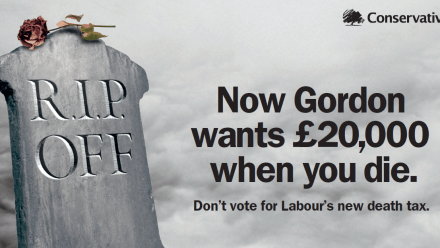
I must admit to rather liking the Tory death tax ads. They are the kind of hardball aggressive politics that the Tories need to master if they are going to win this election. Are they dishonest? Well, I think in the grand political scheme of things they qualify as fair: Brown won't rule this out and it is definitely an option Labour is considering so it is fair game. If this attack is out of bounds, then so is most of the dossier Labour produced on Tory spending plans at the beginning of the year. The other thing that really infuriates me about this whole debate is the idea that the responsible thing to have done would have been for the three main parties to hammer out some compromise deal and then just present it to the public.

A comic tale with serious undertones

From our UK edition

The Joanne Cash affair is the kind of story you couldn't make up. But once you get beyond the comic details there are a few things worth taking seriously. First, CCHQ has not covered itself in glory during this episode. It was aware of the problem but rather than dealing with it, it attempted to massage the situation. If CCHQ had acted decisively, this problem could have been resolved a fortnight ago without all this publicity and damage to the party. CCHQ's performance hardly fills one with confidence about whether or not it has done the appropriate due diligence on its candidates all around the country.   Second, it is striking how much resentment there is to the Cameron circle even in an association so close to Westminster and Notting Hill.

Best served cold

From our UK edition

Good spot by the FT's Jim Pickard, who has picked up on these informal minutes from the last meeting of Labour's National Executive Committee.  He's aleady rooted out some of the juiciest sections (including stuff about voting reform and the election date), so I'd suggest you head over to the FT Westminster blog for that.  But this deliciously sinister reference to the Hoon and Hewitt plot deserves repeating: "Two weeks earlier, members of the organisation committee had forcefully expressed grassroots anger at continuing outbreaks of indiscipline at senior levels and agreed that all members should be equally subject to party rules, but the NEC ended up adopting Dennis Skinner's advice to deny the troublemakers the oxygen of publicity. We may return to them after the election.

The Tories’ dirty tactics are dispiriting but effective

From our UK edition

This death tax levy is gutter politics at its most visceral and it’s thrilling drama. Brown's and Cameron's loathing for each other is pure soap opera, and they’re having a right old slanging match. I agree with Pete, it is dispiriting to see the Tories stoop to misrepresenting policies, the show-stopper in Brown’s repertoire. Together with Cameron’s personal attacks, the Tories have surrendered the high ground, but as Iain Martin notes is anyone really surprised? The Tories have been expecting, righty, Labour to fight a grubby election campaign and have decided to fight Brown’s mob with fire. Personal attacks appeal largely to those whose minds are settled, so I see little electoral advantage in delivering them.

PMQs live blog | 10 February 2010

From our UK edition

Stay tuned for live coverage from 1200. 1200: And we're off, bang on time.  First question on Labour's elderly care plans.  Brown delivers a load of platitudes about how the government is committed to better care.  Even adds that he hopes for cross-party backing. 1201: Cameron now.  He leads on elderly care plans too - and how they will be funded.  With a nod to a letter in today's Times, he adds that people who will have to implement it thinks its disastrous. 1202: Brown's on fiesty, if typically disingenous, form.  He says that he "knows how [Cameron] likes personality politics".  His substantial point, though, is that the Tories supported the Bill in the Commons. 1205: Cameron effectively repeats the point with his second question.

Has that Tory poster made Brown’s job easier in PMQs?

From our UK edition

Yesterday's Guardian story about a potential death tax would have been perfect material for Cameron in PMQs. Even after Andy Burnham's denials, there are still legitimate questions to be asked about it. For instance, would the government say that they will never propose the tax? And, if not, how will they pay for their social care guarantees otherwise? Fired across the dispatch box, these enquiries could have put Brown on the back foot. But now that the Tories have jumped the gun, and released that poster attacking a Labour policy which isn't actually a Labour policy, they've rather limited that line of questioning. If the death tax comes up, all Brown need do is point to the poster and cry foul play. He can even throw in a few words like   "misleading," for good measure.

Kraft’s betrayal is Mandelson’s failure

From our UK edition

I don’t usually agree with the sage of Twickenham but he is right that Mandelson’s promise on Cadbury “melted away”. Kraft is a notoriously feckless corporation, loathed the world over. Reneging on promises is its modus operandi and the remaining 4,000 Cadbury workers are understandably concerned that the closure of Somerdale is just the trailer. Of course, government should not manage private enterprise in circumstances other than the extraordinary, but neither should it be submissive when jobs are at stake. Mandelson’s reputation as a demagogic strategist is deserved, when it comes to smooth tongued fixers he is unsurpassed. But that is his tragedy: his achievements are contained within partisan precincts.

Cameron attacks tax-happy Brown

From our UK edition

A strident interview from David Cameron in today's Express, in which he touches on everything from inheritance tax to not, never, ever joining the Euro. It's this passage that jumped out at me, though: “Middle Britain has had a wretched time under Labour. This Government has taxed mortgages, marriages, pensions, petrol and travel and raised national insurance and the top rate of income tax. We cannot keep squeezing hard-working families." Why so noteworthy? Well, off the top of my head, this is the first time that Cameron has referred to the current system as a "tax on marriage".

The problem with that David Cameron ad

From our UK edition

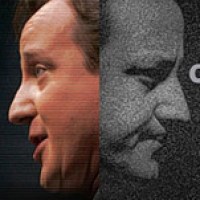
Labour’s new ad with David Cameron facing both ways highlights what was wrong with the Tories’ opening ad of the year, that one dominated by Cameron’s face. The Tory strategy for the election campaign has to be to try and make it into a referendum on this failed government. But that ad, which emphasised Cameron so strongly, gave Labour an opening to try and turn the election not just into a choice between two parties but into a referendum on David Cameron and Tory policy. Labour’s success in doing this is largely responsible for the Tory wobble. The contrast between Cameron and Brown does work to the Tories’ advantage. But it works because it is a contrast.

Some Tories are yet to repay their expenses

From our UK edition

Bad news for David Cameron in the Standard this afternoon – several Tories have not made expenses repayments that were agreed seven months ago. After yesterday’s success, the last thing Cameron needed was a question over the effectiveness of his Scrutiny Panel, established to go “beyond the letter of the rules”, which he deemed too lenient to placate public anger. Bill Cash is the major culprit exposed by the Standard. He agreed to repay £15,000 for an unacceptable rent/mortgage arrangement, but Commons records disclose that he has only repaid the £429 he claimed on an antique desk. Although the non-compliance of Tory MPs is a problem for Cameron, this isn’t merely a story of rapacious Tory MPs.

How should the Tories respond to those Labour guarantees?

From our UK edition

If you're going to take anything away from Andy Burnham's press conference this morning – apart from his denials about a £20,000 "death duty" – it's how heavily those Labour "guarantees" are going to feature in the election campaign.  Here we had social care guarantees, cancer treatment guarantees, waiting line guarantees, and even a new website and poster (see above) attacking the Tories for not signing up to the same guarantees.  So far as the government is concerned, it matters not that these pledges have been made before – what matters is the opportunity to draw more dividing lines across the landscape of British politics.  "Caring" versus "cruel", as far as the eye can see.

Accountability on your iPhone

From our UK edition

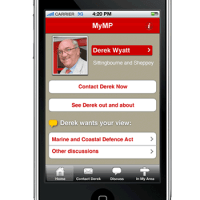
With Brown pitching his AV referendum as the solution to at least some of our political ills, it's worth highlighting the quieter efforts of another Labour MP, Derek Wyatt, to fix the system.  Mr Wyatt, you see, has got involved with the MyMP iPhone app which helps voters track and converse with their MPs.  The first version was released on 15 January, but, I must admit, I've only just come across it thanks to the Telegraph's report this morning. Sure, an iPhone app is only a small thing.  And, in this case, there's certainly room for improvement, as well as for more MPs signing up to the service.  But it's a decent start - and further proof that a combination of simple technology and proactivity on the part of MPs can result in something very much like progress.

Plenty to encourage the Tories in the Populus poll

From our UK edition

Well, the Populus poll isn't all good news for the Tories. As James pointed out last night, they have shed another point and Labour have regained some ground. But, as both Peter Riddell and Mike Smithson note, the Tories can still secure an outright majority on the basis of these figures. The numbers which lead the Times's frontpage coverage are more encouraging for Cameron & Co. They show that the public are attuned to the Tories' broad narrative. 73 percent think society is broken; 82 percent think that now is the time for change; and 64 percent believe Britain is heading in the wrong direction. After 13 years in power, Labour cannot credibly represent change; it has to defend its record, which on the evidence of these findings is not something it will manage easily.

A day to damage Brown?

From our UK edition

Contain yourselves, CoffeeHousers.  I know that we're all really excited about today's Parliamentary vote on an alternative vote referendum (it is, after all, something our Prime Minister has described as "a rallying call for a new progressive politics"), but it isn't a done deal just yet.  That "new politics" might still be put on hold. Indeed, things could get messy for Brown in just a few hours time.  You'd expect him to win the vote, what with Labour's majority and the creeping sense that Downing St very much wants this to happen.  But even the slightest hint of a Labour rebellion, or of Lib Dem disquiet, and the story could turn toxic for the PM.

The Tories think Brown is their most potent weapon

From our UK edition

‘We just need to ram Gordon Brown down the electorate’s throat’ one Tory staffer said to me today when talking about how the party could get back on the front foot. The unspoken thought was that the prospect of five more years of Gordon Brown would be enough to send voters into the welcoming arms of David Cameron.    The Tories are frustrated that in the last few weeks this election has gone from being the referendum on the government to almost being a referendum on them and their plans for government. They are determined to turn the focus back onto Brown, hence Cameron’s aggressive attack on Brown this morning.   PS The Populus poll for The Times tomorrow has the Tories on 40 and Labour on 30, a narrowing of the Tory lead from their last poll.

If this is a suspension, what is an expulsion?

From our UK edition

Sky’s Jon Craig’s asks one of those questions you wished you had posed: wasn’t Elliot Morley suspended already? Yes, he was, on the 14 May 2009 and with immediate effect. However, showing a fine disregard for the manner in which repeat offenders are usually treated, Labour suspended Morley again for good measure. Seeking a clarification about the initial suspension, Craig was told that Morley had been denied the ‘privileges of the PLP’. What might they be? Subsidised beer and sandwiches perchance? The rumour is that Morley was either re-instated on the quiet or had escaped in the first instance, lending more weight to the sense that Labour’s response to the expenses scandal has been hopelessly ill-conceived.

Which UN figures show 600,000 Iraqi deaths?

From our UK edition

While skewering Alistair Campbell on his show, Andrew Marr said the Iraq War had killed 600.000 people. Blair’s former spin-doctor was on the ropes at the time and so did not contest the count, which Marr claimed were “internationally-accepted UN figures”. But I’m curious to find out where Marr got this count from. Finding out how many people have died is difficult, as no Iraqi or Coalition government office regularly releases publically available statistics on Iraqi civilian deaths. I have not been able to find the supposedly authoritative UN figure Marr quoted. But the Iraqi Body Count, the world’s largest public database of violent civilian deaths during and since the 2003 invasion, puts the figure between 95,309 – 103,982 deaths.