Uk politics

George Osborne must put spending cuts ahead of tax rises

From our UK edition

In 2009, Britain borrowed more, as a share of its national income, than any country that isn't being bailed out by the IMF and the Eurozone (Greece) or already making drastic spending cuts (Ireland).  That huge deficit is the critical challenge to our economic stability that George Osborne needs to tackle with the Budget today.  We have got away with high borrowing so far on the understanding that cuts are coming now the election is out of the way.   If you think tax hikes are the answer, then you're asking the wrong question.  Our present fiscal crisis is built on a decade of bumper rises in spending, not tax cuts.  Over the last decade, spending rose from 36.6 per cent of GDP to 53.4 per cent this year according to OECD data.
Osborne makes the “progressive” case

From our UK edition

During the Brown years it was "stability," but it looks as though the watchword for Chancellor Osborne's first Budget will be "progressive".  This is the word that's being bandied about behind-the-scenes, and the coalition seems confident that it has the policies to match the rhetoric.  As the Guardian reports today, it's likely that the personal income tax allowance will be raised by £1,000 or so, to help shield the least well-off from tax rises elsewhere.  And the paper quotes a Tory aide saying that the richest will pay more, "both in absolute terms and as a percentage of their income." Whether he drops the p-word or not, the arguments behind it are comfortable territory for Osborne.

Osborne looks to the long-term

From our UK edition

There are plenty of details for Budget-spotters to look out for tomorrow, but among the most important is just how far Osborne reaches into the future.  The current expectation in Westminster is that he will offer quite a few glimpses into the long-term.  A possible commitment to reduce the main rate of corporation tax to 20 percent over the next five years, perhaps.  Or similar provisions for making the first £10,000 of income tax-free. There are, of course, economic and political motives behind this.

The two sides of the VAT question

From our UK edition

There are two main aspects to the VAT issue: one distasteful, the other less so.  The distasteful one is the issue of whether the government has a mandate for hiking VAT in tomorrow's Budget.  Of course, government is often the art of the unexpected, so we shouldn't be surprised to see measures implemented that weren't explicitly raised in the election campaign – particularly when it comes to tax rises.  But all the claims that there were "no plans" to raise VAT do jar against reports like: "Osborne insisted the budget measures would be spread fairly across society, suggesting capital gains tax will rise and promising a new banking levy.

Who is prepared to cut, and who isn’t?

From our UK edition

One of the leitmotifs of this Parliament  – and something which, by many inside accounts, is helping the coalition immensely – is the willingness of the civil service to wield the axe within their own departments.  And now, courtesy of Reform and the Institute of Chartered Accountants, a new survey suggests that this mentality may stretch beyond Whitehall.  It quizzes public sector "finance decision makers," and the headline finding is that: "82 per cent of respondents think further savings can be made within their organisation in the next year without affecting the current level of service they provide.

Nick Clegg’s Big Week

From our UK edition

With the cuts comes the candy: the sweet-tasting morsels which, it is hoped, will prevent tomorrow's Budget from being too much of a collective downer for the nation.  We're already hearing that a council tax freeze will be pencilled in for next year, and you can expect a few more treats besides. National insurance, for instance, is looking like an obvious candidate. From George Osborne's perspective, these sunnier measures will serve a two-fold purpose.  Like I say, it will be hoped that they keep the public on board with the government's project: stick with us, the message will run, and you'll get more of this in future.  But they will also be used to bind the coalition together.

What will the Labour attack be in a year’s time?

From our UK edition

It's days like this when you realise just how stuck Labour are in a Brownite groove.  Everywhere you turn, there's some leadership candidate or other attacking the government for choosing to cut public spending this year.  Ed Miliband claims that the Lib Dems have been "completely macho … completely cavalier" about cuts.  Andy Burnham says that this year could "damage us in the long run".  And even those who aren't chasing the leadership are getting in on the act: Alistair Darling writes that the coalition has "a fiscal policy that undermines fragile growth". So we already know what Labour's broad response to this week's Budget will look like.  But it got me a-wondering: what will their response to next year's Budget be?

Osborne’s massive opportunity

From our UK edition

I’m quite optimistic about George Osborne’s budget – in the same sense that one might have been optimistic when Churchill took over from Chamberlain. Not because the situation is good, or because you think the road ahead will be easy or enjoyable, but because the road no longer leads to disaster. Not that Osborne is a Churchill – even though he will have his own fair share of blood, sweat toil and tears for us on Tuesday. I’m pretty confident he’ll head in the right direction, and at the right speed. I discuss this in my News of the World column today, but will say a little more here: 1. This Budget will probably mark the point when the UK started to recover. For two months now, the economic data has been favourable.

Assorted LibDem-ery

From our UK edition

Alastair Campbell is right on two counts.  First, that this snippet from George Parker's Budget preview is pretty fascinating: "Senior Lib Dems whisper that Vince Cable, the Lib Dem business secretary, never really believed his pre-election rhetoric that cuts should be delayed until 2011." And, second, that the claim about Cable is downright unbelievable.  I mean, this is the man who attacked Tory spending plans at every opportunity he could, and more venomously than any of his colleagues.  The man, indeed, who pushed the line that "the economy will be plunged back into prolonged recession" as a result of early cuts.  And the man who, by many behind-the-scenes accounts, encouraged his party to adopt the Not This Year stance in the first place.

The Budget: compromise and non-compromise

From our UK edition

It's hard to overestimate the significance of Tuesday's Budget. George Osborne's statement won't just determine the course of our economy for the next few years, but also the political life of this government. Spending cuts and tax rises may not inevitably "fracture the coalition," as Peter Oborne puts it in the Mail today. But they certainly have the potential to. Happily for the coalition, the current political mood is so geared towards fiscal restraint that there will be little immediate opposition to Osborne's general plans.  That will come once the effects of spending cuts are felt in individual constituencies  – months, even years, down the line.

Lord Ashcroft clarifies a few things

From our UK edition

After all the hoo-haa about Lord Ashcroft's tax status, it's only fair to mention this passage from his interview with the Telegraph today: "He explains that new laws brought in under the Coalition mean that all members of the Lords will have to be fully taxed. Yes, I reply, but when does he plan to come onshore? 'I already am.' Really? There has been no public announcement. So he is now paying all of his taxes, including everything that comes from his businesses around the world? 'Yes. So I say to people don’t go moaning on about it because it is no longer an issue. The point is moot... Can we move on?' We move on.

Cameron previews the austerity budget

From our UK edition

Tick, tock, tick, tock: only three-and-a-bit days to go until George Osborne's long-anticipated austerity Budget, and the coalition is gearing up its efforts to prepare us for the worst.  Exhibit A is David Cameron's interview in the Times this morning, which contains few pleasantries and a whole heap of stern talk  – particularly for those in the public sector.  As the PM puts it: "There is no way of dealing with an 11 per cent budget deficit just by hitting either the rich of the welfare scrounger … there are three large items of spending that you can't ignore and those are public sector pay, public sector pensions and benefits.

All in all, a pretty good day for the government

From our UK edition

I doubt David Cameron will have many better days in government than this. Considering the government cancelled a hospital project yesterday, today has passed as one long photo-op, free of incident. It began with Theresa May banning a radical Islamist cleric, Zakir Naik, displaying a resolve that eluded her immediate predecessors. The papers were full of Cameron’s ‘coup’ in Brussels yesterday; the only major news story that might have unnerved Cameron was the FT’s research into Tory immigration policy, which the FT calculates will hit growth and raise taxes. It was too esoteric to hit the TV screens, so too the cuts in arts funding. It must have been a happy breakfast in No 10 this morning.

May calls for culture change towards LGB&T groups

From our UK edition

Theresa May has called for ‘culture change’ in wider society to ease the equality and acceptance of lesbian, gay, bi-sexual and transgender minorities. Abstractions are the executive’s favoured metier these days. I’ve read and re-read May’s article in Pink News and nowhere does she define ‘culture change’. The end product of a culture change towards LGB&T groups might be envisaged, but how is it initiated? The government cannot answer that question, beyond suggesting that supporting pride marches is positive. True, but society is more than a pride march. It exists in the daily confusion caused by ill-defined laws, such as who B&B owners let into their homes/businesses.

Miliband turns Brownite

From our UK edition

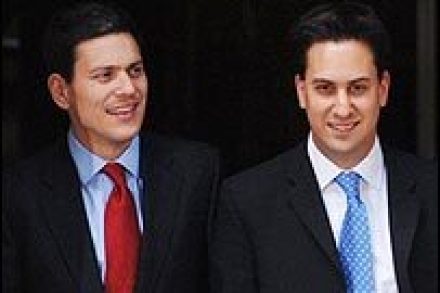
Well done David Miliband, for writing an article in the Guardian that is free of wonkery and abstractions. Miliband deserves applause for being the first Labour leadership contender to address public spending cuts with reasoned analysis, not ideological retorts. Also, he is right to urge George Osborne not to sell the public stakes in RBS and Lloyds at a bargain price. But his central thesis merits censure. He perverts recent history to fit an avowedly left-wing analysis of public spending. Miliband writes: ‘Let's take the deficit argument head on. We need to remember what the Tories want the country to forget: it was falling tax receipts – not rising spending – that primarily caused the deficit to rise.

The audacity of hope

From our UK edition

70 years ago today, Winston Churchill and Charles de Gaulle delivered two of the most important speeches of the 20th Century. Against the odds and common sense, both urged their respective nations to fight on against the tyranny of Nazi Germany. Today is a reminder that France is one of Britain’s oldest and closest allies, a point that the Times expresses this morning. Their words merit revisiting. Here is Churchill’s timeless address: ‘However matters may go in France or with the French Government or with another French Government, we in this island and in the British Empire will never lose our sense of comradeship with the French people.

The Big Society reincarnated

From our UK edition

The Big Society is a great idea. But its problem has always been that it lacks definition; voters and even some Tory MPs aren’t quite sure what it means. But an idea being floated today gives you a sense of its practical and political potential. It is being suggested that the community right to buy, the idea that the community should have first refusal on any asset being sold off, should be applied to the port of Dover. The last government wanted to privatise the port but the new MP for Dover, a Tory called Charlie Elphicke has proposed that a community trust be allowed to buy the port and then lease it out to an operator.

Worrying developments

From our UK edition

Paul Waugh has news that the Treasury asked a broadcaster to sign a written legal agreement that they would not ask any questions about the OBR’s announcement. Well, some of the figures embarrassed Osborne but surely it wasn’t that bad? As Paul notes, this may be a case of the Civil Service taking advantage of ministers’ inexperience but even so. Equally, the government has adopted the practice of its predecessor and issued statements to the press before stating them to the House. Carry on like this and we'll join the axis of evil. New politics please. UPDATE: Turns out not to have been so worrying.