Uk politics

Hughes and Davis fomenting rebellion?

From our UK edition

From opposing sides of the coalition's strait, two warning shots have been fired across the government's bows. David Davis has challenged Theresa May’s decision to renew the 28-day detention limit for six months pending a review. And Simon Hughes has declared that he and a like-minded posse will seek to amend ‘unfair’ aspects of the Finance Bill. Neither is an outright revolt. Neither move amounts to what Ed Miliband termed ‘cracks appearing in the coalition’. Both Davis and Hughes remain in support of the coalition agreement – Hughes will ‘support the Budget’, and Davis, to his enormous credit, has made excessive and illiberal detention periods his raison d’être.

The Budget PR battle enters a second phase

From our UK edition

The government is on the defensive. The IFS’ pronouncement that the Budget was ‘regressive’ and the VAT hike ‘avoidable’ has given sustenance to the opposition and their supporters in the media. At the time, Harriet Harman’s response to the Budget seemed execrable. Now, I’m not so sure. Harman is like a Swordfish bi-plane attacking a battleship: she is so slow and obsolete that her superior opponents cannot bring their modern guns to bear. So she closes the range and scores a hit. Tuesday was one of her more successful strikes. As John Rentoul notes, Harman had a point beneath the bluster. The OBR is George Osborne’s weak spot; it downgraded growth forecasts in light of his Budget.

Cable begs for protection

From our UK edition

Vince Cable is announcing to Metro that "We do not want to make such deep cuts to transport, energy, science research and universities." Really? According to whom? The science budget, which has shot from £1.3bn to an indefensible £3.7bn, is a prime example of a cost that should not be borne by the taxpayer. Scientists are best left to get on with this themselves, and companies are more than capable of funding research. On energy, again, there are many expensive vanity projects just begging for the axe. Given that Cable is in charge of the universities brief - the most important part of his otherwise non-job - you can expect him to want to protect it from cuts. But to lobby openly like this is not something that Theresa May or Liam Fox would do.

The true meaning of Osborne’s Budget

From our UK edition

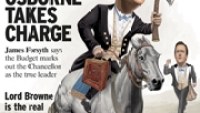
To understand the budget properly, read James Forsyth's cover story in The Spectator today. Sure, it was about reducing the deficit - but within it lie several political strategies which explain how George Osborne hopes to win a majority Conservative government. James says that those around Cameron will not entertain this notion - they "have been persuading themselves that coalition government is the best possible result". But Osborne, he says, finds it deeply unsatisfactory and has a twin mission: fix the economy, and win outright next time. "He has been observing recently that Gordon Brown spent 13 years successfully creating Labour voters — mainly through state dependency — and that the Tories need to reverse this process if they are to win.

RIP Lord Walker

From our UK edition

Peter Walker, Baron Walker of Worcester, has died aged 78. He served as a Cabinet Minister in both the Heath and Thatcher governments. He was what might be termed derisively as a ‘Wet’, and was a leading figure on the liberal side of the Conservative Party for thirty years. He was a founder member of the Tory Reform Group, which propounds One Nation Toryism and economic efficiency, ideals that have, it might be argued, profoundly influenced David Cameron’s leadership. Walker served with distinction throughout the Thatcher government, carrying the brief for Wales, Energy and Food and Fisheries. As Energy Secretary, he was a key figure during the Miner’s Strike.

How good intentions can be counterproductive

From our UK edition

Might the coalition’s emphasis on fairness be making it harder to get people off welfare and into work? Not a question that I can answer with confidence, but certainly one which has been thrown up by the IFS's Budget briefing. Take the government's action on child tax credits, for instance. By increasing it at the lower end of the income distribution, and restricting it at the upper, some claimants now stand to lose more, more quickly, by moving up the income ladder. Or, as the IFS put it, their marginal effective rate of taxation has increased. Of course, this will have been offset by other measures such as the rise in personal allowances. But it does present a conundrum for government policymakers, eager to prove that their measures aren't hitting the poor.

IFS: there could be deeper cuts to come

From our UK edition

An unfamiliar mood before the Institute for Fiscal Studies' Budget briefing today: many of the gathered journalists, economists and policymakers had decided that, for once, this wouldn't be an exercise in spotting the Chancellor's deceptions, because, quite simply, there aren't many. And they could well be right. In his introductory remarks, Robert Chote, the director of the IFS, said that "the government is certainly to be congratulated for the transparency with which it presented [yesterday's policy announcements]." What we've heard, so far, backs up that tribute.

Loving Hattie

From our UK edition

The unthinkable has happened. I’ve started to admire Batty Hattie’s performances at PMQs. Her career may be over, her party may be trashed, her movement may drift leaderless, and her colleagues’ reputation may have been shot to pieces but Hattie always turns up and gives it everything. Nature has not overburdened her with talent. She can’t count. She can hardly speak. She reacts to events about as quickly as a self-timing oven but she has epic quantities of pluck. Every week she pounds out into the surf, like a battleship equipped for the last war but two, and heads for the centre of the fray where she refuses to sink under the heaviest fire.

The road to recovery | 23 June 2010

From our UK edition

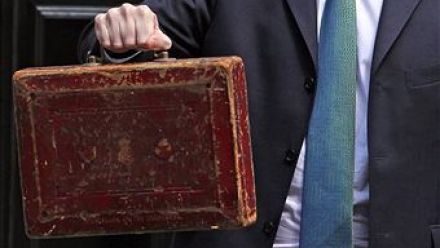
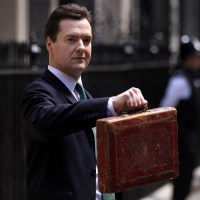
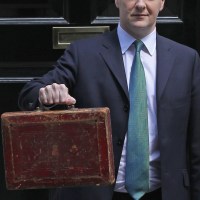
This is a slow-burning budget. Not because Osborne has concealed, like Gordon Brown did, but because the reverse is true. The budget is, as Osborne says, a third of the size but with three times the amount of information. It has layers: some policies and language are there just to assuage the LibDems. Some are pure Tory. James has a brilliant cover piece in tomorrow’s magazine which spells out the political, rather than economic, forces at work in this budget. Osborne, that great player of three-dimensional chess, sees in this budget plans to restore a Tory majority government. The Red Book itself is, for wonks like myself, a joy to read: straight figures, with nothing concealed.

The EU must face cuts too

From our UK edition

This is a balancing act Budget. At every stage and on almost every topic there's a bit of good news and a bit of bad news for taxpayers. Spending cuts are (finally) on the way, but at over £30 billion by 2014-15 they aren't large enough, and there is plenty of dead wood that the Coalition intends to leave in place. Similarly, the rise in the income tax threshold is extremely welcome, but the VAT hike will hit the poorest hardest of all. And so it goes down the list of Government financial activities. Indeed, the theme the Government are keen to communicate is one of leaving no stone unturned, looking at every item of expenditure and every tax for ways to raise or save money....except for one area.

Osborne winning the Budget PR battle – but VAT remains a thorny issue

From our UK edition

Well, that's gone as well as can be expected for the coalition.  Most of today's newspaper coverage highlights the severity of George Osborne's Budget – but, crucially, it adds that the Chancellor had few other options.  The Telegraph calls it a "brave Budget".  The Times says that it delivers "the best of fiscal conservatism combined with no small measure of social justice".  And even the FT – no friend of the Tories in recent years – suggests that Osborne might be "remembered for doing Britain a great service." The sourest notes chime around the government's welfare cuts and the hike in VAT.  Already, it's clear that the latter will be particularly difficult for the Tories and embarrassing for the Lib Dems.

A well-crafted Budget but the spending review will hurt more

From our UK edition

George Osborne’s Budget today was the first dose of pain. The second will be the spending review in October, which I suspect will put far more of a strain on the Coalition than today did. Non-protected departmental Budgets, everything apart from health and DFID, are going to be cut by 25 percent on average. But Osborne told the House he would hope that the cuts to defence and education would be significantly less than that. The unspoken part of that is that the cuts to some other Budgets will have to be significantly bigger than that; I expect there are a few people at BIS and DCMS looking around rather nervously this evening. When the cuts are laid out that’s when the current feeling of unease among a chunk of the Lib Dem backbenches will crystallise.

Why must VAT rise? Because not enough will be cut

From our UK edition

There is plenty of very good news in the Budget.  A two year public sector pay freeze, the abolition of the Child Trust Fund and cuts in welfare spending are all longstanding TPA recommendations that will be absolutely key to getting the public finances under control.  As a result of all the measures proposed, annual spending will be £31.9 billion lower than planned by 2014-15.   The Government are also scrapping more organisations.  The Emergency Budget report says (page 31) that "Regional Development Agencies will be abolished through the Public Bodies Bill.

Slice not structure

From our UK edition

Two weeks ago, when launching the Spending Review, George Osborne called for a once-in-a-lifetime debate about the shape of government in the UK.  He implied that there is a right and a wrong way to cut the deficit.  It would be right to cut spending by addressing the structural causes of the deficit - i.e. public sector inefficiency and the UK's unwillingness to cut its pensions and health entitlements.  It would be wrong to leave the shape of public services and welfare unchanged, but limit their costs temporarily – “salami slice” – with public sector pay freezes for instance.

Unspectacular, but quite effective

From our UK edition

Well, that was excitingly unexciting.  There was little in George Osborne's Budget that we didn't expect, either in terms of rhetoric or policy.  But it still felt new and different nonetheless.  Here we had a Chancellor setting out exactly how much spending he will cut, and putting plenty of emphasis on both our deficit and debt burdens.  It drew a stark contrast with the Brown years, and was a solidly understated performance in itself. There will be plenty of attention paid to the hike in VAT, and rightly so.  But there were some macroeconomic forecasts which were just as eyecatching.

Budget 2010 – live blog

From our UK edition

1343, PH: Harman has sat down now, so we'll draw the live blog to a close.  I'll write a summary post shortly. 1342, FN: I wish I could trash Harman's response, but it's actually quite good.  Many a Tory would be secretly cheering her trashing of the LibDems. "The LibDems denounced early cuts, now they're backing them - how could they support everything they fought against, how could they let down everyone who voted for them?" Again, a fair point. "The LibDems used to stand up for people's jobs, now they only stand up for their own." Her main point - that forecasts for unemployment have risen - is a fairly strong one if true. Osborne did indeed shy away from admitting to VAT rise plans in the election campaign.