Uk politics

If the BBC won’t cut costs, then Hunt must

From our UK edition

From a completely selfish standpoint, I’m pleased that the BBC has saved 6Music. The decision does, however, raise a pertinent question: why is one of the public sector’s mammoth institutions seemingly impervious to spending cuts? Never mind DfID and the NHS, ring-fencing Sue Barker is simply inadmissible. Mark Thompson, the Director General, has identified the barest modicum of cuts. The BBC’s ‘gold-plated’ pension scheme might be limited (subject to union agreement), which will save roughly £50million. But the BBC has awarded 70 percent of its employees a £475 annual pay rise. Few companies in the private sector, especially broadcasters, can afford such generosity. It’s that same with presenters’ pay.
Is Boris the only Tory losing faith in FPTP?

From our UK edition

While we're on the subject of Boris, this article by the Times's Sam Coates is worth noting down.  It suggests that the Mayor of London has "lost faith" in our first-past-the-post voting system, and has declined the opportunity to campaign in its favour.  And while he remains an "agnostic" about the alternative votes system, he is more inclined towards it after "the election and the successful creation of the coalition". Now, Boris's views are Boris's views – so we shouldn't read too much into the story.  But it will still reinforce the idea that more and more Tories are coming around to AV.  And it could fuel fears that the No campaign lacks a dash of oomph.

How Boris is influencing the coalition’s battle against the unions

From our UK edition

This morning's Times devotes its front page to how the government is borrowing Boris's ideas for combating the unions.  But Spectator readers might remember that James foresaw this situation in his politics column.  Here's what he wrote back in October: "…an agenda is being discussed to curtail the ability of unions to call for industrial action. Boris Johnson’s office is floating the idea of minimum required turnouts for strike ballots. The Mayor of London has in his sights the RMT union, which represents many tube drivers and likes to strike first and ask questions later; this June the RMT walked out after a ballot in which less than a third of members voted.

The coalition’s spending cuts are forcing Labour into a corner

From our UK edition

It's becoming a familiar drill: another morning in Westminster accompanied by new spending cuts from the government.  Today, it's the schools budget which is being trimmed to the tune of £1.5 billion, with the cancellation of Labour's plan to rebuild some 700 schools.  But there are also reports of cuts to civil service pay-offs, and even of legislation to make it tougher for the unions to protest those cuts.  After yesterday's news, the Treasury is clearly on a roll. Of course, the main political reason for all this early activity is that the coalition hopes to get much of it out of the way while the public is still on side.  But I'm sure it's also designed with an eye on the Labour leadership contest.

Cameron’s realignment of our party politics

From our UK edition

When the coalition was first formed, I expected it to collapse in months. But, then, I was expecting the type of coalition that I’d seen in the Scottish Parliament when Labour and the Lib Dems kept their distance (and their mistrust). But what has emerged is a far tighter coalition – and one that may even end up in a merger. Cameron has been very generous to the Lib Dems, in both Cabinet places and policies. But since then, he has just grown more generous. In the News of the World today, I wonder if he’s playing for keeps.   It was great to welcome Nick Clegg to The Spectator’s summer party last week, and the other Lib Dems who turned up to raise a glass to the return of fiscal sanity.

The Treasury is playing a very smart game

From our UK edition

Picking up David Laws' axe at the Treasury was never going to be easy – but all credit to Danny Alexander, who seems to be managing it with some degree of gusto.  After those extra savings he announced a few weeks ago, the Chief Sec has now written to ministers asking them to identify cuts of up to 40 percent in their budgets.  I repeat: 40 percent.  That's higher than the highest roundabout figure I heard before the election (30 percent, from civil servants as it happens).  And it tops the 33 percent that the IFS suggested might be necessary last week.  Quite a few ministers will be quaking at the very thought of it. In truth, though, the 40 percent figure is "worst case scenario" territory.

Hague caught in the middle

From our UK edition

When General Petraeus called for a "united effort" on Afghanistan earlier, he might as well have been addressing our government.  Between David Cameron's and Liam Fox's recent statements, there's a clear sense that the coalition is pulling in two separate directions.  And it's left William Hague explaining our Afghan strategy thus, to the Times today: "'The position on combat troops is as the Prime Minister set out last weekend. By the time of the next election, he hopes we won’t still be fighting on the ground. We are working towards the Afghan national security forces being able to stand on their own two feet by 2014,' but there is 'no strict or artificial timetable'. 'Five years is a long way ahead. There is a lot more work to be done.

The coalition’s big choice on Incapacity Benefit

From our UK edition

The coalition's plan for moving claimants off Incapacity Benefit and into work is, at heart, an admirable one.  For too long, IB has been used a political implement for massaging the overall unemployment figures, and it has allowed thousands of people to wrongly stay unemployed at the taxpayers' expense.  There is, quite simply, a moral and economic case for reform. But that doesn't mean that Professor Paul Gregg's comments in the Times today should be ignored.  Gregg is one of the architects of the current system for moving claimants off IB, and he raises stark concerns about how that system is currently operating.  The main problem, he says, is the medical test for determining who, and who doesn't, deserve the benefit.

The side effects of the AV debate

From our UK edition

Ok, so the general public doesn't much care for this AV referendum – and understandably so.  But at least it has added a good slug of uncertainty into the brew at Westminster.  Already, curious alliances are emerging because of it – Exhibit A being Jack Straw and the 1922 Committee.  And no-one's really sure about what the result of the vote will be, or whether it will deliver a killing blow to the coalition itself. But regardless of what happens on 5 May 2011, it's clear that one group is already benefitting from the prospect of a referendum: the Labour leadership contenders.  Until now, they've been distinguished by their indistinguishability on policy grounds.

David Davis: the coalition hasn’t got a way of negotiating with the Tory party

From our UK edition

I doubt No.10 will be all that charmed by David Davis's comments on Straight Talk with Andrew Neil this weekend, but they should certainly take note of them.  They contain some substantive points about the government's relationship with Tory backbenchers, and points which Davis is not alone in making.  The key passage comes when he discusses the watered-down capital gains tax hike: "I don’t think a victory over [the Lib Dems], I mean, it’s quite interesting, we tried to design this, whatever you want to call it, I don’t know whether it’s a rebellion or a difference of view, to really be a precursor to what’s going to happen over the next couple of years, you know.

Conquering the welfare Leviathan

From our UK edition

Among the biggest of challenges facing the new government is the need to make welfare more affordable while continuing to support people in need. There is a strong case for lowering the welfare bill. At around £200 billion the government spends more on welfare than anything else. Spending on pension benefits alone is £77 billion and forecast to grow to £240 billion (in today’s money) by 2050. As George Osborne has noted if the welfare bill is not cut then eliminating the deficit will mean that cuts to other departmental budgets will have to be much deeper. But some of the most important reasons for welfare reform are non-financial.

Report: David Cameron will campaign against AV

From our UK edition

ITV's Lucy Manning reports that David Cameron will campaign against AV ahead of next year's referendum  In one respect, it's not surprising news: this is what the Tories have always said they'd do.  But given recent rumblings and speculation to the contrary, it's still worth noting down. If the Tories don't change their minds before 5 May 2011, the question is how loud and proud that 'No' campaign will be.  If Cameron keeps it low-key, then it might win him some goodwill with the Lib Dems.  But, equally, it could leave him stranded between a strong Yes campaign on one side, and more vocal No campaigns on the other – and under fire from both.

A decision fraught with risk

From our UK edition

The Coalition’s decision to hold the referendum on AV so early is fraught with risk. If AV is defeated at the ballot box, then Nick Clegg will face huge pressure from elements of his party to quit the Coalition. The argument would go that all the Lib Dems were getting out of staying was providing cover to the Tories on cuts. But if AV passes, then there’ll be some Lib Dems who’ll say that they’ve got the best thing they can out of the Coalition and so they might as well head back into opposition to try and restore the distinctiveness of their brand. On the No side, I expect there’ll be a ferocious campaign against AV.

Three questions about the AV referendum

From our UK edition

So now, thanks to Left Foot Forward and reports this morning, we know: the referendum on an alternative vote system will take place on 5 May 2011, the same day as same day as the English local, Scottish Parliamentary and Welsh Assembly elections.  There are plenty of ins and outs, whys and wherefores - most of which are neatly summarised by David Herdson over at Political Betting.  But here are three questions that pop into my head, and are worth idly pondering on this sluggish Friday morning: 1) Does this strengthen the divide or weaken it?  Holding the AV referendum on the same day as local and regional elections was always on the cards: it's the best way to ensure a relatively high turnout, and it smoothes the logistics of it all.

Afghan manoeuvres

From our UK edition

Ming Campbell’s comments today show that some Liberal Democrats do believe in Fox hunting. Responding to Fox’s speech in Washington yesterday and his remark that Britain would be among the last to leave Afghanistan, Campbell told the Daily Politics that the “intervention was unhelpful, indeed the government thought it was unhelpful.” “It would have been better if these remarks had not been made.” Dr Fox’s allies are less than pleased by Ming’s grandstanding. They take the not unreasonable view that the Secretary of State for Defence has every right to express his views on a war that this country is fighting without being second guessed by a backbencher from the junior Coalition partner.

Miliband stamps out an English battleground

From our UK edition

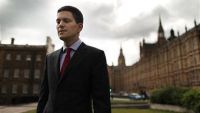
Well, CoffeeHousers, I've read David Miliband's article for the latest New Statesman so that you don't have to.  And let me tell you: it's classic Miliband the Elder.  Sure, the central theme - how Labour can reconnect in the English heartlands - is perceptive enough, and it runs through a few home truths which Miliband's opponents have avoided thus far.  But what could have been a passionate rallying cry ends up reading a little cool and dreary. I mean, "Labour needs a revived politics of Englishness rooted in a radical and democratic account of nationhood"?  Maybe so, but only the wonkiest of wonks will be nodding along enthusiastically. Nevertheless, one passage did jump out at me.

What happened to the Tory manifesto?

From our UK edition

During the love-in at the start of the coalition, no one really asked which Tory pledges bit the dust. It becomes relevant now: the Tory pledge to reduce immigration to the "tens of thousands," for example, was in their manifesto but not in the coalition agreement. Although verbally restated later, it is still seen as being a flexible pledge due to its absence in that document. There is no record of what was dropped, so we at CoffeeHouse have provided one below. I won't say it's a rip-roaring read. But for those who think manifestos mean something, it's good to have on the record. UPDATE: I agree with Mycroft, below, that the first headline on this post – '190 Tory sacrifices' – was misleading. Writers never do their own headlines, but that's no excuse.

A new foreign policy?

From our UK edition

An inventive article from Ben Brogan this morning, arguing that a new vigorously Tory foreign policy is emerging. I can be a little slow sometimes, but I haven’t noticed anything new or Tory about Britain’s foreign policy. Brogan records that the Prime Minister has let it be known that British troops will withdraw from Afghanistan by 2015. Cameron said nothing of the sort; he said he wanted British troops out of Afghanistan by 2015, something quite different. Contrary to expectations, relations with Europe are flourishing under the coalition, as pragmatic government has superseded bellicose opposition. William Hague hopes to influence the EU closely.