Uk politics

The unions deliver Ed Miliband to the throne

From our UK edition

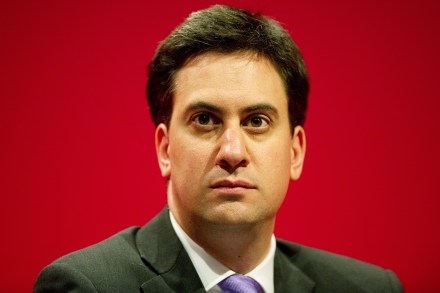
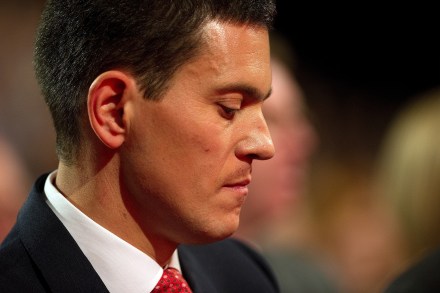
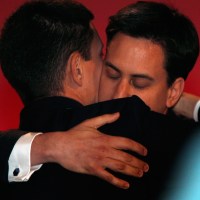
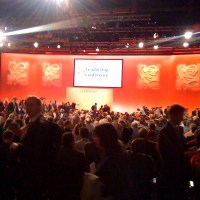
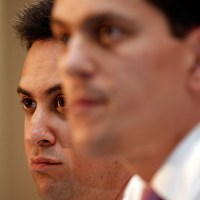
In the end, it was all quite exciting. After four months of soporific campaigning, after a speech by Gordon Brown, after tribute video upon tribute video, it all came down to an astonishingly tense round of results. And Ed Miliband edged out his brother by just over 1 percentage point overall, 50.6 to 49.4. It may have been the outcome that most punters expected coming into today – but it is not one that many would have predicted, with any confidence, back in May. Looking at the full voting split, a less flattering picture emerges. David Miliband actually won two of the three voting blocks: the MPs turned out 53-47 in his favour, the members 54-46 likewise. But it was the unions wot won it for Ed: the brothers gave him their votes in a 60-40 ratio.

Ed Miliband elected Labour leader: live blog

From our UK edition

1704, PH: We'll leave it there, although we'll have more reaction on Coffee House shortly. 1702, PH: I've already forgotten Miliband's final line, although it involved the phrase "new generation". Not a great speech, but some turnaround for him over the course of the contest. 1700, PH: Ooh, what does that mean for Ed Balls? Miliband says that, "I do believe we've got to reduce the deficit, but we've got to do more to help the country". 1700, JF: It is what Labour MPs were calling the Doomsday scenario, Ed loses MPs and Members but wins thanks to massive support in the union section. Tonight there will be those who will question the legitimacy of a leader who did not win the majority support of either his MPs or his party members.

Cameron neglects to mention his tax cut for the middle classes

From our UK edition

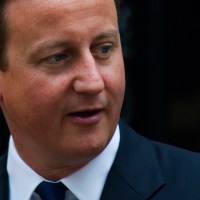
David Cameron’s interview in the Telegraph this morning is striking for three reasons. First, despite the interview appearing on the day of the Labour leadership declaration, there’s no attempt to bring the hammer down on the new Labour leader. All we get is some framing on the deficit. Next, as Paul Goodman notes, it is an attempt to reassure the Tory faithful after the Lib Dem conference Vince Cable is gently put back in his box with the line ‘Vince is Vince’. Cameron also stresses that he ‘will always safeguard our nuclear deterrent’; a line that is very different from the nakedly political discussions of Trident in Liverpool, where what seemed matter to most was making life difficult for Labour.

The real battle begins tomorrow

From our UK edition

So what's all the fuss about today, then? Ah, yes, the election of the new Labour leader. We should know the result around 1640 this afternoon – but, this morning, most commentators are indulging in the idea that Ed has won it. The younger Miliband and his team said to be optimistic, his elder brother less so. At the very least, a remarkable turnaround has taken place. Just before the contest began, MiliD was some way ahead of his sibling in the bookies' calculations. Now, Ladbrokes have suspended betting on MiliE. What happens today, though, is in some respects less important than what happens tomorrow. Today will be the day for triumph and commiseration, for tubthumping speeches about taking Labour back into government.

It’s all over

From our UK edition

The word here in Westminster is that the result of the Labour leadership contest has been certified. The significance of this is that it means the result is not close enough for the party officials to think that there is any need for a recount.

David Miliband preparing for defeat

From our UK edition

There are rumours swirling around Westminster, supposedly issuing from the elder Miliband’s camp, that David Miliband already knows he's lost. As we know, he has said he will serve loyally under Ed Miliband. But there has been enough reported bad blood between the brothers to suggest that defeat would leave him inconsolable.

Yvette Cooper: a better Balls?

From our UK edition

One thing's for sure: Iain Duncan Smith won't pay much attention to Yvette Cooper's article in the Times (£) today – but the public might, and that's what makes it such an artful piece of opposition politics. The whole thing is structured as a letter to IDS and, crucially, the tone is conciliatory and cooperative. "You and I agree that we should get more people into work," she begins, before eventually landing on, "you need to stand up and shout for this in government. We will support you if you do." But underneath this sweet talk there's a streak of malicious intent that comes straight from her husband's political textbook. And so we read that the Treasury is "on a sabotage mission".

Labour caves to divisive Livingstone

From our UK edition

If I was a member of the Labour party I would be feeling pretty uneasy this afternoon as news of Ken Livingstone's victory in the mayoral candidates battle sinks in. There is a cold reality about cuddly uncle Ken which deserves serious examination: he is a ruthless political operative who will sell out everyone, including his own party, to win. But Ken is not just a divisive figure, he was also a sinister Mayor, presiding over an wildly dysfunctional London Development Agency, controlling policy for London through a cabal of advisers calling themselves 'Socialist Action' and getting chummy with divisive and radical islamists including Yusuf al-Qaradawi.

Hancock strikes again<font size="1"><font face="Helvetica, Verdana, Arial"><span style="font-size: 9pt;"><br /> </span></font></font>

From our UK edition

Yesterday, Matthew Hancock constructed what you might call the defensive part of the government's argument on cuts: an explanation of how spending restraint can be good for the country. Today, he strides forward with the offensive component: an attack dossier that asks of the new Labour leader, "What would you cut, Mr Miliband?" By Hancock's calculations, David Miliband needs to set out £55 billion of cuts to meet his deficit reduction plans. For Ed Miliband, that figure hits £67 billion. The attack is two-pronged. First, it pushes the idea – contra Ed Balls – that cuts are necessary. And, second, it puts the Labour leader immediately on the back foot.

Boris v Ken, round 2

From our UK edition

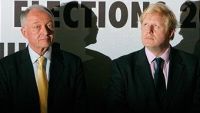
What we have long expected has now been confirmed: Ken Livingstone will be Labour’s candidate against Boris in 2012. From the moment he lost, Livingstone has been working out how to beat Boris in 2012. He is consumed by a desire to be London’s mayor when the Olympics open in 2012. Boris won the mayoralty in almost the best conditions possible for a Conservative candidate — the Tories in opposition, an unpopular Labour government and an economy in mess. He’ll be running for re-election in almost the worst — a Conservative led government making deep spending cuts.   But if any Conservative can win in these circumstances, it is Boris. The fact Ken is his opponent will also help Boris again turn out the outer Zones.

Ed Balls steps up his bid for the shadow chancellorship

From our UK edition

With the result but a day away, there's plenty of radio chatter about the Labour leadership election this morning. The Guardian reports that MiliD will work for MiliE if he loses. The FT observes Harriet Harman shifting towards the Eds' position on the deficit, even if she is remaining neutral in the contest itself. A Populus poll for the Times (£) suggests that Gordon Brown is currently more popular among Labour supporters than either of the Milibands (which is deeply amusing). And Political Betting is calling it for Ed Miliband. But perhaps the most noteworthy contributions come courtesy of Ed Balls, compiled and skilfully analysed by Sunder Katwala over at Next Left.

Another obstacle in the way of free schools

From our UK edition

A few weeks ago, I wrote a cover story about how teachers' unions are trying to strangle the Gove schools agenda at birth. But I fear it is facing an even greater, more immediate threat: basic bungling by government departments. The FT today says that the Department of Transport wants to make sure that local authorities keep the right to veto a new school. Armed with such a weapon, it is a sure way of crushing any competition. The DoT's argument is staggeringly banal: that a new school may play havoc with the traffic. If you're a local authority, wanting to use any means possible to stop a new school competing with the ones you run, it's all the excuse you need.

Too many policemen chasing paper-clips

From our UK edition

Back in June, I asked how long the public would stomach David Cameron blaming Labour. Not long, was my answer - the government would have to form a narrative that suggested it was the ‘great reforming government’, not a symposium of partisan budget balancers. So far, it has failed to compel of cuts’ and public service reform’s necessity. Crime can now be added to the list. Theresa May has blamed Labour for HMIC’s findings into the police’s failure to arrest anti-social behaviour. ‘Labour achieved nothing,’ she said. Fair enough, but this was an opportunity to husband a narrative for public service reform. HMIC is in no doubt that the police have not done enough to combat anti-social behaviour.

Low taxes work

From our UK edition

I ration my writing about Sweden. As CoffeeHousers know, I can extol its virtues with room-emptying conviction. But it's now a few days since its election, and as far as I can tell no English publication has told the extraordinary story of its conservative victory - and the economic turnaround driven by the largest tax cuts in Swedish history. It is now the fastest-growing economy in the West. I tell the story in the political column of this week's magazine (subscribers, click here), but I will summarise it for CoffeeHousers here. Normally, conservatives are elected in Sweden as a kind of light relief, to punctuate decades of leftist rule. They're usually thrown out after one term, and the social democrats get back to taxing the bejesus out of the country.

The coalition is out of touch on crime

From our UK edition

The coalition talks a lot about reducing the number of short criminal sentences. But this talk ignores just how liberal the sentencing regime already is. Just take this case reported on page 31 of the Evening Standard yesterday, a placement which suggests that it is far from unusual. 'At Finsbury Park station Ali, who had drunk a bottle of Jack Daniel's whiskey in Trafalgar Square with Jamil that night, aimed a punch at Mr Sanson over his girlfriend's shoulder. Miss Le Doussal turned around to ask what was going on, only for Ali to punch her in the face, leaving her with a black eye. Fellow passenger Daniel Hurley stepped in to remonstrate but as the argument spilled out onto the platform, Jamil punched him in the temple, knocking him to the floor.

The police retreat from the streets

From our UK edition

Her Majesty’s Inspectorate of Constabulary has published a crushing verdict on the police’s handling of anti-social behaviour. It finds that the police simply aren’t sufficiently visible on the street, which concurs with the conclusion of an earlier report into value for money policing. There’s an old copper’s joke about holidays. ‘I’m going where there’s not a copper in sight.’ ‘Moss Side?’ comes the reply. HMIC’s central finding is that deprived areas are utterly benighted by constant antisocial behaviour, and the police have steadily withdrawn from these ghettos, thinking that tackling antisocial behaviour is 'not proper police work'. Fear of reprisal discourages public neighbourhood schemes.

A salesman for the cuts

From our UK edition

One of the biggest problems facing the coaltion has been presentational: how to sell the cuts? In the absence of a coherent, vigourous message, the Balls school of economic thought has been allowed to grease onto the scene – to the extent that some polls have three-quarters of respondents rejecting the government's deficit reduction plan. But now, at last, signs that the coalition is getting into gear. It's a process which began last week, when Matthew Hancock – a new Tory MP and former adviser to George Osborne – highlighted falling interest rates in Parliament (column 606, here); a point he has been pushing around Westminster ever since. And today Hancock expands on it in an article for the Times (£).

Politicking with the defence of the realm: advantage Labour

From our UK edition

Is Trident’s renewal (either a like-for-like replacement or an alternative) within the scope of the Strategic Defence Review or not? The Lib Dem conference voted to include an alternative in the SDR. But, apparently, the cash-strapped coalition seeks to defer any decision (which will take renewal out of the review entirely). Earlier today, Lib Dem defence minister Nick Harvey intimated that he preferred deferral. As the video below suggests, Harvey’s objective is overwhelmingly political and couched in the language of opposition, not government: I don’t see this as a ‘hot potato’ for Labour.