Uk politics

Abel fights back

From our UK edition

One of the hardest tasks of any opposition is to gain the trust and credibility to run the economy. After what happened over the last few years, Labour have an enormous credibility gap. Ed Balls’ decision to oppose any measure to deal with the deficit has reduced Labour’s economic credibility still further. So too has the two Eds’ decision to make attacks based on mis-truths, like denying there was a structural deficit before the election; or attacking the coalition for cutting bank taxes, when it is actually putting them up; and like backing another bonus tax, despite opposing it at the election, and despite Alistair Darling’s careful explanation of why it won’t work.

A second national debt that needs to be dealt with

From our UK edition

Public sector workers will be waiting nervously for John Hutton’s pension review, due out tomorrow.  It is likely to mandate extra pension contributions of around 2.5-3.5 percent of pay and new ways to make entitlements grow more slowly.  Policy Exchange advocated a similar solution in a report published last year.  Predictably, the TUC is up in arms. It says that public sector pay is not significantly out of line with the private sector – despite all the evidence that it is. The main reason why those in the public sector get a better deal is their pensions. These add up to the equivalent of 44 per cent of public employees’ wages and 71 per cent for uniformed services – but are just 9.

PMQs live blog | 9 March 2011

From our UK edition

VERDICT: A turgid sort of PMQs, where most of the quips were clumsy rather than cutting. Cameron probably won it by virtue of one of the few direct hits – his line about Ed Miliband knifing a foreign secretary, aka MiliD – and because Miliband failed, really, to prod and aggravate the coalition's wounds over Libya. The Labour leader's main attack – over the competence of the coalition – was clear enough, though, and could have some purchase depending on, erm, how competent the coalition is. As it is, Cameron's hint that he still has the occasional cigarette will probably capture the spotlight. 1231: And that's it. My quick verdict shortly.

It’s all in the language

From our UK edition

Sue Cameron’s FT Notebook is always laced with delicious vignettes. This morning, she reveals that the new cabinet manual has been withdrawn temporarily because Sir Gus O’Donnell’s Latin grammar is like Pooh's spelling: it wobbles. What are things coming to when even Sir Humphrey puts the definite article before a Latin phrase? Cameron also reviews yesterday’s shin-dig at the Institute for Government. She reports: ‘Tom Kelly (Tony Blair’s former official spokesman) noted that the coalition was “beginning to learn the hard way that you have to get a grip from the centre”.’ It’s well known that Number 10 is reorganising. The days of the soft-touch have gone.

Cameron’s threadbare praetorian guard

From our UK edition

One of the worst kept secrets of David Cameron’s leadership is that some in the inner circle don’t think much of the members of the shadow Cabinet who are now in Cabinet. What is far more dangerous is when the leader himself lets slip his low opinion of some of his colleagues, as Ben Brogan reports he has been doing lately. This is the kind of behaviour that is bound to cause resentment as this criticism always get back to the objects of it.   At the moment, Cameron can get away with this. He is still seen as the Tories’ primary electoral asset and there is no obvious, or even viable, alternative to him. But when Cameron gets into trouble, this will matter.

Ken Clarke contra mundum

From our UK edition

What to make of Sadiq Khan and Ken Clarke? As Pete has noted, Khan (and Ed Miliband) empathises with Ken Clarke’s instincts. But, as Sunder Katwala illustrates, Khan’s support is qualified. Khan gave speech last night after which he took questions. One of his answers was as follows: "It's no use us wanting to cuddle Ken Clarke - I don't want to cuddle Ken Clarke but perhaps others do - when he is part of a government which has got policies which will see the number of people committing crime going up." He was referring to alleged cuts to police numbers and devices such as the educational maintenance allowance, as well as the pressure on education and mental health in prisons. The implication is that prison works if you throw enough money at it.

David Miliband hurtles back into orbit

From our UK edition

Ah, there it is, in the final sentence of the fourth paragraph: a flattering reference to Ed Miliband. Phew. Good job David Miliband squeezed his brother's name into his article on Labour's future (£) for the Times today, otherwise it might have been July 2008 all over again. As it is, MiliD's third newspaper article in as many days is enough to suggest that he's keen to remain a prominent figure, if not yet an actual rival for his brother's crown. In some respects, though, the recommendations made by MiliD are a challenge to his brother's Way of Doing Things. His suggestion that the left be "an ally of wealth creation," for instance, reads something like: "enough with the banker bashing, already.

Some context for those police cuts

From our UK edition

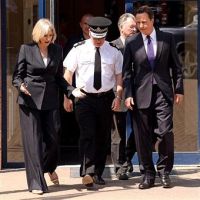
What's it to be? Take a pay cut, or lose your job? That, as David suggested earlier, is the question being posed by Theresa May to police forces – and it's a question that they cannot shirk. With the police budget being cut by 4 per cent a year, there have to be reductions of one sort or another. And if they don't come from pay restraint – along the broad outlines of Tom Winsor's review today – then there will no doubt have to be extra job losses. This is the argument that George Osborne set out in his 2009 conference speech, only now it's being deployed from government. Not that there won't be job losses as well. Conveniently enough, a memo from the Association of Chief Police Officers puts a number on it all, and has been leaked to the Guardian.

Theresa May’s unenviable challenge

From our UK edition

Many political careers have met a torturous end in the Home Office. And this morning, Theresa May began her struggle. She is taking on the "last great unreformed public service" and the opposition is formidable; so much so that the official opposition barely get a look in. The Peelers are marching on Downing Street. The Police Federation has declared itself ‘fed up’ with cuts – a perfunctory warning to the government. Vice Chairman Simon Reed indicated that the Federation feels the government is abrogating its duty of care to those who serve, a dextrous line forged by those opposed to personnel cuts to the armed forces.

What were the SAS doing in the eastern desert?

From our UK edition

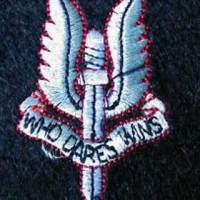
When the official files are opened in 30 years time, we will see what series of decisions led the government to send a helicopter-born SAS team into eastern Libya when they could have sailed in on HMS Cumberland, disguised themselves as reporters or rung up Mustafa Abdel Jalil, Libya’s ex-justice minister who is said to head the “Transitional Government”. But it is easy to see how it happened. The perfectly sensible idea of sending a British emissary to Benghazi to make contacts must have clashed with bureaucratic protocol and the FCO’s duty of care arrangements. “What?” You can just imagine the officials exclaiming to the ministers. “You intend to send a single person to Libya. But what if he got killed? Or hurt?

A princely problem

From our UK edition

Tonight’s Six o’clock news had a long package on Prince Andrew that ended with Laura Kuenssberg reporting from Downing Street on the government’s attitude to the prince. The fact that the government is now so much part of this story is due to an unforced error on its part.   It was the briefing yesterday about how if more came out then Andrew would have to resign as trade envoy that pushed the government right into the middle of this sorry story. This set journalistic hares running and had everyone demanding to know what the government’s position was. The government, which had got involved in this story more through cock-up than anything else, quickly rowed back on Sunday's lines.

SpAd Wars

From our UK edition

Downing Street’s briefing that under-performing special advisors will soon be sacked has created a storm in the Westminster tea-cup. One SpAd pointed out to me the complete hypocrisy of a Number 10 that constantly stresses that briefing against colleagues is a sackable offence doing exactly that. Sacking under-performing SpAds will not be as easy as you’d think it should be. These advisors have, in most cases, been hand-picked by the Secretary of State who will be reluctant to give them up without a fight. SpAds in the rest of Whitehall also argue that the Downing Street operation itself is far from perfect.

The politics of Prince Andrew

From our UK edition

Uh-oh, the Prime Minster has "full confidence" in Prince Andrew as a UK trade envoy – the sort of endorsement that often means the direct opposite. In this case, though, I suspect that the line is more a hasty attempt to defuse some of the tension that has been building on this matter over the past few days. Only this morning, a Downing Street source told the Beeb that the Prince could be ejected from the role should any more revelations surface. Another suggested that "there won't be many tears shed if he resigns." And then there's the senior Tory putting it about that "there appears to be no discernible mental activity," on Prince Andrew's part. It has been – and continues to be – a right royal rumpus, to say the least.

Who watches the watchmen? | 7 March 2011

From our UK edition

There's a fuse-meet-flame quality to PoliticsHome's smart little scoop this morning. Our parliamentarians are already somewhat hacked off with IPSA, the body tasked with overseeing their expenses. So how will they react upon reading that IPSA spent £300,000 of taxpayers' cash on furbishing their London office? The watchdog's shopping list includes 25 cabinets (£2,295 each), 14 "relaxer loungers" (£465 each) and a table at £837. It sounds awfully like some of the MPs' claims that were so controversial in the first place. IPSA are defending the spending, citing "industry standards" and such. But, whatever, it just fuels the sense that they are an unduly expensive and convoluted answer to the question at hand.

Khan comes to Ken Clarke’s support (kinda)

From our UK edition

When it comes to the overall sway of British politics, Sadiq Khan's article for the Guardian is probably the most important of the day. We've heard Ed Miliband say before that, "when Ken Clarke says we need to look at short sentences in prison because of high re-offending rates, I'm not going to say he's soft on crime." But Khan's article, a summary of a speech he is giving later today, actually puts that sentiment into practice – and then some. His central argument is straight from the Hush Puppied One's playbook, particularly in its emphasis on the limitations of New Labour's policy: "Some claim crime fell because of the rise in the numbers imprisoned. But the relationship between crime rates and prison population is more complex than that.

How to build democracies

From our UK edition

Following the events in the Middle East, I have proposed a democracy review of UK bilateral relations and former Europe minister Denis MacShane has suggested that David Cameron set up a Foundation for Democracy Development in the Middle East and North Africa to "provide an all-party source of income, travel grants, and overseas seminars" It would make sense, I think, to do both in succession, starting with the review and then creating a new body that can undertake the work. However, instead of creating a UK-only organisation, the government should build on the links established with Turkey's government and set up a joint endeavour, chaired by William Hague and Ahmet Davatoglu, the Foreign Secretary's counterpart.

Cameron hugs his party

From our UK edition

David Cameron’s speech to the Conservative Spring Forum was one of the most Conservative speeches he has given in a long time. It was an address that was meant to reassure the party during what looks set to to be this government’s most difficult year. The Tory leader opened with a list of policy pledges delivered and they were all distinctively Conservative policies: making work pay, the EU referendum lock, teaching British history in schools, freezing council tax, capping immigration and doubling the operational allowance. There was further crowd pleasing material in a substantial section of the speech which attacked AV.