Uk politics

Osborne and Pickles defiant on planning reform

From our UK edition

George Osborne and Eric Pickles’ joint op-ed in the Financial Times on planning reform is meant to send the message that the coalition won’t back down on the issue. They warn that "No one should underestimate our determination to win this battle". Allies of Pickles are pointing out that these planning proposals are different from the NHS reforms or forestry, both issues on which the government did u-turn, because they are crucial to the coalition’s growth strategy and fully supported by Numbers 10 and 11 Downing Street. One other thing that separates planning from the issues on which the government has u-turned is the confidence Numbers 10 and 11 have in the ministers charged with selling the plans.

Cameron’s energy price headache

From our UK edition

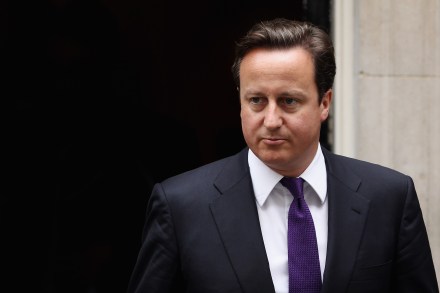
The list of things that will be Big Politics when Parliament returns from its summer break is growing all the time: growth, the post-riot clean-up, the undeserving rich, multiple squeezes, and so on. But few will have has much everyday resonance as another item on the list: rising energy prices. This has been a problem for some time, of course, thanks to a toxic combination of trickle-down green measures, oil price spikes, and financial effrontery from the energy companies. But it looks only to get worse. This morning's Telegraph reports on an internal Downing Street document — entitled "Impact of our energy and climate policies on consumer energy bills" — which suggests that the coalition's policies will add £300 a year to Joe Public's bills by 2020.

Tony Blair revealed to be godfather to one of Rupert Murdoch’s children

From our UK edition

It is a sign of just how close the Blairs and the Murdochs were that Tony is godfather to one of Rupert Murdoch’s young daughters. But it is also a sign of the changed politics around Murdoch that this news will now be a major embarrassment to Blair. Wendi Deng Murdoch has, the Daily Telegraph reports, told the October edition of Vogue that Blair was present at the christening of her two daughters on the banks of the River Jordan last year. He is, the paper says, godfather to the elder one.

Clegg vs Clegg

From our UK edition

As the Lib Dem conference approaches, we can expect some briefing from their spin doctors claiming to have "wrecked" all manner of Tory policies. It's a petty and ugly phase of the coalition. Last year: nuptial bliss. This year: one partner throwing china at the other. The next phase is divorce, which is why I'm surprised to see the Lib Dems accelerating the process by today's divisive briefings. Especially on something as self-defeating as school reform. We are told that "Nick Clegg defeats bid by Michael Gove to let free schools make profits". This is nonsense. As I write in this week's Spectator, Gove is not pushing for profit-seeking schools, to the disappointment of some inside Number 10.

Darling lifts lid on Brown’s chaotic government

From our UK edition

Tieless, Alistair Darling appeared on Marr this morning to discuss his memoir. As with so many of these New Labour autobiographies, there was the strong whiff of a therapy session. At one point, Darling said "if Gordon is listening to this" before remarking that he still felt a huge amount of "residual loyalty" to him. It is not news that the Brown government was dysfunctional. But it was striking that Darling did not dissent when Marr suggested that under Brown, Labour had – collectively – not been fit to govern.

Frontrunner for leadership wants to disband the Scottish Tory Party

From our UK edition

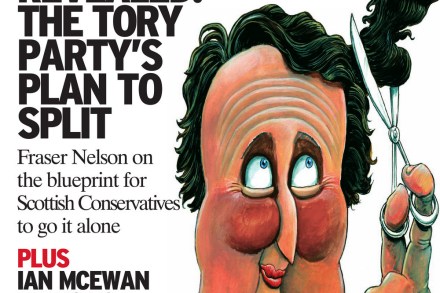
It has to be one of the most astonishing – not to mention bold and risky – moves ever attempted by a politician, of any colour. This morning Murdo Fraser, the Deputy Leader of the Scottish Conservative Party and clear frontrunner for the leadership of the Scottish Tories, announced plans to disband his own party if he wins the leadership contest. Under his plans, the Scottish Conservative and Unionist Party would cease to be. It would be an ex-party. The Conservatives would fight no more elections in Scotland after next year’s council elections. Instead, a new centre-right party would take its place, crucially free from the toxicity which still surrounds the Conservative brand north of the border.

Scottish Conservatives, 1965–2011

From our UK edition

You read it here first – four years ago. The Conservative Party looks like it will finally enact its plans to split, and the Scottish Conservatives will dissolve – at least if Murdo Fraser wins the leadership. The Sunday Telegraph has the news tomorrow: "Murdo Fraser, who is favourite to become leader of the Scottish Conservative and Unionist Party, will announce that he plans to wind up the party if he wins a ballot of members next month. He would follow disbanding the party by launching a new Right-of-centre party that would contest all Scottish elections — council, Scottish Parliament and Westminster.

There’ll be no u-turn on planning

From our UK edition

This government has developed rather a reputation for u-turning. But I would be extremely surprised if it did one over its planning reforms. When you talk to ministers and advisers one is struck by how up for this fight they are. They’re convinced that it is only by taking on these vested interests that they’ll get their message across to the public. And unlike on forests or the NHS, Number 10 and the Treasury are fully on board. There are those who claim that these reforms are profoundly un-conservative. But, in fact, the opposite is the case as Charles Moore argues with his typical eloquence in today’s Telegraph. As Charles says, planning isn’t a conservative concept it is a socialist one.

Untangling the 50p knot

From our UK edition

The 50p tax rate is seen by some as a way of tackling the "undeserving rich" discussed in this week's Spectator. For others, it is a counterproductive imposition driven by envy. The primary practical justification for allowing wealthy people to retain their earnings is that it empowers them to invest in productive enterprises. Over 80 per cent of the funding for business start-ups comes from personal savings or loans from family and friends. And just now we need to give the maximum encouragement to people with the determination to start new businesses. Opponents of a tax cut will no doubt say that wealthy people will not invest in enterprise but fritter away their gains on luxuries.

EU bans Syrian oil imports

From our UK edition

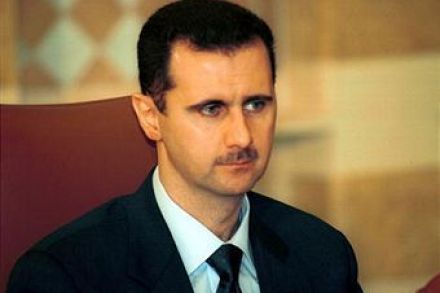
The EU has banned imports of crude oil from Syria. This is being touted as a major success for the EU, displaying the ability of governments to act collectively. Oil sanctions on Syria should, theoretically, impede President Assad: 95 per cent of Syria’s oil is exported to Europe, worth roughly £3bn a year. Germany and Italy are the premier destinations. This is a welcome move against a brutal tyranny, but the embargo is not the total success that it might have been. Italy was stalling earlier in the week, trying to defer the deal’s implementation until 30th November 2011, when existing contracts expired.

From the archives: “The bugger’s bugle”

From our UK edition

Today marks 50 years since the release of Victim, a ground-breaking film about homosexuality that was granted an X-certificate. Writing in the latest issue of the Spectator (subscribers click here), John Coldstream explains the significance of this frank and truthful film and its contribution to the national debate about decriminalising homosexuality. It was made four years after the publication of Sir John Wolfenden’s report into ‘Homosexual Offences and Prostitution’, which recommended that homosexual acts between consenting adults in private should be decriminalised. This contentious reform was not secured until 1967.

More banking worries

From our UK edition

George Osborne wrote a strident article for the Observer last weekend, in which he called rich tax evaders “leeches”. As James Forsyth reveals in the cover story of this week’s magazine, Osborne is not alone among Tories in hounding the ‘undeserving rich’ at present. James goes on to argue that the Tories are ‘becoming particularly worried’ about the callous rich because the Vickers commission is poised to bring the emotive issue of banks back to the ‘political frontline’. The Vickers report has already irritated the coalition’s sore points, with disagreement allegedly rife between George Osborne and Vince Cable. Today’s FT offers a fresh angle.

Cameron: I’m a common sense Conservative

From our UK edition

David Cameron weathered an awkward interview on the Today programme earlier this morning, in which the Strategic Defence Review was savaged and the recent riots were compared to the Bullingdon Club, of which Cameron was once a member. He stood by the defence review, with reference to the successful British contribution to the Libyan intervention, and he blithely ignored the Bullingdon Club question. He reiterated his belief that parts of society have undergone ‘a slow motion moral collapse’.  His gruff tone might have surprised some listeners. The interviewer, Evan Davis, offered Cameron the chance to retreat from the firm, almost draconian line he took at the height of the riots.

Getting tough on discipline

From our UK edition

A fortnight ago, The Spectator asked if Cameron was fit to fight? We wondered if he had the gumption to use the political moment created by the riots to push through the radical reforms the country needs.  So, it’s only fair to note that the government has today actually done something—as opposed to just talking about—the excesses of the human rights culture. The Department for Education has stopped the implementation of new regulations that would require teachers to log every incident in which they ‘use force’ with children. These new rules would have made teachers record every time they had pulled apart two kids in a corridor or intervened to break-up an over-enthusiastic game of football.

The undeserving rich

From our UK edition

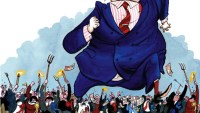
Ever since the Elizabethan poor laws — if not before — society has tended to divide the poor into the deserving and the undeserving. But, as I write in this week's magazine, our politicians are now taking aim at a new category, the undeserving rich. Who you consider to be the undeserving rich depends on your ideological leanings. Russian oligarchs or the families of Middle Eastern despots are, perhaps, the most obvious examples. They have acquired huge wealth but often by illegitimate means. Then come those who evade, to use a favourite phrase of both David Cameron and Ed Miliband, "their responsibilities".

Duncan of Benghazi

From our UK edition

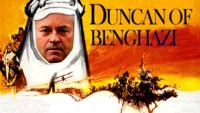
Junior ministers rarely get to influence high-level policy or be seen publicly to have done so. So Development Minister Alan Duncan must feel particularly pleased that his brainchild, the so-called "Libya oil cell", was set up to block fuel supplies to Tripoli; and that its work – as well as the Tory MP’s role – has now become public. On the day that David Cameron jets off to the Paris Conference no less. The BBC reports that a six person team was set, taking in people from the Cabinet Office and the MoD, but working out of the Foreign Office. The team focused on depriving Gaddafi’s regime of oil by cutting off smuggling routes and operations in order to cripple the Libyan military machine and create popular pressure on the government.

Punish the rich, hurt everybody | 1 September 2011

From our UK edition

This week's issue of The Spectator, out today (and available for only £1 an issue here), dwells on the new anti-rich mood in Westminster. James will have more on his cover piece later, but here's the accompanying article by Dennis Sewell to get the debate flowing: The Bible tells us that the poor will always be with us, but there is no good reason, and certainly no scriptural authority, to support the widespread belief that the rich will be too. As capital has become more mobile, slipping across fiscal boundaries at the snap of an enter-key, so too have its owners, who are today only a Gulfstream ride away from somewhere where the climate is more agreeable, the taxman less importuning and the populace less hostile.