Uk politics

A growing argument about the 50p rate

From our UK edition

With the Eurozone and American economies both at risk of a double dip recession, how to get the British economy moving again is going to be one of the defining political arguments of the autumn. A first salvo in that fight has been fired this morning with a letter to the FT from 20 economists calling for the immediate scrapping of the 50p rate because of the harm that it is doing to the economy as a whole. This letter will, one suspects, be privately welcomed by the Chancellor who is looking for ways to, at the very least, cut the rate. He has become increasingly convinced that it is making it harder to get a proper recovery going. But, politically, offering a tax cut to the rich is a hard sell at the moment.

Clarke is right to focus on reoffenders

From our UK edition

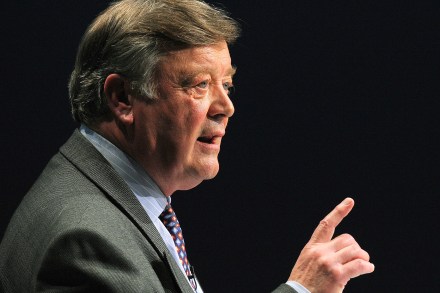
The Justice Secretary Ken Clarke – who was away during the disturbances last month – has signalled his return with an uncharacteristically tough piece in today’s Guardian. The reference to the rioters as a “feral underclass” is not language that the penal reform lobby will welcome from their favourite Minister, but it does signal a firmer line from the Justice Secretary: “In my view, the riots can be seen in part as an outburst of outrageous behaviour by the criminal classes – individuals and families familiar with the justice system, who haven't been changed by their past punishments.

Cameron faces the eurosceptics

From our UK edition

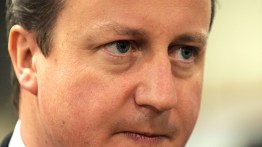
If Tony Blair thought that a meeting with Gordon Brown was like dental surgery without anaesthetic, one wonders how David Cameron would describe being questioned on Europe by Bill Cash and Bernard Jenkin. At the liaison committee, the two veteran eurosceptics pushed Cameron on why he was supporting far greater fiscal integration in the Eurozone. Cameron’s answer was, basically, that this was the only way the Eurozone could be made to work. But one can’t help but feel that greater fiscal integration is simply storing up problems for the medium term given that it will do nothing about the divergence in competitiveness between Eurozone members. The rest of the session was dominated by yet more questions about relations between politicians and the media.

Facebook diplomacy

From our UK edition

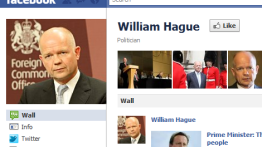
William Hague is an unlikely sort of technophile. Truth be told, for all his strengths he simply does not look like a signed-up member of the Twitterati. His history-dripping, gold-covered office in King Charles Street is about as far away from the internet-enabled Google office as you can get. But the Foreign Secretary has just opened a Facebook profile – and garnered a thousand friends or so in a few days. Ironically, none of his staff can see his family snapshots, his "likes" or who he chooses to poke – as access to Facebook is limited on the Foreign Office IT network. How this foray onto Facebook will end up remains to be seen. Ed Miliband's Twitter experience was famously ill-fated.

Murdoch still in MPs’ sights

From our UK edition

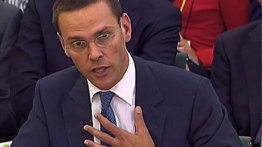
Britain's top-selling newspaper was sacrificed to stop the toxicity from the phone hacking scandal infecting the rest of the Murdoch empire. But it is looking more likely by the day that the News of the World closure will have been in vain. MPs have now have James Murdoch clearly in their sights as they continue to dig down into details of decision-making at News International. He is almost certain to be recalled for a grilling after two senior executives openly contradicted evidence the company chairman gave to the Commons two months ago. Former legal manager Tom Crone today told the Commons culture committee he was "certain" he told Murdoch about an email which suggested illegal interception of voicemail messages was more widespread than first thought.

The reformist case for Clegg

From our UK edition

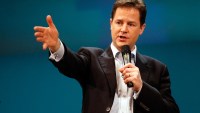
One ally of the deputy Prime Minister suggested to me yesterday that the press was missing the most significant aspect of Clegg’s speech on education: Clegg acknowledging that free schools would now be a permanent part of the educational landscape. This ally argued that this was a big deal given that a year ago Lib Dem conference had voted to boycott these schools. The Lib Dem leader is considerably more liberal than his party. This means that he sometimes needs, so the argument goes, to sweeten the reformist pill with some Lib Dem rhetoric. Hence the emphasis on free schools being fair schools in yesterday’s speech. But this internal Lib Dem party management is frustrating for Conservative ministers.

The riots, one month on

From our UK edition

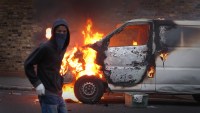
A month has passed since the riots, and it still feels as if nobody has grasped what really happened. The media debate has been limited, to say the least: lots of self-appointed community leaders and youth experts talking about giving kids a "voice" or "stake" in society, or calling the likes of David Starkey racist. The BBC "riots debate" last night, featuring Dame Claire Tickell, Liam Nolan, Shaun Bailey and former gang member Sheldon Thomas was particularly frustrating. Every time somebody came close to making a good point – Bailey, for instance, issued strong remarks about the commercialisation and sexualisation of children – someone else would drown it in bien-pensant blather.

I spy a BBC bias

From our UK edition

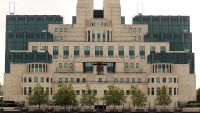
With Colonel Gaddafi's compound lying in ruins and every self-respecting reporter combing through the wreckage, it was only a matter of time before documents of a dictatorship became public. Most explosively, the BBC's Jeremy Bowen has found letters to and from the Secret Intelligence Service which suggest complicity in extraordinary rendition and, as was suggested on the Today Programme yesterday, an unseemly chuminess with Libya's spies. If any part of the British state took part in illegal acts – which extraordinary rendition is – then this is a very serious matter. But it should be said no evidence has hitherto been found of this by any number of inquiries.

Who were the rioters?

From our UK edition

Ken Clarke reveals today that three-quarters of convicted rioters aged 18 and over had previous convictions. Hence his term about a "feral underclass" – strong language, which politicians usually reserve for describing the media. But is this the whole story? One of the reasons that I wanted an inquiry into the riots, as Ed Miliband suggested, is that we could learn more. How many of those convicted finished school? How many were brought up in a workless household, how many by a lone parent, how many in one of London's welfare ghettoes? Did their racial composition match that of their neighbourhoods (I suspect it did, and that race is not a factor in the riots). How many are deemed to have belonged to a hardcore, and how many swept along with the mood?

Do we have the best police service in the world?

From our UK edition

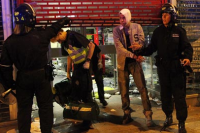
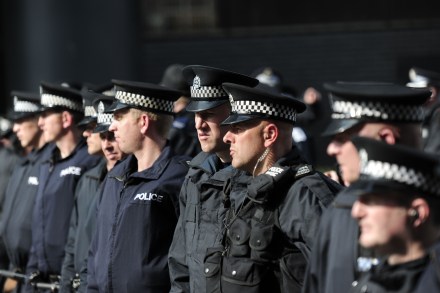
As the wave of rioting and looting swept through London earlier this month it was disturbing to see how the actions of a minority could engender fear and disorder on such a grand scale. As the dust settles and the reality of this episode fades away, there is a simple fact that is at risk of being buried under the heap of condemnation of criminals and praise for the police – namely, that such a relatively small number (just over 2,000 were arrested in London out of a population of 8 million) of people deployed themselves so effectively as to bring London to its knees.

School’s back, and a fight breaks out in the Westminster playground

From our UK edition

Nick Clegg’s speech today on education has certainly garnered him some headlines. But it has also ruffled feathers in Whitehall. A senior Department for Education source told me earlier: "Clegg doesn't understand that the 2010 Act means that Academies are the default mode for new schools, whether Local Authorities like them or not. His speech doesn't change Free School policy or Academy policy generally. It was stupid of Richard Reeves to turn what should have been rare good news for the Government into a splits story, and it won't help reverse public perceptions of Clegg as dishonest." The striking thing about the Deputy Prime Minister's speech today is the emphasis that it places on the need for a role for local authorities.

Osborne and Pickles defiant on planning reform

From our UK edition

George Osborne and Eric Pickles’ joint op-ed in the Financial Times on planning reform is meant to send the message that the coalition won’t back down on the issue. They warn that "No one should underestimate our determination to win this battle". Allies of Pickles are pointing out that these planning proposals are different from the NHS reforms or forestry, both issues on which the government did u-turn, because they are crucial to the coalition’s growth strategy and fully supported by Numbers 10 and 11 Downing Street. One other thing that separates planning from the issues on which the government has u-turned is the confidence Numbers 10 and 11 have in the ministers charged with selling the plans.

Cameron’s energy price headache

From our UK edition

The list of things that will be Big Politics when Parliament returns from its summer break is growing all the time: growth, the post-riot clean-up, the undeserving rich, multiple squeezes, and so on. But few will have has much everyday resonance as another item on the list: rising energy prices. This has been a problem for some time, of course, thanks to a toxic combination of trickle-down green measures, oil price spikes, and financial effrontery from the energy companies. But it looks only to get worse. This morning's Telegraph reports on an internal Downing Street document — entitled "Impact of our energy and climate policies on consumer energy bills" — which suggests that the coalition's policies will add £300 a year to Joe Public's bills by 2020.

Tony Blair revealed to be godfather to one of Rupert Murdoch’s children

From our UK edition

It is a sign of just how close the Blairs and the Murdochs were that Tony is godfather to one of Rupert Murdoch’s young daughters. But it is also a sign of the changed politics around Murdoch that this news will now be a major embarrassment to Blair. Wendi Deng Murdoch has, the Daily Telegraph reports, told the October edition of Vogue that Blair was present at the christening of her two daughters on the banks of the River Jordan last year. He is, the paper says, godfather to the elder one.

Clegg vs Clegg

From our UK edition

As the Lib Dem conference approaches, we can expect some briefing from their spin doctors claiming to have "wrecked" all manner of Tory policies. It's a petty and ugly phase of the coalition. Last year: nuptial bliss. This year: one partner throwing china at the other. The next phase is divorce, which is why I'm surprised to see the Lib Dems accelerating the process by today's divisive briefings. Especially on something as self-defeating as school reform. We are told that "Nick Clegg defeats bid by Michael Gove to let free schools make profits". This is nonsense. As I write in this week's Spectator, Gove is not pushing for profit-seeking schools, to the disappointment of some inside Number 10.

Darling lifts lid on Brown’s chaotic government

From our UK edition

Tieless, Alistair Darling appeared on Marr this morning to discuss his memoir. As with so many of these New Labour autobiographies, there was the strong whiff of a therapy session. At one point, Darling said "if Gordon is listening to this" before remarking that he still felt a huge amount of "residual loyalty" to him. It is not news that the Brown government was dysfunctional. But it was striking that Darling did not dissent when Marr suggested that under Brown, Labour had – collectively – not been fit to govern.

Frontrunner for leadership wants to disband the Scottish Tory Party

From our UK edition

It has to be one of the most astonishing – not to mention bold and risky – moves ever attempted by a politician, of any colour. This morning Murdo Fraser, the Deputy Leader of the Scottish Conservative Party and clear frontrunner for the leadership of the Scottish Tories, announced plans to disband his own party if he wins the leadership contest. Under his plans, the Scottish Conservative and Unionist Party would cease to be. It would be an ex-party. The Conservatives would fight no more elections in Scotland after next year’s council elections. Instead, a new centre-right party would take its place, crucially free from the toxicity which still surrounds the Conservative brand north of the border.