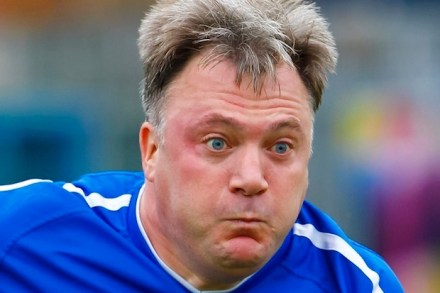
Ed Balls: I didn’t know McBride was briefing against ministers
From our UK edition
listen to ‘Ed Balls on Today: 'This recovery is not working for working families'’ on Audioboo.
From our UK edition
listen to ‘Ed Balls on Today: 'This recovery is not working for working families'’ on Audioboo.
From our UK edition
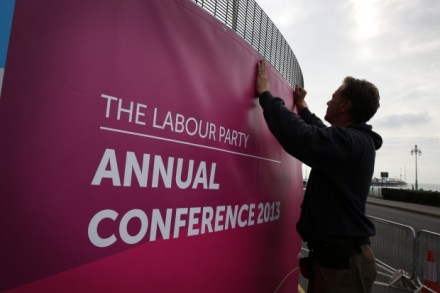
Every morning throughout party conference season, we’ll be providing our pick of the fringe events on Coffee House. It's the second day of Labour's annual conference in Brighton. The morning session starts at 09:30am today, but don't think that means you can lie in. Fringe events with prominent party figures, shadow cabinet members and trade unionists kick off bright and early at 07:00: Title Key speaker(s) Time Location Running club and breakfast with Alastair Campbell Alastair Campbell 07:00 Gresham, Old Ship Hotel Business is Good for Britain: How can we encourage private investment and exports?
From our UK edition
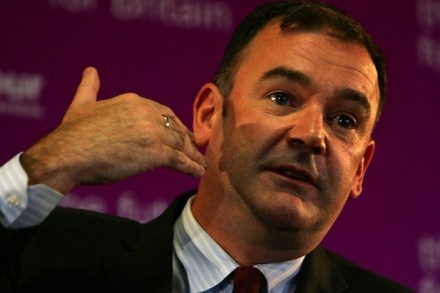
Congratulations to Jon Cruddas, Labour's policy review chief, for managing to produce a front page headline. Cruddas is famed for holding lengthy fringe events and interviews where he manages either to say nothing of interest or else says something that needs translating several times before it makes sense - one special adviser recently told me that he'd found, on the sixth time of reading, that a speech by this guru on 'statecraft' actually contained some very good ideas - and so the Times front page story that he wants parents to lose their child benefit if they refuse to give their child the MMR vaccine is unusual. Monday's Times front page - "Labour 'will stop benefits if parents refuse MMR'" #tomorrowspaperstoday #lab13 pic.twitter.
From our UK edition
Ed Miliband is not the only person who wanted Gordon Brown to sack Damian McBride. At an IPPR fringe event this evening, Douglas Alexander told The Guardian's Jonathan Freedland he urged the Prime Minister to sack McBride over media briefings that his sister Wendy should be sacked; briefings which McBride claimed came from Douglas: 'I did urge Gordon to dismiss someone, it was Damian McBride. That might explain the way he has briefed against me then and writes about me now. 'Listen, I was always a supporter of my sister. The politics that he represents is destructive, divisive and ultimately, deeply damaging to our politics and our cause. 'That was the view I held then — I expressed it on a number of occasions. It's what he did and what he does.

From our UK edition
The cost of living may well appear to be a rich seam for the Labour party to mine, but it isn't entirely risk-free. As shadow ministers talk about Expensive Things in their speeches and fringe discussions this week in Brighton, they will be aware that voters might sympathise with their theme without fully trusting that their party can fix the problem. The polls still show that voters believe the Tories are the most competent on the economy, and an easy riposte from government ministers could be 'you stuck by us when we fixed the economy, now let us fix living standards'. The risk is that Labour appears to jump the question of the economy and go straight to living standards without gaining voters' trust on the former. Why should they therefore trust them to fix the latter?

From our UK edition
Like his colleagues in the Labour party, Stephen Twigg used his speech this afternoon to focus on the cost of living. He pledged that Labour would force schools to open earlier and close later to provide 'wrap-around' childcare: 'Spiralling childcare costs are adding huge pressures to family budgets. Last year, nursery costs rose six times faster than wages, making work unaffordable for many parents…that is why I am announcing that the next Labour government will legislate to deliver a Primary Childcare Guarantee. Before and after school childcare for all primary pupils. ‘For parents of primary school children the certainty that they can access childcare from 8am-6pm through their school.
From our UK edition
The Scottish speech is normally a neglected part of the Labour Party conference but has more potency now that there's less than a year to go to the referendum. Johann Lamont, leader of Scottish Labour, is an important actor in the battle to save the union. The Tory vote in Scotland has been reduced to staff members and blood relatives so much depends on whether Labour is able to pack a punch. And Ms Lamont certainly is. She rather cleverly mocked the way that Salmond is in full hyperbole mode, declaring every second day an 'historic' day — to create the idea that we're building up to some Braveheart-style Independence Day.


From our UK edition
In the words of Andrew Marr, that was an extraordinary interview. Ed Miliband kicked off Labour's conference today with an interview one can only assume was meant to show his personal side. Instead, I imagine it will reinforce the perception he is a tad weird.
From our UK edition
If you want to know just how much anger Damian McBride’s book has created in the Labour party—and particularly its Blairite wing, just watch Alastair Campbell’s interview with Andrew Neil on The Sunday Politics. Campbell doesn’t scream or shout but the anger in his voice as he discusses McBride’s antics is palpable. He did not sound like a man inclined to forgive and forget. This whole row is, obviously, a massive conference distraction. Those close to Ed Miliband had hoped that this year, the Labour leader would get a free run at conference now that his brother has quite politics. But as one of his colleagues said to me late last week, ‘it used to be all about David, now it’ll be all about Damian.

From our UK edition
Ed Miliband’s interview on the Andrew Marr show neatly summed up the Labour leader’s problems in cutting through. Marr started with a series of questions about Miliband’s plans to change Labour’s relationship with the unions. This might be an important issue but it is hardly one of paramount interest to the electorate and every minute Miliband is speaking about this, he can’t be speaking about other things. The next distraction is the whole Damian McBride business. Indeed, Miliband telling Marr that he’d told Brown to sack McBride is the BBC News headline on the interview. Miliband also had to fend off a whole host of questions about why his poll ratings are so bad. Miliband did, though, try to keep bringing the interview back to the cost of living.

From our UK edition
Every morning throughout party conference season, we’ll be providing our pick of the fringe events on Coffee House. Today is the first day of Labour's annual conference in Brighton.
From our UK edition
This is not the backdrop that Ed Miliband would have wanted for Labour conference. Labour’s poll lead has—according to YouGov—vanished, Damian McBride is dominating the news agenda and there’s talk of splits and division in this inner circle. But, as I say in the cover this week, you can’t write Ed Miliband off yet. He has three huge, structural advantages in his favour. The boundaries favour Labour: Type Thursday’s YouGov poll, the best for the Tories in 18 months, into UK Polling Report’s seat calculator, and it tells you that Labour would be three short of a majority on these numbers. It is a reminder that if the parties are level pegging, Labour is winning.

From our UK edition
'Your day will come,' said Godfrey Bloom rather threateningly to David Cameron by way of ending his speech to the Ukip conference. Unfortunately for Bloom, his day came a lot sooner. Just a couple of hours later, in fact.
From our UK edition
Debate the relative merits of the two speeches from Nigel Farage and Paul Nuttall all you like, but the headline from today's Ukip conference won't give voters any impression that the party has grown up at all. Godfrey Bloom (who I've had my own run-in with before) decided to turn up to a fringe on women in politics and start talking about 'sluts'. He admitted as much later (audio clip below).

From our UK edition
Even if Nigel Farage's speech was, as Fraser blogged earlier, a wasted opportunity for the Ukip leader to impress the voters that he really needs to attract, it still pleased the members in the hall. In fact, there was more of an excited, energetic atmosphere at this conference than at any party political conference I've ever attended. When I interviewed Nadine Dorries for the magazine earlier this year, she recalled the dying Tory government in 1997, saying that '[Voters] hated us because the Labour party promise, the vision, the song "Things Can Only Get Better" had a purchase on people's imagination, and in their hearts that I see being replicated by Ukip today.' You can see that start-up excitement in the delegates thronging around Westminster Central Hall today.

From our UK edition
Damian McBride's memoirs will naturally make uncomfortable reading for the Labour party, but the current occupants of Downing Street will also be feasting on his lesson in the dark arts, and wondering if there is anything they can take from it too. This sounds like an odd thing to say when so much condemnation for the poisoned operation of the Brownites (and, as Peter Oborne points out, the operation around Blair too) is flying about today. But the question of whether the current government needs its own Damian McBride is one that has occupied Tory MPs who like to think about these things for a while.

From our UK edition
In association with Gatwick Airport Does Britain really need a new airport, or simply more competition between existing ones? In this special View from 22 podcast, the Spectator's editor Fraser Nelson discusses whether the current and future patterns of air travel mean Britain needs a new airport at all, the pros and cons of various expansion options, which option would see the best deal for passengers and the importance of air travel to economic growth. Joining the panel are Stewart Wingate, CEO of Gatwick Airport, Margot James, the Conservative MP for Stourbridge and member of the No.10 policy unit, and Eamonn Butler, director and co-founder of the Adam Smith Institute.


From our UK edition
If you want to know why Damian McBride was such a feared figure in Whitehall, read the section in his memoirs about how he sowed division between Charles Clarke, then the Home Secretary, and Louise Casey, the anti-social behaviour tsar. McBride’s approach was far more cunning than straight negative briefings or leaks. Rather, he went through the government grid looking for announcements in this policy area and then briefed them out to the papers in a way that made it sound like it had come from either Clarke or Casey’s teams. The result was that both sides became convinced that the other was trying to take all the credit for what the government was doing on this front.

From our UK edition
'Drug use; spousal abuse; secret alcoholism; extra-marital affairs. I estimate I did nothing with 95 per cent of the stories I was told. But, yes, some of them ended up on the front pages of Sunday newspapers.' And with this starts the serialisation of what will be perhaps the most explosive book about British politics for ten years. Damian McBride's memoirs look every bit as good as I had hoped. The Daily Mail serialisation today gives a taste of what should really be called 'confessions of a political hit man' - the methods and motives of Team Brown, perhaps most ruthless and effective bunch of character assassins that Westminster has ever seen.

From our UK edition
Ever since the publication date of Damian McBride's book was set for the week of the Labour autumn conference, it was clear that the party would find itself lugging a bit of the past around as it tries to talk about what it wants to do in the future. But perhaps it wasn't clear quite what a festival of letting skeletons wander out of closets this week would be. There isn't one particularly horrifying skeleton, but the effect both of McBride's book, serialised in the Mail, and the cache of emails released by Benjamin Wegg-Prosser, former Number 10 strategic communications director, is to trawl up a row that had lain quiet.