Uk politics

How easy is Nigel Farage to squeeze?

From our UK edition

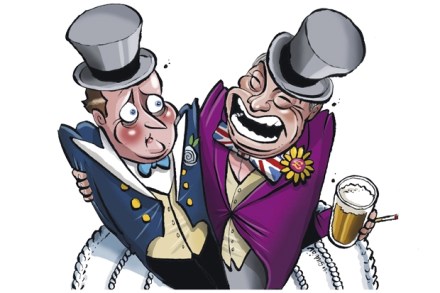
Nigel Farage can't come into the Conservative conference secure zone, but is hovering around the metal barriers at fringes and receptions. The Tories are trying to squeeze him out of the frame as they hold their annual jamboree, but they aren't succeeding terribly well: today's news is full of speculation about a Tory/Ukip pact, even though Farage has been talking about this for years (see James's interview with him in the Speccie). But beyond this conference, all the parties are interested in - and worried about - how on earth they can squeeze Farage effectively when it really matters. The 'squeeze message' is one that parties deploy in the days before polling day, to concentrate the minds of voters tempted to vote for a third party.

George Osborne is back in the Tory leadership race

From our UK edition

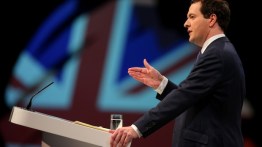
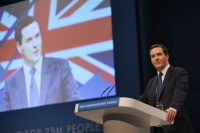
If the next Tory leadership election is a marathon, George Osborne fell down at mile six with that 2012 Budget. Most of those watching assumed that was the end of him. But Osborne got up, dusted himself down and started making his way back through the pack. Today’s speech showed that Osborne thinks he’s now back in that race. It was littered with the personal pronoun. It included a tribute to his parents who founded what Osborne called a small manufacturing company’ which the rest of us call Osborne and Little, the up-market wallpaper merchants beloved of the interior designing classes. It also showed off his acid sense of humour, there were a slew of jokes at the Miliband brothers’ expense.

We’ll balance the books!! (By 2020) George Osborne speech analysis

From our UK edition

You have to hand it to George Osborne: he’s great at turning massive setbacks to his advantage. He pledged to get rid of the deficit over one parliament, now he’s boldly saying he’ll do it over two. Be had said he’d sort out the economy over five years (after all, Britain won a world war in six) but now - in a well-delivered and well-received speech - he’s solemnly declaring that we’re 'not nearly finished' and he should be re-elected to finish the job. So to prove it, he had a new plan for 2018-20: a new deficit pledge. As ever with Osborne, it's political.  He calculates that Ed Miliband plans to run permanent deficits, as Gordon Brown did.

View from 22 podcast special: the return of George Osborne

From our UK edition

Fraser Nelson thinks it was the 'language of someone happy with the economy'. James Forsyth saw it as renewed hope for leading the Conservative party. On this special View from 22 podcast, we analyse George Osborne's speech to Tory conference this morning; whether the economic measures mentioned were sensible and what it says about the Chancellor himself.

The north-south rebrand won’t stop HS2 becoming the new symbol of Tory disunity

From our UK edition

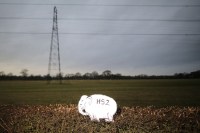
There was no chance the Conservatives could come to Manchester, with a row over the future of high-speed rail raging, and not make a big thing of the proposed new railway line. But as I explained in my Telegraph column last week, the party knew that a little crafty rebranding wouldn't go amiss, and so when Patrick McLoughlin spoke to conference this morning, he placed as much emphasis on the uniting power of the new 'north-south' line as he did on the economic or capacity-based arguments that the government have focused on so far. He said: 'So here in Manchester I am proud to support HS2 - the new north-south line. Just as I’m proud to support it in cities like Sheffield. Leeds. Nottingham. Derby. Glasgow. Birmingham. In all the great cities of our country.

George Osborne focuses on big picture and trust to undermine Labour

From our UK edition

How can the Conservatives deal with Labour's attack on the cost of living? As I explained last week, the party believes that the best way to address the opposition's focus on living standards is to talk about the bigger picture rather than the 'footling little things'. Senior Tories I've spoken to in the past week are very confident indeed that because they enjoy the trust of voters on the economy, while voters still blame Labour for the mess, they don't need to worry about the strategy that Ed Miliband has adopted. One senior figure remarked to me this weekend that 'Labour has mis-fired: when we've got such a poll lead on the economy, why should voters think anything Labour has to say about cost of living is credible?

Conservative conference: Monday fringe guide

From our UK edition

Every morning throughout party conference season, we’ll be providing our pick of the fringe events on Coffee House. It's the second day of the Conservative conference today in Manchester and the fringe is in full swing. As Grant Shapps noted when he kicked things off yesterday, the Tories' is the largest party conference in the UK, and you could easily tell that from the fringe listings. So, for a round-up of the events you can't miss look no further than Coffee House's guide to the crème de la crème of the conference fringe below: Title Key speaker(s) Time Location Business is good for Britain: How can we encourage private investment and growth?

Free Enterprise Group MPs say no to Help to Buy

From our UK edition

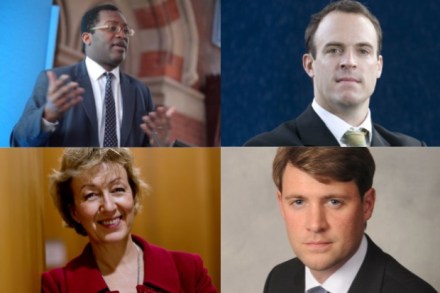
Will any Tories except Cameron and Osborne applaud the Help to Buy mortgage scheme? At an IEA fringe event this evening, discussing lessons to be learnt from the recession, all the members present of the Free Enterprise Group of Tory MPs all conveyed their concern at the plans the Prime Minister has accelerated this weekend. Former banker Andrea Leadsom said she was 'exceedingly concerned' and suggested the property cap should be lowered from £650,000 to £350,000. Chris Skidmore agreed the cap is too large while Kwasi Kwarteng (leader of the group) said he was 'uneasy about governments propping up credit markets in such a direct way'. The Free Enterprise Group have been heralded as the future of the Conservative party, but the present party is listening to them too.

Philip Hammond: Britain can do better than a blank sheet of paper or the Lib Dems

From our UK edition

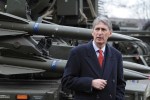
listen to ‘Hammond: 'A Conservative government will never send our forces in to battle without the right kit'’ on Audioboo Philip Hammond's speech to the Conservative conference was accompanied by the set of circumstances that most ministers have bad dreams about after eating too much cheese. First he was interrupted by two men in military clothing, shouting about defence cuts and fusiliers. 'I'll come and talk to you later, let me finish my speech,' the Defence Secretary said, hopefully. The man didn't stop, and was escorted from the floor, followed by a cloud of journalists scribbling away and enthusiastic photographers. Then the giant screens behind Hammond that were beaming two massive shots of his head out across the Manchester Central hall went dead.

Grant Shapps: Britain can do better than a Labour government

From our UK edition

Manchester Central is a beautiful, cavernous conference venue. But it also seems to be acting as a bit of an atmosphere sink today. When Grant Shapps bounded onto the conference stage after the party's tribute to Baroness Thatcher, he might have expected that his speech, which was full of the sort of fare that Tory grassroots love - attacks on Labour and the trade unions and a reminder that Abu Qatada no longer haunts these shores - would have gone down to uproarious applause. But though delegates clearly liked his speech, they never really warmed up. If this continues through the week, it won't help diminish the impression that political conferences are dying.

How strong can the Tory tax attack be?

From our UK edition

One of the key dividing lines in 2015 will be over what sort of action each of the parties proposes to take over filling the financial black hole. The choice is between tax rises and spending cuts, and the Tories were first out of the blocks to make clear that they want to focus on spending cuts, specifically shaving more money from the welfare bill, as part of their election offer. James first revealed this in his Mail on Sunday column in June, and then George Osborne ruled out tax rises at a press gallery lunch the following month. At the time, he said: 'I think this can be delivered through spending and savings both in welfare and in departments, and there is no need for tax rises to contribute to that fiscal consolidation.

Conservative conference: Sunday fringe guide

From our UK edition

Every morning throughout party conference season, we’ll be providing our pick of the fringe events on Coffee House. The Tories' annual bash kicks off today in Manchester with plenty of cabinet ministers and interesting figures popping up, mostly later in the day.

We haven’t heard the last of the mansion tax

From our UK edition

In Manchester this week, there’ll be much talk from the Tories about how they are gunning for a majority. But in private, many senior Tories will admit that being the largest party in another hung parliament is a more realistic aim. As Matthew d’Ancona reveals in the Telegraph this morning, there has been talk—albeit brief-- between the principals about a second coalition. Matt also reminds us how, if it had not been for Cameron’s intervention, a mansion tax would have been imposed by the coalition. I suspect that if there is to be another coalition, the Liberal Democrats would insist on some kind of mansion tax. It has come for them a proxy for wider questions about how much influence they would wield inside a second Tory-Lib Dem coalition.

David Cameron unveils £1,000 marriage tax allowance

From our UK edition

That the Conservatives were going to announce a marriage tax allowance at their party conference had to be one of the worst kept secrets in Westminster since the date of the last general election. So they've managed to go one better than the £750 allowance proposed by their 2010 manifesto with David Cameron announcing in the Daily Mail tomorrow that people will be able to transfer £1,000 of their personal tax allowance to their spouse or civil partner.

The Boris Johnson guide to making headlines

From our UK edition

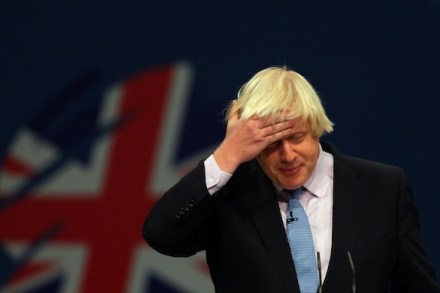
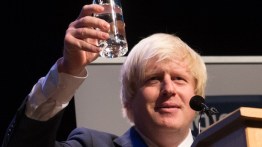
Boris Johnson sure knows how to make the front pages. His interview in the latest FT Weekend Magazine — with the cover quote 'for the first time in years, I wished I was in Westminster' — is a prime example of his strategy. He wants to remain in the public consciousness without revealing anything new. He’s done it several times before, often in similar ways: 1. After a period of inactivity, give an interview which appears revelatory Boris flits in and out of the spotlight, particularly when he’s busy trying to run London. Then suddenly, he appears front and centre with 'news'. In the FT's interview, he says ‘during the whole Syria thing, for the first time in years, I wished I was in Parliament. I watched that and I thought ... I wished, I wished’.

David Cameron ducks a debate with Alex Salmond. This makes sense but is still depressing.

From our UK edition

A novice poker player quickly learns - or had better quickly learn - that strength often connotes weakness and weakness is a reliable indicator of strength. But as the stakes increase and the level of play becomes more sophisticated such elementary tells can be misleading. They are false friends in the land of the double and triple bluff. So a novice poker player might conclude that David Cameron's refusal to debate against Alex Salmond is a sign of weakness. A slightly more experienced player would think this weakness too obvious to be true and conclude that Cameron is holding better cards than he is indicating. And it is true: with the polls indicating a No vote Cameron has little need to risk a debate the outcome of which must be uncertain.

‘North-south railway’: the new Tory brand for HS2

From our UK edition

When Lord Howell described parts of the North East of England as 'desolate' (or did he mean the North West?), he was talking about shale gas exploitation, but he could have more accurately applied the term to the map of Tory support in the region. The urban north hasn't supported the party since the late 1980s. Seats like Manchester Withington, Newcastle Central and Nottingham North (that last is not in the North, of course, but another example of the urban problem) were once Conservative, but now it's hard to imagine them ever being safe blue seats again. The Tories can win without the urban North, but as their electoral map continues to shrink, it's a risky strategy to let the rot continue.

Why the Tories need to reunite the Right

From our UK edition

One of the most important things about British politics right now is that the left is united and the right is divided. The combination of the Liberal Democrats going into coalition with the Tories and Ed Miliband’s leadership of the Labour party has seen left-wingers who moved from Labour to the Liberal Democrats during the Blair years go back to Labour. At the same time, Ukip has started eating into the Tory core vote. Combine this with constituency boundaries that hugely favour Labour and it becomes evident that Labour can win with nowhere near 40 percent of the vote. If the Tories are to stop this happening, they need to reunite the right: to win back the vast majority of those voters who have moved to Ukip. Doing this is going to take a combination of carrot and stick.