Uk politics

Shock as Government agrees with Bill Cash

From our UK edition

Something extraordinary happened on the Committee corridor in Parliament today. A government Secretary of State turned up to a session led by veteran troublemaker Bill Cash to accept a bill that the Tory MP was pushing. More extraordinary still to those unfamiliar with the range of subjects that Cash takes an interest in is that this had nothing to do with Europe: it was his Gender Equality Bill. Cash has been plugging away at this Bill, which lays a statutory duty on the International Development Secretary to ensure that women and girls are supported and promoted through UK aid.
Scottish Nationalism’s Dangerous Cult of Victimhood

From our UK edition

Danny Finkelstein's column in the Times today is characteristically elegant and incisive. In politics as in life he writes, "whatever apparent power and temptation lies with the adoption of the identity of victimhood it is ultimately destructive". Since Finkelstein is pondering lessons that may be drawn from the life of Nelson Mandela it may not be immediately obvious that the conclusion he reaches has some relevance to the campaign for Scottish independence. I better elaborate, then. Much has been said about how and why Unionists need a better "narrative" when making the case for Scotland as part of the United Kingdom. This is true. There is a need for a positive, optimistic, case for the Union. This is also true.

What the National Audit Office really said about free schools

From our UK edition

Is the free schools project unnecessary and costly? If you take your news from the BBC, then you might be forgiven for answering 'yes': the Beeb's reporting on the National Audit Office's latest report on Michael Gove's pet policy suggests that the whole thing has been an expensive vanity project. The report itself doesn't seem to say quite the same thing, though: it argues that the Education department has 'achieved clear progress on a policy priority' and that ministers face a 'rising capital cost trend' in spite of much lower average construction costs than previous programmes (free schools often use existing buildings, while the department allows smaller space standards and reduced building specifications to create an average reduction in construction costs of 45%).

No, David Lidington: EU subsidiarity is not a ‘new principle’

From our UK edition

David Lidington’s letter to Conservative Party members on ‘reform in Europe’ tells us not very much about almost nothing at all. It is measured, upbeat and polite, but that is the essential optimism and generous disposition of the man himself. The only interesting glimpse it offered into current thinking was confirmation of his ignorance of the Maastricht Treaty. Perhaps, like Kenneth Clarke, he hasn’t bothered to read it. The Europe Minister wrote: ‘I’m sure [members] will be pleased to know that in their Subsidiarity Review, the Dutch Government proposed a new principle: ‘at European level only when necessary, at national level whenever possible’.

May’s Brussels-blocking gesture to Tory right

From our UK edition

Why is Theresa May stalling on the publication of the Balance of Competences review? The Times is reporting that the Home Secretary feels the review underestimates the extent of benefit tourism, which would certainly chime with what's been published so far - the last tranche of review documents made the European Union sound like something no sensible person could ever find fault with. But aside from the policy issue, which is becoming more and more sensitive as the deadline for the lifting of transitional controls on Bulgarian and Romanian migrants approaches, there could be another reason the Home Secretary wants to be seen to be delaying on this review.

David Cameron interview: tax, ‘green crap’ and #TeamNigella

From our UK edition

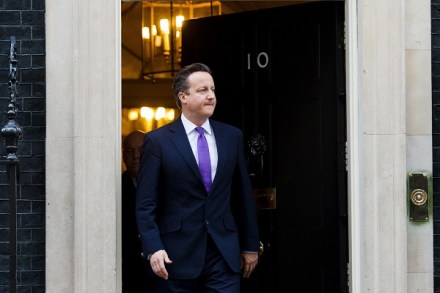
A sneak preview from The Spectator's bumper Christmas issue, out this Thursday... It’s 9.30 a.m. on a Friday and David Cameron is about to head for his Oxfordshire constituency and work from home. This is precisely the habit that his Cabinet Office minister, Francis Maude, is trying to beat out of the civil service, but the Prime Minister has a reasonable claim to some downtime. In the past five days he has met 150 businessmen and toured Chinese cities. This morning, he has paid a visit to Tech City, London’s answer to Silicon Valley, and travelled to South Africa House to pass on his condolences following Nelson Mandela’s death. His last appointment, which will last for as long as it takes to drive to Beaconsfield service station, is an interview with The Spectator.

Border Force ‘neglecting duties’ and ‘weakening’ security – MPs

From our UK edition

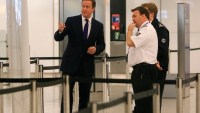
Is the Border Force fit for purpose? At one point it became a model for reform with ministers arguing that its performance had improved significantly since it was split from UKBA in March 2012 into a separate law enforcement body. But today the Public Accounts Committee suggests the Border Force isn't quite fighting fit: more puffing at the back of the line and a bit paunchy. The PAC's report points to weakened security at the border as the Border Force is forced to prioritise passenger checks over checking freight for illicit goods or illegal immigrants, gaps in intelligence on those coming into the country, and 'inadequate IT systems'.

Pathfindering and lobster pots: IDS defends Universal credit

From our UK edition

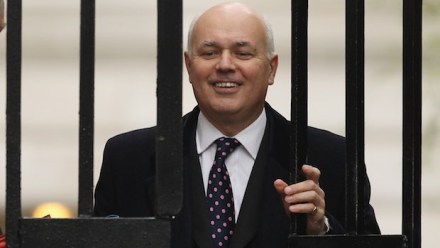
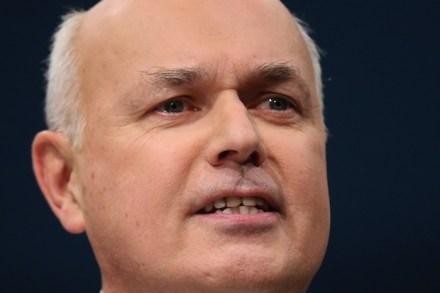
If you'd judged the success of universal credit purely on Iain Duncan Smith's tone at the Work and Pensions select committee this afternoon, you might conclude that things weren't going very well at all. IDS was in a fabulously grumpy mood this morning on the Today programme, muttering about the presenters trying to find fault, and he didn't seem to have cheered up by the time he arrived in the Wilson Room for his select committee grilling, accusing Labour MP Debbie Abrahams of 'moaning' and Glenda Jackson of 'conflating so many issues here, it's almost becoming risible'. So what did we learn? IDS insisted that 'in essence it will be delivered by 2017': his plan was still the same as the original one he'd outlined to them in September.

What Tory ministers think about European reform: exclusive details

From our UK edition

Remember that shopping list of EU reforms that Conservative party members sent ministers in the summer? Well, they've finally got a reply. I've got hold of a letter to members from Europe Minister David Lidington, which answers some of their concerns and gives us an interesting glimpse into where Conservative party thinking currently stands on European reform. The first point worth making is that while Lidington's letter is very upbeat about the prospects of reform in Europe, the minister focuses on the opportunities for Europe-wide reform, rather than the likelihood of a new relationship with the EU for the UK.

Nigel Farage: Establishment and media are out to get us

From our UK edition

After the Mail on Sunday's awkward front page about Ukip Councillor Victoria Ayling's apparently unsavoury views, Nigel Farage has sent an email around to party members complaining about the story and reassuring them that Ayling's views have been distorted. Here is the text of the email: 'I am sure many of you are aware of the attack by the Mail on Sunday on a Ukip Councillor this weekend. 'I firstly want to reassure you that I believe this attack on Victoria Ayling to be unwarranted, and have the utmost sympathy with her. Her words on immigration it would appear were deliberately distorted and taken out of context in order to paint a very nasty picture. She has personally assured me that this is the case and I have no reason to doubt her.

Coffee Shots: George Osborne, action Chancellor

From our UK edition

When George Osborne paid tribute to the 'march of the makers' in his 2011 Budget, few thought the Chancellor was secretly plotting to join the march himself. But as part of his tour of #hardworkingpeople, Osborne hasn't just been pointing at things, like normal politicians: he's been making things too. Today he made a cake: But he's also made bread: And made parts for JCB, working in this picture with a stud gun: In fact, Osborne likes making vehicles.

Iain Duncan Smith: Universal credit plan is different

From our UK edition

Iain Duncan Smith is up before the Work and Pensions Committee this afternoon to talk about his department's annual report. Doubtless the latest bad news on universal credit will crop up, which is a line in the OBR's Economic and Fiscal Outlook which says there will only be a handful of claimants on universal credit by 2014/15, rather than 1.7million, and just 400,000 claiming the benefit in 2015/16 rather than 4.5million. Duncan Smith had a trial run of this afternoon's grilling on the Today programme, where he seemed particularly grumpy, muttering about the presenters trying to find fault while insisting that the programme was still on budget.

Ed Balls: ‘I couldn’t give a toss’ about job speculation

From our UK edition

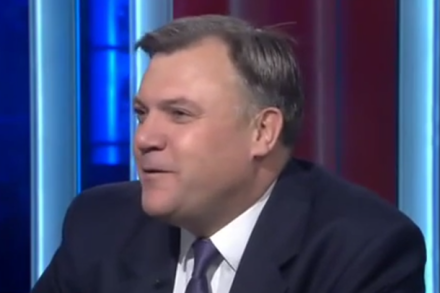
Generally when someone says they 'couldn't give a toss' about something, you can safely bet more than 50p and a cake that it's the most important thing ever to them. So when Ed Balls told Sky's Murnaghan programme today that he 'couldn't give a toss' about speculation that Ed Miliband might move him, it meant a number of things. The first is, of course, that he could give a toss, but frankly it would be weird if the Shadow Chancellor didn't care whether or not he continued in his job. Anyone answering that question honestly would have to admit that they jolly well do give a toss about whether they're going to lose their job or not.

The Tories have to fight on their ground, not Labour’s

From our UK edition

At the beginning of the autumn, strategists from all three parties assumed that the theme of the season would be Labour’s poll lead narrowing as the economic recovery picked up pace. But that hasn’t happened. Instead, Labour’s lead has remained and its own poll numbers have actually ticked up. This is, largely, thanks to Ed Miliband’s reframing of the political debate about the economy, making it about living standards But the autumn statement showed that when the political conversation is focused on the broader economy, the Tories have the better of it. Thursday has weakened Ed Balls, strengthened George Osborne and begun to move the political debate off Labour’s turf of living standards and back onto the Tory question of economic competence.

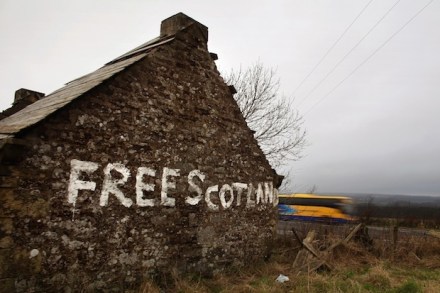
If Scotland leaves, will we be left with FUK?

From our UK edition

In Whitehall, there is a phrase for the entity which would be left if Scotland were to vote Yes to independence next year. The acronym is rUK, which stands for ‘the rest of the United Kingdom’. This device of referring to a country’s altered state in its name has a precedent. After Macedonia broke away from Yugoslavia in 1991, it could only prevent Greece from blocking its UN entry by being admitted as the Former Yugoslav Republic of Macedonia (FYROM). Obviously, it would be embarrassing for the Former UK (FUK) to highlight its initials, but the nomenclature is a real problem.

Vince Cable is right, Britain is most likely to leave the EU under a Labour government

From our UK edition

Vince Cable is surely right in his comments yesterday that the most likely scenario for Britain leaving the EU is if Ed Miliband is Prime Minister after the next election. The theory, that you hear a lot in Westminster, goes like this: Miliband is forced by public opinion into promising a referendum on EU membership, he then becomes Prime Minister and is obliged to hold the vote. But by this time, the Tory opposition is advocating a No vote; arguing that a better deal can be negotiated. The country then votes No and the rest of the EU, for once, accepts the result of the first vote. Many senior pro-European Labour figures feel that this scenario is all too plausible.

‘Not misleading’ = ‘we’re right!’

From our UK edition

Ed Balls didn't have a good day yesterday with his poor Autumn Statement performance, but he's had a slightly better day today, with an analysis from the Institute for Fiscal Studies that confirms families will be 'substantially' worse off in 2015/16 than they were in 2009/10. Balls wants to keep talking about the cost of living: now he's got the IFS' analysis on his side too. Except the IFS didn't quite back him to the hilt. The analysis of the parties' approaches to the living standards question concluded that while the measure Balls used to calculate that working people are £1,600 a year worse off under the Coalition was 'incomplete', it is 'not giving a misleading impression of changes in average living standards'.

How corporation tax cuts are helping wages

From our UK edition

Yesterday's autumn statement included the results of the Treasury's study of the dynamic impacts of the cuts to Corporation Tax, which George Osborne is down from 28 per cent to 20 per cent. This study used the new HMRC Computable General Equilibrium model - as Fraser reported on Wednesday - and the results are impressive. The cuts will increase investment by 2.5-4.5% (£3.6-£6.2 billion in today’s prices). They will increase GDP by 0.6-0.8% (equivalent to £9.6-£12.2 billion). Given the share that we can expect to go to labour, that equates to an increase in wages of £405-£515 a household. As a result of higher profits, wages and consumption, we can expect the cost of the policy to fall by 45-60 per cent in the long run.