Uk politics

Doing God works well for Cameron

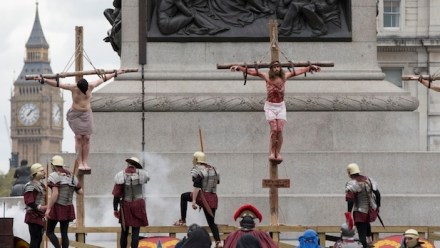
David Cameron's decision to hug-a-Christian seems to have worked pretty well, judging by the political response he's provoked. For starters, his comments about Britain being 'evangelical' about its status as a Christian country managed to enrage the sort of people who also might annoy the churchgoing conservatives he needs to win back after the row over gay marriage. Today, he - and the secularists - got a response from the Archbishop of Canterbury who wrote on his blog: 'It's all quite baffling and at the same time quite encouraging. Christian faith is much more vulnerable to comfortable indifference than to hatred and opposition. It's also a variation on the normal "Sword and Grail discovered" stuff that seems to be a feature of Easter week news.

What does new Number 10 hire mean for stop-and-search reform?

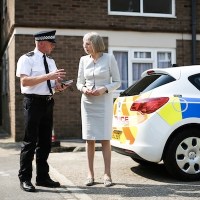
As James revealed on Coffee House earlier, Max Chambers will take over from Patrick Rock on the home affairs brief in the Number 10 policy unit. One thing that will be particularly interesting to watch is whether Chambers' appointment leads to a shift in Number 10's stance on stop-and-search. Rock had been one of the key figures blocking Theresa May's reforms to the power for the police, for fear that it would make the Tories appear soft on crime. So will the new adviser be more amenable to change? I am told that Chambers is open to ideas on reform of stop-and-search and is keen to see more evidence of the need for changes.

Who tells Ed Miliband when he’s made a mistake?

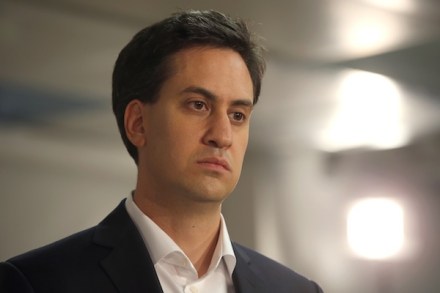
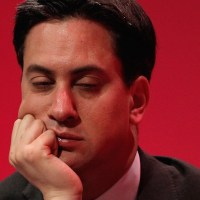
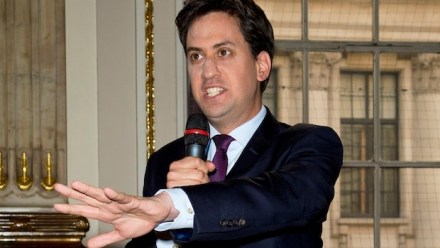
Dan Hodges' piece in this week's Spectator on the team around Ed Miliband is a must-read (and we've posted an even longer version online here). As he runs through those working with the Labour leader, a clear pattern emerges. There doesn't seem to be a Lynton Crosby equivalent working with Miliband. One of the many things that make Crosby so important to the Conservative party is his ability to swear at them and tell them they're doing something wrong. Miliband doesn't have a Crosby-esque character in that respect. Instead, all those around him seem keen to either demonstrate that they are the most loyal, in a Uriah Heep-esque display of servility, or to bolster Miliband confidence.

Podcast: Ed Miliband’s radical Old Labour agenda and Clinton vs Bush round two

Where has Ed Miliband found the policies to form the basis of his potential government? On this week’s View from 22 podcast, The Telegraph’s Dan Hodges and Marcus Roberts from the Fabian Society debate the current state of Milibandism and whether the Labour leader is successfully crafting an intellectually coherent set of policies for government. Will Miliband limp over the finish line into No.10 with a strategy to win 35 per cent of the vote, or go for a broader One Nation approach? And does he still have any chance of becoming Prime Minister? Harpers’ Magazine John Rick MacArthur also joins to discuss Clinton vs Bush, again, with Freddy Gray. Why is the American political establishment looking increasingly like an oligarchy?

Michael Gove’s campaigning job

Who will go where in the forthcoming reshuffle? Guido suggests that Michael Gove could be in for a move to party chairman, given all his major reforms have either been implemented or blocked by the Lib Dems. Number 10 has certainly told Gove that he will be playing an increasing role in the general election campaign: I understand this was made clear to him in the winter of last year, which would explain why David Cameron was quite so cross about the Education Secretary's comments to the FT about Etonians. Cameron recognises that Gove is a smooth media performer who doesn't wilt under the heat of the studio lights, or under the heat of a grilling from top interviewers.

As the Yes side rises in the polls, Scotland prepares for a Neverendum

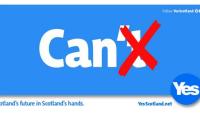
I suspect I might be one of the Scottish journalists Iain Martin considers keen to make a melodrama from the independence referendum. Ten weeks ago I warned in this magazine that Alex Salmond could well lead Scotland to independence. Stuff and nonsense some folk said then. Well, perhaps. But nothing that has happened since has persuaded me I was wrong.  Sure, the polls still show the No side leading but the general picture is clear: the Yes side are closing the gap. Of course there's no law demanding that current trends continue indefinitely but, nevertheless, these are nervous times for the Unionist cause. And for good reason. Consider the poster at the top of this post. It's by far the best advertisement released by either side. Clear, simple, powerful.

Don’t do it Boris!

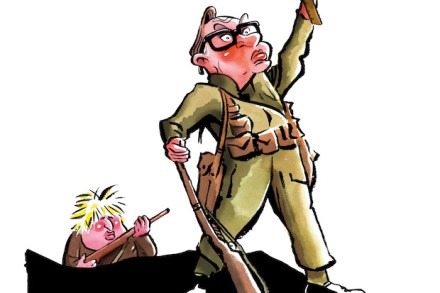
Is Boris Johnson about to announce his intention to stand at the next general election? The well-connected Jason Groves reports today that Boris will make clear his plans before the Tory conference and that his friends expect him to run for parliament but stay as Mayor of London. I think this would be a mistake for Boris, a move that would make him less likely to end up as Tory leader and Prime Minister one day. First, Boris was clear in the campaign that he wouldn't try to return to the Commons before 2016: 'If I am fortunate enough to win I will need four years to deliver what I have promised. And having put trust at the heart of this election, I would serve out that term in full.

Alex Salmond’s reassuring St George’s Day address

St George's Day is one of those festivals that politicians are particularly earnest about, for fear someone accuse them of being ashamed of England. But today's most interesting pointed St George's Day celebration comes from a man more accustomed to suggesting that Englishness is something he is quite separate from. Alex Salmond is hopping across the border to give a speech in Carlisle. The SNP leader wants to reassure English people on St George's Day that they can still be chums with the Scots. They're not going to become surly dragons after independence. Instead, Salmond will say Scots and English people will still cross that border to work and to marry, and will continue to watch many of the same television programmes.

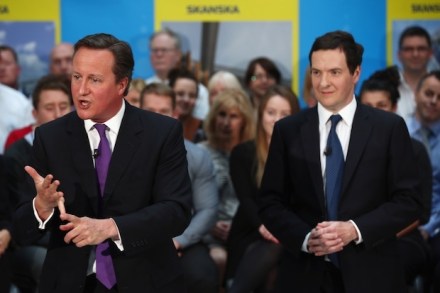
What Cameron and Osborne’s rare joint appearance tells us about their relationship

David Cameron and George Osborne managed to garner more attention for their infrastructure announcement (or re-announcement) today by organising their first joint appearance alone together in four years - and making sure the media were aware that this was the case. The pair haven't appeared together in public for a while partly because they fear doing so would suggest to voters that the government was run by two chaps from very similar backgrounds; better to dilute it by pitching up with other ministers, hopefully with vaguely different backstories. But it is also quite impressive that the two men haven't felt the need to do these joint appearances after questions about splits between them. That's because those questions rarely arise, and when they do, they're rarely valid.

Briefing: Britain — a Christian country?

Is Britain still a Christian country? There is no straightforward answer to that question, as David Cameron discovered to his cost this weekend. The ongoing row began with an article the Prime Minister wrote for the Church Times last week, arguing that Britain should not be ashamed of its Christian ethos: ‘I believe we should be more confident about our status as a Christian country, more ambitious about expanding the role of faith-based organisations, and, frankly, more evangelical about a faith that compels us to get out there and make a difference to people's lives’ In response to this, fifty notable public figures — from Tim Minchin to Terry Pratchett — wrote to the Telegraph warning that the Prime Minister’s remarks will cause ‘alienation’.

Why David Cameron has ditched a free vote on hunting

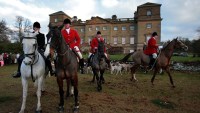
David Cameron has, according to this morning's Times, U-turned on his Coalition Agreement promise to hold a free vote in the House of Commons on repealing the Hunting Act. This wasn't a great surprise - what had annoyed rural Tories more was the failure of the two Coalition parties to agree on a very limited relaxation of the act to allow upland farmers to use up to 40 dogs to flush foxes out of their dens for shooting to prevent them savaging lambs. But why has the Prime Minister, usually rather finicky about not breaking promises, U-turned on the promise of a free vote? The reason is that the pro-hunting lobby know they will lose the free vote if it is held before 2015, and fear that this would set back their cause by showing that parliament has a view on keeping the Hunting Act.

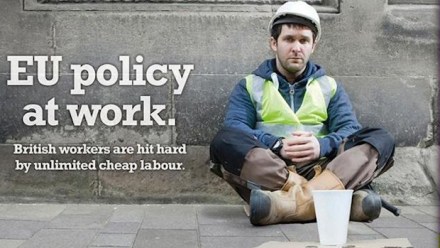
Ukip is already winning the immigration debate without controversial posters

Another day, another bad-tempered debate between two diametrically opposed politicians on immigration. This morning's ding-dong on Radio 4 between Ukip's Paul Nuttall and Labour's Mike Gapes fell into the category of Debates That Won't Change Anyone's Mind But Will Make Them Grumpy Before 9am - a modern-day Sisyphean punishment. listen to ‘Mike Gapes and Paul Nuttall discuss Ukip's new poster campaign’ on Audioboo The pair were discussing Ukip's European elections, which in case you decided to take Easter off from being habitually outraged, are below: Nuttall was arguing that his party was on the side of the British people on this issue and that the posters were simply presenting the facts.

How Nigel Farage hopes that immigration can deliver victory for Ukip

Nigel Farage’s strategy for winning the European Elections is based around winning over blue collar workers who normally vote Labour. Ukip believe that they can use immigration as a battering ram to break through Labour’s defences in the north. One of the party’s campaign billboards unveiled last night simply says, ’26 million people in Europe are looking for work. And whose jobs are they after’. (I suspect that Ukip will welcome the controversy these posters are attracting because it will help amplify their message) https://twitter.com/Adrian_Hilton/statuses/458163441531097088 Ukip’s argument is that it is the only party that can actually do something about immigration.

An American, an Australian and a South African walk into a British election

All three main parties have now hired foreign advisers to help run their general election campaigns. These foreign advisers have one thing in common: they’re all from the English speaking world. Despite our membership of the European Union, when it comes to winning elections, all our political parties think there is more to learn from other English speaking countries than France or Italy. Indeed, it is hard to imagine any of them putting a European in charge of their campaign. But they are all delighted to have their American, Australian and South African campaign hands. Partly, this is a language thing. But, I think, it also goes deeper than that.

John Bercow’s problem with PMQs

John Bercow doesn’t like Prime Minister’s Questions. He’s told the BBC in an interview that it is ‘so bad’—in other words, rowdy—that a bunch of female MPs no longer attend. PMQs is becoming particularly partisan with the approach of the election. Miliband has abandoned his attempts to change it just as quickly as Cameron did before him. But Bercow would do well to look closely at his own role in setting the tone of these sessions. From the chair, Bercow understandably tries to silence the hecklers. But, sometimes, he seems to be indulging in a bit of ‘Punch and Judy’ too. Often he moves into put-down mode, trying to get the House to laugh at the offender.

Britpop 20 years on: the Tory voters who love Oasis

It’s twenty years since the height of Britpop, but does anyone still care about it? YouGov has carried out some polling on the subject today. Although 35 per cent stated that they like or really like Britpop (compared to 20 per cent who dislike/really dislike), 44 per cent replied 'don’t know'. There’s also a lot of indifference on whether music has been better or worse since. Nine per cent think better, 26 per cent worse, and 34 per cent stated they also don’t know. At the height of Britpop, Oasis painted themselves as a working class band, the lads, in contrast to the perceived effete and posh boys of Blur. Based on this public image, one would expect Oasis fans to be natural Labour supporters (like Noel Gallagher, who posed in No.

David Cameron tells Britain to be ‘more confident about our status as a Christian country’

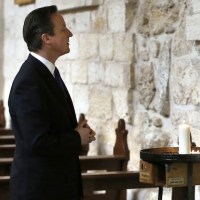
David Cameron is doing God. He has followed up his comments about his faith at last week’s Downing Street reception with an article for The Church Times in which he declares that we should be ‘more confident about our status as a Christian country’ and ‘frankly, more evangelical about a faith that compels us to get out there and make a difference to people's lives.’ This is a strikingly different tone to the one that Cameron used to adopt. Back in opposition, he talked about his faith being ‘like reception for Magic FM in the Chilterns: it sort of comes and goes'. Personally, as I say in the magazine this week, I find Cameron’s openness about the importance of religion in his life refreshing.

Why Fraser Nelson is wrong about a jobs ‘miracle’

In his blog earlier today, Fraser Nelson argues: 'The UK jobs miracle is happening mainly due to radical welfare reform – the type Labour ducked in office..Under Labour, record numbers of people in work were celebrate as an end in itself – but most of the increase was accounted for by immigration. So more jobs did not mean less poverty – not if a quarter of Glasgow and Liverpool were still languishing on the dole at the peak of a boom. This time, it’s different. The welfare reforms are restoring the see saw link between jobs and dole queues.' I suppose I should by now get over the fact that intelligent, articulate journalists feel able to write with such certainty about data they simply don't understand.