Uk politics

A federal UK? Home Rule all round? We have been here before.

From our UK edition

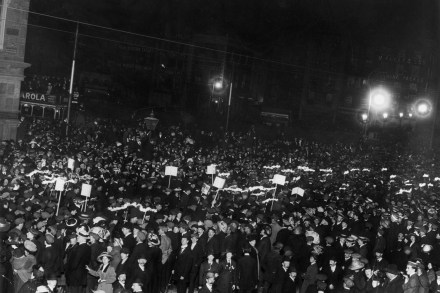
There are fewer truly new things in politics than you think. The present constitutional uncertainty - which, it should be said, could scarcely have been avoided - is no exception. We have been here before, all of us, even if we choose to forget our previous gallops around this track. A century ago - on September 18th, to be precise - a bill for Irish Home Rule was finally passed. It had taken three attempts and nearly 30 years but it was passed at last. There would, once again, be an Irish parliament. Or there would have been had it not been for the Kaiser's War. The guns of August delayed Home Rule; Easter 1916 (and, especially, the response to Padraig Pearse's mad provocation) killed it. Nothing would recover; nothing would be quite the same again.
The NHS Wales disaster vindicates Tony Blair, not David Cameron

From our UK edition

[audioplayer src="http://traffic.libsyn.com/spectator/TheViewFrom22_23_January_2014_v4.mp3" title="Charlotte Leslie and James Forsyth join Sebastian Payne to discuss the NHS." startat=1410] Listen [/audioplayer] As someone who believes that a Labour government would be a calamity for Britain, I ought not to mind the recent fuss about NHS Wales. Yes, it is a disaster – as the Daily Mail has been cleverly highlighting. And it has been run by Labour for 15 years, so they're guilty as charged. Jeremy Hunt, the Health Secretary, makes this point powerfully today. But if the English NHS is much better by comparison to Wales, it’s not because of him, nor because of David Cameron. It’s because of Tony Blair.

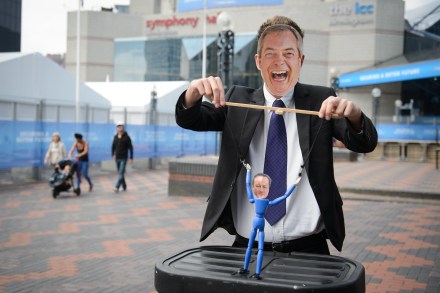
The EU’s gift to Nigel Farage – Brussels demands £1.7 billion more from Britain

From our UK edition

With truly dreadful timing, the European Commission has sprung David Cameron with a demand for £1.7 billion in extra British budget payments to the EU. The commission says this amount is due because the British economy has performed better than forecast. But this unexpected demand is for serious money, an almost 20 per cent increase in the British contribution. If Britain pays up, Christmas will have come early for Nigel Farage and Ukip. This explains why all three Westminster parties have been so quick to denounce the demand as unacceptable. There are mutterings of legal challenges and the like. The money is due by December 1. But politically, I don’t think the government can afford to pay.

Westminster’s gone barking

From our UK edition

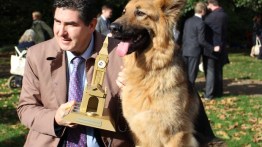
It’s that time of year again – sandwiched between conference season and the Autumn statement – when the nation’s political pooches (and their owners) descend on Westminster. Yes, yesterday saw the Westminster Dog of the Year show, 2014. [caption id="attachment_8903972" align="alignleft" width="250"] Noodle and Alan Duncan announce the winners[/caption] Last year’s winner, Noodle the cockerpoo (and her owner, Alan Duncan) had been promoted to the judging panel after her success, and seemed keen to be back on the podium. She wasn’t the only one, either. David Burrowes’ Cholmeley (who came third last year, and second in 2012), also seemed very attached to the winner’s platform, and posed nicely alongside it.

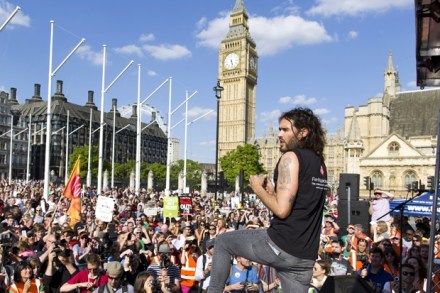
Russell Brand and Nigel Farage remind me of myself five years ago

From our UK edition

I’m often asked by other free school proposers what lessons I’ve learnt over the past five years. Any pearls of wisdom I can pass on so they don’t make the same mistakes? My standard response is to reel off a checklist of things I would have done differently if I’d known then what I know now. To take just one example, we probably wouldn’t have introduced a ‘no packed lunch’ rule if we’d known that we’d have to provide all our four-to-seven-year-olds with free school meals. But the biggest lesson is one I daren’t share, which is that trying to give children a better education than the neighbouring local authority schools, with no additional funding, is really, really difficult.

Deal with the debt, George Osborne? You’ve hardly started

From our UK edition

George Osborne has declared victory over Ed Balls, the IMF and all the others who warned that his austerity measures would throw Britain back into recession. But his triumphalism obscures a huge failure: his inability to contain the national debt. While the UK economy has been growing strongly (it is currently the fastest-growing of any developed country) the public finances have taken a dramatic and sudden turn for the worse. It emerged this week that, between April and September, the Chancellor borrowed £58 billion — £5.4 billion more than during the same period last year. Osborne’s original plan to eliminate the structural deficit by the election has been off course for a long time, but it is now going backwards.

Kelly Tolhurst wins Rochester primary on turnout of 5,688

From our UK edition

Kelly Tolhurst has won the open primary to be Conservative candidate for Rochester and Strood, I understand. The result is not due to be announced until this evening, but I hear that Tolhurst won by fewer than 50 votes on a turnout of 4,000. The turnout is the key in this as it will give some indication as to the level of interest in the constituency in the Conservative candidate. It is worth bearing in mind that the turnout in Sarah Wollaston's open primary in Totnes was 16,497. That much lower turnout in a more high-profile contest following a defection will add to party worries following yet another poll showing Ukip ahead in the constituency. UPDATE, 20.10: Tolhurst has been confirmed as the candidate.

NHS ambulance trouble is more complex than miserly Tories and NHS privatisation

From our UK edition

English NHS ambulance services are spending twice as much on private ambulances than they were in 2012, according to Labour, while response-times have lengthened and ambulance staff appear increasingly disgruntled.[audioplayer src="http://traffic.libsyn.com/spectator/TheViewFrom22_28_August_2014_v4.mp3" title="Julia Manning joins Mary Wakefield and Fraser Nelson to discuss the 999 crisis." startat=50] Listen [/audioplayer] So there's something else to blame on the Tory government, lest anyone feared a shortage. Shadow Health Secretary Andy Burnham lost no time in charging that 'these figures show just how quickly the NHS is changing under David Cameron.' Perhaps.

‘Hang ’em high!’ – leftists for the death penalty, re Pistorius et al

From our UK edition

O, the fury of my Sisters over the risible punishment (I’ve seen longer sentences in Ulysses) handed out to Oscar Pistorius! I’m with them all the way on this one. On hearing that India had issued the death penalty to the four men convicted of raping and murdering a student in Delhi last year, my first reaction was, ‘Ooo, good ­I hope it’s televised!’ I have long been a supporter of the death ­penalty for any type of killing except the most self-defensive kind - and I see this as an important part of my identity as a feminist, especially. Two women a week are killed by partners or ex-partners, and in my opinion, the more woman-murderers who are forced to meet their Maker, the better.

The UKIP effect: killing the thing you love

From our UK edition

This chart, courtesy of Mike Smithson, shows Ipsos-Mori's polling on British membership of the European Union. It shows support for leaving the EU is no higher now than it was 20 years ago. I'll wager this surprises you. As you can see, there has always been a constituency for leaving the EU. Public enthusiasm for the european project has always been conditional. Despite that, the unhappiness of a known known has generally proved more attractive than the uncertainty of a known unknown. (This, ahem, is also true of certain other constitutional questions with which we have wrestled recently.) But how can this be? How can UKIP be soaring in the polls even as public support for their greatest proposal sags?

How Cameron could make the EU a winning issue (and why he won’t)

From our UK edition

[audioplayer src="http://traffic.libsyn.com/spectator/TheViewFrom22_23_Oct_2014_v4.mp3" title="James Forsyth, Mats Persson and Matthew Elliott discuss Europe" startat=60] Listen [/audioplayer]Imagine if David Cameron actually meant it. Imagine if he really did follow through with his implied threat to campaign for Brexit in the absence of better terms from Brussels. You can picture the televised address. An oak-panelled background with a large union flag hanging sedately in the corner, the PM with that furrowed house-captain expression he sometimes does. The script pretty much writes itself. ‘All of you know how hard I tried to secure a new deal. I was often criticised for being too conciliatory, but it was my duty to do whatever was in my power to reform the EU.

It’s not just Ukip that’s changing Cameron’s mind about immigration

From our UK edition

[audioplayer src="http://traffic.libsyn.com/spectator/TheViewFrom22_23_Oct_2014_v4.mp3" title="James Forsyth, Mats Persson and Matthew Elliott discuss Europe" startat=60] Listen [/audioplayer]It is easy to mock David Cameron on immigration. Under pressure from the public and from Ukip, he’s having to hot-foot it to a tougher position on the free movement of labour within the European Union. Ideas dismissed as unworkable only a few months ago are now on the table. But it’s not all political positioning. There really is a serious case for Britain to be treated differently from eurozone countries when it comes to freedom of movement. Whoever ends up in government after the next election, Britain’s relationship with the EU is going to have to change. Why?

Escape from Omnishambleshire: the case for the old county boundaries

From our UK edition

[audioplayer src="http://traffic.libsyn.com/spectator/TheViewFrom22_23_Oct_2014_v4.mp3" title="James Forsyth, Matthew Engel and Tom Holland discuss counties" startat=785] Listen [/audioplayer]Just over 35 years ago, in August 1979, Christopher Booker wrote a cri de coeur in The Spectator calling for the return of England’s ancient counties and the repeal of the 1972 Local Government Act, under which most of them had been either merged, mauled, mangled or murdered. It drew a large and almost wholly supportive response from figures as distinguished as Professor Richard Cobb (‘Booker has rendered us all a ray of hope’) and Michael Wharton, a.k.a.

Ukip 13 points ahead in Rochester & Strood

From our UK edition

Tonight, we have a second poll from Rochester & Strood and it again shows Ukip ahead. Mark Reckless doesn’t lead by Clacton margins—Ukip are on 43 and the Tories 30 in this ComRes poll—but his advantage is formidable with just four weeks to go. Particularly alarming for the Tories is how many voters there intend to use this by-election to kick the government. 62 percent of those polled agree with the statement that, ‘“This by-election is a good opportunity for me to show David Cameron and the Conservative Party how unhappy I am with their government”   Having already announced that Cameron—and every other Tory member of the Cabinet—will visit five times, the Tories cannot now pull back from the fight.

PMQs sketch: Cameron and Miliband squabble over the NHS, while saying nothing

From our UK edition

It didn’t work. But it was a good idea. David Cameron prepared an ambush for Ed Miliband at PMQs today. The trouble was he attacked the Labour leader for a vice he himself has mastered with conspicuous aplomb: question dodging. Miliband is clearly in trouble. He’s using his only remaining strength, the NHS, to prop up his burgeoning weaknesses. Expect this to continue till next May. There’s always a calamity somewhere in the NHS and for Miliband, ill tidings are like gold dust. He painted a picture of a basket-case health system that would have shamed a failed state in the Middle Ages. Cameron, he said, wasted billions on a massive inter-departmental rejig when he came to power.

Gunpowder, treason and caviar – selling out in Westminster, Guido style

From our UK edition

If you're going to sell out to the establishment, you might as well do so on an industrial scale. As the PM told the Guido Fawkes blog's ten -ear anniversary party at the Institute of Directors last night, via video link, 'what better way' to celebrate 'rejecting' the cosy political classes than a posh dinner of caviar and champagne in the heart of Westminster. Guy Fawkes would have been turning in his grave, as cabinet ministers including Francis Maude and Liz Truss, and mysterious billionaires such as Michael Hintze and Lord Ashcroft, along with 200 of Westminster's finest, came to pay homage to a decade of sniping from waspish troublemakers. The Mayor of London, the star turn, was in usual form, conceding that eventually all politicians end up talking to terrorists.

Ukip’s unsavoury Polish ally in the European Parliament

From our UK edition

One of the best arguments against European political integration is the people with whom British political parties end up allied in the European Parliament. For reasons of parliamentary influence and, let’s be frank, money, British parties don’t want to sit on their own, so instead sit as part of broader European groups. Now, all of these groups contain MEPs whose views would be considered distasteful in Britain. But even by this standard, Ukip’s latest recruit to its group seems pretty extreme — Robert Iwaszkiewicz comes from a party that even Marine Le Pen refused to do business with.

Tories reveal innovative new election strategy…

From our UK edition

It is a bold approach but, who knows, perhaps it is just crazy enough to work. I mean, what could possibly go wrong with a strategy on immigration best summarised like this: UKIP ARE RIGHT. DON'T VOTE FOR THEM. Thank heavens for Ed Miliband, eh? He's the Tories' last, best, weapon. What a cheery thought that is.

Ed Miliband’s windfall tax on tobacco to fund the NHS is economically illiterate

From our UK edition

The ‘windfall tax’, a concept introduced in the UK by the Blair government, is by definition a one-off seizure of revenue from a profitable industry, to fund an invariably unprofitable but popular project. It has been justified as putting ‘right a bad deal’ on the excesses of profits of unpopular industries. Between 1997 and 1998, Gordon Brown raised £5 billion from privatised utility companies to fund the Welfare-to-Work Programme. Today we have face another well-intentioned policy initiative, of ensuring every NHS patient is guaranteed a cancer test within 7 days, supposedly to be funded by a windfall tax on tobacco companies.