Uk politics

The Union needs balance

From our UK edition

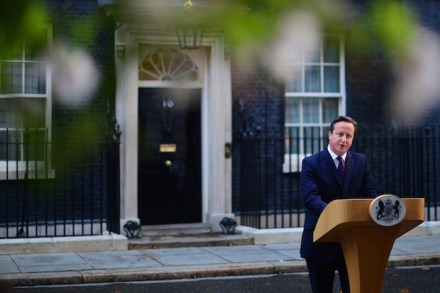
Today’s Guardian long-read on the Scottish referendum is a great piece of journalism. Both Alistair Darling and Danny Alexander argue in it that when David Cameron stepped out of Downing Street and announced his support for English votes for English laws he allowed the SNP to snatch victory from the jaws of defeat, to argue that Scottish voters had been hoodwinked.   Now, to be sure, Alex Salmond make much of Cameron’s announcement. In his Spectator interview he says that it showed that Cameron thinks Scots ‘heads zipped up the back’ and that he didn’t get the enormity of what had just happened.

Ministers to crackdown on food waste in summit with supermarkets

From our UK edition

Ministers are to hold the first of a series of meetings aimed at helping food banks after pressure from MPs to address hunger in the UK, Coffee House understands. Early in the New Year, the Cabinet Office and the department for Environment, Food and Rural Affairs will host a summit for all the big supermarkets where they will demand retailers reduce the amount of food that they throw away, and work out how to redistribute food that hasn’t been bought so that food banks and other charities can make sure it goes to people who are hungry. Rob Wilson is the minister notionally responsible for food banks (after quite an impressive row within the government about who should have to deal with them), and will jointly chair the summit with Environment Secretary Liz Truss.

Why parties should never trust their own MPs

From our UK edition

MPs are often fond of complaining that they are ignored by senior figures in their parties as orders are passed on from central HQ with no explanation or opportunity for backbenchers to discuss strategy. Yesterday's mess over Labour’s internal memo advising MPs on tackling Ukip partly explains why that high-handed approach often happens. Emailing strategy documents to MPs is like leaving a toddler in a freshly painted room with a set of marker pens and expecting to come back to find everything in pristine condition. There is a reason why such papers should be numbered, handed out in a locked room for discussion and collected at the end, if you don’t do that they will end up in a national paper (and even those precautions may not be enough).

Tory MPs prepare mischief for EVEL statement

From our UK edition

William Hague is unveiling his EVEL plans in the Commons at 12.30 today. Just in case you were trying to work out what sort of atmosphere will greet this discussion of English votes for English laws and how far to in introducing that principle to Parliament, Coffee House can give you a quick taste. I understand that the ‘Q-team’, a group of Tory backbenchers who indulge in co-ordinated goading of the Opposition during very political sessions, is meeting currently to discuss tactics for making Hague’s statement very difficult indeed for Labour. I wrote last year about the formation of this team - or rather its resurrection as George Osborne used to do the photocopying for the original one to support John Major when the now Chancellor was just starting out in politics.

Tory EVEL plotting to annoy many different camps

From our UK edition

William Hague is today setting out the Government’s EVEL plan - which includes options for English votes for English laws that some Labourites see as an evil plan to deprive their party of a majority to pass budgets and so on. Those EVEL plans have three options: 1. A ban on Scottish MPs voting on any stage of laws only applying to England. 2. A veto for English MPs on English-only laws before they take effect. 3. Committee stage of an England-only bill’s progress through the Commons to consist solely of English MPs. Tory backbenchers want option one. Downing Street is believed to prefer option two. Labour feels option three is the least evil. And the Lib Dems have their own fourth option, which is a grand committee grand committee of English and Welsh MPs.

Is David Cameron telling porkies on the deficit? His spokesman explains

From our UK edition

As Fraser points out, David Cameron has gone from saying the deficit has been brought down by a third to claiming it has been halved, but with the often unspoken caveat that this is as a share of GDP. After the Prime Minister dropped this claim into his speech today without that very important small print, journalists grilled his official spokesman on whether Cameron was misleading voters at the afternoon lobby briefing. I’ve written up the transcript of our attempts to ask the same question many different ways. Journalist: When the Prime Minister said in his speech this afternoon the government had halved the deficit, did he qualify that in any way? Spokesman: How do you mean?

Labour accuses Government of ‘U-turn’ on Budget charter

From our UK edition

The government has published its Charter on Budget Responsibility, which at one stage was supposed to be a Labour trap but which now appears to be something that Labour can have a bit of fun with. In his ‘black cloud’ economy speech this afternoon, David Cameron announced that the Charter ‘would have the structural current budget into balance’ in 2017/18, which appears to enshrine into law the Labour plan that he is attacking in the same speech. The Prime Minister said: ‘We must finish the job we have started. That is why today, the Government is publishing a new Charter for Budget Responsibility.

It’s beginning to feel a lot like a General Election

From our UK edition

David Cameron is talking about the ‘great, black, ominous cloud’ that Labour’s economic plans would put over the British economy. Labour is talking about its immigration policies while trying not to talk about a document that suggests it shouldn’t talk for too long about them. The Lib Dems are complaining that the Tories would damage children’s futures. It’s beginning to feel a lot like a general election, even though we’re still quite a way away from it. This is one of the benefits for political parties of the Fixed-Term Parliaments Act that is sucking all the life out of Parliament itself. They are now permanently on the campaign trail, even when they’re at Prime Minister’s Questions.

Theresa May’s moral mission: Home Secretary to stop sick children being locked up

From our UK edition

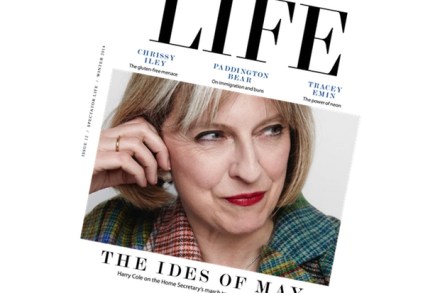
Theresa May will announce changes the Mental Health Act this week that mean mentally ill teenagers are never held in police cells when they should be in a hospital bed. As I reveal in The Times this morning, the Home Secretary will on Thursday publish a review of sections 135 and 136 of the Act which allow police to ‘section’ someone in mental distress in public or private places so that sick children cannot be taken to a cell, and adults are only detained there if their extreme behaviour cannot be managed elsewhere. It may come as a surprise that this happens at all, but last year 236 under-18s ended up in cells when they should have been in hospital.

Why both the Tories and Labour now want a fight on the economy

From our UK edition

Tomorrow, in a sign of how keen the Tories are to keep the political debate focused on it, both David Cameron and George Osborne will give speeches on the economy. Cameron will announce that he is bringing forward a scheme to offer first-time buyers under 40 a 20% discount on 100,000 new home. This scheme had originally been slated for the Tory manifesto but will now be up and running before May. Inside Number 10, they hope that this scheme will help demonstrate that there are tangible benefits for voters to sticking with the Tories and their long term economic plan.   Later on, Osborne will use an address in New York to challenge Ed Miliband on whether Labour would repay any of the national debt.

Jim Murphy wins Scottish Labour leadership contest

From our UK edition

Jim Murphy has been elected leader of the Scottish Labour party. He defeated his more left wing rival Neil Findlay with 55.59 per cent of the vote to Findlay's 34.99 per cent. Kezia Dugdale was elected deputy leader. Murphy is a far more formidable politician than his predecessor, Johann Lamont. But he faces a mighty task. A YouGov poll of Scotland ahead of the UK general election, published this morning, finds the SNP on 47% with Labour 20 points behind. If repeated at the election in May, and assuming a uniform swing, this would see Labour lose 34 of the 41 Scottish seats that it won in 2010.    However, Murphy has energy and no fear of the SNP, both qualities that Scottish Labour has been lacking in recent times.

Why Russell Brand isn’t wrong to fear entering Parliament

From our UK edition

Oh look, Russell Brand doesn’t want to stand for Parliament even though he moans about it! You can watch the clip of the man who was introduced as a ‘comedian and campaigner’ on Question Time last night saying he would ‘be scared I’d become one of them’ here. Now, it’s easy to mock this ‘comedian and campaigner’ for not following through with his ‘campaigning’ and doing something about the issues he cares so deeply about by going into politics, or at least bothering to understand it (he also moaned about pictures of poor attendances in Parliament when MPs are talking about issues that people care about and high attendances when talking about their pay. On which note, here’s something that might interest you, Russell).

The last days of the Cameron administration part 2: Failing Grayling

From our UK edition

Of all the reasons to wish this government gone, Chris Grayling is the largest. He is shutting poor and much of the working and lower-middle class out of the justice system. In matters as fundamental to a good life as housing, employment protection and freedom from domestic violence, he has placed them beyond the rule of law. If they go to court, they have no one to plead their cause, while their landlord or employer or ex-husband can hire lawyers to outwit them. The legal system intimidates most potential claimants. They are too frightened and confused to think of representing themselves. I suspect many middle-class graduates are as nervous. Most don’t and won’t go to court, and what were once strong cases pass by in silence.

Labour briefs MPs on the Ukip threat in their constituencies

From our UK edition

Unfortunately for Labour, it cannot dismiss Nigel Farage as a ‘pound shop Enoch Powell’ quite so easily as Russell Brand did last night. The party knows that Ukip can take the voters that have already deserted it - voters that it thought still belonged to the party - and there have been increasing calls for the Labour leadership to take Ukip seriously. I understand that MPs have been receiving a series of briefings at the party’s HQ recently examining voters who are vulnerable to Ukip. The briefings, which have been produced by a number of party figures including John Healey, who has long worried about the Ukip threat, include details of the demographic of voters in each Labour constituency who are susceptible to voting for Nigel Farage’s party.

The Plebgate judge thought PC Rowland was a pleb

From our UK edition

In paragraph 135 of his judgment in the Andrew Mitchell ‘Plebgate’ case, Mr Justice Mitting says that P.C. Rowland, the police officer whom Mr Mitchell was suing for libel, is ‘not the sort of man who would have the wit, imagination or inclination to invent on the spur of the moment an account of what a senior politician had said to him in a temper’. In paragraph 174, however, the judge says that Mr Rowland did give a false account of how members of the public reacted to the incident. He goes on: ‘Embellishment of a true account by a police officer on the defensive is, of course, not acceptable, but it is understandable if done for that purpose.

Labour now thinks it is safe to reject the Tory narrative on the economy

From our UK edition

Labour has returned to a bit more of an even keel in the past few wintry weeks after a torrid autumn. Plotters are resigned to letting Ed Miliband fight the General Election on his terms, and given the closeness of the two parties in the opinion polls, most are concluding that a disorganised Labour party could still throw the General Election away. Of course, everyone’s still anxious, but that’s not limited to Labour. When all MPs in both parties are anxiously looking at the opinion polls every day, it’s clear that no-one’s very confident. Miliband’s team have been trying to reassure nervy MPs by pointing out, quite obviously, that this election isn’t like the others.

Who privatised Hinchingbrooke hospital? And does it matter?

From our UK edition

When it comes to rows about the NHS, these days it doesn’t rain, it pours. In fact, fights between the parties about who cares more/privatised the most are turning into a weather bomb, such is their frequency. Today Nick Clegg turned up to Prime Minister’s Questions determined to highlight Labour hypocrisy on the health service, and he managed to shoehorn it in to an answer to Harriet Harman’s question about people trusting the Lib Dems (or not). The Lib Dem leader said: ‘In fact, the Shadow Health Secretary, sitting there demurely, is the only man in England who has ever privatised an NHS hospital, and they dare to lecture us. Hinchingbrooke hospital - the only NHS hospital to be privatised, and by the Labour party.

Ministers plan informal review of lessons learned from Afghanistan

From our UK edition

British troops have now left Afghanistan, but the debate about the conflict itself and what happens next rumbles on. There have been a number of calls for a review of the conflict so that the government can learn lessons about what did and didn’t work - as well as what might happen next in the country, given there isn’t a great deal of confidence that the handover definitely heralds a new era of peace. I now understand that while there is currently no plan for a formal review or inquiry, ministers plan to hold discussions about lessons learned from the conflict as part of the regular National Security Council meetings and that there will be some kind of public conclusion to these discussions, whether it be a statement in the House of Commons or something published.

Are poor people really having to bury their loved ones in the back garden?

From our UK edition

One of the most striking stories in today’s papers - and on the front of one of them - is the claim made by Labour’s Emma Lewell-Buck that people on low-incomes are struggling so much with the cost of funerals that they are having to resort to burying them in their back gardens. Lewell-Buck was introducing a well-intentioned bill on the cost of funerals, which has been rising above inflation for a good long while. She told MPs: ‘People are also turning to alternatives to the traditional funeral. Some are holding do-it-yourself funerals, and even having to bury relatives in their back garden. A number of companies are offering cut-price funerals, including “direct” cremations that have no formal service attached to them.