Uk politics

Jim Murphy vs. Diane Abbott: will Miliband rein him in?

From our UK edition

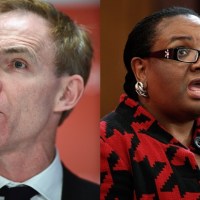
How far will Jim Murphy be allowed to go? Yesterday, the Scottish Labour leader proposed funding extra nurses through the Mansion Tax — something his colleagues south of the border aren't particularly happy with. On the World at One today, the Hackney MP and potential London Mayoral candidate Diane Abbott attacked Murphy, and at first forgot his name, for 'jumping the gun' on the Mansion Tax. She argued London will be unduly hit by this policy and the super-wealthy will avoid it: ‘I’m very surprised John…Murphy’s making these boasts. I support the Mansion Tax in principle, I support the union and redistributive taxation but there are two big problems about the Mansion Tax. It is effectively a tax on London — 80 per cent of it will come from London.

The Laws according to David

From our UK edition

As Westminster clatters back to life after the Christmas break, so the steady stream of invitations land on Steerpike's mat. Don't all rush at once, but David Laws will be giving a speech this month at the Institute of Government on 'effective government in 2015 and beyond'. While this will no doubt be riveting feast of wonkery, it is a bold move by the senior Liberal Democrat minister. The speech is to launch the the Institute's 'Programme for Effective Government' report which 'outlines a series of practical measures for parties to adopt in making sure they honour their party manifestos'. Is this really something that a leading light of Nick Clegg's party is really qualified to lecture on?

Does anyone in London actually know how the Barnett Formula works?

From our UK edition

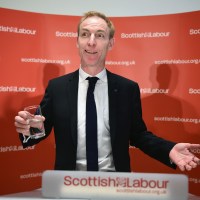
We've just had two years of intensive constitutional politics. Time enough, you'd think, for even London-based politicians and commentators to work out how British politics actually works. But if you think that you'd be wrong. Very wrong. Consider our old friend the Barnett Formula. Antiquated and not entirely fit for purpose - it being a 1970s convenience that was itself an updated version of the 1880s Goschen Formula - but hardly a mystery or a terribly complicated piece of financial wizardry. And yet it seems that almost no-one in the Westminster village actually understands how Barnett works. Yesterday, you see, Jim Murphy promised that he would use Scotland's share of the proceeds from Labour's so-called Mansion Tax to hire an extra 1,000 nurses north of the Border.

Is the NHS ‘crisis’ too complex for politicians to solve?

From our UK edition

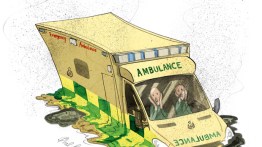
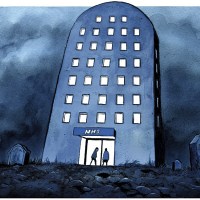
Is the NHS in crisis, or isn’t it? Jeremy Hunt doesn’t want to use the word, telling the Today programme that ‘there’s a huge amount of pressure’, while Norman Lamb argued that ‘I wouldn’t describe it as a crisis’ but ‘I readily acknowledge that the system is under intense pressure’. Few politicians want to describe something they’re notionally responsible for as ‘in crisis’ (though Lamb isn’t afraid to use pretty strong language about some areas of his portfolio, including mental health). But whatever word they use, ministers know that things aren’t hunky dory in accident and emergency departments at the moment - and this hasn’t been a cold winter.

Will any party really offer an election message of ‘hope, not falsehood’?

From our UK edition

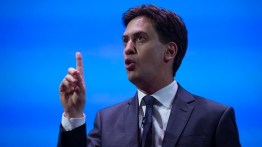
Ed Miliband today promised that Labour will offer ‘hope, not falsehood’ in its General Election campaign. It’s a bold pledge given the party is making so much of the claim that the Tories want to reduce public spending to levels not seen since the 1930s - a claim that has foundations made of something oddly similar to sand. Similarly the Tories have today produced an interesting dossier that Miliband’s party has interestingly called ‘dodgy’ because it contains a number of ‘assumptions’. As James explains, that’s part of the plan, as Labour now has to say which cuts it wouldn’t reverse and which it would.

Nick Clegg’s new year pitch for eternal power

From our UK edition

Nick Clegg has clearly had an exciting Christmas. He used his first press conference of the year to talk about people playing footsie, exes leaving late-night voicemail messages, frantic January sales shopping and body parts. He was using all these vivid images, dreamt up while he was working out how to deal with Labour’s ‘decapitation strategy’ in his own constituency, to make a pitch for him to remain in power for as long as possible. Forever, hopefully, but at least after the next General Election. The Deputy Prime Minister warned repeatedly of the risks of 'having a parliament which is held hostage, every hour and every day and every week, by a shifting array of factionalist parties’.

Parties launch onto General Election roller coaster

From our UK edition

It's the first day back for MPs and even though we are still months, not weeks, away from the General Election, the parties are all already launching themselves down the campaign roller coaster. Ed Miliband is launching his General Election campaign today and the action will start to shift from the now dull and empty House of Commons to seats around the country. Both sides have spent the past few months predicting a dirty and tough campaign, and if today's diary is anything to go by, they'll all be utterly shattered by polling day too, with a tough pace to keep. We have a speech from Ed Miliband, a press conference from a good chunk of the Tories on Cabinet and Nick Clegg's press briefing all before lunchtime. Yet no-one seems to be planning to say anything new.

Cameron avoids a New Year slip-up

From our UK edition

In 2010, David Cameron stumbled in his first New Year broadcast interview over the Tory plans for a married couple’s tax allowance. This slip-up knocked him and his party off course and was a harbinger of the disastrous Tory campaign to come. Today, there were no such mistakes from Cameron as he appeared on Andrew Marr. Instead, he stuck to his competence versus chaos message and tried, fairly successfully, to avoid making any other news. In this campaign, we will see a more disciplined Cameron than the one who fought the 2010 election. The Tories are this time, in contrast to 2010, certain of what their message should be. One challenge for Tory and Labour alike in the next few months is to avoid getting drawn into hung parliament speculation.

What the first 2015 election posters tell us about the campaign

From our UK edition

If you want a glimpse of the sort of election campaign we’re facing for the next few months, these posters from Labour and the Conservatives tell you everything you need to know. [caption id="attachment_8954872" align="alignnone" width="621"] The poster and the porkie[/caption] The Tories want to encourage voters to stay on the (apparently German rather than British and apparently heading nowhere) road to recovery, even if that involves leaping around between different measures of the deficit in order to give the impression of momentum. They want to talk about the economy because that’s their strongest issue. Similarly Labour is staying where it is most comfortable, threatening the end of the NHS as we know it in posters released this weekend.

Even Ukip don’t dare break the unhealthy consensus on the NHS

From our UK edition

There’s an irony about Ukip’s rise. Nigel Farage party’s popularity is driven by a widespread sense that the main parties are all the same. Yet in the past four years, the differences between the Labour party and the Conservatives have grown substantially, on issues from the size of the state to an EU referendum. In an election year you might expect parties to converge in the centre ground as they chased swing voters. It won’t happen this time. Labour is determined to stop left-wingers defecting to the SNP and the Greens, while the Tories, who have long had their own issue on the right because of Ukip, believe that their best chance of victory comes from heightening the contrast between them and the other parties.

Tony Blair, master of communication, claims his warnings about Labour were ‘misinterpreted’

From our UK edition

Politicians really are quite unfortunate people, aren’t they? Always being misinterpreted. It’s almost as though they speak another language (some Commons debates suggest they do, anyway) and journalists wilfully translate them wrongly. Today Tony Blair has claimed that his remarks about a lefty Labour party losing to a right-wing party have been ‘misinterpreted’. This is what he told the Economist: - There could be an election ‘in which a traditional left-wing party competes with a traditional right-wing party, with the traditional result’ and when asked if that means a Tory win, ‘Yes, that is what happens’. - ‘I am convinced the Labour Party succeeds best when it is in the centre ground.

Podcast special: end of year roundup and predictions for 2015 and the general election

From our UK edition

2014 is drawing to close, so it's time for our annual end of year podcast — looking back on an exhilarating year both in Britain and abroad. James Forsyth reflects on the Scottish referendum and why it’s been a bad year for Westminster. Isabel Hardman discusses how Ukip have continually confounded expectations in 2014 and the challenges they face in the next few months. Matthew Parris has written off the Liberal Democrats but believes we need to watch out for the SNP next year. Douglas Murray remains concerned about Russia and the Islamic State, while I discuss what has been happening across the pond as the 2016 presidential race earnestly begins in Washington.

Why the Tories are stirring up a row on hunting

From our UK edition

Why on earth are the Tories using the quiet news period between Christmas and New Year to talk about fox hunting? It’s a question many Conservative MPs are asking, worrying that it will only make their party look more posh and out-of-touch to most voters. Other than that Boxing Day is good day to place a story about hunting (check out Camilla’s festive mount in the Telegraph today), placing the story at all seems like an odd idea. Even Labour are quite chuffed with the story, as it’s not exactly an offensive against the Opposition. They haven’t just used it to bash the Conservatives, but also to needle Ukip on whether the party supports a ban or not. But why have the Conservatives given the Opposition a bit of a gift?

The Blue on Blue action has to stop if the Tories are to win next May

From our UK edition

There’s little sign of a Christmas truce in the Conservative party this morning. Instead, the row between Theresa May’s camp followers and the rest of the Conservative hierarchy is still being played out in the newspapers. This might be a particularly public episode of it but this row has been going on in private for quite some time. The cause is really quite simple, Number 10, other Cabinet Ministers and CCHQ believe that May’s followers regularly put promoting her future leadership ambitions above the interests of the party. Harry Cole’s recent profile of May for Spectator Life which claimed that she had given up on Cameron and no longer rated him infuriated both Downing Street and CCHQ. May herself can’t plead ignorance in all this.

Murphy’s mission

From our UK edition

The proverbial visitor from Mars would assume that the Scottish Nationalists had won—not lost—September’s referendum. Alex Salmond has given another crowing interview today, you can read mine with him from The Spectator’s Christmas issue here, in which he offers advice to England on how to rediscover itself. While the crisis in Scottish Labour continues. In an interview with The Guardian, Labour’s new Scottish leader Jim Murphy drives home how big a challenge the party faces there, ‘We’re 20% behind. Just to get even we have to close the gap by 1% a week.’ Murphy is also remarkably frank about the quality of the leaders that preceded him.

Listen: Lucy Powell tries to dodge questions on leaked Ukip document with ‘it’s irrelevant to you!’

From our UK edition

How has Labour managed to make such a mess of its response to the leak of a document on dealing with Ukip that came out on Monday that it's still having to talk about it on Friday? I've been baffled by the poor crisis comms this week - until I heard Lucy Powell, vice-chair of the party's General Election campaign, trying to field questions on it today on the Daily Politics. Her tactics were to tell the interviewer that the origins of the report were 'irrelevant', an old but useless tactic of spinners that generally encourages the journalist to think the story even more relevant than they did when they started the interview.

Why Alex Salmond’s help could hinder Labour

From our UK edition

Anyone surprised by Alex Salmond’s comments in the Independent about SNP MPs possibly voting on English matters if it helped Labour is clearly missing out on the wealth of wisdom that comes from reading James Forsyth’s pieces, given our political editor’s interview with the former first minister revealed the very same thing last week: The SNP surge has delighted many Tories, because it could cost Labour as many as 30 seats. Given SNP MPs’ self-denying ordinance about voting on devolved matters (such as health, education and policing), the more seats they win, the easier it should be for Cameron to govern in a hung parliament. But Salmond has some bad news for the Prime Minister: not voting on devolved matters, he said, is ‘my choice.

Labour’s ‘quick and dirty’ briefing

From our UK edition

More fallout from the Labour Ukip leak reaches me. Some sources in the party remain amazed that it apparently never crossed the desk of Yvette Cooper, given her role in the Ukip strategy group. But there is also considerable amusement about an email, passed to Coffee House, that Lucy Powell sent out describing the briefing pack as 'quick and dirty'. Some might be wishing material produced by HQ wouldn't fit such a racy description. The row over the report is fading, but it seems to have increased some tensions between party frontbenchers. And those who produced the report itself aren't in the best of moods either...

Labour tries to deal with dysfunctional campaign machine after Ukip leak

From our UK edition

After spending all week stamping all over their own report about how to approach Ukip, Labour is now trying to work out what on earth led to the row. It’s not so much a leak inquiry as a cock-up inquiry, as the MPs who are supposed to be in charge of Ukip strategy in the party say they hadn’t seen the report at all - though those involved in writing it claim they did. One HQ source tells me that Yvette Cooper signed off on the report, which was compiled by experts on polling and constituency data, including the man the party recently hired as the ‘Nate Silver of Bolton’, Ian Warren, other members of the field team and some MPs. But the official Ukip Strategy Group did not know about the contents of the report.

PMQs: Cameron and Miliband clash on the economy

From our UK edition

Today’s PMQs was the last one before the holidays. But there was not much Christmas cheer on display. Cameron and Miliband clashed on the economy, with the Labour leader keen to drive home his line that the Tories are intent on taking Britain back to the 1930s. Cameron had prior notice of Miliband’s first question because someone had seen the question on the Blackberry of a Labour staffer on the train and put it on Facebook. Armed with this knowledge, Cameron tried to defuse the attack by pointing out that he was only planning to return spending to, in real terms, 2002/2003 levels. He also had plenty of references lined up to Labour’s leaked anti-Ukip document, which warns that the Tories have a 17 point lead on the economy.