Uk politics

PMQs: The TV debates row rumbles on

From our UK edition

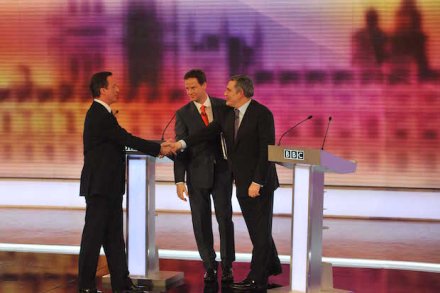
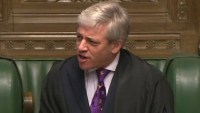
There are only a couple more sessions of PMQs left before the election and there was a slightly end of term feeling to today’s session. Ed Miliband started by mocking Cameron’s failure to meet his immigration pledge. Cameron responded by reading out a list of Tory achievements, almost daring Bercow to cut him off - which he eventually did. Cameron then started to mock Miliband asking those putting him on their leaflets to put their hands up, cue Tory MPs enthusiastically putting their hands up. But Miliband then changed tack and started asking about the TV debates. Cameron, who is determined not to do them, was not as comfortable answering these questions.

Ukip dumps its 50,000 immigration target – could this help the Tories?

From our UK edition

It was a bit rich of George Osborne to tease Nigel Farage for ‘a novel approach to policymaking’ for dumping Ukip’s previous commitment to a 50,000 cap on the number of migrants arriving in the UK each year live on the Today programme. George Osborne found this rather funny, even though he and his colleagues have spent the past year doing something reasonably similar. It was on the same programme that Theresa May downgraded the net migration target to a ‘comment’, while Osborne gave newspaper interviews in which he made it clear that it would be rather difficult to meet the target under Britain’s current arrangements with the EU.

Suburban legends: Why London’s property boom seems set to help Labour win seats

From our UK edition

Economists have for some time spoken of a ‘great inversion’ of London, whereby property price hikes in inner London, often linked to gentrification, has made suburbia comparatively more affordable. These changes, marked in the five years since David Cameron became Prime Minister, could have a profound effect on how the general election result pans out in the city. This is especially the case given the ability of such changes to affect the social and demographic makeup of London, as people from poorer backgrounds, the young and ethnic minorities are more likely to be susceptible to price increases in the private rental market.

Can the Tories really make another net migration target?

From our UK edition

Why is Theresa May doggedly sticking to the Tory net migration target, even when it has failed so badly in this Parliament? Her Tory colleagues might be asking why she’s even talking about it when immigration is not one of the key campaign priorities for her party. It is supposed to be talking about housing this week, not immigration. But there on the front page of today’s Times (which is holding an immigration series this week, so May has probably not decided to time her intervention) is May insisting that the target should be kept. She tells the paper: ‘You will have to wait for the manifesto to see the exact words. The idea of the net migration target will still be there. It will be measured [in the same way].

Tories launch new Saatchi poster campaign

From our UK edition

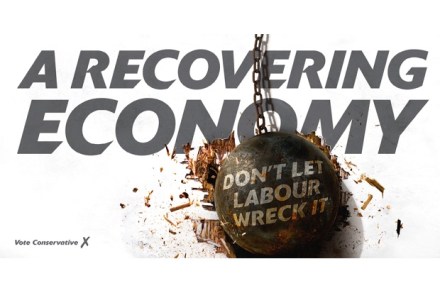
You know the Conservative campaign is well underway when there’s a new Saatchi poster about. Today, Conservative HQ has released a new campaign to remind the public that Labour pose a threat to Britain's economic recovery. The message in the poster (above) warns voters ‘don’t let Labour wreck it’. I understand this poster was created by M&C Saatchi, the advertising agency behind classic numerous Tory posters — including ‘Labour isn’t working’ and ‘New Labour, New Danger.’ The first poster of the 2015 campaign from the Saatchis ties in the Tories' message about the economy into the classic bold Saatchi style.

Tories ‘have fixed’ beleaguered campaign database

From our UK edition

The Conservatives believe they have fixed their beleaguered campaign database, VoteSource, after increasing complaints from MPs. Coffee House understands that a number of MPs in marginal seats complained to party co-chair Lord Feldman after they started to tire both of finding that their data wasn’t being saved properly and of being told that everything was fine. MPs have been told that the party made repairs to VoteSource over the weekend and it is now supposed to be fully functioning. Those checking their data in the past few weeks had been growing increasingly agitated about the way the database was working, with at least one association threatening to start using old-fashioned cards to keep voter information.

Mini Election: Patrick O’Flynn on the economy, party tribes and the importance of Farage

From our UK edition

Has Ukip found a set of credible economic policies? In the latest Mini Election video, I discuss the party's spring conference with Patrick O'Flynn, MEP for the East of England and Ukip's economic spokesman. As the man responsible for producing a plan of spending and cuts for the party, how does he intend to 'hold the Tories' feet to the fire' and how important is the economy to Ukip's overall message? We also chatted about the rapturous response to Nigel Farage's keynote speech, and whether the party relies too much on just one man. And if Ukip is also splintering into different tribes with different agendas, does O'Flynn find himself on the left of the party? Is he clashing with the more long-standing libertarians?

Immigration threatens to overshadow Tory housing week

From our UK edition

It’s supposed to be the Tory housing week, with David Cameron setting out plans to double the number of discounted starter homes to 200,000. It’s an important, salient issue to make election promises on. But more salient is immigration, and somehow the Tories are having to talk about that again today. Today's Times contains a plea by Ken Clarke that Cameron drop the Tory target to drive net migration into the ‘tens of thousands’, given its failure in this parliament. Ministers have oscillated between blaming the Lib Dems and blaming Europe for missing the target (they could also blame the growing economy, as Fraser explains here) and David Cameron did closely tie controlling immigration to European reform in his speech before Christmas.

Who paid for that?

From our UK edition

One of the things that even its critics, such as myself, have to concede that the European Union has been good at is making clear what it has funded. By contrast, in this country there’s little to tell you that the taxpayer has paid for something. But this is changing. The government will tomorrow, as I mention in the Mail on Sunday, announce that all publicly funded infrastructure projects will now be branded with a Union flag logo and the message ‘Funded by the UK Government.’ This will apply right across the UK and should provide some clarity as to who is paying for what; using this branding will be a condition of winning government contracts.

National parties no more

From our UK edition

All the election forecast models agree, the next election result is going to be remarkably tight. On these models, neither Labour nor the Tories are going to come close to winning a majority. They would both be about 40 seats short. Now, events could intervene to change things. But, as I argue in the magazine this week, one of the reasons Labour and the Tories are finding it so hard to win a majority is that they are not national parties anymore. Compounding this is that no party is aiming for full spectrum dominance in this campaign. Rather, they are trying to talk up the issues that are best for them and worst for their opponents. So, you hear the Tories talking about their long term economic plan and leadership. While Labour want the debate to be focused on the NHS and fairness.

Are reports of a Ukip split greatly exaggerated?

From our UK edition

Day two of the Ukip conference, and the placid mood continues. Delegates seem very content with the speeches that they've heard from Douglas Carswell, Patricia Culligan, Janice Atkinson and Diane James. They wee particularly entertained by Atkinson, who spent a great deal of her speech talking about Harriet Harman, and criticising the other parties' policies for women. They were very happy when Culligan described reforms to Ofsted that will mean children will be allowed to celebrate nativity plays (something that might have come as a surprise to a number of parents). And Diane James delivered a speech better than the sort of stuff you'd expect from many a junior minister.

Watch: Mark Reckless and Steve Crowther discuss day one of Ukip’s spring conference

From our UK edition

Today has been ‘Nigel Farage Day’ in Margate. Although many of the party’s other prominent characters addressed its spring conference, it was the leader who entirely stole the day with a speech lapped up by the crowd. If there was ever any doubt that Ukip is built around the personality of Farage, today proved it. I spoke two of Ukip’s other key figures to gauge their thoughts on the conference.

Farage uses speech to clarify his position

From our UK edition

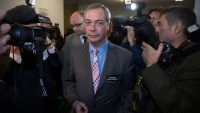
Nigel Farage’s speech to the Ukip conference was fine. Not a bad speech, but not his best speech, either. It was just fine. Activists seemed happy, ecstatic, even when he came on, and were joyful chanting when he left the stage too. But Farage clearly wanted to answer a number of questions about his own position. The Ukip leader started by pointing out that there had been a number of questions about his whereabouts, and that some of his opponents had tried to spread some unpleasant rumours that he was unwell (there have been some rumours circulating in Westminster to that effect, though it’s unclear where they originated from).

Ukip backs Osborne’s deficit plans – but how would Farage cut spending?

From our UK edition

The Ukip spring conference is underway in Margate today, with the party starting the two days of speeches and fringes with a pledge that it will match the Tory plan to eliminate the deficit by 2017/18. Nigel Farage has said that this support is conditional on the Tories keeping their promises, but it will be interesting, once he has arrived at the conference from the US, to see how he articulates a Ukip vision for cutting the deficit.  Given the party has spent a fair while talking about what it wouldn't cut, for example the 'Bedroom Tax', it may find it less enjoyable to talk about what it would cut.

What Ukip needs from its spring conference

From our UK edition

Ukip has put all the journalists in a special balcony above the main auditorium at its spring conference. It’s quite thoughtful of the party, as the gallery is right next to the press room where hacks can file, but it also means that they’re a little apart from the delegates. Sitting on the floor of the hall, I overheard a party official talking to a delegate. ‘Those people over there,’ he said, pointing to the gallery. ‘Are here to take the piss.’ To be fair, one of the jobs that the press in this country does very well is to take the mick out of politicians whose bloated egos could do with a little needling from time to time. We are like the little brother who teases his siblings, and in doing so, stops them from becoming a self-important twit.

If you think Britain’s corrupt now, watch what happens if we ban second jobs for MPs

From our UK edition

Last year, I had an exchange with Hugo Rifkind on Twitter in which I bet him dinner at Clarke’s that his father would stand down before the next election. My reasoning was that, at the age of 68, his dad wouldn’t want to serve another five years in the Commons and would be happier in the Lords. I hadn’t anticipated he would depart as a result of a cash-for-access scandal. I’ve always rather fancied running in Kensington myself. Rifkind has a majority of 8,616, which makes it a safe seat, and it’s only a 15-minute cycle ride from my house. But I’m not going to throw my hat into the ring because I still have numerous responsibilities in connection with the three schools I’ve helped set up.

Why are the Lib Dems spending so much time talking about mental health?

From our UK edition

Nick Clegg is to hold an hour-long phone-in next week on mental health. The Deputy Prime Minister will host the session himself on LBC on Monday. This is part of the emphasis that the Lib Dems are placing on mental health in their election campaigning. Now, there are lots of good reasons why the Lib Dems might want to campaign on mental health, including that it jolly well needs campaigning on because it is, as Clegg says, a ‘Cinderella service’ that suffers from long waits, poor research and less funding, yet one in four people will suffer from some kind of mental ill-health. But there are sound political reasons too. The first is that it is very popular with potential Lib Dem voters, as explained here.

Ukip is the most trusted party on controlling immigration

From our UK edition

Which party does the public trust the most to control immigration? ComRes/ITV News have released a new poll revealing it's not the Conservatives — unsurprisingly given today's figures. 36 per cent trust Ukip the most to tackle immigration, compared to 19 per cent for the Tories: [datawrapper chart="http://static.spectator.co.uk/isCLx/index.html"] The poll also reveals that over half of the public think the impact of immigration on the NHS has been bad. As the chart below shows, perceptions on immigration are mixed.

The Tory trouble to come on defence spending

From our UK edition

There are still some unhappy mutterings about the possibility that the Tories won’t commit to spending 2 per cent of GDP on defence in the next Strategic Defence and Security Review. Treasury sources have been pouring cold water on the suggestion that George Osborne has told David Cameron that spending will fall below that target, but that’s because no-one’s making any decisions until they have to, and they only have to make a decision after the election. In any case, we’ve probably seen the full extent of the unhappy mutterings in the past few days anyway - at least, until the election is over.