Uk politics

Politicians give cautious reactions to the Paris attacks

Unlike political Twitter, which was full of armchair experts extolling their own surprisingly untapped talent while the Paris attacks were still taking place on Friday night, senior politicians have today been rather cautious in their responses to the massacre. Theresa May repeatedly told the Marr Show that there were ‘lessons to be learned’ from the attacks, but that it was ‘too early to tell’ what the fate of the Schengen agreement would be. She also said that there needed to be political consensus on British action against Isis in Syria. But she was carefully non-specific, saying: ‘It is of course important that we look at the lessons to be learned

Diary – 12 November 2015

One of my constituents has been in an Indonesian prison since May. Journalist Rebecca Prosser was arrested with her colleague Neil Bonner while working on a documentary for National Geographic about piracy in the Malaccan Strait. Their visas hadn’t come through when filming started and they were arrested by the Indonesian navy and locked up in a prison with 1,400 men and 30 women. The family had been warned that publicity would only make things worse so I have been working behind the scenes to try to get her home. I’ve been ambushing Philip Hammond and Hugo Swire as they come out of the division lobby after 10 p.m. votes,

Tracey Crouch interview: I wasn’t sure I wanted to be a minister

Usually when the Prime Minister offers a backbencher their first ministerial post, they trip over their shoelaces in the rush to accept. Not so Tracey Crouch. Even though she had been waiting for five years to be promoted – having previously been considered too rebellious – and even though she had always wanted to be Sports Minister, she hesitated when the call finally came after the General Election to offer her just that. Instead of accepting at once, she told the Prime Minister she wasn’t sure. The reason she gave David Cameron was one many women shy away from when discussing their careers. ‘I said I wasn’t sure because I

The war on pensioners

Who controls the media in Britain? Depending on your political outlook, you might answer: the Conservatives, the liberal-left chattering classes, Rupert Murdoch or the BBC. But if the coverage of the elderly is anything to go by, then we can perhaps agree on one thing: the headlines are decided by a cohort of 25- to 45-year-olds who believe that other people’s parents and grandparents — a.k.a. Britain’s pensioners — have stolen their future, dashed their dreams and nabbed all the plush property. How else to account for a headline such as ‘No pay rise? Blame the baby-boomers’ gilded pension pots’ and a plethora of articles maintaining that pensioners have ‘never had

Corbyn backs suspended policy chief in Labour party row

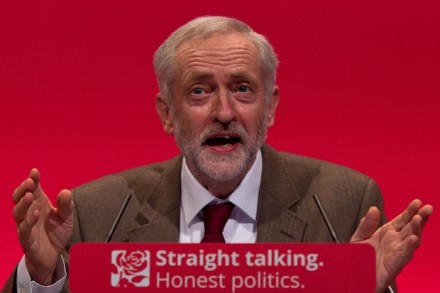
Labour is having the sort of day that Ukip used to offer up on a reasonably regular basis. Jeremy Corbyn’s head of policy Andrew Fisher has been suspended and faces an investigation by the party for urging voters in his constituency to back the Class War candidate over the Labour one. But Jeremy Corbyn has backed his head of policy, saying he hopes the matter can be resolved quickly. Corbyn said this afternoon: ‘I have full confidence in Andrew Fisher and his work. I respect the integrity of the General Secretary’s office and trust that this matter will be settled as quickly as possible.’ These sorts of stories are the

Tory MPs expect changes to school funding

A running sore in the Tory party is the way in which school funding is allocated. Under the current arrangements, a school in a rural area receives less money per pupil than one in a town or city, and this causes a great deal of resentment. It means that schools in the best-funded areas get £6,297 per head, but those at the bottom of the list receive just £4,208 per pupil. Conservative MPs have held repeated meetings with ministers about this arrangement, but got nowhere before the election because the areas they were worried about were more likely to be safer territory for the Tories. They had a particularly grumpy meeting with

Labour’s dilemma over Oldham by-election message

The Oldham West and Royton by-election is Jeremy Corbyn’s first test as Labour leader, though the party has not selected a Corbynite candidate to fight the seat. Jim McMahon won 232 votes in last night’s selection, beating Mohammed Azam, who got 141 votes and former MP and ardent Corbynite Chris Williamson, who got just 17 votes. McMahon is a moderate, so it will be interesting how much of Corbyn’s message he ends up selling on the doorstep. He said during his selection campaign that ‘on issues like austerity, I’m very close to Jeremy indeed’, so it’s not as though he’s wholeheartedly against the new leader. What will also be interesting

Rows on Trident and Syria highlight Labour’s policymaking problems

How does Labour make its policy? Different factions and frontbenchers are quarrelling about a number of issues such as Trident and action in Syria, but a common theme in each dispute is whose word actually represents official policy. Currently the party has a plethora of different stances on everything. Maria Eagle is having to explain that a Scottish Labour conference vote does not change the party’s official policy on Trident, while her Shadow Cabinet colleague Diane Abbott is explaining that it’s something the UK-wide party really should follow. Hilary Benn is having to explain that Labour won’t consult Stop the War on British involvement in action against so-called Islamic State

The ‘genius’ plan that stopped a Tory housing rebellion – and endangered a manifesto pledge

The Housing and Planning Bill gets its second reading in the House of Commons this afternoon, and though Labour has been making angry noises about it, it won’t encounter as many problems as it might have done. This might ultimately be a bad thing for the Tories, though. The rebellion that won’t happen would have been on the right-to-buy for housing associations, which the Tories put in their manifesto, but which a number of their own MPs were deeply worried about. Housing associations were so worried about the impact of the government legislating to force them to sell off their homes that they made a voluntary offer to ministers to

Theresa May doesn’t rule out supporting leaving the European Union

Could Theresa May be the politician to lead the ‘Out’ campaign in the European Union referendum? James examined this prospect in his politics column recently, and Westminster watchers have been trying to pick up clues as to whether the Home Secretary is preparing to support leaving the EU. Today she gave very little away on the Andrew Marr Show, but it was what she didn’t say that was the most telling. May insisted that the most important thing at the moment was that Britain did the renegotiation. ‘Let’s do this renegotiation, let’s see what reform we can bring about as a result of this renegotiation,’ she said, adding that the

Cameron rekindles collective responsibility row with EU comments

David Cameron’s decision to make it clear that he is definitely not ruling out Brexit by saying that ‘people need to understand there are significant downsides’ to being outside the European Union has been greeted with derision in eurosceptic circles. Campaigners argue that the Prime Minister clearly doesn’t think he’ll get much from his renegotiation if he doesn’t think it’s worth continuing to threaten that he could possibly campaign to take Britain out of Europe in order to spook EU leaders into giving him what he wants. But there’s also an interesting internal implication to the Prime Minister’s speech in Reykjavik, which is that effectively ruling out a Brexit makes

PMQs: Corbyn hones his skills as Leader of the Opposition, but not as an election winner

Jeremy Corbyn’s growing confidence at Prime Minister’s Questions is almost perfectly in step with his growing unpopularity outside the Chamber. He has perfected his geography teacher stare of disapproval to the extent that Tory MPs now automatically fall silent when he talks for fear of being kept behind after class. And he isn’t leaping all over the place with a phone-in format that doesn’t hold the Prime Minister to account. This week, the Labour leader focused on tax credits, and highlighted David Cameron’s inability to answer his questions about whether he could guarantee that no-one would be worse off as a result of the changes. Cameron didn’t answer the questions

Osborne prepares to face 1922 Committee as Tory anger at peers builds

It is difficult to exaggerate the fury in the Tory party at the House of Lords after last night’s double defeat. MPs I have spoken to today want swift and damaging retribution from the government for the Upper Chamber’s behaviour that goes far beyond what ministers are likely to propose, with some suggesting that the bishops should be the first to take the hit because they should understand the constitutional delicacies involved in votes like this given their ‘privileged constitutional position in the Chamber’. Mind you, the Bishops weren’t as turbulent last night as they could have been: only the Archbishop of York supported the Baroness Hollis amendment that delayed

Osborne pledges help for tax credit claimants after Lords humiliation

Tonight has not been a good one for George Osborne, with peers refusing to take his word that he was in ‘listening mode’ about tax credits. He didn’t look particularly happy about the matter when he gave a pooled clip to broadcasters a few minutes ago. He complained about an unelected group of Labour and Lib Dem lords voting down a matter passed by the House of Commons, and added: ‘I said I would listen and that’s precisely what I intend to do. I believe we can achieve the same goal of reforming tax credits, saving the money we need to save to secure our economy while at the same

Government defeated twice in the Lords on tax credits

The government was defeated twice in the Lords tonight on tax credits, with the motions put down by Baroness Meacher and Baroness Hollis both passing. We are now expecting a response from George Osborne this evening on what the government will do. Considering that these tax credit changes are meant to bring in £4.4 billion in 2016/17, the government is in a proper pickle. Now, the motions in the Lords tonight were not ‘fatal’, they don’t compel the government to abandon the tax credit changes wholesale. But the Hollis amendment means that existing tax credit claimants would be exempted from the cuts until they had moved on to universal credit

Peers offered tax credit deal: behave and Osborne will listen to you

The House of Lords is unusually packed this afternoon for the debate on tax credit cuts. As I explained earlier, there are four motions to consider, and the government has decided to plump for one by the Bishop of Portsmouth as the least worst way of peers expressing their dissatisfaction with the situation. Tory Leader of the Lords Baroness Stowell has just told peers that she visited Number 11 this morning and that the Chancellor ‘would listen very carefully were the House to express its concern in the way that it is precedented for us to do’. The Bishop’s amendment adds the following to the end of the motion introducing

What to expect from today’s Lords showdown on tax credits

There could be four troublesome votes on tax credits in the Lords this afternoon, each challenging not just the measures that George Osborne is keen to introduce, but also the way that the Lords functions. The most troublesome of all in terms of the constitutional implications is the amendment to the motion introducing the instrument from Baroness Manzoor. This is the Lib Dem ‘fatal’ motion and it changes the government motion ‘that the draft Regulations laid before the House on 7 September be approved’ to ‘that this House declines to approve the draft Regulations laid before the House on 7 September’. The Lib Dems want to appear to be tougher

Labour MPs try to ward off deselection threat

As well as the rather big problem of how to get rid of a leader they think is unpalatable to the general voting public, Labour MPs also have to work out how to protect themselves from deselection. Simon Danczuk seems to be the only member keen to talk about the former, claiming today that he’s happy to be a ‘stalking horse’ if Labour performs badly in next May’s local, London and Holyrood elections. But without many colleagues backing him and the leadership contest rules and party membership remaining the same, Danczuk could find that his intervention drops like a dead donkey. On the second question – how to prevent the

Arnie Graf: Corbynmania feels like student politics, not people trying to form a government

Arnie Graf was, for a little while, the man who was supposed to rebuild the Labour party after its 2010 defeat. He was a famed community organiser from the US, brought over by Ed Miliband to have a go at revitalising is party. Graf didn’t last, but last night he spoke about his experiences with the Labour party, and what he thought of the current surge in membership under Jeremy Corbyn. This was his first brush with proper party politics, and while Graf had clearly enjoyed the work he’d done in building up the party in small local areas with community meetings, he said ‘I wouldn’t come back to it