Uk politics

David Cameron’s tax returns tell us nothing. So why did he publish them?

From our UK edition

It’s just as well that David Cameron abandoned his career in public relations because he seems to be comically (or, if you’re a journalist, deliciously) bad at crisis management. He has done absolutely nothing wrong, but is carrying on as if he’s Ken Dodd in 1989 - except Dodd handled it all more deftly. The Prime Minister has now released six years of his tax returns, which is odd because no one is asking questions about his income over the last six years. But still, he wants to tell us about the £100k annual rent he's getting form his Notting Hill flat and the £3,052 of bank interest (which suggests a balance of about £150k). And the other tax returns show about £200k of income since becoming PM.

David Cameron is guilty of bad spin – and nothing more

From our UK edition

At last! We can now see why David Cameron tried to keep this quiet. He sold his shares in January 2010 – just as the recovery was starting. What a dunce! His £31,500 would be worth a lot more by now if he’d held, and diversified his portfolio. So can you trust him with the nation’s finances? And this, as far as I can make out, is the limit of the scandal. All else is spin and smear. The spin, of course, matters. The Prime Minister has behaved as if he had something to hide when he didn’t. His carefully-worded highly-specific non-denial denials (‘In terms of my own financial affairs, I own no shares…’) were the equivalent of screaming ‘ATTENTION JOURNALISTS!!! HIDDEN STORY!!! LET THE GAME BEGIN!

Why has the government been so behind the curve on steel?

From our UK edition

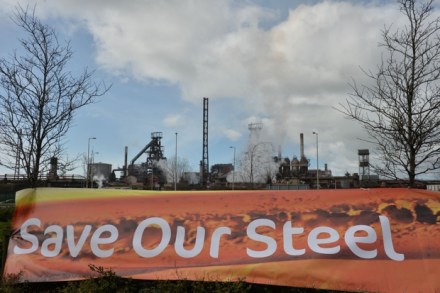
This hasn’t been a good week for the government. As I say in my Sun column today, it has been oddly off the pace in its response to Tata’s decision to sell off its UK steel plants. We have had the absurd sight of the Business Secretary flying to Australia and then turning round and coming back again. What makes all this so odd is that everyone knew that Tuesday’s meeting of the Tata board was key to the future of these plants. Government insiders say that the government being caught on the hop is another example of how Number 10’s obsession with the EU referendum means that it is dropping the ball elsewhere. One Minister tells me that ‘Downing Street are totally distracted’.

There’s been a Tweet but, worry not, DCI Taggart is on the case

From our UK edition

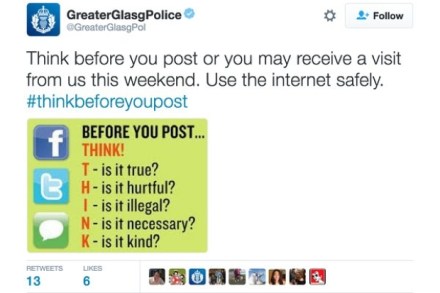
Behold, the Tweet that banned the internet. Has it really come to this? Evidently so. It is necessary to laugh at Greater Glasgow Police and you'd be advised to do so while it remains legal to do so too. Doubtless this latter consideration is simply the result of an administrative oversight but we must make the best of a bad situation that is not itself of our own making. All this is true and yet not enough either. You might think this is merely an April pleasantry, a first of the month jape designed to entertain you as we await the first real sighting of spring in these northern parts. If you think that then all I can say is that you are a kinder soul than I. The Scottish Police, you see, have form in these matters. Their record is as long as a long man's arm.

Why is Gus O’Donnell misleading the public about the EU rules on Brexit?

From our UK edition

When Sir Gus O’Donnell was head of the civil service, those who worked under him would have prided themselves in the code that he was supposed to uphold: to be impartial, avoid politics and do their best to make sure the public is not misled. This morning, Sir Gus was involved in what can only be described as a systematic attempt to mislead the public about the EU and the terms in which Britain would leave. His point: that it would take more than two years to negotiate the terms of UK’s exit, and this deadline could only be prolonged with hard bargaining from hostile partners. "Obviously at the end of two years anything we haven't negotiated has to be extended by unanimity of a vote excluding us so that's a bit scary.

Would Brexit mean Boris as PM? If so, should we worry?

From our UK edition

This time last year, Matthew Parris was about the only commentator predicting that the Tories would win a majority. In his Times column today, he says he is now beginning to think that Britain will vote ‘out’ – and he looks at the consequences. Specifically, Cameron’s likely resignation and a summer Tory leadership campaign with Boris Johnson as the favourite. It all might feel a bit premature, but Matthew Parris is one of the most prescient writers in Britain (as Spectator readers know). If Britain does vote out and Cameron quits, then Boris would be the favourite (see graph, below). And then, gloves would come off.

Cameron can’t just focus on the EU referendum

From our UK edition

Early on in his leadership, David Cameron was clear that he wanted the Tories to stop ‘banging on about Europe.’ But Europe—or more specifically, the EU referendum—is now dominating Cameron’s time so much that he is neglecting domestic policy. I report in my Sun column today that one of those intimately involved in the disability benefits cuts debacle and IDS’ resignation told me that ‘Cameron is completely obsessed by Europe, he has taken his eye off the ball’. Now, as David Cameron takes a break in Lanzarote, he would be well advised to reflect on whether he wants to carry on letting the EU referendum crowd out other government business.

Can the ‘leave’ campaign convince British farmers that they’d be better off out?

From our UK edition

As Nigel Farndale wrote in this magazine in February, leaving the EU would have a dramatic effect on British farmers and the agricultural industry. When it comes to British agriculture, the EU very much sets the rules – with regards to both regulations and funding – so a vote for Brexit would mean change, in a big way.   But what makes the EU debate even more interesting when it comes to farming is that the farming minister – George Eustice – has placed himself firmly in the ‘out’ camp. Eustice, after all, was once a Ukip candidate in the European Parliament Elections, and was Campaign Director for the No to the Euro campaign – so perhaps it was unsurprising that he would join the campaign to leave the EU as well.

If Scotland had gone independent today, it would be facing sado-austerity

From our UK edition

Today is Independence Day, the 24 March, the day Alex Salmond nominated as his ‘independence day’ following a Yes vote. Today’s edition of The National, the newspaper dedicated to the cause of Scottish independence, imagines what might have been. But one rather important story is missing. Yesterday, the Institute for Fiscal Studies updated its forecasts on what an independent Scotland would look like. The result: it’d have the worst deficit in the developed world (see graphic, below). In his official forecasts Alex Salmond envisaged raising up to £7.5 billion of oil revenue. This was before the oil price plunge. Last weeks' Budget revealed the actual amount: zero. (The graph, below, shows the changing picture). Hence the deficit.

Spectator’s Notes | 23 March 2016

From our UK edition

Why have David Cameron and George Osborne overreached? Why are so many in their own party no longer disposed to obey them? Obviously the great issue of Europe has something to do with it. But there is another factor. Victory at the last election, followed by the choice of Jeremy Corbyn as Labour leader, has convinced too many Tories, including Mr Osborne himself, that they will be in power for ten more years at least. So they get careless and cocky. Then they make mistakes. Then they come up against the most admirable fact about parliamentary democracy, which is that you can never guarantee being in power for ten years. (You can’t even guarantee it for the prescribed five, though the iniquitous Fixed-term Parliament Act of the coalition has made this easier than before.

What’s behind Labour’s little list of ‘hostile’ MPs?

From our UK edition

Why have Jeremy Corbyn’s allies drawn up a list ranking Labour MPs according to how hostile they are to the leadership? It’s not the first list that categorises MPs: I revealed in the Times recently that the moderates who are plotting to destabilise the Labour leader had drawn up their own list that ranged from the ‘signed-up Corbynistas’, the ‘nervous soft left’, the ‘organisational left’, ‘centrists’ and the moderates. It might be that the Corbynites are simply trying to understand the Labour party a bit better and finally improve their parliamentary operation.

PMQs unifies Tory MPs and weakens Jeremy Corbyn

From our UK edition

On Sunday at noon, few would have predicted that Tory MPs would have come out of PMQs cheered and unified. But thanks to The Times’ Sam Coates revealing this morning that the Labour leader’s office have ranked their MPs from core group to hostile, David Cameron won this session hands down and cheered up Tory MPs in the process. Jeremy Corbyn had plenty of material of his own to work with, Iain Duncan Smith’s resignation letter should be a rich seam for Labour. But when Cameron started quoting the rankings at every turn, Corbyn — remarkably, given that his team had had all morning to come up with one — had no comeback. He was reduced to, rather pathetically, telling Cameron to leave the theatre. The Tory benches meanwhile were loving it.

Politicians should slow down their responses to terror attacks

From our UK edition

David Cameron has been chairing a Cobra meeting this morning to discuss the UK government’s response to yesterday’s terror attacks in Brussels. Inevitably, the issue has become deeply partisan, with Ukip's Mike Hookem managing to release a statement while the attacks were still taking place, arguing that ‘this horrific act of terrorism shows that Schengen free movement and lax border controls are a threat to our security’. Yesterday, too, Tory MPs attacked John McDonnell for calling into question the fitness of George Osborne for the job of Chancellor while a major terrorist attack was unfolding.

Tories face the new political reality on welfare

From our UK edition

Are there going to be more welfare cuts or not? In an afternoon in which the government tried to calm the row following the resignation of Iain Duncan Smith, the key line that stood out was Stephen Crabb telling the Commons that ‘we have no further plans to make welfare savings beyond the very substantial savings legislated for by parliament two weeks ago’. The new Work and Pensions Secretary’s language was qualified by the Treasury, which clarified that this didn’t mean no more cuts in this parliament - just that the government didn’t have any planned. But it has become the big takeaway story from yesterday’s medley of statements. George Osborne plans to defend his Budget today as part of the wind-up session in the Commons.

Number 10 tries to neutralise Budget row

From our UK edition

David Cameron and George Osborne have got a lot to do to patch up the current Tory wars. But first they need to ensure that those wars don’t get even worse, by making the Budget battles of this week seem less potent. This, it was revealed at morning lobby briefing, will now involve allowing MPs to vote on a Budget that does not set out how the government will save £4bn that the cuts to personal independence payment were supposed to achieve. It will also involve the government not opposing the rebel amendments on the tampon tax and VAT on solar panels and insulation products. This second decision on whipping arrangements has been made out of absolute necessity as the government was going to lose.

How can David Cameron fix the Tory row over the Budget?

From our UK edition

Last week’s Budget was supposed to be boring, but is still splashed across the front pages of the newspapers this morning. It was supposed to be crafted so that no Tory MPs could raise a rumpus, yet it has led to the resignation of a Cabinet minister and the opening up of a yawning split in the Tory party. This row between the Tory leadership and those supporting Iain Duncan Smith isn’t officially about Europe, though the referendum has undermined the foundations of the party enough to make this row seriously destabilising for the leadership.

Podcast: IDS, Ros Altmann and the return of Tory Wars

From our UK edition

Iain Duncan Smith has just given what James Forsyth refers to as a "bombshell interview" which turned into "a missile aimed at George Osborne". Ros Altmann, the pensions minister, released a statement last night that could be described as a missile aimed at Iain Duncan Smith. What's next? James Forsyth and I discuss in this podcast.

Iain Duncan Smith warns government in danger of ‘dividing society’

From our UK edition

In one of the most extraordinary political interviews of recent times, Iain Duncan Smith has warned that the government ‘is in danger of drifting in a direction which divides society rather than unites it.’ He repeatedly, and pointedly, argued that in drawing up policy the Tories have to have a care for those who don’t, and will never, vote for them—a remark that everyone in Westminster that will see as being directed against George Osborne. Explaining his resignation, IDS that he was ‘semi-detached’ from decisions taken in government, and that his department was being forced to find savings because of the welfare cap which had been ‘arbitrarily’ lowered by the Treasury.

Ros Altmann is wrong: the IDS resignation was not about Europe. But it didn’t help

From our UK edition

In another extraordinary development the pensions minister, Ros Altmann, has released a statement attacking her former boss Iain Duncan Smith. She reinforces the No10 line that Iain Duncan Smith “championed the very package of reforms to disability benefits he now says is the reason he has resigned” and accuses him of being very hard to work for. Her reaction is odd in that she said nothing about his departure for 24 hours, then at 9pm last night released a series of tweets culminating in her statement saying his attacks on the government can be explained by his position as a Brexiteer. So was she encouraged by No10? Her statement is strikingly similar to No10's version of events.

Stephen Crabb: how my mother inspired my vision of welfare reform

From our UK edition

Earlier, I republished my interview with Stephen Crabb, the new Work and Pensions Secretary. He was, then, Wales Secretary - not all of his (many) thoughts on welfare reform made the cut. So I've been through the transcript, and posted more of this comments below: they give a better idea of what the new welfare secretary is like. At the time, benefits had been cut in the post-election Budget. Crabb was a bit nervous, saying-: ‘You have always got to handle the issue of welfare with care because you are dealing with support mechanisms for Britain’s most vulnerable people. That’s what welfare is. You’ve got to take care of the issue.