Uk politics

Government suffers its first Article 50 bill defeat

From our UK edition

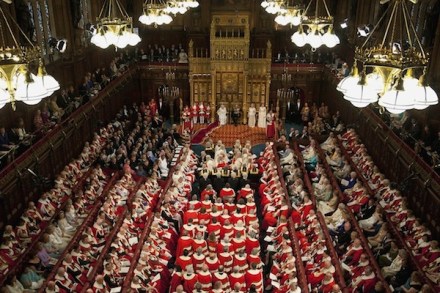
In the past few minutes, the government has lost a vote in the House of Lords on a key aspect of Brexit: the status of EU nationals. Peers are at the Committee Stage of the bill that allows the government to trigger Article 50, and despite attempts by Home Secretary Amber Rudd to reassure them that this issue will be the priority once the negotiations for Britain to leave the European Union have begun, they backed Amendment 9b, which says the government should guarantee now that EU nationals living in the UK will have their rights protected. The House voted 358 to 256 for the cross-party amendment. Rudd was watching the debates this afternoon.

Is Michael Gove angling for a cabinet return?

From our UK edition

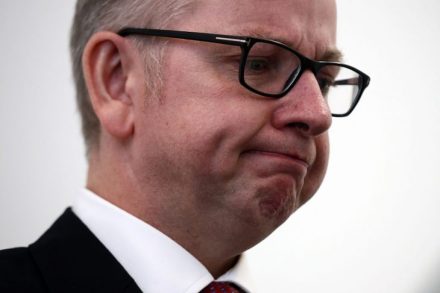
I never expected to be writing the following, since Michael Gove is, to me, one of the few heroic figures in modern politics. But he did write a very strange column in the Times last week, inciting the government to ‘Put VAT on school fees and soak the rich’. He seems to be outraged that what he calls ‘the education of the children of plutocrats and oligarchs’ is a charitable activity. Private schools get rate rebates, VAT exemptions and free uniforms, weapons etc for their cadet forces, he says. This is ‘egregious state support’. He also mocks the many bursaries provided by public schools, on the grounds that these have ‘left behind’ all those who do not receive them.

Gerald Kaufman: Labour hero, Jewish villain

From our UK edition

Gerald Kaufman, who has died aged 86, was instrumental in saving the Labour Party, back when the Labour Party was something that could still be saved. It was Kaufman who pithily pegged the 1983 manifesto as 'the longest suicide note in history'. He knew the phrase would hang around the far-left and dog any attempt to dodge responsibility for the calamity.  In his heart, he was a radical, but he parted ways with the 1980s Labour left in its mush-headed confusion of ends and means. The mush is now party policy but Kaufman expended considerable wit keeping it at bay during the Kinnock years.

Saying sorry to Liverpool is a politician’s rite of passage

From our UK edition

As Paul Nuttall, the Ukip leader, has recently discovered, there usually comes a point in a British political career when you have to apologise to Liverpool. The origins of this custom are obscure, rather like the rule that the Cap of Maintenance must accompany the Sovereign to the State Opening of Parliament, but it must not be questioned. It is no good asking why Liverpool should receive more apologies than, for instance, Runcorn or Milton Keynes: you must just say sorry. Rather than having to stammer an inconvenient ‘mea culpa’ at a by- election it would be more sensible to get your apology in first.

Labour haven’t hit rock bottom yet

From our UK edition

Copeland was a truly awful result for Labour. But as I say in The Sun this morning, the really alarming things for Labour is that things can get worse for them. Many Labour MPs have been operating on the assumption that the NHS will keep the party’s loses down to a manageable level in 2020. But Copeland suggests that this hope is misplaced. Labour went all in on the health service there and had no shortage of material to work with, the maternity unit at the local hospital is under threat. By the end of the campaign, Labour’s message was perilously close to vote for us or the baby gets it—and yet people still didn’t vote for them. The other thing that should really worry Labour is that the Tories’ Corbyn card will be even more potent in 2020.

Labour is finished. But you can’t blame it all on Corbyn

From our UK edition

Even now, even following their historic thrashing in Copeland, Labourites still cannot face the truth. Sure, there are Twitter tears this morning. I’m sure the vibe in Corbyn’s office is skittish and fearful. There’ll be an explosion in ‘What now for Labour?’ articles. But they still do not get the yawning, abyssal depth of the crisis they face. They still don’t see that their party isn’t merely in trouble; it’s finished, over, kaput. Labour is a zombie party, a Frankenstein creature patched together from dead slogans and middle-class anti-Tory angst; a living-dead entity utterly incapable of making a connection with the living.

I was right! Brexit has killed off Ukip

From our UK edition

It is hugely important, if you are someone as insecure as myself, to say 'I told you so' whenever the opportunity arises. So, on 28th January this year I wrote a piece about the Stoke and Copeland by-elections and took a bit of stick on here for its thesis. This was the crucial bit: 'And Copeland and Stoke-on-Trent Central? Nuttall has risked all by standing in the latter, where his party came second last time. If he doesn’t win, that may well be it for them. The Lib Dems will continue their revival in both seats, but win neither. My guess is that with a decent candidate, a quiescent Ukip and a split vote, Labour will just about hold Stoke. And the Tories will gain Copeland, again benefiting from an increased Lib Dem vote. How perverse will that be?

Labour hold Stoke as Ukip and Nuttall fail to breakthrough

From our UK edition

James Forsyth discusses the by-election results with Fraser Nelson and Isabel Hardman: Labour has avoided total electoral disaster and held the Stoke Central seat with a relatively comfortable majority of 2,620. The Labour vote share in the seat was only marginally down on the 2015 general election, which while not good for an opposition party does suggests that Brexit hasn’t taken as big a chunk out of Labour’s support in Leave voting seats as some are suggesting. Labour are trying to argue that their victory here marks a turning point in their attempt to see off the Ukip threat to them in Brexit voting seats in the Midlands and the North. It is certainly true that not winning here is a blow to the new Ukip leader Paul Nuttall.

Polls close in Copeland and Stoke

From our UK edition

Polls have closed in the Copeland and Stoke by-elections. It is too early to say with any certainty what the results will be, but we’ll be with you on Coffee House until the results are declared. In Copeland, it is a two horse race between Labour and the Tories. The Tories aren’t predicting they’ll take it, but they do sound rather optimistic. In private, some Labour MPs are very pessimistic about this result. But this could be expectations management. If the Tories do take Copeland from Labour, it’ll be a staggering result: the governing party hasn’t taken a seat in a by-election in thirty odd years and that was in the middle of the Falklands war with the former Labour MP standing for the SDP.

Why Labour deserves a crushing defeat in Stoke

From our UK edition

Never in recent years has a party deserved to lose an election, to be demolished by people’s ballots and fury, as much as Labour does in Stoke. The way Labour has treated this northern constituency is a microcosm of the metropolitan contempt it now feels for all the rough-handed, gruff-voiced non-Londoners who once made up its support base but who now irritate the hell out of it by doing stupid things like voting for Brexit and believing in democracy. Were Labour to receive a bloody nose from the people of Stoke it would be a wonderful day for British politics, and, who knows, possibly a wake-up call for a left made lazy by its misplaced virtue and self-satisfaction.

George Osborne is to blame for the business rates fiasco

From our UK edition

It is almost always unwise to postpone the introduction of a big, scheduled tax change, but often tempting at the time. George Osborne, when Chancellor of the Exchequer in the coalition government, postponed the revaluation of business rates, when it was due two years ago, for obvious political reasons. So now it is happening, and it hurts worse than it would have then. The current rates are based on the rental value of business properties in 2010. Since then, the scene is transformed. The internet has called the whole concept of the ordinary, physical shop into question. Values have vastly altered and the political problem – as with the poll tax in the 1980s – is that losers are more vocal than gainers.

Cabinet wastes time with discussion on something it already agrees on

From our UK edition

If ever you wanted to understand what Theresa May’s relationship with her top ministers is like, today’s Cabinet meeting provides some insight. The ‘majority’ of the session, which lasted more than an hour, was taken up with a discussion about the importance of the Union. Not a discussion in which any of the problems raised by Brexit for the Union, such as the problems with the land border between Northern Ireland and Ireland, were addressed, but a general discussion on how everyone present supported the “most successful political union of countries that has been seen”.

The Stop Trump protests are the ultimate virtue signal

From our UK edition

This afternoon, across Britain, the most pro-establishment demo of modern times will take place. Sure, the Stop Trump protesters gathering outside Parliament and elsewhere will look and sound rad. They’ll chant and rage and blow whistles and hold up placards with Trump done up like a tangerine Hitler. But don’t be fooled. These people are the militant wing of the old establishment. They’re radicals for the old status quo, pining for the pre-Brexit, pre-Trump era when their kind ruled and ordinary people knew their place.  The aim of the Stop Trump gatherings is to encourage MPs to deny Trump a state visit. Starting at 4.

Labour has no alternative

From our UK edition

In normal times, by-elections are bad for governing parties and good for oppositions. But it is an indicator of how much trouble Labour is in, as I say in The Sun this morning, that they are the ones who are nervous ahead of Thursday’s by-elections. Some in the Labour machine seem almost resigned to losing Copeland to the Tories and are concentrating on trying to hold off Ukip in Stoke. Given that Labour is polling as low as 24% and Jeremy Corbyn’s ratings are worse than Michael Foot’s were at this point in his leadership, and the epic defeat Foot led Labour to in 1983 paved the way for 14 more years of Tory government, you might think that defeat in either contest would be the end of Corbyn’s leadership. But it won’t be.

Tony Blair is right about Brexit

From our UK edition

I don't know about you but if I were to make a speech arguing that democracy should be abandoned, I probably wouldn't begin by saying 'I want to be explicit. Yes, the British people voted to leave Europe. And I agree the will of the people should prevail.' That's just me, however. When Tony Blair says this, he apparently means to encourage an anti-democratic insurrection. Which, I suppose, makes sense if you still suffer from an acute case of Blair Derangement Syndrome. Plenty of people evidently do. If Blair is really as toxic and irrelevant as his critics aver, there'd be no need for all this fury. Blood vessels could remain unburst and eyes unpopped. The reaction to Blair's speech suggests something else. It suggests that he must have a point.

Brexit was a revolt against snobs like Tony Blair

From our UK edition

The brass neck of Tony Blair. The Brexit vote was ‘based on imperfect knowledge’, says the man who unleashed barbarism across the Middle East on the basis of a student dissertation he printed off the internet. Who marched thousands into unimaginable horror on the basis of myth and spin. That NHS claim on the side of the Leave bus is small fry, infinitesimally small fry, in comparison with the guff this bloke came out with. It didn’t cause anyone to die, for one. For Blair to lecture the British people about truth is an affront to memory and decency and reason. No self-respecting citizen should put up with it.

Labour’s love lost

From our UK edition

Just as it seems that Labour has reached the bottom of the abyss, Jeremy Corbyn and his party somehow manage to find a new low. The latest nationwide poll puts them at 24 per cent, trailing the Tories by 16 points. No wonder Labour MPs look so boot-faced around Parliament, and an increasing number are hunting for jobs elsewhere. If a general election were called now, the Conservatives would win a huge majority. Labour would be further than ever from power, arguably even finished as a major parliamentary force. Polls are not rock-solid indicators of future electoral success or failure, but Labour’s ratings are so abysmal as to suggest a party facing an existential crisis.

The truth behind the Brexit hate crime ‘spike’

From our UK edition

Britain is in the grip of an epidemic, apparently. An epidemic of hate. New figures, compiled by the Press Association, suggest that hate crimes soared to 'record levels' in the three months following the EU referendum. Only four police forces around the country recorded a decrease in hate crimes; the others saw a spike. And in the case of three forces - the Metropolitan, Greater Manchester and West Yorkshire - the spike was significant: these forces recorded more than 1,000 hate crimes each post-referendum.  This is being held up as evidence that prejudices and madness were unleashed by Brexit. In truth, the hate-crime spike looks more like a classic crime panic, a constructed 'crisis'.

John Bercow must be saved from the paroxysms of Parliament’s angry men

From our UK edition

John Bercow is a curious little poppet. He's come a long way since his spotty days of undergraduate hangem'n'floggery in the Federation of Conservative Students, an organisation banned by Norman Tebbit for being too right-wing. Today he's more likely to be found welcoming one acronym or another to Parliament or accosting the word 'progressive' and roughing it up.  Bercow, now handsomely perched in the gods of the liberal establishment, has defied the axiom that we become more conservative as we grow older. (Then again, if you start out in the Monday Club and keep going right, you'll end up in Rhodesia by Friday.)  We need to understand this change of heart to appreciate the splenetic fury he inspires in the worst, most tribal brand of Tory.

Number 10 distancing itself from Law Commission’s secrecy proposals

From our UK edition

There has been an understandable, and justified, outcry about the Law Commission’s proposed changes to secrecy legislation. The current proposals present a serious threat to investigative journalism and whistle blowers. But Theresa May’s Number 10 is very keen to point out that this review was something commissioned not by them, but by David Cameron’s Number 10. ‘This is a consultation by an independent body instigated by the previous Prime Minister’ is how one May aide describes it—which is a clear attempt to distance the current Prime Minister from this whole business. I am told that it is highly unlikely that the proposals will be implemented in their current form.