Uk politics

How much pain are Brexiteers prepared to inflict on us?

From our UK edition

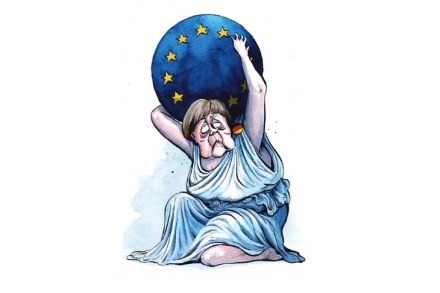
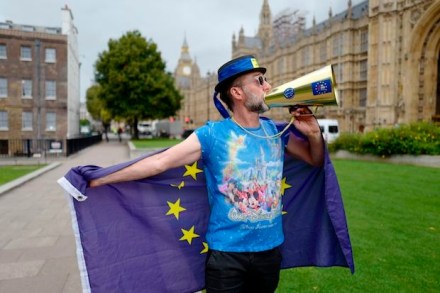
When this magazine endorsed Brexit, it did so in typically trenchant and elegant fashion. ‘Out and into the world’ we said. The central thesis of The Spectator’s case for Leave was that the European Union has become a parody of itself, a sclerotic, irredeemably unreformable, set of institutions that are, at some core, fundamental, level intrinsically incompatible with this country’s instincts, traditions, and future. Even so, that case, forceful though it was and certainly hardly without merit, still suffered from the wishful thinking that has, alas, been so typical of so many Brexiteers.

Anti-Semitism is not a priority in the Labour Party

From our UK edition

It is the gripe of every end-of-the-bar bigot you meet. ‘Look, I’m not saying there isn’t any racism but there can’t be as much as they claim. They exaggerate it. This isn’t me saying this, by the way. I know loads of black lads who say the same. They’re just milking it. It stands to reason.’ Place that paragraph before almost any Labour member and they would know exactly what they were looking at. They would call it textbook racism. The throat-clearing at the outset. The downplaying of the problem. The some-of-my-best-strawmen-are-black rhetorical device.

Where will the real trouble come from on the EU Withdrawal Bill?

From our UK edition

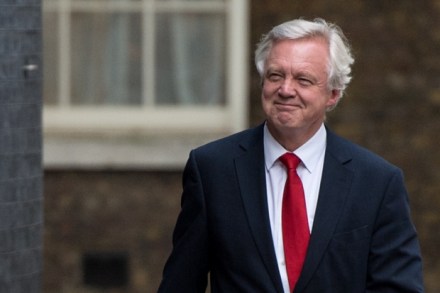
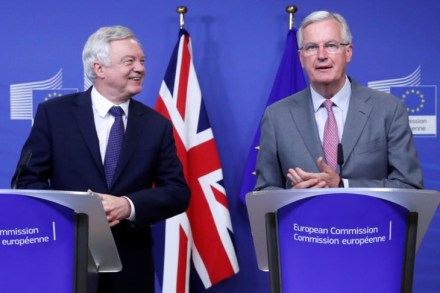
Things may be rather awkward for David Davis in Brussels at the moment, but at least he doesn't need to worry too much about what's going on in the Commons. The EU Withdrawal Bill starts its second reading debate this Thursday, with the big vote on whether it will pass to Committee stage, and how long that next stage will be, on Monday 11 September. The Tory whips are now confident that there won't be any trouble from their own side at this stage, with pro-Remain Conservatives planning to table all their amendments at the Committee stage, rather than trying to block the Bill's progress this week.

How Theresa May plans to sneak policies past MPs

From our UK edition

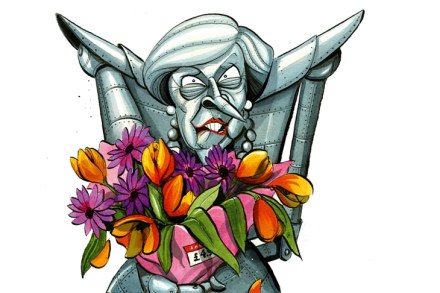
If Theresa May is in it for the 'long term', does this mean that she plans to do big things with her premiership? The Prime Minister promised a great deal when she stood on the steps of Downing Street over a year ago, but has so far delivered a snap election which messed up her chances of actually achieving what she promised. She now has to rely on a party which doesn't share all of her values - the DUP - or the good will of Labour MPs who happen to support what she wants to do. But this is all about May's weakness in the House of Commons Chamber. She can still make as many changes as she wants to policies using secondary legislation.

Senior Tories oddly supportive of Theresa May’s plan to stay

From our UK edition

Theresa May's announcement that she plans to serve as Prime Minister for 'the long term' has come as rather a surprise to her party. Cabinet ministers and senior backbenchers had hoped that all the talk of her sell-by-date and a leadership contest would have faded in time for the autumn, but this has stirred it up again. There are two schools of thought in the party as to whether the Prime Minister went into her interview yesterday intending to give a stronger line on whether or not she was going to leave. By and large those who are most unimpressed by the way she has led up to this point think that it was a deliberate move to show authority. Even those who think she was bounced into it believe that the Prime Minister was trying to quash speculation about having a precise leaving date.

Theresa May wants to spend her political capital in an odd way

From our UK edition

What on earth is Theresa May up to? The Prime Minister seemed to have successfully calmed things down in the Tory party following her disastrous snap election. But now she has thrown everything wide open again by telling reporters that she would like to fight the next election and that she is her 'for the long term'. The 'do you want to fight the next election' question is a tricky one for Prime Ministers to answer. Say 'no' and you become a lame duck. Normally saying 'yes' makes more sense, even if you're secretly planning to scarper before there is another campaign. But May had already cast herself as a lame duck, albeit one who was very keen to serve and clear up the mess she'd made for as long as was necessary.

Theresa May’s climbdown on corporate excess is a major retreat for the Tories

From our UK edition

‘Mayism’, whether it left you in admiration or despair, at least seemed like an identifiable philosophy. It was concerned with social justice, but it wasn’t socialist: it was better described as post-liberal. Mayism was sceptical of free markets, which were prey to ‘selfish individualism’ (as the manifesto put it), but it didn’t see big government as the answer. It preferred to spread economic power, by clamping down on corporate malpractice and giving new rights to workers. And the symbol of this – until yesterday when the Tories pretty much dropped the proposal – was the idea of putting workers on company boards. To be exact, the idea has not been entirely dropped.

How Kezia Dugdale made Mission: Impossible more difficult for herself

From our UK edition

When Kezia Dugdale was elected Scottish Labour leader, she tweeted: ‘Mission: Impossible has a happy ending, right?’ As she steps down from the job, Dugdale is getting enough praise to suggest that her mission has a happy ending. But is that really fair? She leaves with more Scottish Labour MPs in Westminster than she started with: impressive, given many had assumed Scottish Labour was dead for at least a generation after the SNP surge in 2015. But then again, she leaves with her party in third place at Holyrood. Her critics on the Left will argue that the party’s recovery in its Scottish seats was far more down to Jeremy Corbyn than it was to her.

Kezia Dugdale’s resignation leaves Labour in turmoil all over again

From our UK edition

Even in Scotland, ‘Name the post-devolution leaders of the Scottish Labour party’ is a pretty decent pub quiz question. There have been so many and so few of them left much of a legacy. The people’s standard has been borne by Donald Dewar, Henry McLeish, Jack McConnell, Wendy Alexander, Iain Gray, Johann Lamont, Jim Murphy and Kezia Dugdale. Eight leaders in eighteen years. (In the same period, the SNP and the Tories have each only had three leaders.) And now there will be a ninth. Kezia Dugdale’s resignation as leader of the Scottish Labour party surprised even some of her closest allies and senior aides. Many of them are, not to put too fine a point on it, furious, seeing her resignation as something close to an abdication of responsibility.

Was Kezia Dugdale forced out by the Corbynistas?

From our UK edition

Kezia Dugdale was overseeing a revival in her party’s fortunes. She had established herself as a passionate and articulate champion of its values and even the Tories had to admit how impressive she had become in the many debates of Scottish public life. So why quit as party leader now? In her resignation letter, she says she has had a personal re-evaluation after the death of a friend: Earlier this year I lost a dear friend who taught me a lot about how to live. His terminal illness forced him to identify what he really wanted from life, how to make the most of it and how to make a difference. He taught me how precious and short life was and never to waste a moment.

The Tories need houses, not memes, to win over the young

From our UK edition

The Tory party has a new youth wing called Activate to try to win over the kids with 'memes' - I believe they're called - similar to the way that Momentum has built a sort of cult around Jeremy Corbyn. This is in response to the dismal recent Conservative youth vote, which bodes ill for the party. As a party member rather optimistically put it, ‘we’ll only be fine when a Conservative politician can go to Glastonbury and not be booed’. https://twitter.com/Activate_uk_net/status/902284187687780353 Yeah, I wouldn't be too hopeful on that one to be honest.

On Brexit, Labour and the Tories are closer than either would like to admit

From our UK edition

For months, Labour has been moving ever closer to the Tory position on Brexit while pretending that it isn’t. First, it backed Brexit. Then in June, John McDonnell told Robert Peston that he couldn’t see continued membership of the single market being 'on the table' in Brexit negotiations. He added that people would interpret membership of the single market as 'not respecting that referendum.' In July, Jeremy Corbyn told Andrew Marr that single market membership is 'dependent on membership of the EU.' Barry Gardiner has even suggested that the UK would become a 'vassal state' if it were to remain in the single market after Brexit.

This year’s exam results for free schools prove Michael Gove was right

From our UK edition

As readers of The Spectator will know, I have been banging the drum for free schools for eight years – almost as long as Michael Gove, who first started talking about them in 2007. But it has been hard to persuade people of their virtues without any results to point to. Education is plagued by crackpot theories and un-evidenced policies and free schools were often dismissed as just another fad. Until this week. Now, at last, the advocates of the free schools policy have some results to point to – and they are spectacular. Last week, King’s College London Mathematics School, a specialist sixth form college that opened in 2014, topped the Times’s A level results table.

Brexit means taking back responsibility

From our UK edition

Say what you like about the Tories but cutting immigration by 100,000 in a single day is impressive. To think Jeremy Corbyn says this government isn't delivering. Until now, official figures put the number of students overstaying their visa in the UK at 100,000. An update from the Office for National Statistics confirms critics’ suspicions that that total was flawed. In fact, the Home Office notes, last year only three percent of foreign students were unaccounted for. That means roughly 3,000 overstayed. Skim-readers and those out for a political fight have branded this a ‘blunder’ but the facts are more complex. Access to emigration data in this area has only been available since the introduction of exit checks.

Scotland’s vast deficit gives nationalists another dose of reality

From our UK edition

Happy GERS day everyone! For the uninitiated, the publication of the Government Expenditure and Revenue Scotland figures has become one of Scotland’s most-cherished annual political bunfights. It is a kind of Caledonian Festivus, during which certain rites must be observed. Some people enjoy the Festivus Miracles, others relish the Festivus Feats of Strength and magical thinking but everyone agrees that the true meaning of Festivus - and GERS - is only truly made apparent during the traditional and joyous Airing of Grievances. Today, happily, will be no exception. the latest GERS figures show some improvement in Scotland’s financial position. The deficit run by Scotland last year only amounted to £13.3 billion, slightly better than the £14.

The SNP’s fatal flaw

From our UK edition

Nicola Sturgeon, SNP leader and occasional first minister of Scotland, has come to a jarring realisation. After 31 years as a member of the SNP and three as the party’s leader, she has announced that she is not comfortable with the name 'Scottish National Party'. At the Edinburgh Festival, Sturgeon told Turkish novelist Elif Shafak:  'If I could turn the clock back, what 90 years, to the establishment of my party, and chose its name all over again, I wouldn't choose the name it has got just now. I would call it something other than the Scottish National Party.'  The problem for Sturgeon, it seems, was the worldwide upsurge in populist nationalism. This was causing confusion about the SNP's mission and motivations.

Will Ukip survive as an anti-Islam party?

From our UK edition

The decision to allow Anne Marie Waters – co-founder of anti-Islam group Pegida UK alongside former EDL leader Tommy Robinson – to stand for leadership of Ukip has created fresh fractures within a party that is preparing for its third leadership contest in a turbulent twelve months. Criticism of Waters’ candidacy has come not only from the modernising wing of Ukip, but also from strong supporters of Nigel Farage’s robust line on immigration and integration. Farage loyalist Bill Etheridge MEP warned against hardliners using the party 'as a vehicle for the views of the EDL and the BNP' while Scottish MEP David Coburn has warned against 'entryism'.

Jeremy Corbyn has no idea how hard life is in Venezuela

From our UK edition

And so Jeremy Corbyn has decided not to condemn the thugs who run Venezuela and instead would like us to recognise the regime’s ‘effective and serious’ attempts at reducing poverty. Try telling that to my skeletally thin friend, Tyrone, who lives in a city in the Venezuelan Andes, almost in tears on skype. Ty is a student, aged 23, and has been living on nothing but potatoes for the past couple of weeks. Like millions of others he is desperate to leave the country but he does not have the money to buy his passport. It costs around 130,000 bolivars to obtain – in other words, around £9,900 at the official exchange rate (13.1 bolivars to the pound) or a snip at £7.70 at the black market rate (16,900 bolivars to the pound).

The battle for Scottish independence is far from over

From our UK edition

It is August and, except in Washington and Pyongyang, the square root of heehaw is happening. This poses certain difficulties for the residents of Grub Street. Desperate times call for desperate measures and if that means burning your hot take then so be it.  Hence the recent proliferation of articles claiming that Scottish nationalism is on the brink of extinction, undone by internecine feuding and subject to the implacable laws of diminishing returns.

Scottish nationalism is having a nervous breakdown

From our UK edition

When Nicola Sturgeon’s indyref2 gamble backfired and the SNP got slapped around in the election, it was only a matter of time before the Nats turned on each other. But few expected things to blow up quite so quickly. Anger and anguish, division and recriminations - Scotland's separatists have spent the past few months afflicting their movement with the rancour they visited on the country for five years. Scottish nationalism is going through a nervous breakdown. Its bloggers are in open warfare. Nicola Sturgeon is under fire from one of her former MPs for throwing her under the bus after a raft of bad headlines. The pro-independence National newspaper has been derided by an MSP as comical.