Tv

Entourage review: its obsession with boobs, babes and oiled up bodies continues

From our UK edition

Look, could everyone please stop denigrating the Entourage movie for spurious reasons like 'it feels like an extended episode of the TV series'? Since the US release a few weeks ago, critics across the Atlantic have booed and shamed writer and director Doug Ellin’s long-awaited reunion of Vinnie Chase and co for just that. As if, instead of being a cheery summer feel-good flick for nostalgic fans, the show ought to have morphed into some erudite reflection for Entourage neophytes on how childish 20-something boys grow up into upstanding young gentlemen. Yawn. What a boring film that would have been. What did detractors expect? A brand new cast, novel character arcs and an entirely different raison d’etre?

Pet rescue

From our UK edition

I adore Andrew Roberts. We go back a long way. Once, on a boating expedition gone wrong in the south of France, we had a bonding moment almost Brokeback Mountain-esque in its bromantic intensity. Roberts had hired an expensive speedboat for the day (as Andrew Roberts would) and we’d left very little time to get it back to harbour and avoid being stung for a massive surcharge. Problem was, the seas had got very rough and our anchor was stuck fast. We manoeuvred the boat this way and that to no avail. There was nothing for it. Someone would have to dive down to free it. It wasn’t easy. The water was cold and dark, visibility near-zero, and the anchor was way below comfortable free-diving distance. Various, increasingly desperate efforts were made by our party.

The Wachowskis’ Sense8 reviewed: the kind of programme where nobody ever fully dies

From our UK edition

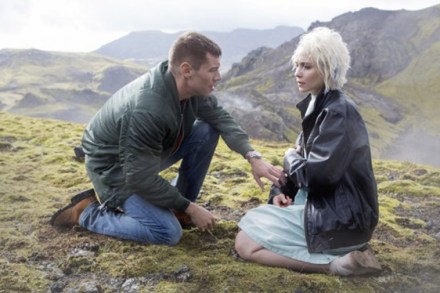
With 60 million international subscribers and a programme-making budget of about $3bn, Netflix is steamrolling most of the received wisdom about how we make and watch television. Already riding high on the success of prestigious hits like House of Cards and Daredevil, Netflix is expecting to bust new barriers with Sense8, whose 12 episodes became available to view today. The big news is that Sense8 marks the TV debut of Andy and Lana Wachowski, the enigmatic creators of the blockbusting Matrix movies, though riding a little less high of late following equivocal reactions to Cloud Atlas and Jupiter Ascending.

Are you being funny?

From our UK edition

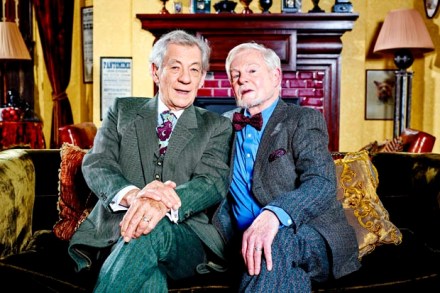
Monday saw the return of possibly the weirdest TV series in living memory. Imagine a parallel universe in which Are You Being Served? had starred Laurence Olivier, John Gielgud and Janet Suzman, and you might get some idea of what ITV’s Vicious is like. Alternatively, I suppose, you could just watch the thing and realise that no, you’re not drunk — you really are seeing Derek Jacobi, Ian McKellen and Frances de la Tour acting their socks off in a sitcom that would have been considered rather creaky in 1975. Jacobi and McKellen play Stuart and Freddie: a pair of gay actors who’ve been living together for decades despite the fact that their main mode of communication is to trade personal insults while the studio audience laughs dutifully.

Living history

From our UK edition

It has been a while since the BBC really pushed the boat out on the epic history documentary front. Perhaps to make amends it is treating us to possibly the most historian-studded, blue-screen-special-effects-enhanced, rare-documentastic, no-hyperbole-knowingly-under-employed series ever shown on television. Armada: 12 Days to Save England (Sundays, BBC2). Having clearly spent a lot of money here, the BBC is taking no chances with its demographic spread. For the laydeez, in the Ross Poldark role it has Dan Snow, captured somewhat gratuitously piloting his handsome yacht into the choppy waters of the English Channel. (Just like in 1588! Sort of.

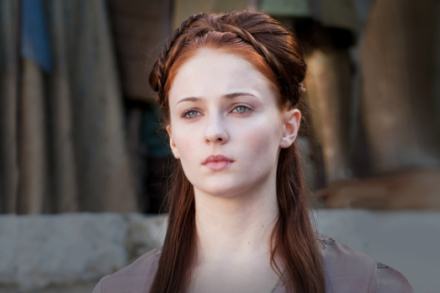
Game of Thrones has always been a vacuous banquet of sex and violence. Why are people suddenly outraged by it?

From our UK edition

If you’ve never watched Game of Thrones, it is a twee fantasy show in which men and women discuss politics at length, dance in Austen-like balls, and drink small amounts of wine by streams. Characters communicate as much by the angle at which they hold their fans or opera glasses as by the subtext of their artfully crafted bon mots. It has attracted a massive following for the cultured and intellectually stimulating qualities of the series, but there has been some outrage after the last episode featured what appeared to be a rape scene.

What Afghan soldiers really think – the same as us

From our UK edition

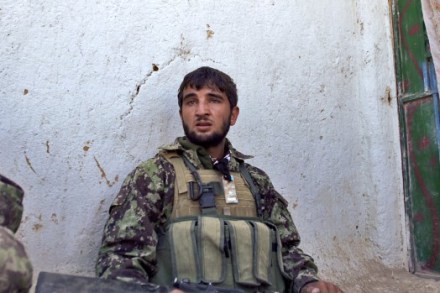
‘The NATO Commander in Eastern Afghanistan has said that this year 54 foreign bases have already been closed...’ Last December Channel 4 aired a documentary entitled Billion Dollar Base: Deconstructing Camp Bastion, the predominating ‘takeaways’ from which were a) what phenomenal amounts of money we’d spent on our eight-year operation in and around Helmand Province, and b) how unimpressed the Afghan brass were by what ‘little’ we were leaving behind. I found myself watching most of it through gritted teeth; but it was hard, nevertheless, not to have some sympathy for the incoming Afghan soldiery. A new documentary film has now taken up that very story. Tell Spring Not to Come This Year (dir.

The lying game | 14 May 2015

From our UK edition

My favourite scene in the first episode of the new series of Benefits Street (Mondays, Channel 4) — now relocated to a housing estate in the north-east, but otherwise pretty much unchanged — was the one where the street’s resident stoner and low-level crim Maxwell has to attend a court summons. Really, if the whole thing had been scripted and faked by the film-makers (as I’m sure it wasn’t: no need), it couldn’t have worked out better. With just 15 minutes to go before Maxwell’s court hearing seven miles away, his brother turns up to give him a lift on his motorbike. But there’s one small problem. Maxwell’s brother is still under the influence of the vast quantities of diazepam he’s carrying with him in his bag.

Channel 4’s The Vote reviewed: ‘complex, acute, very funny and oddly moving’

From our UK edition

He’s back on top form. James Graham has taken the unlikeliest setting, a polling station during the last hour of a general election, and turned it into a beautifully crafted comedy drama. The Vote at the Donmar was broadcast on Channel 4 last night at 8.30 p.m. We’re in a knife-edge London marginal constituency where a polling blunder has been uncovered. A wizened pensioner voted twice by accident. Once in his brother’s name, once in his own. Panic stations. Democracy is threatened. Kirsty, an excitable teller, tries to even up the score by persuading a relative who hasn’t voted to cast his ballot under her discreet direction. This he does. But he votes for the wrong party. Now two extra votes are needed.

Messy genius

From our UK edition

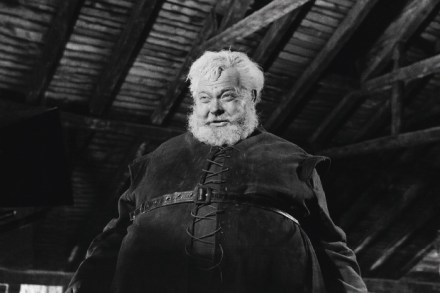
Orson Welles would have been 100 this month. When he died in 1985, aged 70, the wonder was that he had lasted so long. His bulk was so immense, his productivity so prodigious in so many areas, his temperament so exorbitant, that he seemed to have been part of the landscape for ever. Never was ruined greatness so visible. The other great auteurs maudits of this century, Abel Gance and D.W. Griffith, disappeared into silence and oblivion. Eisenstein simply died young. Not Welles. Every time he trundled insincerely through some commercial for cheap liquor (he, the great bon viveur; he, for whom the very word commercial was an insult when applied to film), he sent a pang through the world’s heart.

Not much cop | 7 May 2015

From our UK edition

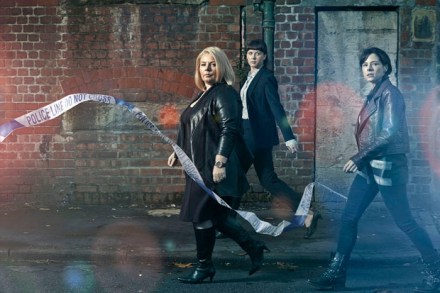
With Clocking Off, Shameless and State of Play among his credits, Paul Abbott is undoubtedly one of the most respected TV writers in Britain. Not even his biggest fans, though, could argue that he’s one of the subtlest. On the whole, whatever his characters are thinking, they’ll also be saying — and generally in a way that proves what no-nonsense salt-of-the-earth types they are. Nor do his dramas ever suffer from a shortage of incident, much of it pitched somewhere between the bracing and the lurid. It’s an approach that Abbott evidently felt no need to change now that he’s writing a cop series. No Offence (Channel 4, Tuesday) began with DC Dinah Kowalska coming back in a taxi from a disappointing evening out with her boyfriend, who was on crutches.

Aussie rules | 30 April 2015

From our UK edition

Some years ago I paid a visit to the site of the Gallipoli landings because I was mildly obsessed with the Peter Weir movie and wanted to gauge for myself how horrible it must have been. En route I met up with a young Australian who was training to be an actor (in my false memory it was the unknown Russell Crowe) and together we clambered up the near-cliff-like slopes in the blazing sun, imagining the Turks sniping and rolling grenades at us from the trenches on top. That anyone could have survived at all, we agreed, was a miracle.

Target practice

From our UK edition

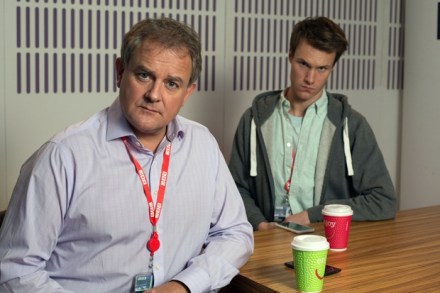
Ever since the days of Tony Hancock, many of the best British sitcoms — from Dad’s Army to Fawlty Towers, Rising Damp to The Royle Family — have featured a middle-aged man convinced that he’s the only sane person left in an increasingly mad world. The frankly subversive twist in W1A (BBC2, Thursday) is that the middle-aged man in question might well be right. As the BBC’s Head of Values, Ian Fletcher (Hugh Bonneville) is surrounded by any number of jargon-spouting younger colleagues whose apparent aim is not to let anybody realise how stupid they are — or at least it would be if they realised it themselves.

Campaign kick-off: 20 days to go

From our UK edition

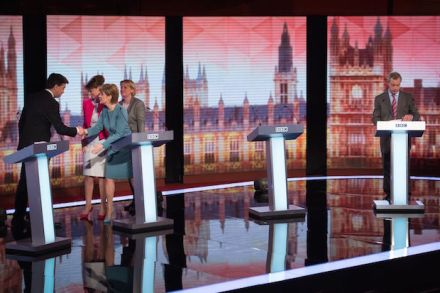
The third week of the election campaign looks set to end with a day of reflection. Last night’s opposition leaders’ debate provided plenty of things to ponder, not least how messy any post-election coalition negotiations will be. To help guide you through the melée of stories and spin, here is a summary of today’s main election stories. 1. Nicola + Ed According to the snap poll, Ed Miliband ‘won’ last night’s TV debate, followed closely by Nicola Sturgeon and then Nigel Farage. That says all you need to know about where the action was. As James Forsyth summarised last night, Miliband’s gamble paid off.

Listen: The Spectator’s verdict on the opposition leaders’ TV debate

From our UK edition

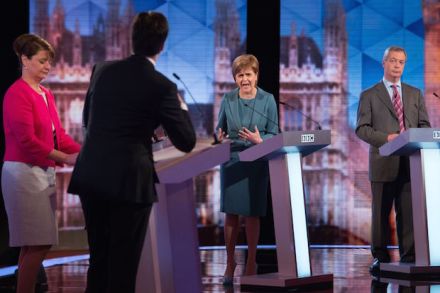
Ed Miliband managed to surpass expectations in tonight's opposition leaders' debate. In this View from 22 podcast special, Fraser Nelson, James Forsyth, Isabel Hardman and I discuss the final televised debate with the party leaders — minus David Cameron and Nick Clegg. Did Nigel Farage target  his core base once again? How successfully did Nicola Sturgeon deal with Ed Miliband's attacks? And did Natalie Bennett and Leanne Wood manage to have their voices heard?

Why Ed Miliband is taking part in tonight’s TV debate

From our UK edition

Tonight Ed Miliband takes one of the big risks of the campaign. He debates with Nicola Sturgeon, Nigel Farage, Leanne Wood and Natalie Bennett. All of these leaders will be aiming to score points off Miliband. Those close to the Labour leader give several reasons for why he is taking part tonight. They argue that he does well whenever he’s given the chance to speak to voters directly. But the main reason for Miliband’s doing this debate is the Scottish situation. Labour feared that without Miliband present, this debate would have turned into a clash between Sturgeon and Farage — which would have benefitted the SNP north of the border.

Campaign kick-off: 21 days to go

From our UK edition

Now that all the manifestos are in the public domain, we are back onto more conventional campaign territory. The big event of today is at 8pm this evening, when the ‘opposition leaders’ will debate each other on the BBC in the final televised debate before polling day. To help guide you through the melée of stories and spin, here is a summary of today’s main election stories. 1. Here come the insurgents Tonight’s TV debate represents an opportunity for the smaller political parties to give Ed Miliband a good kicking. Nicola Sturgeon, Nigel Farage, Natalie Bennett and Leanne Wood will all relish the chance to turn on Miliband — the only mainstream party leader taking part.

Deadly, not dull

From our UK edition

Blimey, there has been so much good stuff to watch on telly of late: the Grand National, the Boat Race and the Masters; The Island with Bear Grylls; the final of University Challenge (bravura performance from Caius’s Loveday, though how the winning Cambridge team’s hearts must have sunk when they realised that the public intellectual chosen to present this year’s prize was that literary equivalent of a Dalí melting clock poster on a pretentious fifth former’s bedroom wall — Will Self); and, of course, the first episode of the new season’s Game of Thrones (Sky Atlantic, Monday). I’m assuming you’re all on board with Thrones, now, and that it doesn’t need any introduction.

Ruth Davidson, Scotland’s Iron Lady, could be just what the Tories need

From our UK edition

Nicola Sturgeon has been described as a rock star politician. In Tuesday’s STV debate she looked like one who is suffering from second album syndrome. Having impressed a UK-wide audience in the seven-leader ITV debate last week, her reception at the Scottish version was far more muted, with some instant polls suggesting a narrow victory for Scottish Labour leader Jim Murphy. A dispassionate observer might place Sturgeon third, behind Murphy and an impressively plucky Ruth Davidson. It takes something to stand before a Scottish audience, where the Tory brand isn’t just toxic but radioactive, and earn applause for making the case to reintroduce prescription charges.