Turkey

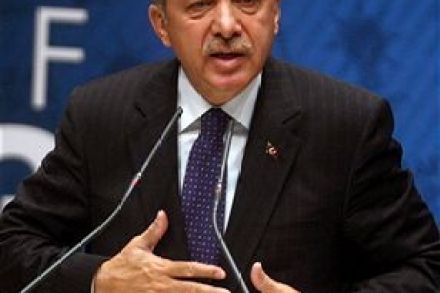
Turkey’s agony – how Erdogan turned a peaceful protest into a violent nightmare

From our UK edition

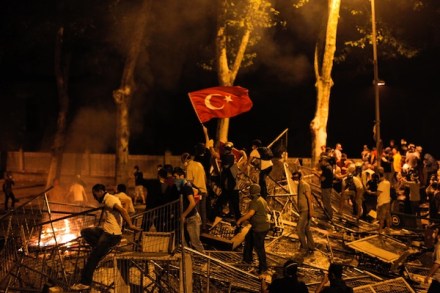
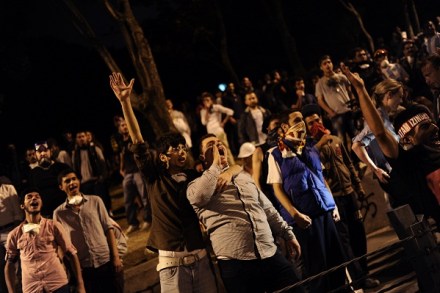
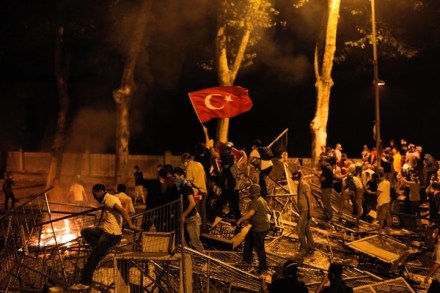
  Istanbul By now, everyone has heard of the brutal suppression of protests all over Turkey, which began with a peaceful sit-in in Istanbul to protect a hapless apology for a park from demolition. Right by the city’s unofficial centre, Taksim Square, Gezi Park had been slated to become yet another one of the ruling AKP’s signature Ottoman-cum-Disneyland construction projects. It was hardly much of a park, by London standards, but it was one of the last remaining places in the area with a few trees and a bit of room to stroll around. The protesters found the idea of losing that tiny refuge from Istanbul’s urban chaos unbearable.
Erdogan’s immediate dilemma

From our UK edition

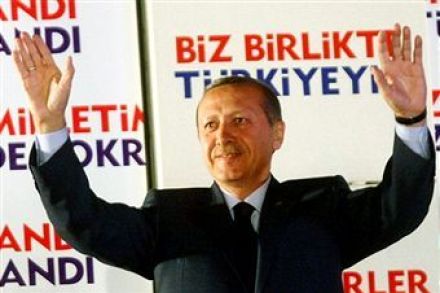
It seems that everyone won the election that was held in Turkey this weekend. Prime Minister Erdogan's Justice and Development Party (AKP) officially won, taking some 50 per cent of the vote, which is enough to secure him a third term in office, but not sufficient to enable his party to make changes to the constitution. As the BBC's Gavin Hewitt notes, ‘Prime Minister Recep Tayyip Erdogan of Turkey stands out. He is genuinely popular. He is socially conservative, but he has tapped into the aspirational mood of Turkey’s middle class.’ But although the opposition party, Republican People's Party (CHP), lost the election they actually polled about a quarter of the votes, the best result it has had for three decades.

The tragedy of Taksim square

From our UK edition

First he set the police on his own people, now 'democratic' Prime Minister Erdogan is refusing even to meet them. The peace talks he promised are being held not with protestors themselves but with a group of official mediators the protestors have never met. In the days to come, Erdogan will try to persuade the world that he is battling extremists, but as Claire Berlinski points out in her heart-breaking piece in this week's magazine — written from the centre of the riots in Istanbul last night — the demonstrators were until recently very ordinary citizens from all walks of life, brought together in peaceful protest.

Turkey redux

From our UK edition

It must be boring for you too, returning to the same complaint, over and over again. Report on the BBC’s 10 O’Clock News about the trouble in Turkey. Not a single mention, in the three minutes, of the words Islam, or Muslim, or Islamification. You had to infer everything. Without prior knowledge of what was going on, you would have been utterly mystified as to why people were unhappy. You noted that all of the protestors were young, middle class, educated and the women fashionably unveiled; well spoken, good English and so on. And you would have wondered then who the alleged ‘50 per cent’ who support the Prime Minister might be; what are they dressed like? Is this an argument about poverty, or what? Not a mention of the causes.

The mystery of modern Turkey

From our UK edition

What does Turkey actually think? That's an issue that has been occupying many Europeans, as the vital NATO ally heads to the polls. On the one hand Turkey has in the last 10 years become more like the West: globalised, economically liberal and democratic. Turkey’s economy is now the world’s 16thlargest, the sixth largest in Europe. But, at the same time, questions arise about its recent policies: will it consolidate its democratic achievements, or is it threatened by a populist tyranny or even authoritarian rule? Certainly, many fear that Prime Minister Recyp Erdogan's behaviour is moving Turkey away from the West, both in terms of internal policy and external alignmen.

The Spectator’s Notes | 6 June 2013

From our UK edition

What a strange country this is. On the same day that we celebrated the 60th anniversary of the coronation, a mystical rite founded for the ancient kings of Israel and continuous here for a thousand years, our almost equally venerable House of Lords voted to undermine the basis of the oldest of all human relationships recognised in law. The new Archbishop of Canterbury spoke very well on both subjects. In Westminster Abbey, he praised the Queen’s ‘servant leadership’, and reminded the congregation that Jesus ‘did not count equality with God a thing to be grasped, but humbled Himself and took the form of a slave’. But in Parliament, equality was greedily grasped.

What’s eating Turkey

From our UK edition

  Ankara ‘Islam, politics, economics — choose two’ is a great line, said by one of my Turkish students, and it would make a good exam question. Tayyip (the name means ‘very clean’ in Arabic — cf. ritual washing) Erdogan (meaning ‘strong hawk’, a Turkish nationalist reference) came to power in 2002 with a very good press. This was to be what the world wanted — a Muslim version of German or Italian Christian Democracy — and for years he gave it that. The rival parties destroyed themselves in silly bickering and corruption, and Erdogan’s party was very successful, with reforms in health and housing that improved the lives of ordinary Turks no end.

How social media helps authoritarians

From our UK edition

Have you heard? Do you know? Are you, as they say, ‘in the loop’? When the Mail on Sunday said a ‘sensational affair’ between ‘high profile figures’ close to Cameron had ‘rocked’ No. 10, did you have the faintest idea what it was talking about? I did, but then I’m a journalist. Friends in the lobby filled me in on a story which had been doing the rounds for months. I even know which law stopped the Mail on Sunday  following the basics of journalism and giving its readers the ‘whos’, ‘whats’, ‘whens’, ‘whys’ and ‘hows’. (Although with most affairs the ‘whys’ are self-evident.

Is it time to aid Turkey’s protestors?

From our UK edition

Is it now time for William Hague to send money, and possibly arms, to the rebels now participating in what we might call a Turkish Spring? There have been violent demonstrations, clashes with police, petrol bombs thrown and the like. The protestors are largely from Turkey’s most secular cities and regions and include gay rights supporters, students, professionals, football supporters (?), women’s groups, journalists and the like. Their objection, principally, is the growing Islamification of what was, until comparatively recently, a proudly secular and fairly modern state.

Why Greece isn’t recovering: the view from a cruise ship

From our UK edition

This column comes to you from the cruise ship Minerva in the Greek port of Piraeus. Why I’m aboard is a story for another day — and let me admit up front that, as financial-crisis reportage goes, observations provoked by a Homeric vista of islands and cocktails on the poop deck are unlikely to match Newsnight’s Paul Mason choking through tear gas outside a burning Athens bank. But still there are parables to be trawled from the placid Aegean waters. As the anti-austerity bandwagon gathers momentum, the Greeks seem to be in deep denial about the other element of the recovery equation.

Stopping Assad

From our UK edition

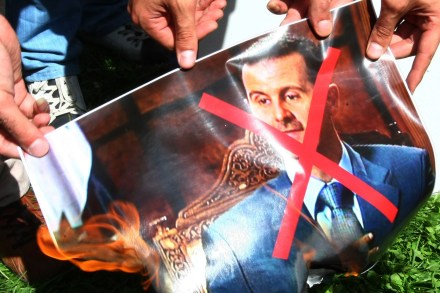
The situation in Syria grows worse by the minute. President Assad seems to have taken the UN Security Council’s deadlock as carte blanche to launch an all-out attack on Homs. Russia looks like she wants to mediate, while Turkey is preparing a new initiative with countries who oppose the Syrian government, a sort of anti-Assad group. Meanwhile, the Gulf States have expelled all Syrian ambassadors.   The chances of a ceasefire are low, as are the prospects of a military intervention. Russia has an interest in persuading Assad to abdicate, but can Assad be persuaded? Syria still has friends in Iraq and Iran, where the governments are supporting the regime both materially and financially.

Uncertainty reigns in Syria

From our UK edition

The Syrian situation is worsening by the day. Now the Arab League has pulled back its monitors in recognition of their failure to ease the violence. Foreign Secretary William Hague has said he is ‘deeply concerned,’ while the Gulf states are pushing for the whole mater to be referred to the UN Security Council. But the chances of a ceasefire and the start of a transition are low. The Russian government is growing tired of Bashar al-Assad but does not want to condone any kind of intervention, which they think is likely if the matter is referred to the UN Security Council. Russia still regrets backing the Libya resolution, believing they were hoodwinked by the West into allowing a military intervention against Muammar Gaddafi.

Turkish anger, French parochialism, British benefit

From our UK edition

The relationship between Turkey and France — which started with the alliance between Francis I and Suleiman the Magnificent — is in precarious territory following the French Parliament's decision to ban denial of the Armenian Genocide. Turkey's moderate Islamist government has taken as hard a line on the issue as previous Kemalist governments did, and has announced, in response to the French move, that Turkey would halt 'all political consultations, joint military activities and manoeuvres.' Not content with a formal rebuke, Turkish Prime Minister Recep Tayyip Erdogan has sought to make the conflict personal; claiming (falsely) that Sarkozy's father served in Algeria in the 1940s and would have direct knowledge of 'massacres' committed there by French troops.

Stopping Maliki’s coup

From our UK edition

The year is ending not with a successful US withdrawal from Iraq — as President Barack Obama claims — but with what amounts to a coup d'etat by the country's Shiite prime minister (and former ally of the US) Nouri al-Maliki. Less than 24 hours after the last US soldier left Iraq, the country's Sunni vice-president Tareq al-Hashemi was wanted on charges that he led death squads, in a case most observers think could reignite the sectarian slaughter of 2006-07. Violence in Iraq has subsided since 2006-07, when Sunni insurgents and Shiite militiamen killed thousands of civilians each month — but, without U.S. troops to act as a buffer, many Iraqis now fear a return to those days.

Sorry, Mr Gul, but Turkey won’t be joining the EU any time soon

From our UK edition

It's not going to happen. That's what everyone says who knows anything about the subject that we're going to be hearing quite a bit about this week: Turkey's membership of the EU.  I've heard it from someone who works for William Hague, from a political editor, from a diplomat. Which makes this week's state visit by the Turkish president, Abdullah Gul, on his three-day state visit to Britain seem pretty well beside the point.  The British government is right behind Turkey's bid for EU membership, no country more so. David Cameron and William Hague have if anything been even more effusive in their support than Tony Blair and Jack Straw before them — the duo who managed to ensure that Turkey became officially a candidate nation for EU membership.

Do Muslims vote Islamic?

From our UK edition

The electoral success of Tunisia's Islamist Ennahda party and the likelihood that the Muslim Brotherhood will do well in Egypt's forthcoming elections has heightened fears in many quarters. Will Islamic parties always dominate such contests in the Middle East? The electoral success of the Islamic Salvation Front in Algeria, the Justice and Development Party in Turkey and Hamas in Palestine suggest the answer is yes. But looking at a broader data set – that is, the entire range of elections in which Islamic parties have taken part – reveals a different picture. Islamic parties have stood for elections in more than 90 elections in more than 20 countries. But as scholars Charles Kurzman and Ijlal Naqvi argue in a fascinating study entitled "Do Muslims Vote Islamic?

Relations between Turkey and Israel deteriorate

From our UK edition

Last summer, I spoke to Turkey’s foreign minister, Ahmet Davutoglu, about the Mavi Marmara row. Davatoglu was not only animated, but clear on what he thought. Unless Israel apologised, he said, the “relationship would change”. Now, Turkey has reacted to the publication of a UN report (which insists that Israel's naval blockade of Gaza was legal but that Israeli soldiers used unreasonable force) by following through on some of Davutoglu's threats. Many military agreements between Turkey and Israel have been suspended and the Israeli ambassador has been expelled. The Turkish Prime Minister, Recep Erdogan, has also warned that relations will disintegrate further unless Israel offers an apology, pays compensation and removes the embargo against the Gaza Strip.

Bitter Turkish delights

From our UK edition

Turkish accession to the EU is apparently no more than a dream of those who desire it at present, but it remains a point of contention across Europe. The British government, for instance, are in favour of enlargement, believing Turkey’s economy to be essential to Europe’s continued economic strength. Accession would also hamper the goal of political integration in the EU, which is expedient to Britain. Not everyone in Britain shares the government’s unqualified enthusiasm for Turkey. The Home Affairs Committee has issued a report this morning, criticising aspects of the government’s policy and insisting on careful management of accession.

The end of Assad

From our UK edition

After weeks of violence, the end of the Assad regime is now inevitable. It may take weeks, months or years, but the kind of damage that President Assad has inflicted on his domestic credibility and international standing cannot be repaired. The country's two most populous cities, Aleppo and the capital Damascus have remained calm, but now protesters are defying the army. More than 300 members of the governing party have resigned and publicly condemned the crackdown. Crucially, the army's loyalty is now in doubt. It is said some military units have refused to quell the protesters in Damascus.

Meanwhile, in Libya…

From our UK edition

The death of Osama Bin Laden may be a very arresting punctuation mark in the conflict against tyranny — but the conflict continues nevertheless, not least in Libya. The latest news from the country is that the rebels are maintaining their fragile hold on the port town of Misrata, although Western agencies are still struggling to send in aid and relief supplies. "We have seven ICU beds and eleven cases," is how one hospital worker puts it to Channel 4's Alex Thomson. "What is Nato doing? What is the world doing? If any more people come here they will die.