Trigger warnings

Do Oxford students really need trigger warnings?

From our UK edition

It is freshers’ week on campus. Brand new students get to make friends, get drunk and find their way around university. The excitement culminates with freshers' fair, a once-in-a-lifetime opportunity to find your tribe by joining everything from the paragliding club to the Mao appreciation society. Who cares if you never attend a single meeting? For one brief moment, you can flirt with the person you might become. Freshers’ fairs offer new students a glimpse of the intellectual and political possibilities on offer at university. But sadly not at Oxford. This year, Oxford University’s freshers’ fair comes with a big fat trigger warning. Apologies. I should of course have prefaced that sizeist statement with ‘Trigger Warning: body shaming.

Guston is treated with contempt: Philip Guston Now reviewed

From our UK edition

Philip Guston is hard to dislike. The most damning critique levied against the canonical mid-century American painter is that he is too uncontroversial, his appeal too broad, his approach altogether too winsome. None of that stopped the team behind Philip Guston Now – a travelling mega-survey of his work, which will reach Tate Modern in 2023 – from announcing otherwise. In 2020, the year the show was due to open, the curators announced that in light of the ‘racial justice movement’, the artist’s works might now legitimately be read as racist, and the show could not go forward as planned. This was and is quite obviously nonsense. The works in question are marshmallow-like renderings of Klansmen in absurd, mundane scenes.

Hogarth framed

Visiting public art galleries has become a dangerous undertaking — at least if one wishes not to be accosted by ludicrously woke signage and unnecessary trigger warnings. In the past, one might have, justifiably, seen warnings before entering a room exhibiting, say, the garish and pornographic sculptures and photos of Jeff Koons going hard at it with Hungarian-Italian “actress” and part-time politician Ilona Staller, aka Cicciolina. Today, such warnings are found outside galleries exhibiting not such ephemera but the greatest works in the Western canon. Last autumn’s Titian show at the Isabella Stewart Gardner Museum in Boston warned visitors before entering that “Titian: Women, Myth and Power explores themes of sexual assault and violence.

Hogarth

Why trigger warnings don’t work

The science is in, but don’t expect that to change anything. According to at least 17 recent studies, trigger warnings — those advisories posted ahead of content some readers may find distressing — not only fail to alleviate suffering in the emotionally disturbed but may actually induce greater trauma in those individuals. There are, to date, no studies that indicate trigger warnings work to their intended purpose. They were dreamed up in the 1970s after psychologists began to diagnose a new condition, post-traumatic stress disorder, in Vietnam War vets. But trigger warnings only reached popular consciousness in the 2010s, when feminist blogs used them ahead of content about sexual violence.

trigger
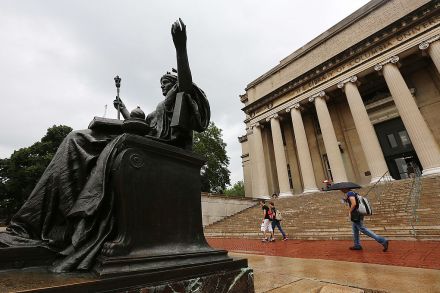
columbia

The problem with Ovid

'The Rotation Method’ is one of the most amusing sections of Kierkegaard’s Either/Or. The second-most famous melancholy Dane has some good advice for dealing with irritating absurdity: cultivate arbitrariness when confronted with flagrant examples of it. There is someone whose conversation you find insufferable. What to do? Kierkegaard’s narrator has some tips: ‘I discovered that he perspired copiously when talking. I saw the pearls of sweat gather on his brow, unite to form a stream, glide down his nose and hang at the extreme point of his nose in a drop-shaped body.’ There is much about cultural life today that can be profitably approached with the Rotation Method.