Travel writing

The short, eventful life of George Forster – explorer, naturalist and revolutionary

From our UK edition

George Forster (1754-94), the German-Polish polymath, was in every sense a late Enlightenment prodigy. He was just ten years old when he accompanied his father, Johann Reinhold, on a scientific expedition to Russia and still in his teens when he sailed with him on Captain Cook’s epic three-year voyage to Antarctica and the Pacific islands. The ensuing book, A Voyage Round the World (1777), largely written by George, became a classic. It established him as one of the most significant naturalists and travel writers of the age, leading to him being elected a Fellow of the Royal Society aged just 22. He was also a very young polyglot, having learnt German, French, English and Russian by the age of 12. (He later added Dutch, Italian, Spanish, Portuguese and Swedish, as well as Latin.
Riddled with contradictions: the enigma of Jan Morris

From our UK edition

Jan Morris was driven by almost super-human levels of energy and ambition, producing more than 40 books as well as news and travel articles, introductions, interviews, reviews and essays, travelling incessantly and taking on every job that was offered. That’s as far as I can go without a pronoun, because of course Morris’s life is divided into two parts. For the first half he was James, for the second she was Jan. James Morris was born in 1926, aware from early on that she was female, trapped in a male body. The transition to Jan, made in the early 1970s, remains at the heart of our fascination with Morris.

Camus comes to America

The 20th-century French writer Albert Camus remains a living author, a permanent contemporary, in a way that the far more dogmatic and ideological Jean-Paul Sartre does not. The latter provided a caricature of “existentialism,” nihilism dressed up as absolute freedom, beholden to no limits and no enduring truths. In contrast, the author of The Stranger and The Plague rejected Sartre’s facile nihilism, as well as his repellant accommodation with murderous messianism, typically conveyed in fashionable leftist nostrums. The more hopeful side of Camus comes through in his recently re-released Travels in the Americas: Notes and Impressions of a New World.

camus

Fresh tracks in ancient territories

By complete fluke, my delayed shuttle bus rose through the Coast Mountains at dusk. I pressed against the window, outing myself as a tourist amid seasonaires snoozing through another spectacular sunset. Hot pinks and deep purples streaked between towering pines, transforming the outline of snow-capped peaks. I’d crash with local friends for a month, with support from Vail Resorts to explore stories beyond the slopes. Tales of Whistler Kids ski school were already family lore – I’d once visited as a 10-year-old, buzzing to see snow. Stuck at Vancouver International, I’d pulled up a chair at Salmon n’ Bannock on the Fly – Canada’s only Indigenous restaurant in an airport. As travelers, how often do we pause to ask whose land we’re actually on?

Lisbon and the Algarve: the spots I find hard to share

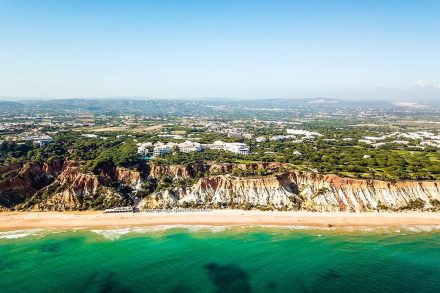
World-class golf, more than 300 days of sunshine a year, flavorsome local seafood, excellent wines and more than 1,000 miles of Atlantic Ocean coastline. There are countless reasons to add Portugal to your bucket list, not least that United Airlines has announced direct flights from New York to Faro, starting in 2025. Me, I might have been living in Lisbon on and off for four years, but I’m continually surprised by new discoveries, from quirky bookstore openings in central Lisbon (Salted books, I love you) to secluded coves or gnarly rock formations in the Algarve’s emblematic places such as Praia do Marinha.

lisbon portugal

Is Nato ready for war with Russia?

From our UK edition

38 min listen

Welcome to a slightly new format for the Edition podcast! Each week we will be talking about the magazine – as per usual – but trying to give a little more insight into the process behind putting The Spectator to bed each week. On the podcast: TheSpectator’s assistant foreign editor Max Jeffery writes our cover story this week, asking if Nato is ready to defend itself against a possible Russian invasion. Max joined Nato troops as they carried out drills on the Estonian border. Max joins us on the podcast along with historian Mark Galeotti, author of Putin's Wars. (00:55)  Then: Lionel Shriver talks to us about the sad case of Jennifer Crumbley, the mum who's just been convicted of manslaughter – for her son carrying out a school shooting.

Pat Yale follows her hero across Turkey

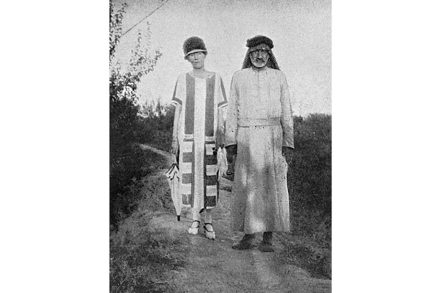
Green-eyed Gertrude Bell belongs in Charles Doughty’s Travels in Arabia Deserta, that slab of velvety antique that enthralled the English (they were not yet British) in the love-affair phase of their relationship with the Arabs. County Durham-born to a wealthy industrialist father, Bell (1868-1926) was a key player when the Powers tried ineptly to mould the Middle East, as the Ottoman Empire crumbled. She is well covered in the literature and appears in a large hat alongside Churchill in conference photographs. But as Pat Yale announces in this new book: “Her time in Turkey has been largely overlooked.” Bell traveled extensively in that country before the first world war (starting in 1899) and in its aftermath.

Yale

Road trips out of Lisbon: a slice of tranquilidade

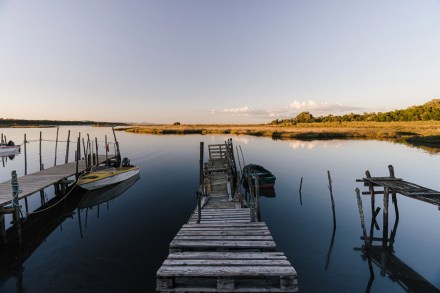
Forget Barcelona. Say sayonara to San Fran. And so long, London. Post-Covid, Lisbon has become a hub for the creative, hungry and cosmopolitan. A throng of new restaurants, wine bars and buzzy co-working spots has formed a playground for the young and ambitious.  They’re squeezing every last drop out of their free time, too, joining the tourists in thumping nightclubs before escaping to beautiful  beaches. But plenty of weekend visitors don’t know (or have time to discover) that the city is flanked by bucolic countryside, dotted with world-class hotels and agriturismos. A forty-minute drive can take you to pristine white sands, enchanting pine forests, retro beachfronts and sprawling national parks. Next time you’re in town, tack a road trip onto your city break.

road trips lisbon

The dark side of the Himalayas

From our UK edition

How best to write a book about the Himalayas when Mount Everest has been reduced to just another tick-off on the bucket lists of the wealthy? We all remember the pictures of adventurous parka-clad westerners queuing up to scale the summit in 2019. The world’s most inaccessible and inhospitable areas have now become the target of an extreme form of charter tourism. Not even the outbreak of Covid stopped people forking out more than $10,000 to join the queue. In High, the Norwegian writer and social anthropologist Erika Fatland traverses the mountain range, straying from the well-trodden path of privileged tourism onto the Silk Road less travelled.

A poet finds home in a patch of nettles

From our UK edition

Towards the end of a long relationship – ‘resolved to have a conversation about the Future, which meant Separating’ – Nancy Campbell’s partner suffered a stroke. Campbell’s life then became a hell of hospital visits, supporting and fearing for the brilliant Anna, an intellectual who worked with virus analysts in Moscow, reduced by brain insult and aphasia to a kind of infancy. Thunderstone is the story of Campbell’s response to this crisis. Her diary extracts jump from Anna’s stroke in 2019 and her slow healing, to Campbell’s own new life, which begins when Anna is strong enough to be encouraged to move on, from June to September 2021. Campbell is a poet and travel writer, with many friends and contacts.

A mighty river with many names: adventures on the Amur

From our UK edition

The Amur is the eighth or tenth longest river in the world, depending on whom you believe. The veteran travel writer and novelist Colin Thubron reckons 2,826 miles the best estimate. In these pages he makes an arc-shaped journey from source to mouth: Mongolia to the Pacific via Russia and China. The author travels on horseback, buses, pontoon rafts, boats, trains and in taxis and the vehicles of strangers. Starting in late August, he breaks off in Khabarovsk, the largest city on the Amur (population 500,000), returning home to London when the river freezes. As book and journey progress, the Amur changes its name and gender.