Trans

Harry Potter and the strange absence of J.K. Rowling

From our UK edition

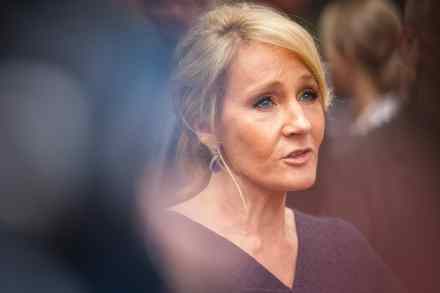
Harry Potter returned to Hogwarts this weekend for a 20th anniversary special. He was joined in the Gryffindor common room by Hermione Granger and Ron Weasley, but not – controversially – the woman who created it all. JK Rowling’s conception of Hogwarts, a school of witchcraft and wizardry, has become an institution. The books have sold more than 500 million copies worldwide, while the film series grossed almost $10 billion at the box office. Not a bad return for Warner Brothers, who bought the rights to the first four books for a reported £1 million. But Rowling’s foray into the trans debate has created a headache for Warner Brothers. Let’s be clear: she has said nothing that diminishes transgender people like me.
Gender is contentious. The BBC is pretending it isn’t

From our UK edition

The BBC has produced its annual 100 Women list, a showcase for women who have done interesting, important things. There’s a lot to like about this year’s list: half the women on it come from Afghanistan; some of them, tellingly, can’t be pictured for their own safety. Perhaps if fewer British resources had been deployed getting Pen Farthing's dogs out of Kabul in the summer, some of those women wouldn’t live in fear for their lives. But that’s another debate. There’s something else interesting about the BBC’s 100 Women, which says something about the Corporation’s ongoing struggle for impartiality. At least two of the people on the 100 Women list were born male and now identify as transwomen.

In praise of Stonewall

From our UK edition

This morning saw a profound breakthrough in the trans debate. I say that on the basis of an interview Nancy Kelley, Stonewall's CEO, did with the BBC’s Emma Barnett on Woman’s Hour.  What’s important is not really anything that Kelley said, though some of that was indeed interesting and I’ll come to it in a second. What matters is that the interview took place at all, since that constitutes a significant shift in the way Stonewall does its work. Stonewall's instinct has been to largely avoid mainstream media and other political debates about its work on trans issues that is now its primary focus.

Jess Phillips and Labour’s ongoing women problem

From our UK edition

Last week, Intelligence Squared put on a debate called ‘Is Labour unelectable?’ Unsurprisingly, Labour MP Jess Phillips spoke against the motion – yet in doing so she managed to prove exactly why Labour are in fact hopelessly sunk. The key moment was when Spiked’s Ella Whelan challenged Phillips for having quote tweeted and then promptly deleted an article that was supportive of Kathleen Stock, the philosophy professor hounded out of her job for her audacious view that women deserve some of their own spaces.  'This is worth a read. Thoughtful and gentle,' said Phillips on Twitter, though apparently she quickly decided it wasn’t worth a read and removed the tweet. Some accuse Phillips of being a typical politician, fickle and lacking conviction.

Could the ‘Kathleen Stock’ amendment backfire?

From our UK edition

The hounding of Kathleen Stock – who left Sussex university following a concerted campaign against her by trans rights activists – was a disgraceful indictment of freedom of speech on campus. But one remedy for preventing a repeat – the so-called 'Stock amendment' to the Higher Education (Freedom of Speech) Bill, now passing through the Commons – isn't the answer. Impetuous legislation is normally bad legislation; unless we think very carefully, we may end up with something ineffective or even counter-productive. At first glance, a simple ban on students piling in to demand the sacking or departure of professors on account of their politics or teaching might look good.

The persecution of Marion Millar and Kathleen Stock

From our UK edition

Marion Millar’s nightmare is over. The Scottish accountant facing prosecution for ‘transphobic’ tweets has been told the Crown is discontinuing its case against her. Millar stood accused of acting in a threatening or abusive manner and in a way aggravated by prejudice relating to sexual orientation and transgender identity. At issue were a series of tweets which, it was claimed, were of a ‘homophobic and transphobic nature’.

Dave Chappelle’s show is a rip-off

From our UK edition

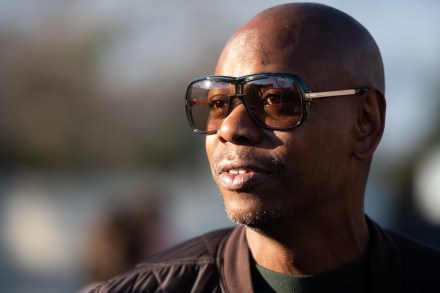
Towards what seemed like the halfway point of his show in London last night, Dave Chappelle announced to the crowd he was going to tell us something he was refusing to tell the media.  He wanted us to know, he said while looking sadly at the floor, that his quarrel was not with the gay or the trans communities . No, no. Looking up and raising an index finger, he explained: 'I’m fighting a corporate agenda that needs to be addressed.' Thinking we still had another hour of the show to go, we cheered. ‘You fight those corporate vampires, Dave!’ we thought. He then let us know, whenever it was possible, that we should be kind to one another. Very shortly after that he raised his thumbs aloft and walked off stage: 45 minutes. Friday night tickets are £160.

Why liberals must stand with Kathleen Stock

From our UK edition

I know what it feels like to be bullied and vilified for expressing views with which, eventually, many right-minded people end up agreeing. I am talking, of course, about transgender ideology and the case of Professor Kathleen Stock which this week was belatedly picked up by the mainstream press. In short, a group of University of Sussex students started a campaign for Stock to be sacked on the spot, claiming she was ‘espousing a bastardised version of radical feminism that excludes and endangers trans people’. The group – a collection of poundshop Antifas – said Stock was a danger to transgender people, arguing: ‘We're not up for debate. We cannot be reasoned out of existence.

Was this volunteer cancelled by Childline for his views on gender?

From our UK edition

When Liz Truss confirmed that the government was committing itself to banning LGBT conversion therapy, there was some bemusement: is the middle of a pandemic really the time for this? The decision was announced back in May, and Truss – who serves as equalities minister – conceded that 'many forms of the practice are already prevented under current legislation'. But this 'new ban', she added 'will ensure that it is stamped out once and for all.' Let’s be clear: coercive and abusive practices need rooting out. But if existing laws doesn’t work, will new ones really help? Or could they have unintended consequences? James Esses – a trainee psychotherapist – worried that normal therapeutic practices could get caught in the net.

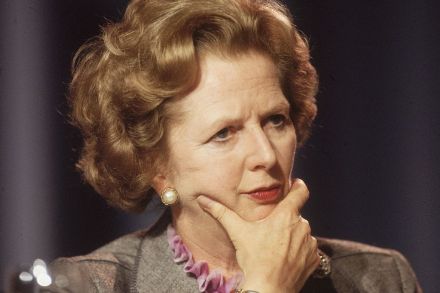
How Margaret Thatcher helped inspire my transgender journey

From our UK edition

The gender debate has generated plenty of heat, but as a trans person – and keen supporter of the Conservative party – it's clear to me that amidst this discussion there are plenty of myths circulating. One that troubles me most – as the first trans person to stand for the Tory party in the European elections in 2019 – is the idea that trans people are all radical left wingers. This couldn't be further from the truth. Trans people come in all shapes and sizes, with all sorts of backgrounds and all kinds of political affiliations. Of course, I can't speak for all trans people. But through my charitable and LGBT+ support work, I have interacted with thousands of trans adults and young people.

New Zealand’s transgender debate is turning nasty

From our UK edition

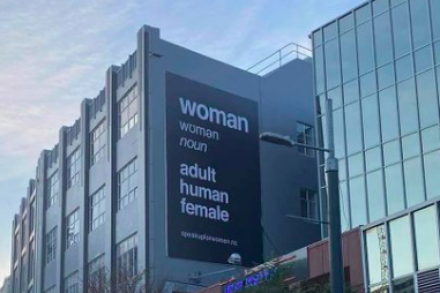
New Zealand was the first country in the world to give women the right to vote in parliamentary elections. But now, 120 years on from that landmark moment for female equality, Kiwi women are fighting a rear-guard campaign to defend the meaning of the word 'woman'. As well as dealing with the fallout from the pandemic, Jacinda Ardern’s Labour government has been busy prioritising a bill that would effectively allow anyone to become a woman just because they wanted to. While Ardern is being cheered on by the transgender lobby, it has fallen to Speak Up for Women, a grassroots campaign group, to speak truth to power. Rather predictably, politicians seem unwilling to listen; worse, some are determined to stop anyone else hearing what these women have to say.

What’s the problem, ladies and gentlemen?

From our UK edition

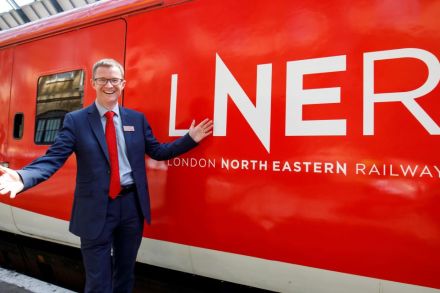
Picture the scene. You're on a train when the following message comes over the tannoy: 'Good afternoon, ladies and gentlemen, boys and girls.' Are you offended? One passenger travelling on a London North Eastern Railway (LNER) train was. 'So as a non-binary person this announcement doesn't actually apply to me so I won't listen,' the commuter wrote. Remarkably, LNER didn't simply ignore or dismiss this complaint. It apologised: How scared of the trans mob must LNER be to act so swiftly? 'I’m really sorry to see this, Laurence, our Train Managers should not be using language like this, and I thank you for bringing it to my attention. Please could you let me know which service you are on and I will ensure they remain as inclusive as we strive to be at LNER.

What does the trans debate mean for widowers like me?

From our UK edition

I once asked a hospice nurse to describe her job and was surprised when she likened it to midwifery. 'There are two days,' she said, 'which aren’t the full 24 hours. The day you are born, and the day you die.' Uncertainty, fear and waiting. Having been at my late-wife’s deathbed – and at her side as she gave birth to our children – I can see the analogy. But why, when it comes to the language of inclusivity, is death excluded? Or, as the Brighton and Sussex University Hospitals NHS Trust, asserted recently 'there is currently biological essentialism and transphobia present within elements of mainstream birth narratives and discourse'.  Why stop at births? This is a hospital we’re talking about. Lives don’t just start there.

Why does Penny Mordaunt think ‘trans men are men’?

From our UK edition

Something dramatic happened in the House of Commons yesterday: Penny Mordaunt told MPs that 'transmen are men and transwomen are women'. This mantra – for that is what it is – has been said so often in recent years that it might now be an unremarkable way in which to wind up a debate. But it is a worrying sign to see it repeated so unthinkingly in parliament. Mordaunt is wrong: transwomen are male, and women are female. Male people are not female people, and therefore transwomen are not women. As a transwoman I should know: I fathered three children – I am definitely male. Their mother was a female person. She is a woman, not me. https://www.youtube.com/watch?

The SNP’s transphobia muddle

From our UK edition

For a party so devoted to trans rights, it seems strange that the SNP is less than forthcoming over its new definition of transphobia that their National Executive Committee adopted in recent days. The mind boggles over what they may be hiding. Despite the twin pressures of Brexit and Covid-19, not to mention a key Scottish election three months away and the ongoing Alex Salmond affair, it seems that the party is prioritising the gender debate. As a trans person, even I am getting exasperated by this relentless focus.  Let’s be clear: transphobic hate crime exists but it is nowhere near as commonplace as the transgender lobby would like us to believe.

Why are trans activists and a bookstore trying to cancel me?

From our UK edition

Imagine my surprise to wake up this morning to be told that Readings book store in Melbourne had posted an abject apology on its blog yesterday about hosting an event with me back in 2018: ‘Readings prides itself on ensuring everyone in our community feels safe, respected and considered. We apologise for any hurt caused by highlighting the work of an author whose current stance is to divide our community. To that end, Readings regrets programming Julie Bindel in 2018 and thank our community for opening the dialogue with us. Readings is committed to considering the work of all authors to ensure our future program of events, reviews and discussions remain relevant and diverse.

Is the past being rewritten in LGBT+ history month?

From our UK edition

Did you know that February is LGBT+ history month? If you have a 'progressive' employer you probably do. Banks, universities, local councils, NHS services and train operators are all getting on board. Rainbow flags are flying high above buildings across Britain. But do lesbian, gay, bisexual and trans people really need their own month to reflect on the past? Or is this more an occasion to virtue signal in the present? To be fair to the Bank of England, when it raised the rainbow flag on Threadneedle Street on 1 February, it was also commemorating Alan Turing. A war hero, who was gay, it is believed Turing took his own life after undergoing chemical castration following his 1952 conviction for 'gross indecency'.

Why does Innocent think this pensioner is guilty of ‘transphobia’?

From our UK edition

The trans debate can be a nasty one. And when women (and it usually is women) have the courage to speak out, they face being shamed and silenced. Their crime apparently is 'transphobia'. But all too often, this word no longer means the hatred or fear of trans people like me. Instead, it refers to the simple act of disagreeing with an ideology that insists men and women are defined, not by their biology, but by feelings. Dame Jenni Murray, Professor Kathleen Stock, Joanna Cherry MP, Julie Bindel, and many other women have been hauled before a kangaroo court and been found guilty. But behind these high-profile cases, ordinary women face the same treatment. An army of (often anonymous) accounts police social media for wrong think.

Spain’s transgender wars are turning nasty

From our UK edition

Lidia Falcón O’Neill is a legendary figure in Spanish politics. Half a century ago, she stood up to Franco as head of a cell in the communist Unified Socialist Party of Catalonia. In 1974, this opposition led to her being brutally tortured: 'When she fainted they untied her and laid her on the ground. They woke her up with a bucket of water. … She stayed on the ground, wet, for hours, until they took her down to the cell. … On the sixth day, the torturers could not continue with the same sessions. They could no longer hang her on the wall because she was rapidly losing consciousness because of it. So, when she woke up, she kept getting punched and kicked while lying on the ground.

2020 was the year the tide turned in the trans wars

From our UK edition

2020 will, of course, be remembered as the year in which Covid-19 was unleashed on the world. But it is one in which another menace – gender identity ideology – was put firmly in its place, in the UK at least.  Perhaps the tipping point was the deranged response to JK Rowling’s essay on sex and gender, which she published back in June. For taking issue with 'language that calls female people ‘menstruators’ and ‘people with vulvas’,' Rowling suffered widespread and predictable condemnation.