Tories

The Public Health Racket

From our UK edition

A fine catch by Tim Worstall who rightly scoffs at this passage in today's Telegraph report on the (Westminster) government's plans to "tackle" alcohol consumption: [M]inisters are expected to unveil measures to increase the price of alcoholic drinks according to how strong they are. This could be done through higher taxation per unit, minimum pricing per unit or simply higher levels of duty for strong drinks. Ministers will also encourage companies to produce weaker alcoholic drinks. Prime Minister David Cameron is known to have sympathy with the idea of minimum pricing, which medics say could save nearly 10,000 lives per year if set at 50p per unit. Emphasis added.

Scotland: A Land Where Conservative Principles Die

From our UK edition

For some time now we have been told - by the editor of this magazine among other, less distinguished, commentators - that David Cameron and the Downing Street machine view Scotland as a rum, far-off place about which they know little and which, on the rare occasions they pay attention to it, perplexes them mightily. One would like to think this were not the case but it seems a dispiriting and accurate appraisal. Why - indeed why-oh-why - do Conservatives abandon the principles of Conservatism when discussion turns to Scotland? On Sunday "sources close to the Prime Minister" apparently ruled out any talk of fiscal autonomy, devolution plus, devo max or anything else you care to call the useful accumulation of greater revenue powers at Holyrood.

The Tories & A Third Way: Real Home Rule for Scotland

From our UK edition

How brave are the Scottish Tories? Brave enough to appreciate that they might have to risk the Union to save it? Bold enough to recognise that much greater powers for Holyrood are in their interest just as much as such additional powers are something the SNP craves? Because how can there be a right-of-centre revival while Holyrood is charged with spending but is not expected (or allowed) to do the dirty work of raising its own revenue? And, mark this, Scottish politics needs a centre-right party that is credible and capable of offering an alternative to the smug consensus that otherwise too often dominates Scottish politics. Holyrood is unbalanced at present, both in terms of its responsibilities and the range of views heard within its walls. So what can fix that?

Michael Moore’s Quietly Sensible Consultation

From our UK edition

Michael Moore's statement to the House of Commons on the question of how a referendum on Scotland's constitutional future may be held was clear, composed, sensible and modest. In other words it was everything that the last few days have not been. The Prime Minister in particular - as bemoaned here, here and here - has not distinguished himself in recent times. Perhaps it is fairer (it is certainly kinder) to presume this was just as innocent a cock-up as any Prime Ministerial cock-up can be; regardless is was a desperate piece of floundering that made Mr Cameron look something of a chump.

David Cameron has given Alex Salmond an opportunity to play the statesman

From our UK edition

Shockingly, it is possible some of you did not see my appearance on BBC News this afternoon. Thanks to the wonders of Youtube and the baffling enthusiasm some people have for clipping and sharing these things, you can catch up with it now. As is always the case, I forgot half the things I wanted to say. Jon Sopel asked if it was really plausible for David Cameron to "do nothing". Well, of course it is. Indeed when you cannot offer anything useful it is best to offer nothing at all. The time - as a few of us argued back then - for Conservatives to back a referendum came and went in the last parliament. The Tories could have (nay, should have) supported Alex Salmond's referendum bill then.

Cameron’s Caledonian Gamble: Unwise and Unnecessary

From our UK edition

So. it looks as though David Cameron is following the Spectator's advice not mine. What a nincompoop! But if the reports are correct then Cameron is playing us for fools. That is, there's nothing wrong with suggesting a referendum on Scottish independence be held sooner rather than later; adding conditions to it is a different matter. It matters little, really, whether a referendum is binding or advisory; a Yes to Independence vote would be impossible to ignore, politically and practically speaking, even if the referendum were only advisory. So, to this extent, Cameron's suggestion that a vote can be binding if held within 18 months but only advisory if held after that point is a futile distinction without a meaningful difference.

Has Peter Oborne Gone Mad?

From our UK edition

How bad was the last Labour government? Pretty much as bad as you can imagine says my old friend Peter Oborne. Which leads me to ask if my old friend has gone mad? According to Peter: It is now widely accepted that the years of New Labour government were an almost unalloyed national disaster. Whichever measure you take – moral, social, economic, or the respect in which Britain is held in the world – we went into reverse. Nevertheless, historians may come to judge that these 13 years of Labour misrule served a vital purpose. In retrospect, the Brown/Blair period may be seen as a prolonged experiment which taught the liberal Left that its ideas cannot work, do not work, and have no chance of ever working. It takes time to ruin a country.

How Not to Save the Union

From our UK edition

There is a good deal of good sense in the magazine's main leader this week. By which I mean of course that a good deal of it is unconvincing and some of it dangerously so. That is, if David Cameron listens to the Spectator he risks assisting the very forces - Alex Salmond and the SNP - the magazine's editors (and the Prime Minister himself) wish to defeat. Of course Alex Salmond is beatable and of course support for UN-member independence is a minority enthusiasm. This is one reason why a referendum seems to scare Scots less than it does politicians and pundits based in London. (Most of those pundits and politicians, incidentally, seem only to care about Scotland's constitutional question; the actual governance of the country is, at best, most often an afterthought.

The Polls Back David Cameron

From our UK edition

Brother Korski is, as always, the voice of urbane reason on all matters european. I have little idea whther David Cameron done brilliant in Brussels lately or whether he's blundered badly. Neither verdict seems satisfactory or sufficiently nuanced. There is this, however: in one respect he has done the rest of europe a favour: had he agreed to a new treaty he would have been forced to hold a referendum in Britain and it is hard to see how any treaty, be it ever so favourable to Britain, could have passed. Cue more diplomatic shenanigans and assorted other awkwardness in Brussels. By standing aside Cameron may have "isolated" Britain but he's made life much easier - though it's stll far from simple - for every other leader in europe.

Europe is the story again

From our UK edition

Today was one of those days when we saw just how divisive the European issue can be to the Conservative party. The sight of Malcolm Rifkind and Nadine Dorries treating each other with barely disguised contempt on Newsnight was a sign of just how poisonous relations in the parliamentary party could become. Intriguingly, the Daily Mail reports in its first edition that ‘Even some of Mr Cameron’s closest Cabinet allies are understood to be shifting to a much more Eurosceptic position, with a five-strong group of ministers planning to visit the Prime Minister as early as today to urge him to toughen his stance.

The Autumn Statement Makes a Tory-Lib Dem Electoral Pact More Likely

From our UK edition

Amidst the economic doom and gloom (though all the forecasts are always wrong so who knows how things will look by 2015?), the politics of the coalition government remain interesting. So Danny Alexander's performance on Newnight tonight was very interesting. The Chief Secretary of the Treasury told Jeremy Paxman that the Liberal Democrats were committed to the new spending and borrowing plans announced by George Osborne yesterday. Furthermore, the spending cuts announced for the first two years of the next parliament (though said plans can only be aspirational since they cannot, surely, bind the next parliament?) would be part of the next Liberal Democrat manifesto. I doubt Tim Farron or Simon Hughes or even Vince Cable think this a good idea.

Ron Beats Boris and George

From our UK edition

The question of who will succeed David Cameron is, in every essential, a pointless parlour game. Obviously, then, it's great sport for the press and just the kind of thing to entertain hacks and everyone else at Westminster. The "rivalry" between George Osbore and Boris Johnson is the sort of thing that, if it did not exist, would have to be invented by journalists. (Oh: hang on...) It is the successor to Tony vs Gordon and the Tory counter to the Warring Milibands and is a show that won't close, we're told, until 2018 or 2019. So you've only to endure another seven or so years of George vs Boris sillyness. This will be fun for everyone! In which light consider these pieces by wise birds Nicholas Watt and Tim Shipman.

Why are the SNP Talking Scotland Down?

From our UK edition

These days "Talking Scotland down" is both the gravest sin imaginable and the standard SNP response to any suggestion there might be even the occasional or minor drawback to independence. Thus when Philip Hammond makes the obvious point that Rump Britannia might not build warships on the Clyde he's being "anti-Scottish". Thus too when George Osborne suggests some firms might want the constitutional questions - including EU-access - clarified to assist their long-term planning he too is guilty of "talking Scotland down". It is true, as Joan McAlpine says, that we have been here before and the sky did not fall.

Warsi: Tories will oppose plans for more state funding of political parties

From our UK edition

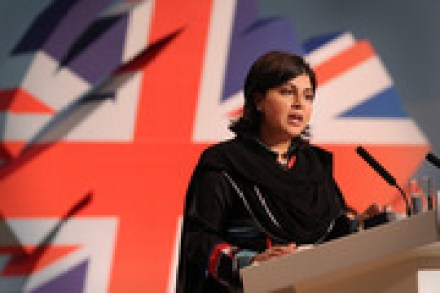
In an interview in The Times today, Sayeeda Warsi makes clear that the Conservatives will oppose the idea of giving political parties three pounds of state funding for every vote they win. She says: 'I fundamentally disagree with that. At a time when the country is facing the current economic climate, for us to be thinking about putting £100 million, which could build 20 schools and give you thousands of operations on the NHS, into party political funding is wrong. I think people would be appalled by it. They would say, "That is not what I pay my taxes for".' This is a welcome intervention. State funding of parties based on the result of the last general election would be an appalling system.

Lord Ashcroft’s Common Sense

From our UK edition

Good stuff from Lord Ashcroft this morning. Good because, obviously, he agrees with me that the Tory obsession with Europe and, just as importantly, the style in which that obsession is paraded before the public damages the party. As the noble lord puts it: [W]e know that for many people, the main barrier to voting Conservative is that they do not think we share the concerns of people like them.  But which issue has the last week shown still seems to exercise our party above all others? Some will be inclined to blame the media for the back-to-the-nineties coverage of Tory turmoil over Europe.  But the fact that we know journalists find the story irresistible makes it all the more ludicrous to hand it to them on a plate. [...

First Lord or First Among Equals?

From our UK edition

Well, James, hang on a minute. The three "schools of thought" you identify in relation to last night's Tory rebellion on Europe are not three distinct schools at all. That is, one may consider the Tory party "unmanageable" on europe and believe that the leadership got caught up in the madness yesterday. But it is your final school that really have it wrong: The third lot are the ones who have grasped the significance of last night's events. Despite being loyalists, they are in no doubt about the need for Cameron to change his style of party management. They want him to stop acting like a medieval monarch and start behaving in the manner of someone who is first among equals when it comes to his parliamentary colleagues. Up to a point.

How important is the Ministry of Defence?

From our UK edition

How important is the Ministry of Defence? Not, according to Fraser, important enough to this government to appoint a Secretary of State who has any great interest in Defence issues. This is fairly remarkable. You might have thought - and the MoD's particular problems might have persuaded you - that defence would be an issue demanding a specialist but that reckons without the managerial habits of modern politics. This is not a criticism of Philip Hammond. He will doubtless be, as they say, a "safe pair of hands" at the MoD.

The Voters, Damn Them, Refute the Tory Right

From our UK edition

At the risk of careering round an old argument, Jonathan, the graphs you've produced on political affiliations are yet another reminder, if ever one were needed (and it is) that the Tory right's argument that Cameron would have won a majority if only he'd run a blue-meat campaign is dreadfully mistaken. As you can see, more voters identify with the left than the right. This was Tony Blair's legacy and the ground upon which Cameron was compelled to fight. I suppose it is possible that Cameron could move right without alienating voters who consider themselves - accurately or not - centrists but I suggest this is not probable.

Three Cheers for the House of Lords | 12 October 2011

From our UK edition

As a general rule complaints that the opposition are too beastly for words should not be taken too seriously. They reflect a sense of entitlement on the part of the governing party that, whenever it may be modestly frustrated, quickly becomes peevish, sour and silly. If this is true of parliamentarians it is even truer when considering the bleatings of partisan pundits cheering on Team Red or Team Blue. Again, if you judge these squabbling teams by different criteria then you forfeit some right to be taken seriously. So it's depressing to see a commentator as urbane and generally sensible as Benedict Brogan make such an ass of himself in this piece about how nasty Labour types and "organised" Crossbenchers are - the beasts - frustrating the government in the House of Lords.

Does Alex Salmond Fear Ruth Davidson?

From our UK edition

The ballots for the Scottish Conservative and Unionist party's leadership election have been posted to members and few people, I think, have any real idea as to what the result will be. In general terms, as readers know, I'm sympathetic to Murdo Fraser's analysis of the woes afflicting conservatism in Scotland and unpersuaded that Ruth Davidson's campaign has been as good as it should have been. These concerns were scarcely assuaged by Ruth's article in last week's Scotland on Sunday. Choked with cliches and boilerplate it was a depressingly thin analysis of the state of the party. "We need to change ourselves, not our name" she wrote which is, well, fine but part of the point of the name-changing idea is to demonstrate once and for all that the party has changed itself.