Tories

Theresa May forced into ‘dementia tax’ U-turn by Jeremy Corbyn

From our UK edition

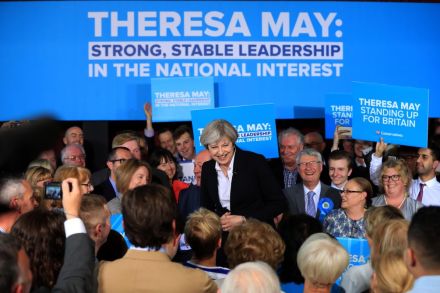
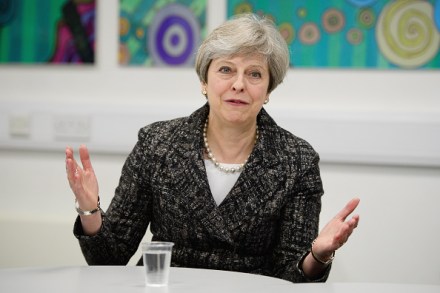
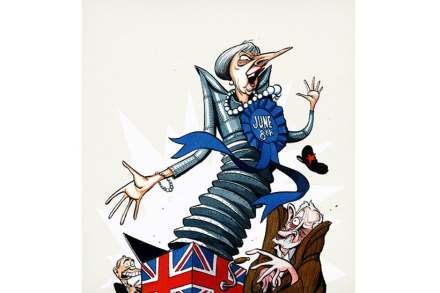
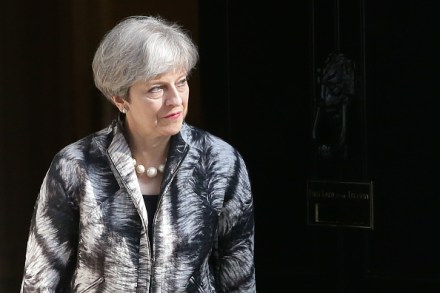
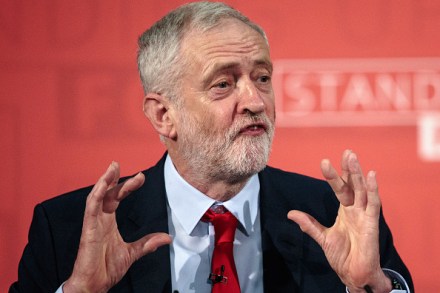
Theresa May promised ‘the first ever proper plan to pay for – and provide –social care’ in the party’s manifesto. Four days later, that plan has now changed. The Prime Minister has said that there will, after all, be a cap on the amount people have to pay for the cost of their care. So what made May change her mind? Jeremy Corbyn, according to the PM. May said that ‘since my manifesto has been published, my proposals have been subjected to fake claims made by Jeremy Corbyn’. The reaction to the policy, May suggested, meant that the government would ditch the manifesto plan.

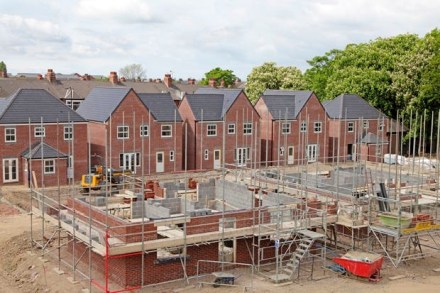
It’s time for a real Department of Housing, with a minister to match

From our UK edition

'I earned capital in the campaign, political capital, and I intend to spend it'.  That was how George W Bush put it after winning his second presidential election in 2004. He’s possibly not the best model for good governance, but the sentiment is worth pondering as Theresa May rolls on relentlessly towards victory. Mrs May will wake on June 9 with money in the bank, politically if not fiscally. She’ll have crushed and possibly split apart the Labour Party, secured her party another five years in office and stamped and stamped and stamped her personal authority on the Conservative Party.

The Tories hit their highest poll lead since 1983

From our UK edition

The Tories have just hit a new high in the polls: 49 per cent, handing them a 22-point lead over Labour. This margin is virtually uncharted territory for the Conservatives, with ICM pointing out that the party’s current lead has only been bettered once in the last 34 years of polling - back in May 1983. As ever, it’s less good news for Labour: the party sits on 27 per cent, according to ICM - a number which precisely matches the share of the national vote they picked up in last week’s local elections. If - and it’s a big if - this means the pollsters have pinpointed Labour's share of the vote at 27 per cent, the outcome would be disastrous for the party come June 8th. Replicated nationally, the Tories would win a thumping majority of 172.

Andy Street’s West Midlands victory is a big blow to Corbyn

From our UK edition

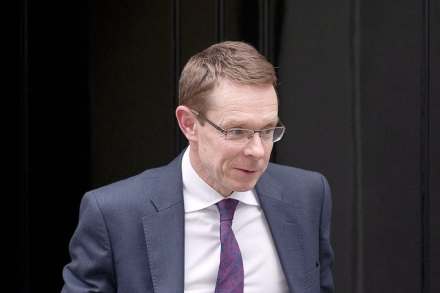
Andy Street has won the race to become the new West Midlands mayor in a huge triumph for the Conservatives. Street’s victory was narrow - by only a few thousand votes out of the half-a-million or so cast - but his success is extraordinary for the Tories on a day of sweeping wins for the party across the country. Labour are already trying to spin this election as being hard-fought from the outset. The shadow chancellor John McDonnell has said that it was ‘always going to be close’. But make no mistake: this is an embarrassment for Jeremy Corbyn and the Labour party. Street beat Labour’s Sion Simon on what should have been the party’s own turf, with Labour currently holding 21 out of the 28 Westminster seats in the West Midlands area.

Local elections: West Midlands win caps off a day of stunning successes for the Tories

From our UK edition

The Tories are up 540 seats, have gained control of 11 councils and enjoyed success in the Tees Valley, Cambridgeshire and Peterborough and West of England mayoral races. Conservative candidate Andy Street has won the West Midlands mayoral contest. Labour's vote has plummeted, with the party losing 360 seats as well as control of six councils. Labour's Steve Rotherham won in Liverpool's mayoral contest; Andy Burnham won in Greater Manchester. Ukip has lost every seat it was defending. The party has gained one seat across the whole country - in Lancashire, from Labour. The Lib Dems have lost 24 seats but have seen their share of the national vote jump by seven per cent. The SNP are down 7 seats in Scotland, with the Tories up by 164.

Theresa May’s scrutiny-dodging will only get worse

From our UK edition

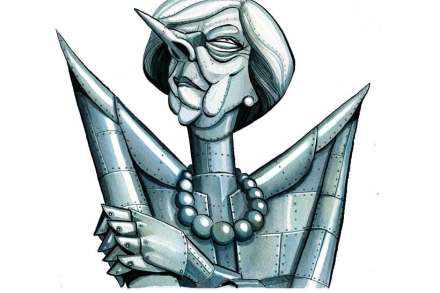
What a very boring election this is. The Tories are trying to keep their Prime Minister away from anyone who isn’t an android programmed to wave a placard about ‘strong and stable leadership’. Journalists from local papers are being kept in rooms to prevent them from - gasp - filming an interview with the Prime Minister for their websites. Other events take place away from the media entirely, with Theresa May cocooned safely among Tory activists: the political equivalent of a tree falling in an empty forest. Over the bank holiday, the Sunday papers carried tales of a row between May and her key aide Fiona Hill in which the Prime Minister apparently complained that she was being kept away from voters.

Manchester needs a new champion – and it isn’t Andy Burnham

From our UK edition

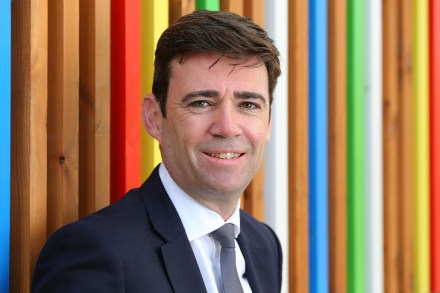
Another election that catches my business eye is the one for mayor of Greater Manchester. The winner will have a powerbase with huge potential: a city-region of 2.7 million people, an enterprise culture that has evolved over two centuries, an outstanding university science base, strong flows of inward investment, Europe’s largest industrial estate at Trafford Park, a global sports brand at Old Trafford, and a world-class airport. Yes, it also has problems of ‘entrenched worklessness’, NHS overstretch and underperforming schools — and nine of its ten local authorities are Labour-controlled. But that’s no reason to award the mayor’s job to yet another socialist opportunist.

Capping prices to win votes is no substitute for a serious energy strategy | 29 April 2017

From our UK edition

Is capping domestic energy prices an equitable way to help the ‘just about managing’, or an electoral gimmick with a whiff of anti-free-market ideology? When it was Ed Miliband’s idea, it was certainly the latter. Now it’s likely to be included in Theresa May’s manifesto, offering a potential £100 saving for millions of homes on ‘standard variable tariffs’, it is defended by the ever-plausible Sir Michael Fallon as a matter of ‘intervening to make markets work better’. And that, after all, is what the Prime Minister said she would do, wherever necessary, in the interests of fairness.

There’s more to Boris’s ‘mugwump’ insult than meets the eye

From our UK edition

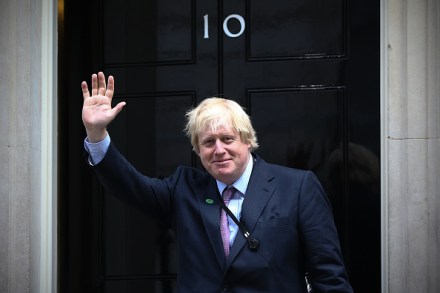
Boris Johnson has entered the election campaign with a bang. The Foreign Secretary was being squirrelled away, some were saying, after a number of ministers apparently suggested to Theresa May that she should sideline Boris to avoid alienating voters. It’s clear that’s not going to be happening. Today, Boris is front and centre calling the leader of the opposition a ‘mugwump’. In the Sun, Boris said that some may think Corbyn is harmless - a ‘mutton-headed old mugwump’ - but they’d be wrong to hold that view. The po-faced will say this is proof that Johnson is up to his old tricks and we shouldn’t fall for it; shadow foreign secretary Emily Thornberry has done just that, calling the comments ‘crass’.

How to vote to save the Union

From our UK edition

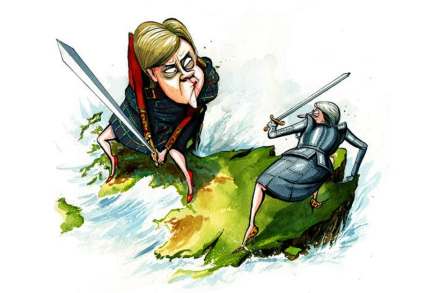
When launching the Scottish National Party’s election campaign, Nicola Sturgeon said the word ‘Tory’ 20 times in 20 minutes. For much of her political lifetime, it has been used by the SNP as the dirtiest word in Scottish politics. Nationalists have long liked to portray the Conservatives as the successors to Edward Longshanks: an occupying army with little affinity for the people they were trying to govern. But things are changing fast in Scotland. Amid the other political dramas of the past few months, the revival of Tory support north of the border has gone relatively unnoticed. They had only one MP after the last election, but a poll this week puts them on 33 per cent in Scotland — enough to win 12 seats.

Why Matthew Parris is wrong about a Tory lurch to the right

From our UK edition

Exaggeration is the political pundits' stock in trade: nobody built a loyal readership on equivocation. But Matthew Parris' recent commentary about the Conservative Party's direction under Theresa May borders on the hysterical. A few weeks ago he used his Times column to hyperventilate about a Conservative Party 'paralysed in the headlights of a dangerous surge of reckless populism and in thrall to its own right wing'. Last Saturday, he returned to the theme and wrote of a 'deep, deep shift under way in our party...leaving anyone once attracted to the strong strand of tolerance and moderation we found powerful in the Conservative tradition feeling cowed, discouraged'.

This election will be won or lost on the suburban battleground

From our UK edition

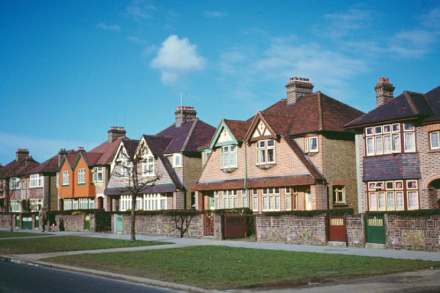
In Westminster, all the general election chatter is about Brexit. Will Tory Remainers turn Lib Dem? Will Labour leavers desert Jeremy Corbyn? As polling day draws near, however, the Europe obsession must recede. Politicians may not be able to look past last year’s referendum, but voters will have moved on. MPs will find that, as before, the great issue of our time will be just one of many on the doorsteps. This summer’s battleground won’t be Brussels. It will be suburbia. Domestic matters will decide whether Theresa May returns to Downing Street with a fat majority, and no one is more domesticated than the average suburbanite. We are intensely local. We want good local schools and good local hospitals — we don’t like grand projects like HS2.

Theresa May’s great gamble

From our UK edition

Theresa May has long been clear about what sets her apart from other politicians: she doesn’t play political games. When she launched her bid for the top job last year, she was clear that — unlike her rivals — she hadn’t succumbed to the temptations of Westminster. She told us that she didn’t drink in the bars or gossip over lunch. She invited the TV cameras into her first Cabinet meeting as Prime Minister to record her telling ministers that ‘politics is not a game’. The danger for May in calling an election three years ahead of schedule is that it looks a lot like game-playing. Has a 20-point poll lead proved too much of a temptation, even for this vicar’s daughter?

Those who want a clear Brexit will need to make sure it is in the manifesto

From our UK edition

Mrs May’s decision to call a snap general election is not very welcome, and I had thought she would think it too risky, but it makes sense — obviously because of Jeremy Corbyn and, a bit less obviously, because of public attitudes to her. She has brilliantly convinced people that she is a straightforward, unpolitical person who doesn’t descend to political games. This is untrue. She is, however, a person without childish vanity, celebrity hunger or media obsession. She benefits from a big cultural change, which descends from Mrs Thatcher, via all sorts of others — Angela Merkel, Ruth Davidson, Nicola Sturgeon. Women are now seen as stronger, more real and less silly than men. This is an old folk wisdom, but it only recently became the orthodoxy in politics.

Theresa May doesn’t trust enough people for a power ‘circle’. A triangle, maybe

From our UK edition

The fact that nothing leaked about Mrs May’s snap election tells you much of what you need to know about her. It shows how iron is her discipline and how close her inner circle (so close, in fact, that it is a triangle rather than a circle). It suggests that she takes neither her cabinet nor her party into her confidence. It shows that if she wins the general election, her control of her administration will be much tighter than that of Margaret Thatcher (which was surprisingly loose) and even than that of David Cameron (which was surprisingly tight). Finally, it shows that if she loses, or gets a result no better than the present parliamentary arithmetic, she will find herself friendless.

What the papers say: Jeremy Corbyn does pose a threat to the Tories

From our UK edition

Theresa May is riding high in the polls and there’s much talk of a Tory landslide - but that doesn’t mean the Government should rest on its laurels, says the Daily Telegraph. It’s vital, the paper says, that the PM does her best to ‘create a sense of urgency among the voters’; ‘They have to understand the dangers of not coming out to support her,’ the paper adds. Of course, some might laugh at the prospect of Corbyn making it to Number 10 - yet it’s just that sense of ‘impossibility’ that the Labour leader ‘hopes to exploit’.

Labour is starting its hardest election campaign woefully unprepared

From our UK edition

The opposition parties about whom Theresa May complained in her speech launching the snap election are grinding into action. Their size and resources seem to be inversely proportionate to how prepared they are: the Lib Dems say they have already selected around 400 candidates to contest seats, while Labour hasn't selected any candidates in seats it doesn't hold. The party is contacting its 2015 candidates to see if they might stand again so it might mount reasonably well-informed campaigns in key seats (or formerly key seats: a campaign with an ounce of wisdom would have to name seats it already holds as 'key seats' while accepting that many of its sitting MPs will just be washed away).

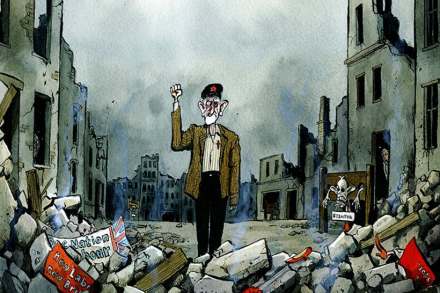
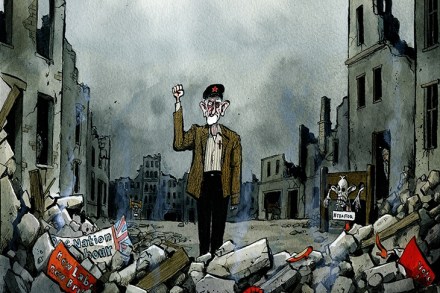
Jeremy Corbyn is already anticipating his political extinction

From our UK edition

Just seven weeks till Jezza-geddon. The Labour leader seemed to anticipate his political extinction with a dead-sheep performance at PMQs. Poor Corbo. He’s never shaken off the air of Speakers’ Corner. He belongs outdoors, with a step-ladder and a bull-horn, ranting away at tourists and pigeons. Today he was faced with a carefully drilled Tory militia eager to demonstrate their unity. It was impressive but dispiriting as well. Every preferment-seeker and red-box wannabe on the backbenches had been ordered to lace their query to the PM with extravagant praise of Tory economic genius. Up they popped, in wearying succession, the pliable Pippas, the malleable Marys, the robotic Richards, the pushover Pauls. It wasn’t a debate. It was a flash-mob of Duracell Bunnies.

The Tory party should not forget George Osborne’s role in its revival

From our UK edition

George Osborne’s decision to stand down as an MP is a sign of how impregnable Theresa May’s position is perceived to be. Osborne is the most politically formidable of the Tory sceptics of May’s Brexit plan, and his decision to quit the Commons suggests that he doesn’t think she’ll come unstuck in the next parliament. Of course, Osborne has others things to occupy himself with: the editorship of the Evening Standard and his lucrative work for Black Rock. But one suspects that he’d have been prepared to brazen out the criticism over his multiple jobs if he thought there would be a political sea change in his wing of the party’s favour in the next parliament. Osborne’s departure from the Commons will further denude it of experience.

Can Labour survive this general election?

From our UK edition

'There are times, perhaps once every thirty years, when there is a sea-change in politics,' reflected James Callaghan in 1979, conscious he was about to be turfed out of Number 10. He didn’t know the half of it. While Margaret Thatcher’s election did herald the end of the post-war consensus, it kept the Conservative/Labour ‘mould’ intact, despite later attempts by the SDP/Liberal alliance to break it. But with a ‘Brexit election’ now called for 8 June, Labour will be fighting for its very survival. The last great national political realignment was the 1922 general election in which Labour beat the Liberals into second place for the first time.