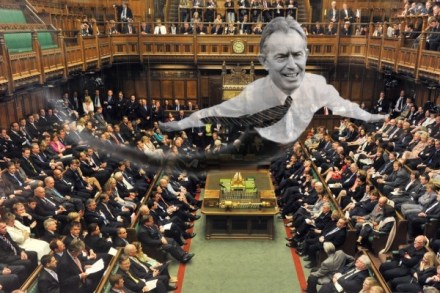
Tony blair

A double strength headache for Miliband

From our UK edition

Johann Lamont and Tony Blair don’t have much in common. But they are both causing Ed Miliband trouble this morning.   I suspect that those close to Miliband are relieved that Lamont has quit as the leader of the Scottish Labour party; his statement on her resignation last night was barely lukewarm. Certainly, the Miliband circle didn’t hold her in high regard and became despairing of her abilities during the referendum campaign. But what they won’t like is how she has taken a swing at them on the way out. She has lambasted Miliband’s office for treating Scottish Labour as ‘a branch office of a party based in London.’ These words will sting and be thrown back at Labour by the Scottish Nationalists at every opportunity.
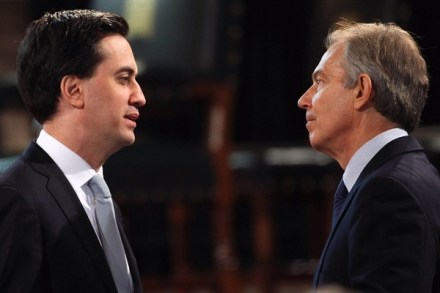
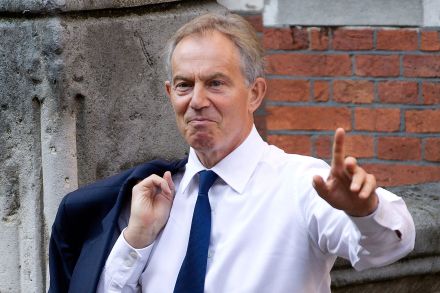
The NHS Wales disaster vindicates Tony Blair, not David Cameron

From our UK edition

[audioplayer src="http://traffic.libsyn.com/spectator/TheViewFrom22_23_January_2014_v4.mp3" title="Charlotte Leslie and James Forsyth join Sebastian Payne to discuss the NHS." startat=1410] Listen [/audioplayer] As someone who believes that a Labour government would be a calamity for Britain, I ought not to mind the recent fuss about NHS Wales. Yes, it is a disaster – as the Daily Mail has been cleverly highlighting. And it has been run by Labour for 15 years, so they're guilty as charged. Jeremy Hunt, the Health Secretary, makes this point powerfully today. But if the English NHS is much better by comparison to Wales, it’s not because of him, nor because of David Cameron. It’s because of Tony Blair.

Jonathan Powell is wrong – talks with the IRA prolonged the Troubles

From our UK edition

Jonathan Powell seems to be unavoidable at the moment. Having read his first two books a couple of times I felt a weary sense of resignation on news of the third. It wasn’t until I saw and heard him on channel 4 news that I felt serious irritation. We, whoever 'we' may be, should talk with everyone, everywhere, at any time, because we always do anyway - pretty much summed it up. Words are important - the more so when they are delivered by Tony Blair’s former chief of staff, who is much credited  with making a serious contribution to the Belfast Agreement. Jonathan Powell is a serious man, although one would be hard pushed to recognise that if you tuned into his Channel 4 performance.

Clacton to Ukip, Britain’s anti-politics were long in the making

From our UK edition

Talking to people in Clacton-on-Sea this week, there was a sense that, as much as they thought there were too many people in Britain, they felt politicians had it too easy. Over and over again people told me that MPs in Westminster didn’t understand working people. Politics is becoming less about policy and more about empathy; voters just don’t want to be ruled by aliens. In a famous article in 1955, Henry Fairlie described the chasm between the aliens and normal people: I have several times suggested that what I call the 'Establishment' in this country is today more powerful than ever before.

Jonathan Powell interview: middle-man to the terrorists says ‘secret talks are necessary’

From our UK edition

Jonathan Powell is a British diplomat who served as Tony Blair's chief of staff from 1997 to 2007. During this period, he was also Britain's chief negotiator for Northern Ireland. These days, Powell runs a charity called Inter Mediate, which works as a go-between among terrorist organizations and governments around the globe. David Cameron appointed him last May as the UK's special envoy to Libya. His book 'Talking to Terrorists' was published this month, a review of which can be found in the October 4 edition of The Spectator. In it, Powell argues the British government has failed to learn lessons from the history of diplomacy with guerrilla groups.

Must MPs always vote before we go to war?

From our UK edition

Jesse Norman was permitted three minutes for his speech to the Commons in last Friday’s debate. But the contribution from the Conservative MP for Hereford & South Herefordshire was one of the more important backbench interventions — and no less important for being wide of the debate’s focus. The House was being invited to support British intervention against the Islamic State. Mr Norman’s speech was about whether the invitation was even appropriate. As he put it, ‘A convention has started to develop that, except in an emergency, major foreign policy interventions must be pre-approved by a vote in Parliament.’ The MP thought this unwise. I disagree. Or half-disagree. But ­Norman’s case was powerful, and I shall give you the gist.

Tom Bower’s Diary: Resuming hostilities with Richard Branson

From our UK edition

This week marks another milestone in my 15-year battle with Richard Branson. Ever since he unsuccessfully sued me in 1999 to prevent the publication of my first damning biography, we have exchanged shots. His anointment on Sunday as Britain’s most admired businessman coincides with my appearances to promote Branson: Behind the Mask, my second book. Inevitably, the book sparked his fury, summarised in a 29-page letter of complaint. Our war is now focused on whether Virgin Galactic, his Heath Robinson rocket, will ever carry him 62 miles into the border of space. For ten years his regular predictions of imminent take-off have proven wrong. Last Christmas he announced he would fly this month with his son and daughter. I derided his forecast. Now he says take-off will be next March.

Chuka Umunna: the last disciple of New Labour’s third way

From our UK edition

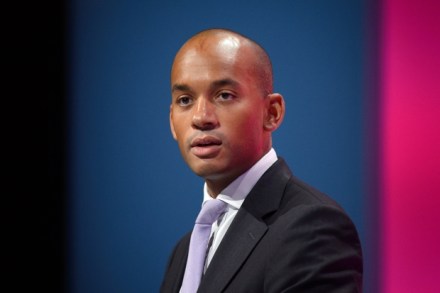
Chuka Umunna is the last disciple of the third way standing. At a Times fringe earlier, he was full of praise for centre-left European reformers such as the Italian PM Matteo Renzi and French PM Manuel Valls. Indeed, when Umunna spoke approvingly of the battle that Valls is having with his own party one sensed that it was something that Umunna would like to do himself. Umunna sought to portray himself as the reasonable outsider. He said that the biggest challenge in politics was to make compromise fashionable again. He urged the Labour party to embrace entrepreneurs and his tone about business and technology was unremittingly hopeful. His desire to command as much political space as possible was reminiscent of New Labour in its pomp.

GQ kills irony as Tony Blair wins Philanthropist of the Year

From our UK edition

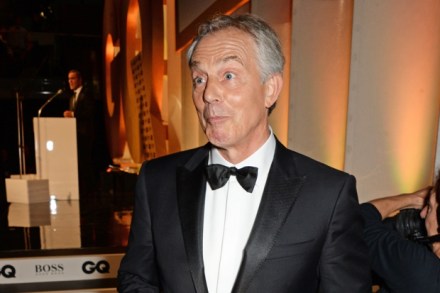
Satire died when Henry Kissinger won the Nobel Peace Prize, said Tom Lehrer. Now irony has followed it to the grave. GQ's Philanthropist of the Year is Tony Blair. And no, this isn't some cunning wind-up by the magazine. They gave the former PM a bauble at a ceremony last night. I'd like to say that Blair looks suitably embarrassed holding it, but nope. Neither he nor the lady wife 'do' embarrassment. Even nice Gary Lineker had a go at GQ on Twitter. ‘People will be greatly concerned and wonder if this was the right decision,’ he tweeted when the news came through. They will indeed wonder. Employing four-letter words, I suspect. I would love to have been at the Condé Nast meeting at which this one was agreed.

You can’t spin yourself into authenticity – as Ed Miliband is finding out

From our UK edition

For a politician to draw attention to his own deficiencies is a desperate attempt to curry favour with the electorate that has been tried before with dismal consequences. The most famous case is that of the former Tory leader Iain Duncan Smith who, at his 2002 party conference, addressed the problem of his dullness as a political performer by saying that no one should ‘underestimate the determination of a quiet man’. One result was that Labour backbenchers would raise a finger to their lips and say ‘shush’ whenever this croaky-voiced man was speaking in the House of Commons.

Look where Tony Blair’s messianic fervour has left us

From our UK edition

While trawling down the Mail Online’s right-hand-side of the page porno strip, to consider analytically the latest photographs of Jessica Alba in a swimming costume, I came across a rather good piece of journalism by Stephen Glover. Yes, yes; you know this already. But the horrors inflicted by US/UK liberal evangelism on the world (and then later, by extension, on ourselves) cannot be understated. Liberal evangelism and, as Glover has it, arrogance and narcissism on the part of primarily Tony Blair. To which we might add an abiding stupidity, too. And a messianic fervour.

Call Me Dave still has much to learn from The Master

From our UK edition

David Cameron and Tony Blair faced identical tasks earlier this week. Both wished to force a reluctant group of back-sliders to adopt a more robust and pragmatic position. Cameron wanted Europe to toughen up against Putin. Blair wanted Labour to toughen up against Cameron. Blair’s opportunity was the 20th anniversary of his enthronement as Labour’s leader. Oddly enough the chief beneficiary of that leadership – the Labour party itself – mysteriously forgot to give its messianic champion a chance to reflect on his methods. Instead, he offered his blueprint for further Labour victories to the think-tank, Progress. Blair likes to write in the early morning, in long-hand, seated at a window.

Which party has the most MPs’ children in Parliament?

From our UK edition

Commons inheritance Emily Benn, granddaughter of Tony and niece of Hilary, has won the right to stand for Labour in Croydon South. Which party produces the most political dynasties? Current MPs who had a parent in the Commons: CONSERVATIVE James Arbuthnot, Richard Benyon, Dominic Grieve, Ben Gummer, Nick Hurd, Andrew Mitchell, Nicholas Soames, Mark Pawsey, Laura Sandys, Robin Walker, Bill Wiggin LABOUR Hilary Benn, John Cryer, Lindsay Hoyle, Anas Sawar, Andy Sawford, Alison Seabeck d.u.p. Ian Paisley Jnr Air scares The loss of a second Malaysian Airways airliner means that the number of worldwide casualties in civilian air disasters — 827 so far this year — has already exceeded that of last year, when 459 died. But it does little to disturb the steady downwards trend.

Tony Blair — the unloved one

From our UK edition

Tony Blair, international superstar, has jetted into London to deliver the inaugural Philip Gould Memorial Lecture at Progress, a think tank. The speech would have enraged the likes of Len McCluskey, in the unlikely event that he listened to it. Blair trotted out all the pleasing soundbites of the past. The ‘third way’ was, he said, ‘a hard-headed examination of the world as it really is.’ Progressive politics was ‘not a cast of policy but a cast of mind. It’s not a programme but a philosophy. It’s not time limited but perpetual.’ The audience drank of these comfy platitudes and were nourished. Mr S, meanwhile, wondered what Ed Miliband, who has flown to America in pursuit of a photo-op with Barack Obama, made of it all.

Miliband’s message: I’m neither New Labour nor Old Labour

From our UK edition

On the hottest weekend of the year, few people would want to be stuck inside in Milton Keynes. But that is where the Labour hierarchy finds itself. For this weekend is the party’s national policy forum. Ed Miliband’s speech today is meant to try and show that while he has moved on from New Labour he is not old Labour. There will be much talk of how fiscal restraint will have to continue and how Miliband knows there can be no return to the free spending ways of the past. One aide sums the message up as, ‘We know there is no money to spend.’ But it’ll be fascinating to contrast Miliband’s speech today with the one that Tony Blair is giving on Monday to mark the 20th anniversary of his election as Labour leader.

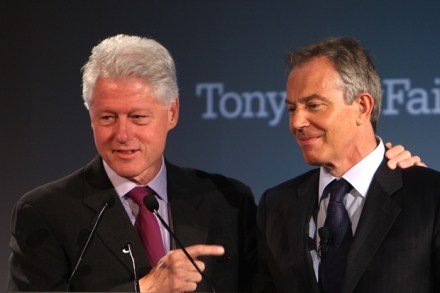
The profitable delusion shared by Bill Clinton and Tony Blair

From our UK edition

Tony Blair and Bill Clinton must be very happy about how they have fared since leaving political office, for each has since become enormously rich. Tony Blair may well be the richest British prime minister since the 14th Earl of Derby in the 19th century, and Bill Clinton is among the ten richest American presidents ever (richer even, it is said, than President Kennedy) — not bad for the child of a junior tax inspector in Edinburgh and for one from a poor and dysfunctional family in Hope, Arkansas. But to temper our envy we may note that what they have gained in wealth they have been losing in reputation.

I like the look of this exciting new Islamic State. But why don’t they want Belgium?

From our UK edition

There is something attractive about almost the whole of southern Europe being part of an immense and somewhat rigorous caliphate, as promised by the exciting Sunni Islamic movement formerly known as Isis. This new entity, stretching from Santander in what we currently know as Spain, to Cox’s Bazar on the Bangladesh and Burmese border, would handily encapsulate 98 per cent of the worst countries in the world, as defined by me out of rank prejudice, but also by various more scientific UN criteria.

Podcast: Terror’s comeback kids and Steve Coogan, foe of press censorship?

From our UK edition

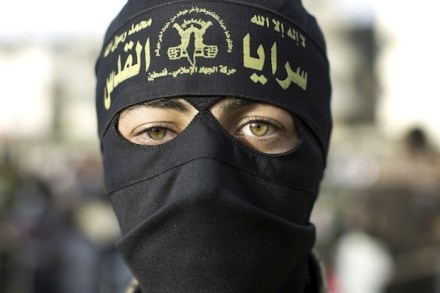
Why do Iraq’s jihadists keep on coming back? On this week’s View from 22 podcast, Daveed Gartenstein-Ross and Freddy Gray (1 min, 29 sec) examine why groups such as ISIS have a habit of disappearing, losing their territorial gains and reappearing more deadly than ever. What can the West do, if anything, to combat the ISIS threat in Iraq? Are we going to see instability in the region for years? James Forsyth and Isabel Hardman (10 min, 29 sec) also look at the disappearance of hawks in Westminster and why Parliament is so reluctant to intervene in foreign lands. Does the ghost of Tony Blair and Iraq scare off MPs from voicing interventionist feelings? It’s also been a terrible week for Ed Miliband — will Labour consider junking their leader?

How the Westminster hawk became an endangered species

From our UK edition

[audioplayer src="http://traffic.libsyn.com/spectator/TheViewFrom22_19_June_2014.mp3" title="James Forsyth and Isabel Hardman discuss the death of Westminster hawks" startat=726] Listen [/audioplayer]There is a slight whiff of the summer of 1914 to Westminster at the moment. The garden party season is in full swing and the chatter is all about who is up and who is down. In the Commons chamber itself, domestic political argument dominates. You would not know that a vicious sectarian war is raging in the Middle East. At the first Prime Minister’s Questions after the fall of Mosul to the terrorist group ISIS, no one asked David Cameron to explain the government’s policy on Iraq. The situation in Iraq is dire on both a humanitarian and a strategic level.

Blair haunts foreign policy debate

From our UK edition

Whether or not the Iraq war was wise, it's fair to say that it is now unwise for Tony Blair to intervene in the ongoing foreign policy debate. The former Prime Minister was under fire last week as the country British and US forces invaded in 2003 was rent asunder by ISIS, and naturally the debate about whether these developments show the intervention was the wrong decision has put further pressure on Blair. He rarely needs much pressure to justify his actions, though: he gives the impression of a man who protests too much. In his column today, Boris Johnson makes quite clear that these protests do not come without a cost to the wider debate about intervention.