Thomas friedman

Can the Big Mac save Russia?

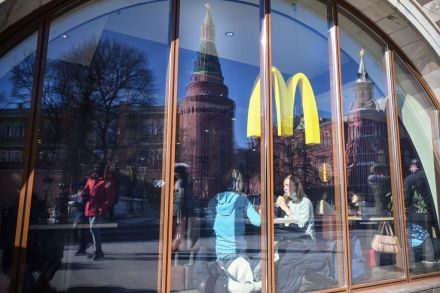
Cockburn has rarely seen eye to eye with de-celebrated New York Times columnist Thomas Friedman. He's particularly irked over Friedman's habit of quoting conversations he's had with cab drivers, given that Cockburn never remembers his taxi rides the next morning. Yet today he can't help but think there's something to Friedman's pro-globalism parachute journalism after all. During the 1990s, Friedman became famous for touting what he called the Golden Arches Theory of Conflict Prevention. This held that "no two countries that both have a McDonald’s have ever fought a war against each other." The thinking behind this idea was simple: as American corporations expanded globally, as nations consolidated and opened up their markets, war became bad for business.
The Ukraine invasion is nothing compared to Iraq

Of the war in Ukraine, New York Times columnist Thomas Friedman writes, “Our world is not going to be the same again because this war has no historical parallel.” In the very next sentence, he describes the Russian invasion of Ukraine as “a raw, eighteenth-century-style land grab by a superpower,” thereby acknowledging that the episode actually has innumerable historical parallels — just not ones that Friedman cares to acknowledge as legitimate. Friedman figures prominently among those claiming to have divined the essential character of the present age. His key finding: tech-driven globalization has rendered old-fashioned power politics obsolete. The rules of the game have changed irrevocably. Practically speaking, nations have no choice but to submit.

invasion iraq