Thomas Chatterton Williams

Francis Fukuyama does not read your tweets

Francis Fukuyama never reads the comments. He is a benign presence on social media, whether it’s on Twitter, or Instagram. Now I know why. Unlike many public thinkers, Fukuyama is not that interested in joining the digital fray. He reckons that a third of comments on his posts ‘are going to be stupid references to The End of History — “this is not the end of history, is it” — so I’ve avoided the temptation to get into fights.’ I’ve called Dr Fukuyama — permanently assured of a place in the history of ideas since his essay “The End of History?” appeared in 1989 — to talk about his hobbies. Great minds need to rest. Socrates enjoyed dancing. Diogenes was a keen sunbather. Immanuel Kant was a dedicated pipe smoker.

francis fukuyama

Is this the sanest debate on race yet?

The race debate is rapidly descending into a one-note diatribe where white accountability has become the only game in town. White liberal voices now dominate an increasingly febrile narrative but alongside mainstream flagellations about systemic racism and white supremacy, a less hysterical, more nuanced discussion is taking place. Black centrist and conservative intellectuals have been quietly trying to unpick what's really been going on across western democracies. Their conclusions run counter to the mainstream story we are all being impelled to sign up to, namely that injustice runs deeper than mere skin color.

bret weinstein

The fatuousness of the Harper’s letter

The recent letter ‘on justice and open debate,’ published in Harper’s magazine on July 7 and signed by some 150 self-nominated intellectuals, will stand as one of the conspicuous fatuities of this intense American election year. The intellectuals begin with the portentous assertion that ‘our cultural institutions are facing a moment of trial.’ It is then explained that forces that have all long demanded ‘police reform and greater equality and inclusion across our society,’ goals whose championship these signatories claim throughout for themselves, are now being threatened.

letter

Harping on Harper’s

Earlier this week, a motley assortment of about 150 sententious bourgeois liberals, joined by a couple of Chamberlain conservatives, diminished whatever public standing they had by choosing Harper’s magazine, your grandmother’s favorite periodical, to publish an ungainly group letter that, they would like us to believe, is an impassioned defense of free speech in these parlous times. On its merits, this should not be controversial or even necessary. Until about ten years ago, free speech was a sacrosanct element of the American Republic.

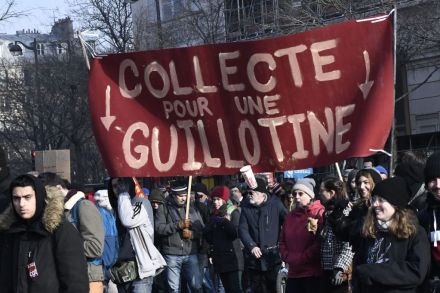
speech Protesters hold a banner reading ''Fund-raising for a guillotine'

Harper’s vs Vox — and the bonfire of the liberal values

Cockburn is long enough in the tooth to recall when it was uncontroversial to defend the 'free exchange of information and ideas.’ Not so many moons ago, it seemed obvious to the point of boring to say that 'the way to defeat bad ideas is by exposure, argument, and persuasion, not by trying to silence or wish them away.’ Not anymore. In 2020, that is edgy stuff, as the group of 150 writers who just wrote a joint letter to Harper’s have proved. Their letter, a defense of free expression, makes the perfectly clear and fair point that ‘as writers, we need a culture that leaves us room for experimentation, risk taking, and even mistakes. We need to preserve the possibility of good-faith disagreement without dire professional consequences.

vox